

Here's a surprising truth: 93% of children enjoy at least one recreational fear activity, and scary stories top the list. Yet many parents and educators still treat spooky narratives as something to shield kids from. That instinct is understandable, but it misses the bigger picture. Scary storytelling is one of the oldest, most powerful forms of human connection. It builds courage, sparks imagination, and teaches us how to face the unknown. This guide breaks down exactly how scary stories work, why they matter for readers of all ages, and what techniques make them truly unforgettable.
Table of Contents
- What makes a story scary?
- How scary storytelling shapes young minds
- Core tools and techniques of effective scary storytelling
- Applying scary storytelling: Examples and inspiration
- The overlooked magic of scary stories
- Ready for more chills and thrills?
- Frequently asked questions
Key Takeaways
| Point | Details |
|---|---|
| Scary stories harness primal fears | The most effective scary storytelling taps into universal anxieties like the unknown and isolation. |
| Supports child resilience | Age-appropriate scary stories help children develop courage and cope with life’s uncertainties. |
| Crafted with technique | Great scary storytellers use pacing, suspense, and sensory immersion to engage readers of all ages. |
| Safe scares build bravery | Safe, regulated fear experiences empower both young and adult readers to face real-world challenges. |
What makes a story scary?
Every great scary story starts in the same place: your imagination. Not with a monster. Not with blood. With uncertainty. The moment you don't know what's behind the door, your brain starts filling in the blanks, and that's where real fear lives.
The themes in scary stories that resonate most deeply tap into primal fears we all share. Darkness. Isolation. The unknown. These aren't random choices. They're hardwired into human psychology, which is exactly why they work across cultures and generations.
According to storytelling craft experts, the core mechanics of scary stories include:
- Starting with primal fears like isolation or the unknown
- Leveraging uncertainty so the reader's imagination does the heavy lifting
- Using setting as a character that reinforces dread and tension
- Escalating horror gradually rather than front-loading the scares
- Employing foreshadowing and sensory immersion to pull readers deeper in
Setting deserves special attention. A creaking old house, a fog-covered road, a silent forest at midnight. These aren't just backdrops. They breathe. They press in on characters and readers alike, making the world feel unsafe in ways that feel visceral and real.
Pacing is equally critical. Rush the reveal and you lose the tension. Drag it out too long and readers disengage. The sweet spot is that slow, deliberate escalation that keeps you turning pages even when part of you wants to stop.
"The best scary stories don't show you the monster right away. They make you feel it first."
Foreshadowing plants seeds of unease early. A strange smell. A door that shouldn't be open. These small details accumulate, and by the time the horror arrives, readers have already half-convinced themselves something terrible is coming. That anticipation is the engine of every great scary story. Understanding why horror books matter starts with recognizing that fear, when crafted well, is genuinely transformative.
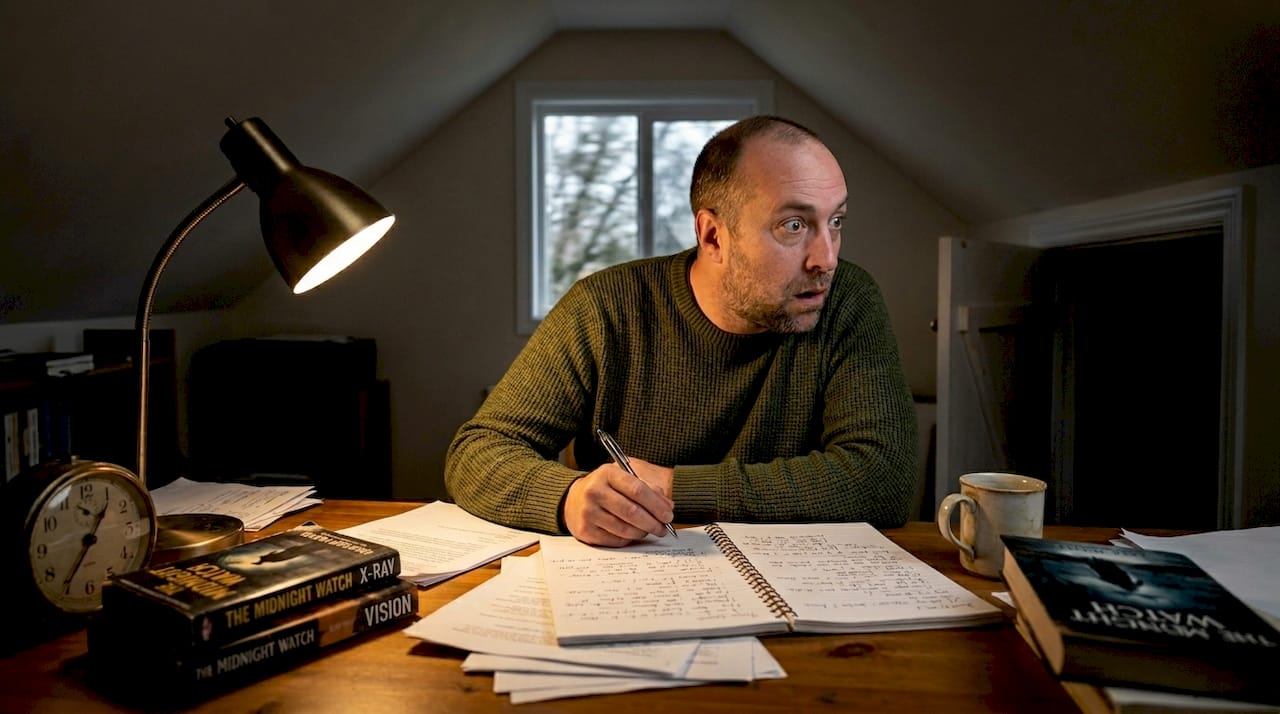
How scary storytelling shapes young minds
Knowing how powerful scary storytelling can be, especially for children, reveals why its mechanics deserve close attention.
Children's engagement with scary stories peaks around age 7, but the appetite for spooky content starts earlier and lasts well into the teen years. Far from being harmful, this engagement is actually a sign of healthy emotional development. Recreational fear activities like scary stories help 93% of children build psychological resilience and process complex emotions in a safe, controlled setting.
Think of it this way: a scary story is a rehearsal for real fear. The child feels the tension, experiences the dread, and then survives it. Every time that happens, they get a little braver.
| Age group | Engagement style | Recommended intensity |
|---|---|---|
| Ages 4 to 6 | Simple spooky, friendly monsters | Low, cozy scary |
| Ages 7 to 9 | Mystery, suspense, mild horror | Moderate, age-guided |
| Ages 10 to 12 | Psychological tension, plot twists | Higher, parent-reviewed |
| Ages 13 and up | Full horror, complex themes | Teen-appropriate |
Scary storytelling also gives children tools to help develop courage by letting them practice emotional regulation. They learn that fear is survivable. That's a lesson no classroom lecture can fully replicate.
Here's how to introduce scary stories to young readers in a healthy, empowering way:
- Start with age-appropriate content, like classic horror for children that balances suspense with resolution.
- Read together so you can pause and check in on how your child is feeling.
- Discuss the story afterward. What scared them? What made them feel brave?
- Gradually increase intensity as confidence grows.
Pro Tip: The best gauge of "safe-scary" for a child isn't age alone. Watch for excitement mixed with nervousness (that's the sweet spot) versus genuine distress. If a child wants to keep reading, you're in the right zone. Stories featuring monsters in children's literature are especially effective because monsters are concrete, imaginable, and ultimately beatable.
Core tools and techniques of effective scary storytelling
To put these techniques into practice, it's helpful to see concrete examples and applications.
Every skilled scary storyteller has a toolkit. The good news? These tools are learnable. Whether you're writing your first ghost story or trying to understand what makes your favorite horror novel so gripping, these mechanics explain everything.
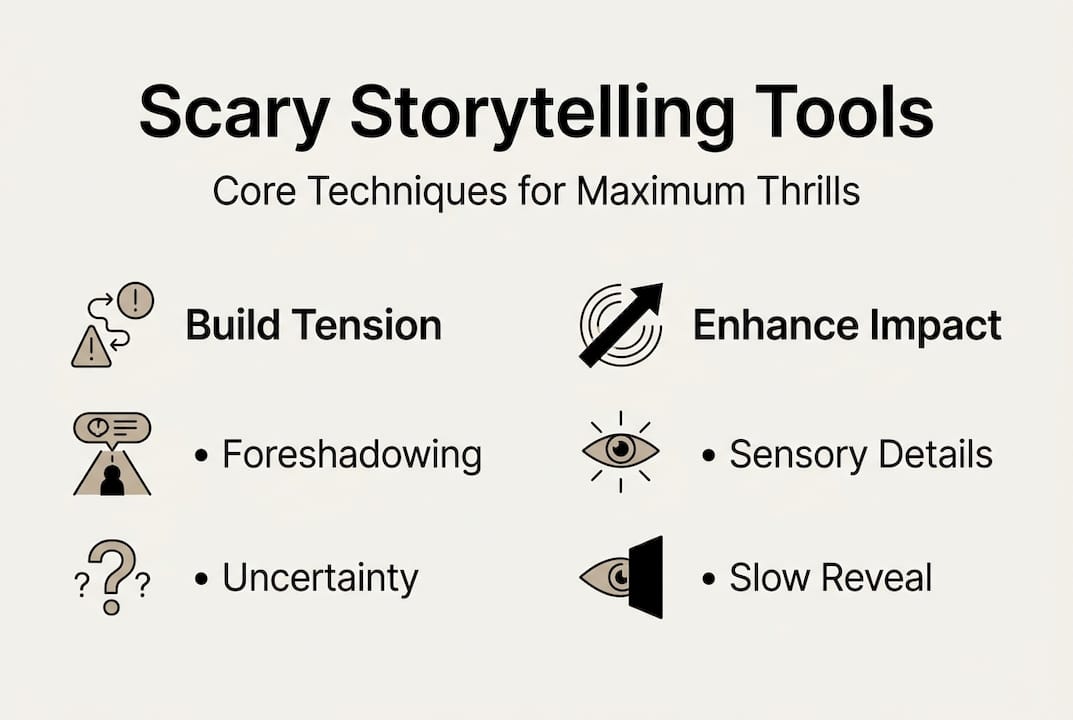
Pacing and suspense are the backbone of any scary story. Pacing and theme as predator are two of the most powerful amplifiers in scary storytelling. When the threat feels like it's always one step behind the protagonist, readers can't look away.
Here's a practical comparison of reveal strategies:
| Technique | Best for | Effect on reader |
|---|---|---|
| Fast reveal | Younger readers, action-heavy stories | Immediate shock, quick resolution |
| Slow reveal | Older readers, psychological horror | Sustained dread, lingering unease |
| Partial reveal | All ages | Imagination fills the gaps, maximum fear |
| No reveal | Experienced horror readers | Unsettling ambiguity, lasting impact |
The descent structure is another essential technique. Stories that guide writing gripping horror consistently use a downward spiral: the world starts normal, small things go wrong, then bigger things, until the character (and reader) feels completely trapped. That structural momentum is what makes horror feel inevitable.
Here are the key techniques every scary storyteller should practice:
- Foreshadowing: Plant clues early that pay off later.
- Sensory immersion: Make readers smell, hear, and feel the scene.
- Restraint: Don't show everything. Let imagination do the work.
- Descent structure: Escalate problems steadily toward a breaking point.
- Unreliable safety: Remove every place the character (and reader) feels safe.
Pro Tip: The scariest monster is often the one you never fully see. Restraint in reveals is one of the most powerful creative techniques available to any horror writer. A shadow, a sound, a half-glimpsed shape in the dark. That's scarier than any detailed description.
Applying scary storytelling: Examples and inspiration
Bringing everything full circle, what does all this mean for those who want to master or share scary storytelling?
The best way to understand scary storytelling is to see it in action. Classic examples like Goosebumps by R.L. Stine use fast pacing and relatable child protagonists to deliver age-appropriate thrills. For older readers, Stephen King's work demonstrates the descent structure and sensory immersion at their finest. Both approaches use theme as predator and descent structure to create maximum dread, just calibrated for different audiences.
Adapting tone and theme for different ages is simpler than it sounds. For younger readers, lean into mystery and wonder over graphic content. For teens and adults, psychological complexity and moral ambiguity hit harder than jump scares ever will.
Want to try your own scary story? Start with these prompts:
- A child finds a door in their house that wasn't there yesterday.
- A small town loses power on the same night every year.
- A new kid at school knows things they shouldn't.
- Something is wrong with the family dog, but no one else seems to notice.
- A letter arrives addressed to someone who died ten years ago.
Understanding why read ghost stories reveals that the benefits extend beyond entertainment. Readers who engage with scary stories regularly show stronger empathy, better emotional vocabulary, and more creative problem-solving skills. The horror genre as a whole is a training ground for the imagination.
Scary storytelling is empowering for writers too. There's something deeply satisfying about crafting a moment of genuine dread, knowing that a reader somewhere will feel their pulse quicken because of words you chose.
The overlooked magic of scary stories
Conventional wisdom says protect children from fear. Keep things light. Keep things safe. But that instinct, while well-meaning, actually underestimates kids. And it underestimates the profound value of darkness in storytelling.
Here's what most people miss: fear, when experienced through story, is one of the most connecting emotions we have. Shared thrills build community. Think about every campfire story ever told, every sleepover where kids dared each other to read one more chapter. Those moments create bonds.
For adults, scary storytelling reconnects us to primal emotions we've learned to suppress. It reminds us that we're still capable of wonder, dread, and genuine surprise. That's rare and valuable.
Kids who regularly engage with scary stories don't become more fearful. They become more resilient, more imaginative, and more empathetic. Stories that let them foster imagination through monsters give children a safe space to explore complex emotions and come out stronger on the other side.
The best scary stories don't just frighten. They illuminate. They show us something true about being human, about vulnerability, about survival. That's not something to shy away from. That's something to celebrate.
Ready for more chills and thrills?
If this guide has sparked your appetite for scary storytelling, you're in exactly the right place. Mark Watson Books offers carefully crafted collections for every kind of reader, from curious kids taking their first steps into spooky fiction to seasoned horror fans craving something truly unsettling.

Explore the full horror collection for gripping reads that deliver real dread. Looking for something age-appropriate for younger readers? The children's books collection has stories that thrill without overwhelming. And for fans of internet folklore and modern horror, the creepypasta books collection brings digital nightmares to life. Your next favorite scary story is waiting. Don't hesitate.
Frequently asked questions
What are the core elements of scary storytelling?
Primal fears, uncertainty, and sensory immersion combine with immersive settings and gradual escalation to create effective scary stories. These mechanics work together to keep readers emotionally engaged and genuinely unsettled.
Why do children enjoy scary stories?
Scary stories let children experience and master fears in a safe setting, and 93% of children engage in recreational fear activities because they support bravery and emotional resilience. The controlled thrill of a scary story is both fun and genuinely developmental.
How can I make scary stories appropriate for young readers?
Regulate intensity by leaning on suspense over graphic content, and always offer a resolution that empowers rather than overwhelms the young reader. Starting with mystery and wonder before introducing darker themes is a reliable approach.
What techniques do expert scary storytellers use?
Masters use restraint, descent structure, and foreshadowing to build dread, and they consistently leave room for the reader's imagination rather than revealing everything outright. Pacing is the invisible hand that controls how scared you feel at every moment.