
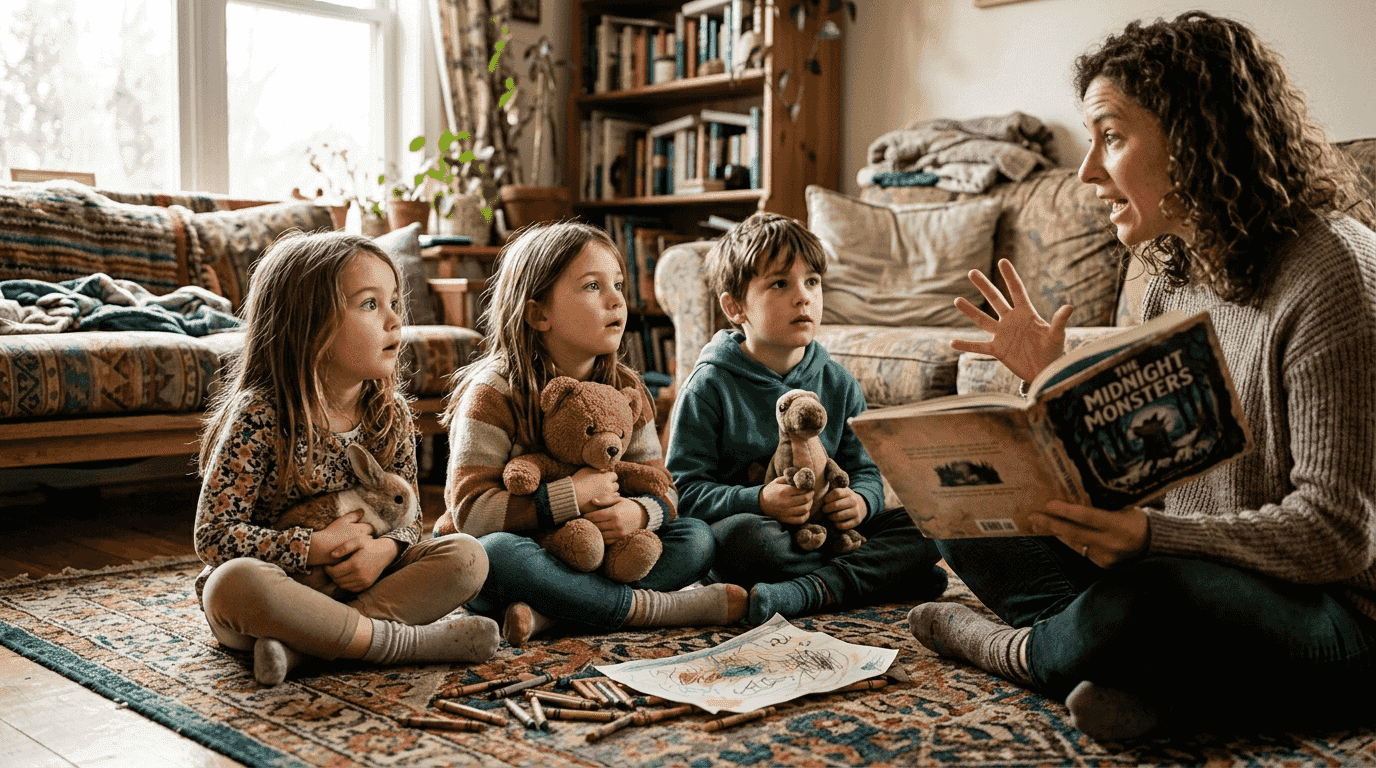
Many parents worry that scary stories might harm their children's emotional wellbeing. The opposite is often true. Scary stories provide children with safe opportunities to confront fear, building courage and emotional resilience in controlled environments. This article explores the psychology behind why frightening tales help children develop bravery, emotional regulation skills, and confidence when facing real challenges.
Table of Contents
- How Scary Stories Provide A Safe Space To Confront Fear
- How Scary Play And Storytelling Build Emotional Regulation And Resilience
- Why Children Are Naturally Drawn To Scary Stories And Recreational Fear Activities
- Practical Guidance: How Parents And Educators Can Use Scary Stories To Build Courage Effectively
- Discover Children's Horror Books That Build Courage
- Frequently Asked Questions
Key takeaways
| Point | Details |
|---|---|
| Safe fear experiences | Scary stories help children develop courage by providing controlled environments to confront and manage fear. |
| Emotional resilience | Experiencing safe fear helps children learn emotional regulation and boosts self-confidence. |
| Natural attraction | 93% of children enjoy at least one frightening yet fun activity. |
| Practical skills | Scary storytelling teaches coping strategies like deep breathing, humor, and cognitive reappraisal. |
| Control matters | Children feel empowered knowing they can stop scary stories anytime, reducing real stress responses. |
How scary stories provide a safe space to confront fear
Safe fear refers to experiencing frightening emotions in controlled settings where children know they're protected. This concept is crucial for emotional growth because it allows young minds to practice managing fear without actual danger.
Scary stories let children face fear with complete knowledge they can stop anytime. Unlike real threats, storytelling gives kids power over the experience. They control when to start, pause, or end the narrative, creating psychological safety even while experiencing genuine emotional responses.
The adrenaline from fear provides children with alertness and strength in manageable doses. These physiological responses mirror real danger situations but occur in contexts where children can practice staying calm. The horror genre specifically creates these controlled fear environments through narrative structure.
The feeling of control reduces real stress responses in children significantly. When kids understand the threat isn't real, their bodies still respond with heightened awareness, but cortisol levels remain lower than during genuine danger. This creates ideal learning conditions for emotional regulation practice.
Pro Tip: Start with bedtime ghost stories that end positively, showing children how characters overcome fears. This narrative arc reinforces that scary feelings pass and problems get solved, building confidence in emotional management.
Common examples include Halloween tales where monsters turn friendly, spooky sounds explained by natural causes, and mysteries solved by brave protagonists. These stories teach children that investigating fears often reveals manageable truths, reducing anxiety about unknown threats.
How scary play and storytelling build emotional regulation and resilience
Scary play combines exposure therapy with play therapy principles, creating powerful learning opportunities. Children engage with frightening concepts through imagination, developing skills they'll use throughout life when facing anxiety or stress.
Scary play helps manage anxiety by safely engaging with fear. Research shows that horror-based interventions may lower anxiety over time, giving children frameworks for understanding and processing uncomfortable emotions.
Emotional regulation skills taught through scary storytelling include recognizing physical fear responses, labeling emotions accurately, and applying calming techniques. Children learn their bodies signal fear through racing hearts or shallow breathing, then practice returning to baseline states.

Coping strategies emerge naturally from scary story experiences. Deep breathing helps when tension builds during suspenseful moments. Humor breaks tension when scary elements become silly rather than threatening. Cognitive reappraisal lets children reframe frightening ideas as fictional entertainment rather than real dangers.
Resilience builds through repeated safe exposure and overcoming imagined threats. Each time children face a scary story and survive the experience, they gain evidence of their emotional strength. This creates positive feedback loops reinforcing courage.
Here's how scary play progresses from initial fear to mastery:
- Child encounters frightening element in story or play
- Emotional response activates (fear, excitement, curiosity)
- Child recognizes control over the situation
- Coping strategies get applied (breathing, reframing, humor)
- Fear diminishes as child masters the emotional experience
- Confidence grows from successful emotional regulation
Pro Tip: Encourage children to create their own scary stories. This creative process gives kids complete control over fear elements, letting them explore exactly what scares them at their own pace while building narrative and emotional intelligence skills.
The children's books category offers age-appropriate scary content that scaffolds these emotional learning experiences progressively.
Why children are naturally drawn to scary stories and recreational fear activities
Children show remarkable enthusiasm for frightening yet fun experiences. Nearly all kids engage with some form of recreational fear, from ghost stories to roller coasters, suggesting this attraction serves important developmental purposes.
Age patterns reveal interesting trends in scary content preferences. Younger children prefer mild spooky elements, while preteens increasingly seek intense scary experiences. This progression matches growing emotional regulation abilities and desire for autonomy.
| Age Group | Percentage Enjoying Scary Activities |
|---|---|
| 4 to 6 years | 78% |
| 7 to 9 years | 89% |
| 10 to 12 years | 96% |
Sensation-seeking as a personality trait links strongly to enjoying scary content. Children high in sensation-seeking actively pursue novel, intense experiences including controlled fear.
Common recreational fear activities children pursue include:
- Ghost stories told around campfires or at sleepovers
- Halloween haunted houses and costume play
- Age-appropriate horror movies and television shows
- Thrill rides at amusement parks
- Scary video games with fantasy monsters
- Creepy books and graphic novels
This natural attraction isn't random. Fear mixed with fun creates optimal arousal states for learning and memory formation. Children remember scary stories vividly, along with lessons about courage and problem solving embedded in narratives.
The creepypasta books collection taps into this developmental interest, offering internet-age scary stories that resonate with contemporary children's experiences.
Developmental psychologists recognize that seeking controlled fear experiences helps children test their growing independence. Choosing to engage with scary content represents agency, while successfully managing emotions demonstrates competence. Both factors contribute significantly to healthy identity development.

Practical guidance: How parents and educators can use scary stories to build courage effectively
Selecting age-appropriate scary stories requires careful consideration of multiple factors. Content should challenge without overwhelming, resolution should demonstrate problem-solving, and language should match comprehension levels while introducing some new vocabulary.
Best practices for telling scary stories to children include:
- Create comfortable physical environments with good lighting and close proximity to trusted adults
- Check in regularly during stories, watching for signs of excessive distress versus engaged excitement
- Emphasize story endings where characters overcome challenges through courage and cleverness
- Discuss fears openly after stories, validating emotions while reinforcing coping strategies
- Let children control pacing by asking questions or requesting breaks
- Use voices and sound effects moderately to enhance engagement without causing panic
| Story Type | Characteristics | Courage Building Benefits | Potential Challenges |
|---|---|---|---|
| Gentle spooky tales | Mild suspense, silly resolutions, cartoon-style threats | Builds basic emotional regulation, safe introduction to fear concepts | May bore older or sensation-seeking children |
| Moderate scary stories | Real tension, clever protagonists, clear moral lessons | Develops problem-solving alongside courage, teaches persistence | Requires careful age matching to avoid overwhelming |
| Intense horror | Complex fears, ambiguous endings, sophisticated themes | Challenges older children, builds advanced coping skills | Inappropriate for younger kids, needs debriefing |
Pro Tip: After finishing a scary story, ask children what the brave character did to solve their problem. This conversation reinforces that courage means taking action despite fear, not feeling no fear at all. Children internalize this distinction, applying it when facing real challenges.
Children's horror often concludes with overcoming challenges, which builds resilience. These narrative patterns teach children that problems have solutions and scary feelings eventually pass.
Setting appropriate limits remains essential. Parents and educators should establish that children can always opt out of scary content without judgment. This maintains the crucial element of control that makes fear safe rather than traumatic.
Observe individual differences carefully. Some children thrive on intense scary stories while others prefer gentler approaches. Neither preference indicates weakness. Effective courage building meets children where they are developmentally and temperamentally.
The horror collection provides various intensity levels, letting adults match stories to individual children's readiness and interest.
Discover children's horror books that build courage
Ready to help the children in your life develop courage through storytelling? Mark Watson Books offers carefully curated collections of age-appropriate scary stories designed specifically for building emotional resilience.

Our horror collection features stories that balance genuine suspense with positive resolutions, creating safe fear experiences that build confidence. From gentle spooky tales for younger readers to more intense narratives for preteens, you'll find options matching every child's developmental stage.
Explore the children's books collection for broader selections that include scary elements alongside other engaging themes. For kids fascinated by internet-age horror, the creepypasta books offer contemporary scary storytelling that resonates with digital natives.
Each book provides opportunities for meaningful conversations about courage, fear management, and emotional growth. Start building resilience through storytelling today.
Frequently asked questions
Are scary stories harmful to children?
Age-appropriate scary stories are not harmful and offer significant benefits for emotional development. Research consistently shows that controlled fear experiences help children build courage and emotional regulation skills. The key factors are ensuring content matches developmental readiness and maintaining children's sense of control over the experience.
How can I tell if a scary story is right for my child?
Check story content for age-appropriate themes, language complexity, and resolution styles that demonstrate problem-solving. Consider your individual child's fear tolerance and previous reactions to mildly scary content. Start with gentler scary stories and observe responses, gradually increasing intensity only if your child shows interest and handles earlier stories well.
What are signs that a child is gaining courage through scary stories?
Children developing courage talk about fears more calmly and objectively rather than with panic. They show pride in overcoming scary story challenges, often requesting similar or slightly more intense stories. Most tellingly, they begin using learned coping strategies like deep breathing or reframing in real situations beyond storytelling contexts.
Can scary stories help children with anxiety?
Scary play helps manage anxiety by safely engaging with fear in controlled environments. Research suggests horror-based interventions improve emotional insight and may lower anxiety over time. Children practice identifying fear responses and applying calming techniques, skills that transfer to managing real-world anxiety triggers effectively.
Recommended
- Creepypasta - Volume 3: Fifty MORE Stories: Terrifying Tales Featuring Creepypasta Favorites | Mark Watson Books
- Creepypasta - Volume 1: The First Fifty Stories: Terrifying Tales Featuring Creepypasta Favorites | Mark Watson Books
- Creepypasta: Origins: Terrifying Tales Featuring Creepypasta Favorites | Mark Watson Books
- Creepypasta - Volume 2: The Next Fifty Stories: Terrifying Tales Featuring Creepypasta Favorites | Mark Watson Books