

Scary stories do more than frighten you. They engage curiosity, challenge cultural fears, and offer psychological relief through structured narratives. Whether you read horror novels, children's ghost tales, or folklore collections, these stories tap into universal anxieties while providing safe spaces to confront the unknown. This guide explains the themes, narrative techniques, and emotional mechanics that make scary stories effective across genres and age groups. You will learn how horror differs from thrillers, why children benefit from controlled fear, and what storytelling strategies create lasting impact.
Table of Contents
- What Makes Scary Stories Uniquely Effective
- How Scary Stories Help Children Understand And Manage Fear
- Themes And Folklore In Scary Stories: Tapping Into Universal Fears
- Crafting Lasting Scares: Narrative Techniques And Emotional Impact
- Explore Curated Scary Story Collections And More
- Frequently Asked Questions About Scary Stories
Key takeaways
| Point | Details |
|---|---|
| Fear and curiosity drive engagement | Scary stories balance dread with narrative momentum to keep readers invested. |
| Genre differences matter | Horror emphasizes mood and psychological depth, while thrillers focus on chase mechanics. |
| Children's stories structure fear safely | Illustrations, humor, and resolution help young readers explore fear without trauma. |
| Folklore taps universal anxieties | Cultural myths and superstitions give scary stories thematic resonance. |
| Narrative techniques create lasting impact | Atmosphere, pacing, and suspense turn shock into memorable emotional experiences. |
What makes scary stories uniquely effective
Scary stories evoke fear, dread, and suspense to immerse you in experiences that linger long after you finish reading. Unlike thrillers, which prioritize anxiety and chase mechanics, horror focuses on mood, atmosphere, and psychological depth. Thrillers rely on calculated delays and information disclosure, while horror uses atmospheric erosion and sudden shocks to unsettle you. This distinction shapes how writers structure their narratives and what emotions they prioritize.
Horror characters tend to be reactive survivors navigating hostile environments. Thriller protagonists are active problem solvers racing against time or adversaries. The primary emotion you feel distinguishes these genres clearly. What emotion is the audience experiencing? If dread and confrontation dominate, you are reading horror. If anxiety and pursuit drive the plot, you are in thriller territory. This emotional focus determines pacing, tone, and narrative payoff.
Effective scary stories balance fear with curiosity and narrative engagement. You keep reading not just to escape danger but to understand the source of terror and witness how characters respond. This dual pull creates tension that sustains interest across chapters. Horror stories invite you to confront existential fears in imaginative contexts, offering catharsis through resolution or ambiguity. The best examples leave you unsettled yet satisfied, having explored darkness safely.
Horror fiction aims to evoke fear, dread, or suspense by delving into supernatural, psychological, or grotesque elements.
Consider these distinctions when choosing your next read:
- Horror prioritizes mood and psychological unease over plot mechanics
- Thrillers emphasize external conflict and time pressure
- Horror characters react to threats; thriller protagonists actively solve problems
- Emotional payoff differs: dread versus anxiety
Understanding these differences helps you appreciate horror storytelling techniques and select stories that match your preferences. Whether you seek atmospheric dread or adrenaline fueled chases, recognizing genre boundaries enhances your reading experience.
How scary stories help children understand and manage fear
Children's scary stories use succinct narration and interactive pauses to reduce intensity. Writers break tension with humor or narrative framing to offset disturbing themes like ghosts or death. This structure allows young readers to process fear in manageable doses. Scary stories for children engage fear through narrative structure and interactive elements, making dread approachable rather than overwhelming.
Illustrations greatly influence the story's emotional impact. Stephen Gammell's original artwork for "Scary Stories to Tell in the Dark" heightened fear with grotesque, unsettling visuals. When publishers replaced his illustrations with tamer versions, reader backlash was immediate. Illustrations significantly impact the reading experience of children's scary tales, shaping how young audiences interpret and internalize fear.
These stories externalize fear, allowing children to explore it safely and gradually. Scary stories help children manage fear by externalizing it, turning abstract anxieties into concrete narratives with clear beginnings and endings. Children's horror stories often conclude with overcoming the challenge, providing a feeling of victory and confidence. This resolution teaches resilience and emotional regulation.
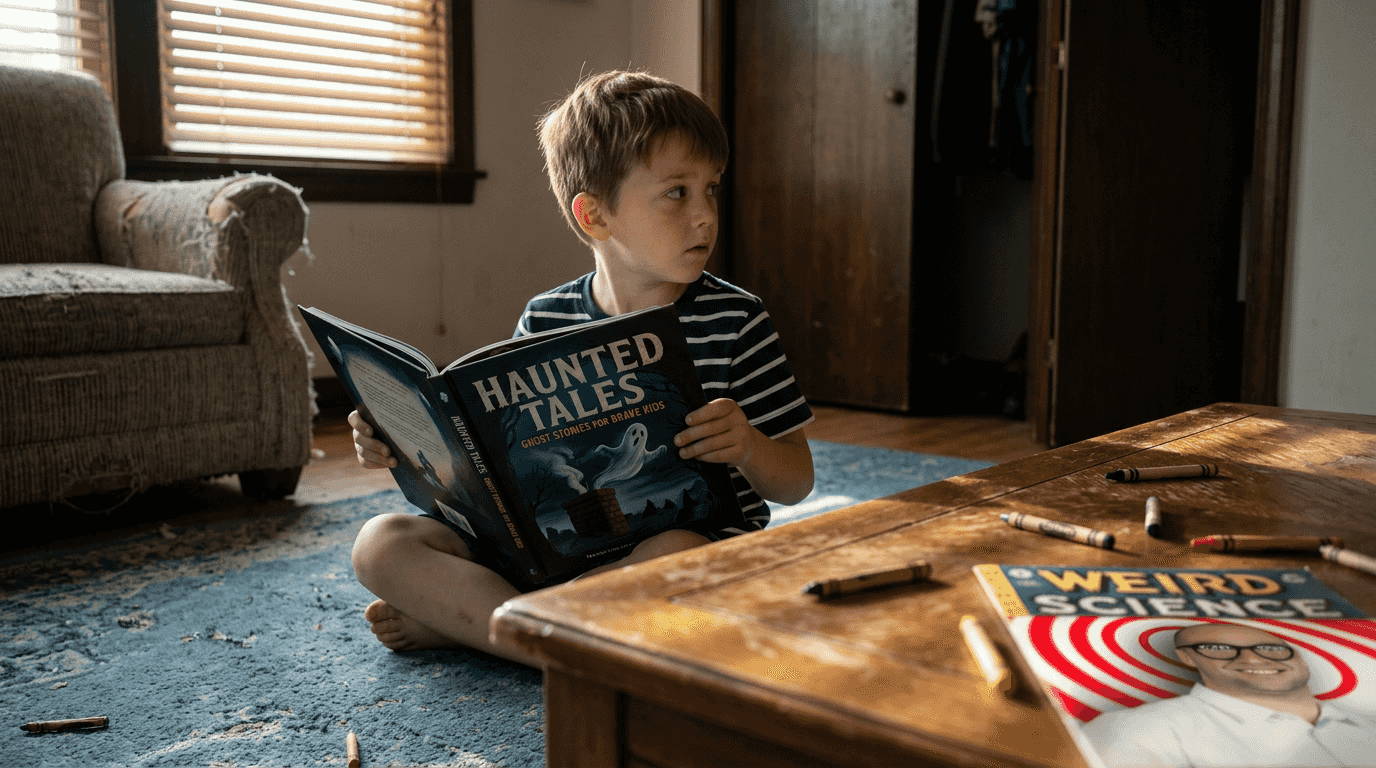
Pro Tip: When selecting scary stories for children, check illustrations and narrative tone to match the child's emotional readiness. Start with lighter tales and progress to more intense narratives as confidence grows.
Consider how different elements shape children's experiences:
| Element | Impact on Fear | Example |
|---|---|---|
| Illustrations | Amplify or soften emotional intensity | Gammell's grotesque art versus sanitized replacements |
| Humor | Provides emotional relief and distance | Silly monsters or funny character reactions |
| Resolution | Offers closure and empowerment | Protagonist defeats the ghost or escapes danger |
| Interactive pauses | Allows processing time | "And then... nothing happened" beats |
These techniques make children's scary stories effective tools for emotional development. They teach kids that fear is manageable, that courage can be learned, and that darkness has boundaries. Understanding how scary stories develop courage helps parents and educators use these narratives intentionally. If you are illustrating your own stories, explore practical illustration techniques to balance fear with accessibility.
Themes and folklore in scary stories: tapping into universal fears
Folklore and superstition form the backbone of many scary stories. These narratives confront fears of the unknown and reinforce cultural myths about the supernatural. Stories often explore the dangers of superstition, using narratives to challenge or reinforce beliefs about the supernatural. This thematic foundation gives scary stories cultural resonance beyond individual scares.
The "Scary Stories to Tell in the Dark" series exemplifies tapping primal fears through folklore. Alvin Schwartz collected urban legends, ghost stories, and folk tales that reflected shared anxieties about death, the unknown, and moral consequences. The use of folklore and traditional tales) allows stories to resonate with readers on a deeper level, tapping into universal fears and cultural anxieties. These themes create emotional connections that transcend plot mechanics.
Themes like superstition, morality, and survival differ across story types. Children's tales often emphasize moral lessons wrapped in supernatural consequences. Adult horror explores existential dread, societal collapse, and psychological breakdown. Folklore based stories bridge these categories by addressing timeless human concerns through culturally specific narratives.
Consider how themes vary across scary story categories:
| Theme | Children's Stories | Adult Horror | Folklore Collections |
|---|---|---|---|
| Superstition | Teaches caution through consequences | Explores irrational belief systems | Preserves cultural myths |
| Morality | Clear right versus wrong | Ambiguous ethical dilemmas | Traditional values and warnings |
| Survival | Overcoming challenges builds confidence | Existential struggle against chaos | Community resilience stories |
| The Unknown | Managed revelation and resolution | Sustained ambiguity and dread | Cultural explanations for mysteries |
These thematic layers give scary stories depth beyond surface scares. They connect individual fears to collective anxieties, making personal dread feel universal. Modern creepypasta folklore themes continue this tradition, adapting ancient storytelling patterns to digital formats. Early creepypasta stories demonstrate how internet culture creates new folklore while preserving timeless fear triggers.
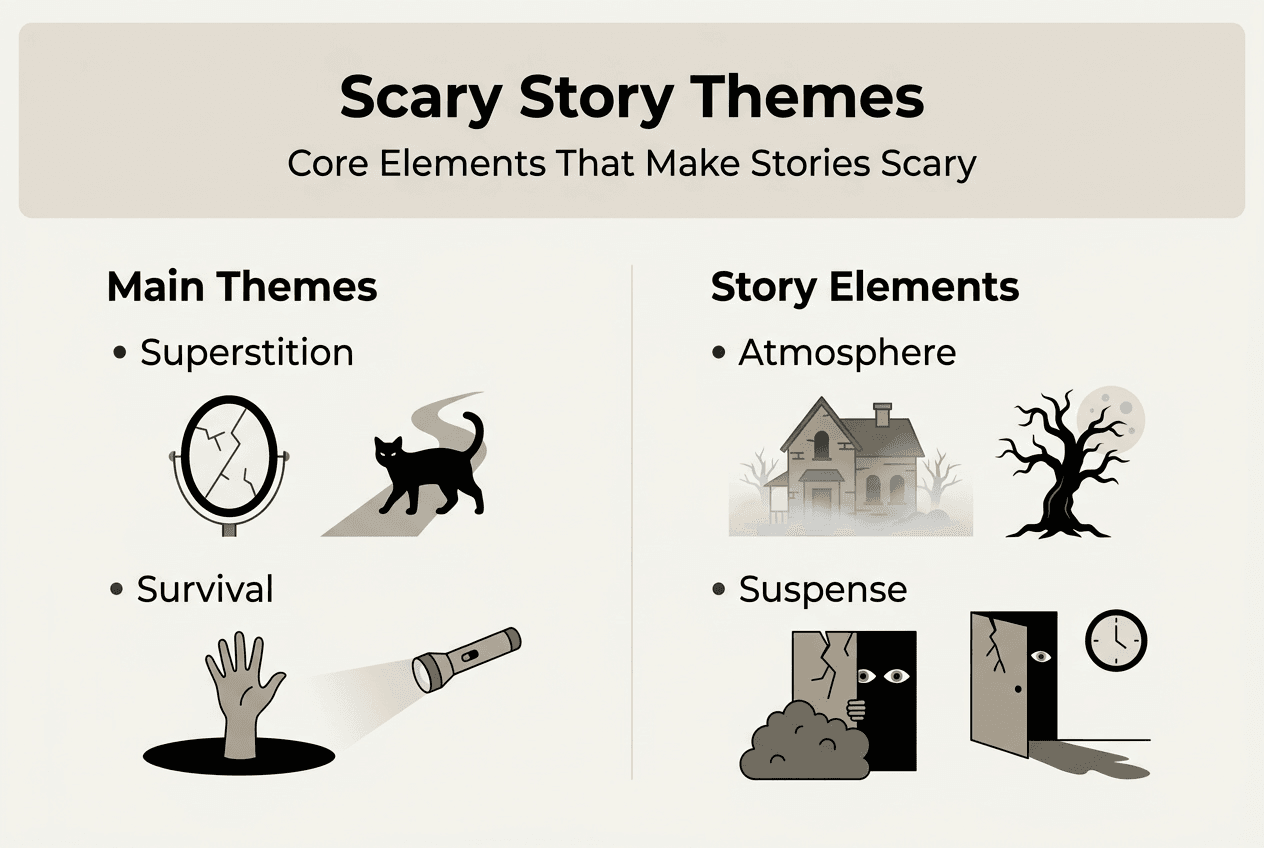
Understanding these themes helps you appreciate why certain scary stories endure across generations. They address fundamental human concerns through culturally resonant narratives, making fear both personal and communal.
Crafting lasting scares: narrative techniques and emotional impact
Key narrative techniques include building atmosphere, controlling pacing, and using suspenseful reveals. Writers create dread through environmental details, sensory descriptions, and psychological tension rather than relying solely on shock. The fear of the unknown and psychological tension heighten dread more effectively than graphic violence or jump scares. Horror fiction aims to evoke fear by delving into supernatural, psychological, or grotesque elements.
Writers strategically vary tension and shock to keep you engaged and unsettled. A slow build creates anticipation. Sudden reveals provide cathartic release. Alternating these rhythms prevents predictability and maintains emotional investment. Effective stories invite you to confront fear in a safe, imaginative space, offering controlled exposure to darkness without real danger.
Successful horror writers master atmosphere, pacing, and fear, creating stories that linger long after the last page is turned. This mastery separates memorable horror from forgettable shock. The best scary stories change how you perceive familiar spaces, making everyday environments feel threatening through careful narrative construction.
Follow these steps to craft a memorable scary story:
- Establish normalcy before introducing the threat to create contrast
- Build atmosphere through sensory details and environmental descriptions
- Control pacing by alternating tension and relief
- Reveal information strategically to maintain mystery
- Use psychological depth to make characters' fears relatable
- Create stakes that matter emotionally, not just physically
- Deliver a payoff that satisfies narrative expectations while surprising readers
Pro Tip: The most effective scares come from withholding information rather than revealing everything. Let readers' imaginations fill gaps with their personal fears.
These techniques apply across formats and audiences. Whether you write for children or adults, understanding how to manipulate atmosphere and pacing determines your story's emotional impact. Study horror writing techniques in published works to see these principles in action. Notice how successful authors balance revelation and concealment, tension and relief, shock and anticipation.
Mastering these narrative strategies transforms simple scares into lasting emotional experiences. Your stories will resonate beyond initial frights, creating memories that shape how readers perceive fear itself.
Explore curated scary story collections and more
If you want to experience the themes and techniques discussed in this guide, Mark Watson Books offers diverse horror collections and children's scary stories that showcase strong storytelling. These carefully selected works reflect the narrative strategies, thematic depth, and emotional impact explained throughout this article. You can explore folklore inspired tales, modern creepypasta narratives, and stories that balance fear with curiosity.

Each collection demonstrates how effective scary stories engage readers through atmosphere, pacing, and psychological insight. Whether you seek adult horror or age appropriate children's tales, these books embody the principles that make scary stories memorable and meaningful.
Frequently asked questions about scary stories
What is the difference between horror and thriller stories?
Horror focuses on mood, atmosphere, and psychological dread, using reactive characters who survive hostile environments. Thrillers emphasize chase mechanics, time pressure, and active protagonists solving problems. The primary emotion distinguishes them: dread versus anxiety.
Why are scary stories important for children?
Scary stories help children externalize and manage fear in safe, controlled contexts. They teach emotional regulation, build confidence through narrative resolution, and demonstrate that courage can overcome challenges. These stories provide psychological benefits beyond entertainment.
How do illustrations affect children's perception of scary tales?
Illustrations significantly shape emotional intensity and how children process fear. Grotesque artwork amplifies dread, while softer visuals make stories more accessible. The backlash against replacing Stephen Gammell's original "Scary Stories" illustrations demonstrates how visual elements define the reading experience.
What themes are most common in scary stories?
Common themes include folklore and superstition, moral consequences, survival against unknown threats, and cultural anxieties about death or the supernatural. These themes create resonance by connecting individual fears to universal human concerns.
How do writers build suspense in horror stories?
Writers build suspense through controlled pacing, strategic information reveals, atmospheric details, and psychological tension. They alternate tension and relief, withhold key information to maintain mystery, and use sensory descriptions to create immersive dread. The most effective suspense comes from what remains unseen.
Can scary stories have positive psychological effects?
Yes, scary stories offer catharsis, teach emotional regulation, and provide safe spaces to confront fears. They help readers process anxieties, build resilience, and understand that darkness has boundaries. Controlled exposure to fear through fiction can reduce real world anxiety.
Recommended
- Why scary stories help develop courage in children
- Creepypasta: Origins: Terrifying Tales Featuring Creepypasta Favorites | Mark Watson Books
- Creepypasta - Volume 3: Fifty MORE Stories: Terrifying Tales Featuring Creepypasta Favorites | Mark Watson Books
- Creepypasta - Volume 2: The Next Fifty Stories: Terrifying Tales Featuring Creepypasta Favorites | Mark Watson Books
- Storytelling in Travel Photography: Creating Memories