
Horror fiction does more than simply scare you. It holds up a mirror to society's deepest anxieties, from isolation and madness to technological dystopia and environmental collapse. While many dismiss the genre as mere entertainment filled with monsters and gore, horror fiction serves as speculative fiction that disturbs and frightens by weaving psychological and supernatural elements into metaphors for cultural fears. This guide unpacks the themes, mechanics, and cultural impact that make horror fiction a vital literary force in American culture, revealing why millions of readers turn to these dark tales to process the uncertainties of modern life.
Table of Contents
- Key takeaways
- Understanding what horror fiction really is
- Key themes and fears in horror fiction
- How horror fiction scares: mechanics and storytelling techniques
- The impact of horror fiction on American literature and culture
- Explore a curated selection of horror fiction
- Frequently asked questions
Key Takeaways
| Point | Details |
|---|---|
| Definition and purpose | Horror fiction is speculative fiction designed to disturb or examine deeper social anxieties through psychological or supernatural elements. |
| Terror versus horror | Terror builds anticipation about what might happen while horror delivers direct confrontation with the macabre. |
| Core mechanisms | Suspense, unreliable narrators, and eerie settings drive anxiety and create lasting impact. |
| Cultural impact | The genre functions as social commentary by coding real world fears into fantastical scenarios. |
Understanding what horror fiction really is
Horror fiction stands as speculative fiction designed to disturb, frighten, or scare audiences by crafting eerie atmospheres and deploying psychological or supernatural elements as metaphors for deeper societal anxieties. This genre transcends simple jump scares or gore. Instead, it operates on multiple levels, using the framework of fear to examine what makes us human and what threatens our sense of safety and identity.
The distinction between terror and horror matters significantly for understanding how these stories work. Terror builds through anticipation, creating dread about what might happen. You feel terror when footsteps approach a locked door or when shadows move at the edge of vision. Horror, by contrast, delivers the revulsion of direct confrontation with the macabre. It arrives when the door bursts open to reveal the monster or when the shadow resolves into something grotesque and undeniable.
Common mechanisms drive horror fiction forward. Suspense keeps readers turning pages, withholding information to maximize anxiety. Unreliable narrators make you question reality itself, blurring the line between madness and supernatural threat. Eerie settings like abandoned asylums, fog-shrouded graveyards, or isolated cabins amplify vulnerability. These elements combine to create stories that linger long after the final page.
Pro Tip: Psychological horror focuses on mental deterioration, paranoia, and internal fears rather than external monsters. If a story explores themes and elements of scary stories through character psychology rather than graphic violence, you're reading psychological horror. Pure gore-based horror prioritizes visceral shock and explicit imagery over subtle dread.
The genre also functions as social commentary. Zombie apocalypses explore consumerism and conformity. Haunted houses represent buried family trauma. Body horror examines anxieties about physical autonomy and medical intervention. By coding real-world fears into fantastical scenarios, horror fiction allows readers to confront uncomfortable truths from a safe distance. This metaphorical layer distinguishes literary horror from simple shock entertainment and explains why the genre maintains such enduring cultural relevance.
Key themes and fears in horror fiction
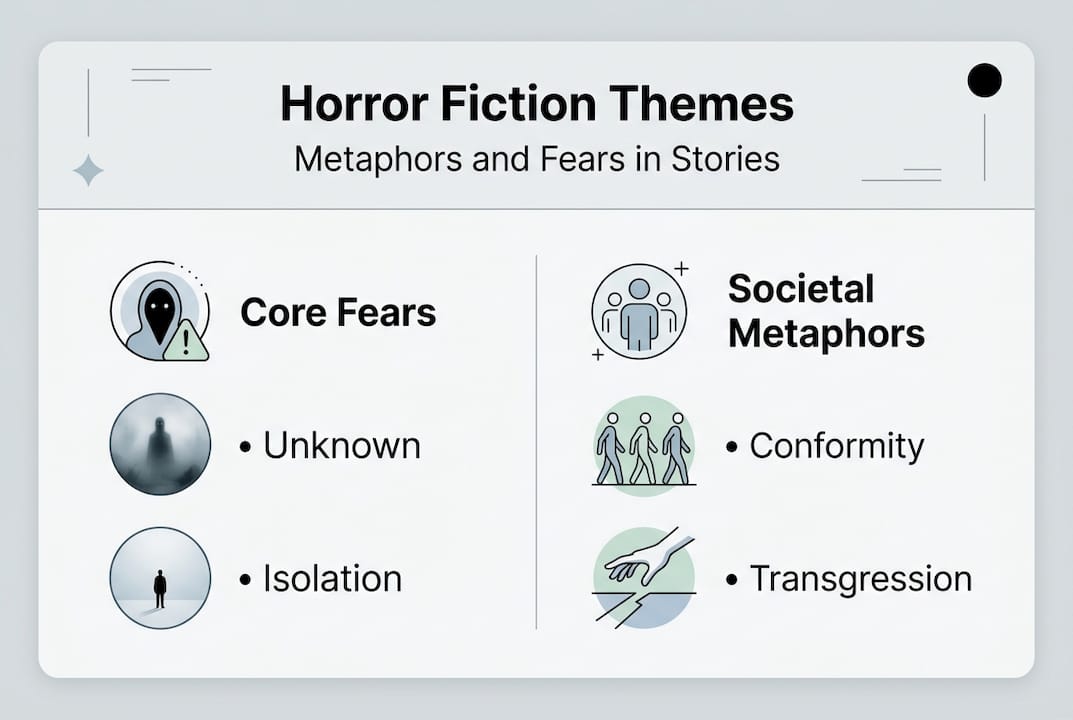
Horror fiction channels specific fears that resonate across cultures and eras. The key themes include fear of the unknown, death, the afterlife, evil, psychological dread, body horror, and social anxieties like isolation, madness, and transgression. These themes function as vessels for exploring what terrifies us individually and collectively, making abstract anxieties concrete through narrative.
The fear of the unknown drives countless horror stories. Humans crave certainty and control, so stories that withhold information or present incomprehensible threats tap into primal discomfort. Cosmic horror exemplifies this theme, presenting entities so alien that human minds cannot grasp their nature or purpose. Death and the afterlife generate existential dread, forcing characters and readers to confront mortality and what might follow. Evil, whether supernatural or human, challenges moral certainty and safety.
Psychological dread explores internal landscapes of paranoia, guilt, and mental deterioration. These stories ask whether the threat comes from outside or within, whether the protagonist can trust their own perceptions. Body horror examines physical vulnerability, transformation, and loss of bodily autonomy. Social anxieties manifest through themes of isolation, where characters face threats alone without support systems, and madness, where reality itself becomes unreliable.

| Terror | Horror |
|---|---|
| Anticipation and dread | Direct revulsion and shock |
| Fear of what might happen | Confrontation with what has happened |
| Psychological suspense | Visceral, graphic imagery |
| Example: hearing footsteps approach | Example: seeing the monster's face |
These themes serve as metaphors for horror story themes addressing real cultural and social fears. A vampire story might explore class exploitation and parasitic relationships. A werewolf tale could examine the beast within civilized society or loss of self-control. Ghost stories often process grief, unfinished business, or historical trauma. The terror vs horror distinctions shape how these themes manifest on the page.
Pro Tip: Watch for societal critiques embedded in horror themes. Stories about infection and contagion often comment on immigration fears or disease panic. Tales of surveillance and control reflect anxieties about privacy erosion and authoritarian government. Home invasion narratives explore class tensions and the illusion of suburban safety. The monster always means something beyond itself.
Transgression themes push boundaries of acceptable behavior, morality, and social norms. Characters who break taboos face consequences, but these stories also question which rules deserve breaking and which authorities merit challenging. Modern horror increasingly uses these themes to examine systemic injustice, environmental destruction, and technological overreach, proving the genre's continued relevance as social commentary.
How horror fiction scares: mechanics and storytelling techniques
Horror fiction deploys specific techniques to build atmosphere and deliver scares effectively. The mechanics involve building suspense through obscurity, contrasting terror (anticipation of dread) with horror (revulsion from the macabre), employing unreliable narration, using visceral imagery, and leveraging tropes like haunted settings, monsters, and moral ambiguity. Understanding these techniques reveals the craft behind effective horror storytelling.
-
Establish normalcy before disruption. Effective horror begins in the ordinary world, establishing characters readers care about before introducing threats. This contrast makes the horror more impactful.
-
Control information flow strategically. Withhold key details to build suspense, then reveal them at moments of maximum impact. What readers don't know creates more fear than what they do.
-
Use sensory details to immerse readers. Describe not just what characters see but what they hear, smell, and feel. The creak of floorboards, the metallic taste of fear, the chill of supernatural presence.
-
Deploy unreliable narration to destabilize reality. When readers cannot trust the narrator's perceptions, every detail becomes suspect. Is the ghost real or is the protagonist descending into madness?
-
Build to crescendos and release tension. Horror needs rhythm. Constant intensity numbs readers. Alternate between quiet dread and explosive terror to maintain emotional impact.
-
Subvert expectations and familiar tropes. The most effective scares come when readers think they know what will happen, then the story pivots in an unexpected direction.
Visceral imagery creates physical reactions in readers. Descriptions of decay, transformation, or violence trigger disgust and discomfort. However, the most skilled horror writers know restraint often works better than explicit detail. Suggestion allows readers' imaginations to conjure horrors more personal and terrifying than anything written on the page.
Common tropes provide familiar frameworks that writers can either follow or subvert. Haunted locations concentrate supernatural energy and isolate characters from help. Monsters embody specific fears, from vampires representing predatory sexuality to zombies symbolizing mindless consumption. Moral ambiguity complicates simple good versus evil dynamics, forcing characters into impossible choices where every option carries consequences.
"Terror is the feeling of dread and apprehension at the possibility of something horrific, while horror is the feeling of revulsion that usually occurs after something frightening is seen, heard, or otherwise experienced. It is the feeling one gets after coming to an awful realization or experiencing a hideous revelation."
The benefits of ghost stories extend beyond simple entertainment. These narratives help readers process fear in controlled environments, explore ethical questions, and examine cultural anxieties. The mechanics that create scares also create meaning, making horror fiction a sophisticated literary form.
Atmosphere serves as the foundation for psychological thriller effects. Setting descriptions, weather, lighting, and sound design on the page all contribute to the overall mood. A story set in perpetual twilight feels different from one unfolding in harsh fluorescent light. These choices shape reader experience as much as plot events. Understanding horror tropes and mechanics helps readers appreciate the genre's complexity and writers' deliberate craft choices.
The impact of horror fiction on American literature and culture
American Gothic tradition established horror fiction's literary credentials through authors like Edgar Allan Poe and Nathaniel Hawthorne, who focused on psychological terror and national anxieties about Puritanism, guilt, and the wilderness. This foundation evolved into diverse subgenres exploring distinctly American fears, from frontier isolation to urban decay, from technological advancement to social fragmentation.
The genre's cultural influence extends far beyond literature. Horror shapes film, television, music, and visual arts. Stephen King's novels become blockbuster movies. Jordan Peele's films spark national conversations about race and class. Horror podcasts attract millions of listeners. The aesthetic and thematic elements of horror permeate popular culture, influencing fashion, music videos, and video games.
| Metric | 2026 data |
|---|---|
| Horror fiction market share | 12.7% of adult fiction sales |
| Year-over-year growth | 22% increase in unit sales |
| Reader demographics | Evenly split between male and female readers |
| Library demand | High circulation rates, especially for new releases |
| Top themes | Eco-anxiety, AI ethics, identity exploration, social justice |
The current horror boom reflects broader cultural anxieties. Horror fiction captures 12.7% of adult fiction sales in 2026, driven by BookTok recommendations and diverse themes addressing contemporary concerns like environmental collapse and artificial intelligence ethics. This growth demonstrates the genre's ability to evolve with cultural moments, providing frameworks for processing new fears.
BookTok transformed horror fiction marketing and discovery. Young readers share recommendations through short videos, creating viral trends around specific titles and subgenres. This democratized discovery process elevates diverse voices and experimental narratives that traditional publishing might overlook. The platform's algorithm favors emotional intensity, making horror's visceral impact particularly shareable.
- Film and television adaptations bring horror narratives to wider audiences, creating feedback loops where successful adaptations drive book sales and popular books attract adaptation deals.
- Music genres like horrorcore hip hop and dark ambient electronic incorporate horror aesthetics and themes, expanding the genre's cultural footprint.
- Academic study of horror fiction examines its role in exploring gender, femininity, and social issues through frameworks of abjection and the fantastic.
- Horror conventions and fan communities create spaces for celebration and analysis, fostering ongoing engagement beyond individual works.
Horror unit sales increased 22% year-over-year through 2026, with evenly split demographics between male and female readers challenging outdated assumptions about the genre's audience. Library demand remains high, indicating horror's appeal across economic demographics. Scholarly studies confirm the genre's use for exploring gender, femininity, and social issues through literary techniques of abjection and the fantastic.
The genre enables examination of identity and marginalization in ways realistic fiction cannot. Monsters become metaphors for otherness and persecution. Supernatural threats externalize internal struggles with mental health, sexuality, or cultural displacement. Body horror explores medical trauma and autonomy. This metaphorical flexibility makes horror fiction particularly effective for exploring horror and social issues that might feel too raw or controversial in realistic narratives.
Contemporary horror fiction increasingly centers diverse voices and perspectives, moving beyond the genre's historically white, male-dominated canon. Authors from marginalized communities use horror frameworks to process specific cultural traumas and systemic oppression, creating narratives that resonate with readers seeking both representation and sophisticated social commentary. This evolution ensures horror fiction remains culturally relevant and literarily vital, attracting new generations of readers and writers to the genre's possibilities.
Explore a curated selection of horror fiction
If this exploration of horror fiction's depth and cultural significance resonates with you, discovering quality horror books that match your interests becomes the natural next step. Mark Watson Books offers a thoughtfully assembled horror book collection spanning classic Gothic tales to contemporary psychological thrillers, ensuring you find stories that deliver the specific type of fear and insight you crave.

The collection includes everything from atmospheric ghost stories to visceral body horror, from cosmic dread to social commentary wrapped in supernatural frameworks. For readers drawn to internet-age horror, the creepypasta books selection captures the collaborative, evolving nature of modern digital horror storytelling. Each title represents careful curation focused on literary quality and genuine scares rather than cheap shocks.
Pro Tip: Match horror books to your preferred themes and scare tolerance. If you enjoy psychological complexity over graphic violence, seek stories labeled literary horror or psychological thriller. For supernatural atmosphere without gore, Gothic horror and ghost stories deliver. Readers comfortable with intense imagery can explore splatterpunk and extreme horror subgenres. Browse the full range at Mark Watson Books to find your perfect match.
Frequently asked questions
What is the difference between horror and terror?
Terror creates anticipation and dread about potential threats, building suspense through what might happen. Horror delivers direct confrontation with the macabre, producing revulsion and shock from what has happened. Terror keeps you anxious about the monster approaching, while horror shows you the monster's face.
How does psychological horror differ from supernatural horror?
Psychological horror focuses on mental deterioration, paranoia, and internal fears without requiring supernatural elements, often leaving ambiguity about whether threats are real or imagined. Supernatural horror introduces ghosts, demons, or otherworldly forces as explicit external threats. Both explore horror themes but through different mechanisms.
What are classic horror settings and common tropes?
Classic settings include haunted houses, abandoned asylums, isolated cabins, fog-shrouded graveyards, and decaying mansions that concentrate supernatural energy and isolate characters. Common tropes feature unreliable narrators, moral ambiguity, monsters as metaphors, and the final girl survivor archetype. These elements provide familiar frameworks writers either follow or deliberately subvert.
Why do some readers prefer dark fantasy over horror?
Dark fantasy incorporates horror elements within fantasy worldbuilding, often providing more hope and agency for protagonists facing supernatural threats. Horror prioritizes fear and dread, frequently offering bleaker outcomes and less control for characters. Dark fantasy appeals to readers wanting atmospheric darkness without horror's relentless psychological intensity or nihilistic undertones.
What ethical considerations exist in realistic horror portrayals?
Realistic horror depicting violence, trauma, or social issues requires careful handling to avoid exploitation or gratuitous suffering. Writers must balance impact with responsibility, considering how graphic content affects readers and whether it serves the narrative's themes. Ethical horror examines difficult subjects thoughtfully rather than using trauma purely for shock value or entertainment.