
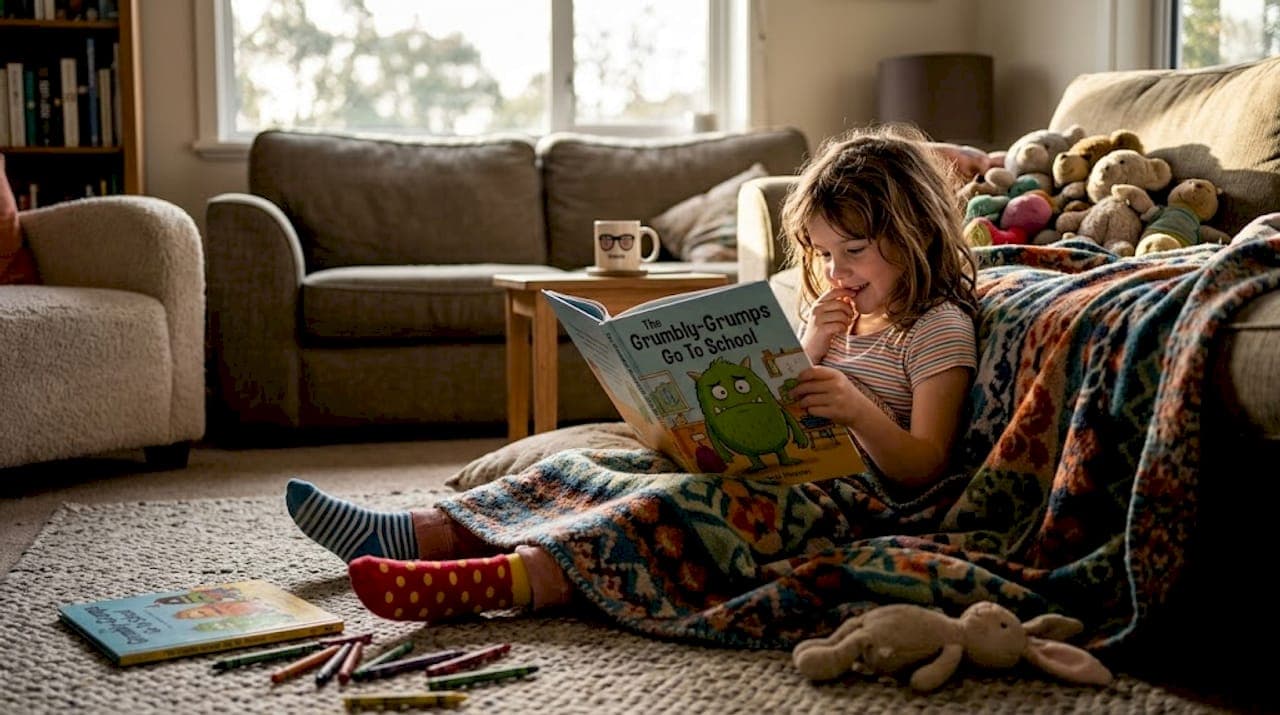
TL;DR:
- Monster stories help children face fears safely, building courage and emotional resilience.
- Age-appropriate monster books teach emotional vocabulary and promote empathy through engaging narratives.
- Guided reading with humor and reassurance enhances parent-child bonding and emotional growth.
Monster horror in children's books gets a bad reputation. Many parents assume spooky stories will terrify young readers or fuel nightmares, but the opposite is often true. When done right, monster-themed books create a vivid, safe space where kids can face their fears, build courage, and laugh out loud. These stories blend suspense with heart, turning the scary into something surprisingly empowering. Whether you're a horror enthusiast raising a little reader or a parent searching for something with more edge than a typical bedtime story, monster horror for kids delivers more than you might expect.
Table of Contents
- Why monster horror captures young imaginations
- Essential monster horror books for different ages
- Benefits of spooky stories: Emotional growth and parent-child bonding
- Addressing fears and building bravery: How to guide kids through monster horror
- Why the best monster horror for kids mixes fun and safe scares
- Discover more monster horror and children's classics
- Frequently asked questions
Key Takeaways
| Point | Details |
|---|---|
| Monsters as learning tools | Monster horror books help kids face fears and express emotions in fun, safe ways. |
| Choose age-appropriate stories | Selecting the right book for your child’s age ensures a positive, engaging experience. |
| Shared reading matters | Reading monster horror together strengthens bonds and promotes open conversations. |
| Empowerment through spooky fun | Guided exposure to harmless scares can build confidence and resilience in children. |
Why monster horror captures young imaginations
Once parents recognize the potential, the next step is understanding what makes these stories so captivating for children.
Monsters are fascinating because they are just out of reach. They live under beds, behind closet doors, and in shadowy corners of the imagination. That distance is exactly what makes them powerful storytelling tools. Kids can explore fear without real danger. The monster is scary, but it's also contained within the pages of a book.
Research into child development shows that monsters foster imagination in ways that more realistic threats simply cannot. A monster is fantastical enough to feel thrilling, yet familiar enough to spark genuine emotion. That combination is storytelling gold.
"The best monster stories don't just scare kids. They teach them that scary things can be faced, named, and even laughed at."
Books like Go Away, Big Green Monster! by Ed Emberley are a perfect example. This title empowers kids to control fears by letting them literally dismantle the monster page by page. The child becomes the one with power. That's a radical shift from passive fear to active courage.
Here's what great monster horror books consistently do for young readers:
- Create emotional vocabulary. Kids learn to name fear, excitement, and relief.
- Build resilience. Facing a fictional monster is practice for facing real challenges.
- Spark creativity. Monsters invite kids to imagine their own creatures and stories.
- Make reading thrilling. The suspense keeps pages turning in a way that flatter stories can't.
The science of scares explains that children actually seek out mild fear as a form of play. It's the same reason they love roller coasters and hide-and-seek. Monster books tap into that instinct and channel it into literacy.
Pro Tip: Read monster stories in a fun, dramatic voice. Use pauses before the scary parts. Kids respond to theatrical storytelling, and it transforms the experience from passive reading into an event.
The humor woven into many monster books is just as important as the scares. When a monster turns out to be friendly, clumsy, or misunderstood, children learn that fear can be reframed. That's not just good storytelling. That's emotional intelligence in action.
Essential monster horror books for different ages
Understanding children's interest in monsters makes it easier to pick the right story at each stage.
Not every monster book suits every age. A toddler needs bright illustrations and simple, reassuring resolutions. An eight-year-old wants real tension and maybe a twist ending. Matching the book to the child's developmental stage makes all the difference.
Here's a quick comparison of top monster horror titles by age group:
| Title | Age range | Core theme |
|---|---|---|
| Go Away, Big Green Monster! | 2 to 5 | Fear control and empowerment |
| The Monster at the End of This Book | 3 to 6 | Humor and self-awareness |
| There's a Monster in Your Book | 3 to 7 | Interactive play and bravery |
| The Color Monster | 4 to 7 | Emotional recognition |
| Scary Stories to Tell in the Dark | 10 and up | Classic horror atmosphere |
For younger kids, the classic horror guide points to titles that prioritize playfulness over genuine fright. These books use monsters as vehicles for humor and reassurance, not terror.
Key picture books for younger kids include The Monster at the End of This Book, There's a Monster in Your Book, and other age-appropriate titles that put the child in control of the narrative. That sense of agency is crucial at early ages.
For older readers, the tone can shift. More complex plots, morally ambiguous monsters, and genuine suspense become appropriate. This is where illustrated horror books shine, pairing vivid artwork with stories that linger in the mind.
Here are five recommended titles by reading level:
- Go Away, Big Green Monster! (ages 2 to 5) for first introductions to fear.
- The Monster at the End of This Book (ages 3 to 6) for interactive humor.
- There's a Monster in Your Book (ages 3 to 7) for participatory storytelling.
- The Color Monster (ages 4 to 7) for emotional learning.
- Scary Stories to Tell in the Dark (ages 10 and up) for older readers ready for real chills.
Did you know? A growing trend in children's publishing focuses on emotional intelligence through monster characters. Publishers are increasingly pairing spooky visuals with stories about feelings, friendship, and self-acceptance. Monster horror isn't just getting scarier. It's getting smarter.
Benefits of spooky stories: Emotional growth and parent-child bonding
After finding the right books, parents and fans can tap into several developmental benefits during storytime.
Monster horror does something quietly remarkable. It gives kids permission to feel big emotions in a small, safe setting. Fear, relief, excitement, and even empathy all show up in these stories. That emotional range is exactly what children need to develop strong social and psychological skills.
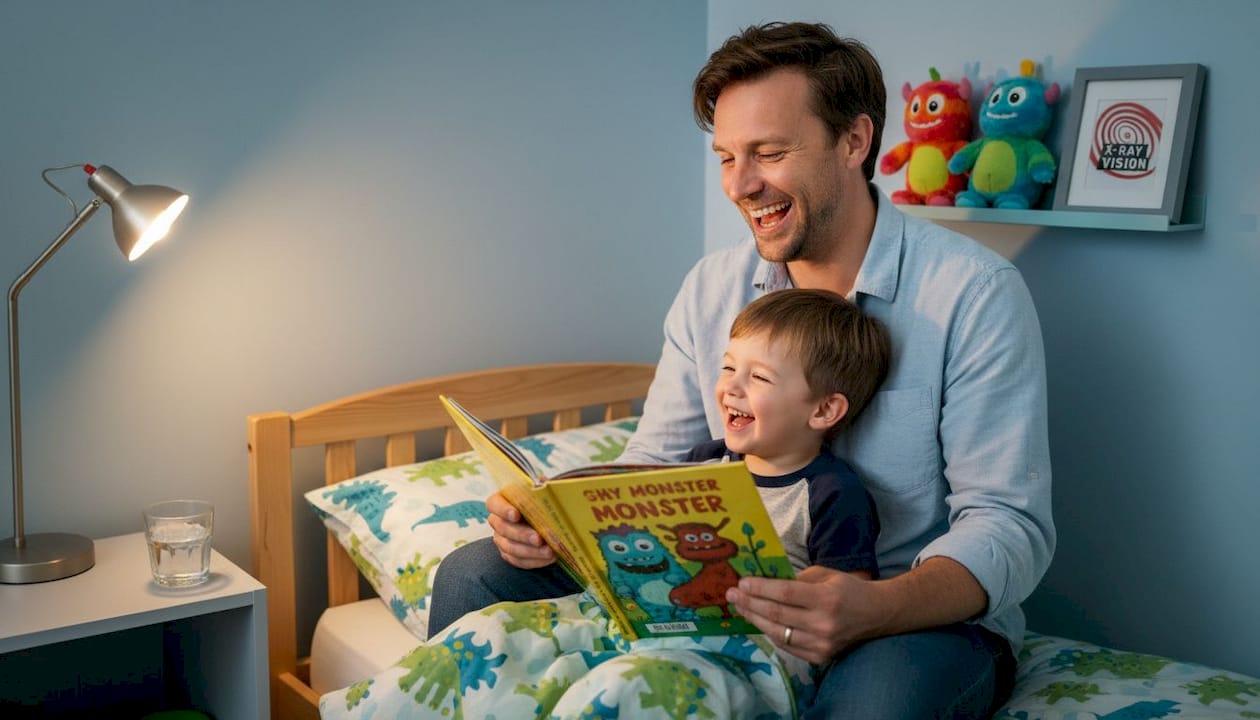
The educational value of scary stories is well-documented. When kids engage with fictional fear, they practice regulating their emotional responses. That practice carries over into real life.
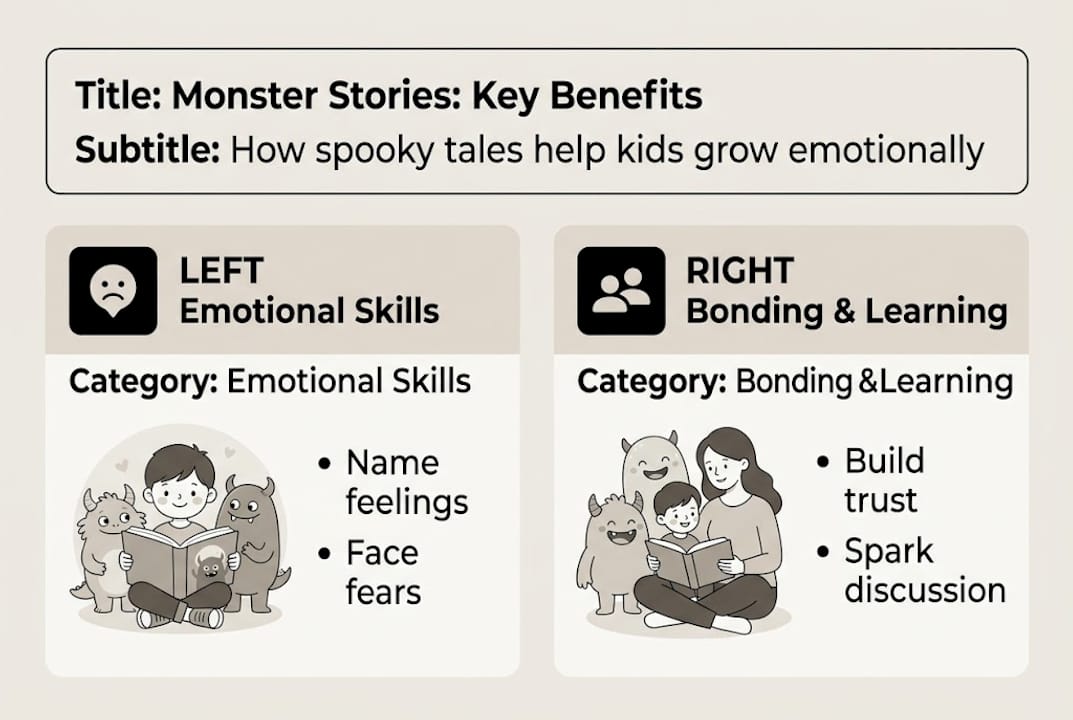
The Color Monster by Anna Llenas is a standout example. This title helps explore emotions through monster imagery, giving children a concrete visual language for feelings that are otherwise hard to describe. Anger is red. Sadness is blue. Fear has a face, and that face is a monster.
Here's what the research and reader experience consistently show:
- Emotional regulation. Kids who read about fear in fiction show greater ability to manage real anxiety.
- Empathy development. Monster stories often humanize the "scary" character, teaching compassion.
- Communication skills. Spooky stories naturally prompt conversations about feelings and safety.
- Shared joy. Reading together creates positive associations with books and learning.
The power of illustrations in monster books deserves special mention. Bold, expressive artwork makes abstract emotions tangible. A child who can't yet verbalize anxiety can point to a picture and say, "That's how I feel."
| Benefit | How monster books deliver it |
|---|---|
| Emotional vocabulary | Monster characters represent specific feelings |
| Bravery | Child controls or defeats the monster |
| Parent-child bonding | Shared reading creates trust and conversation |
| Love of reading | Suspense and humor make books exciting |
Pro Tip: After reading a monster story, ask your child, "Was the monster really scary, or just misunderstood?" That single question can open up a rich conversation about fear, empathy, and perspective.
The why horror books matter goes beyond entertainment. These stories are tools. Used well, they help families build the kind of emotional closeness that makes kids feel safe enough to talk about what actually scares them.
Addressing fears and building bravery: How to guide kids through monster horror
While bonding and learning through monster stories is valuable, being thoughtful about approach helps maximize gains and fun.
Not every child responds to monster horror the same way. Some kids lean in with wide eyes and delighted grins. Others need a slower, gentler introduction. The good news is that with the right approach, almost any child can benefit from these stories.
Here are five practical steps for reading monster horror with your child:
- Start with humor-forward titles. Books like The Monster at the End of This Book ease kids in with laughter before tension.
- Preview the book yourself. Know what's coming so you can prepare your child without spoiling the fun.
- Read interactively. Pause, ask questions, and let your child predict what happens next.
- Name the feelings out loud. Say, "That part felt a little scary, didn't it? What do you think the monster is feeling?"
- End with reassurance. Close every session with a calm, warm moment. A hug, a laugh, or a simple "You were so brave."
Books like Go Away, Big Green Monster! are built for exactly this kind of guided reading. The title empowers kids to control fears by structuring the story so the child commands the monster to disappear. That's not passive reading. That's active bravery.
"When a child tells a monster to go away and it actually goes, something shifts. They realize they have power over fear. That's a lesson that sticks."
Understanding horror and resilience means recognizing that mild, managed fear is a growth experience. It's not something to avoid. It's something to navigate together.
The goal isn't to eliminate fear. It's to teach kids that fear is survivable, manageable, and sometimes even fun. Monster horror books are one of the most effective tools for delivering that lesson in a format children actually love. Explore more about courage in children to understand just how transformative these reading experiences can be.
Why the best monster horror for kids mixes fun and safe scares
With practical and empathetic approaches laid out, it's worth considering a broader view on what makes monster horror lastingly valuable for young readers.
Here's a perspective that often gets overlooked: pure fright doesn't work for kids. A story that only scares leaves a child unsettled, not enriched. The monster books that genuinely matter are the ones that make children laugh, think, and feel seen.
Classic jump-scare mechanics, borrowed from adult horror, fall flat in children's literature. Kids need resolution. They need the monster to be defeated, befriended, or understood. That arc from fear to relief to empowerment is what creates lasting impact.
The books that parents return to again and again share one quality: they invite adults in, not just children. When a parent is genuinely engaged, laughing at the same twist, feeling the same suspense, the experience becomes shared rather than supervised. That's when monsters foster imagination at its most powerful.
Monster horror for kids isn't a lesser genre. It's a precise art form that demands humor, heart, and just enough edge to feel real.
Discover more monster horror and children's classics
Ready for more imaginative and safe scares? Here's where to find the best picks for your family.
Mark Watson has spent years writing at the intersection of horror and children's literature, and that experience shapes every title in his collection. Whether you're hunting for a spine-tingling read for yourself or a perfectly pitched monster story for the young reader in your life, there's something waiting for you.

Browse the full horror collection for titles that deliver genuine chills with craft and intention. Or explore the children's books collection for carefully curated stories that balance fun, fear, and emotional depth. These aren't random picks. They're books chosen because they work. DON'T WAIT. Your next favorite read is one click away.
Frequently asked questions
Are monster horror books safe for young children?
Yes, when chosen appropriately for age and read together, these books help children process fear in a safe and playful way. Books like Go Away, Big Green Monster! empower kids to control fears rather than be overwhelmed by them.
How do I select the right monster horror book for my child?
Choose books designed for your child's age group, with playful themes and positive resolutions, to ensure appropriate content and tone. Key picture books for younger kids include playful and age-appropriate titles that prioritize empowerment over fright.
What are some recommended monster horror books for teaching emotions?
The Color Monster and similar titles use monster characters to help children recognize and discuss their feelings. This book helps explore emotions through vivid monster imagery that gives kids a visual language for complex feelings.
Can reading monster horror books strengthen parent-child bonds?
Yes, sharing these stories together promotes open conversation, trust, and joyful learning. Reading empowers kids and bonds families by creating shared emotional experiences that invite genuine connection.