
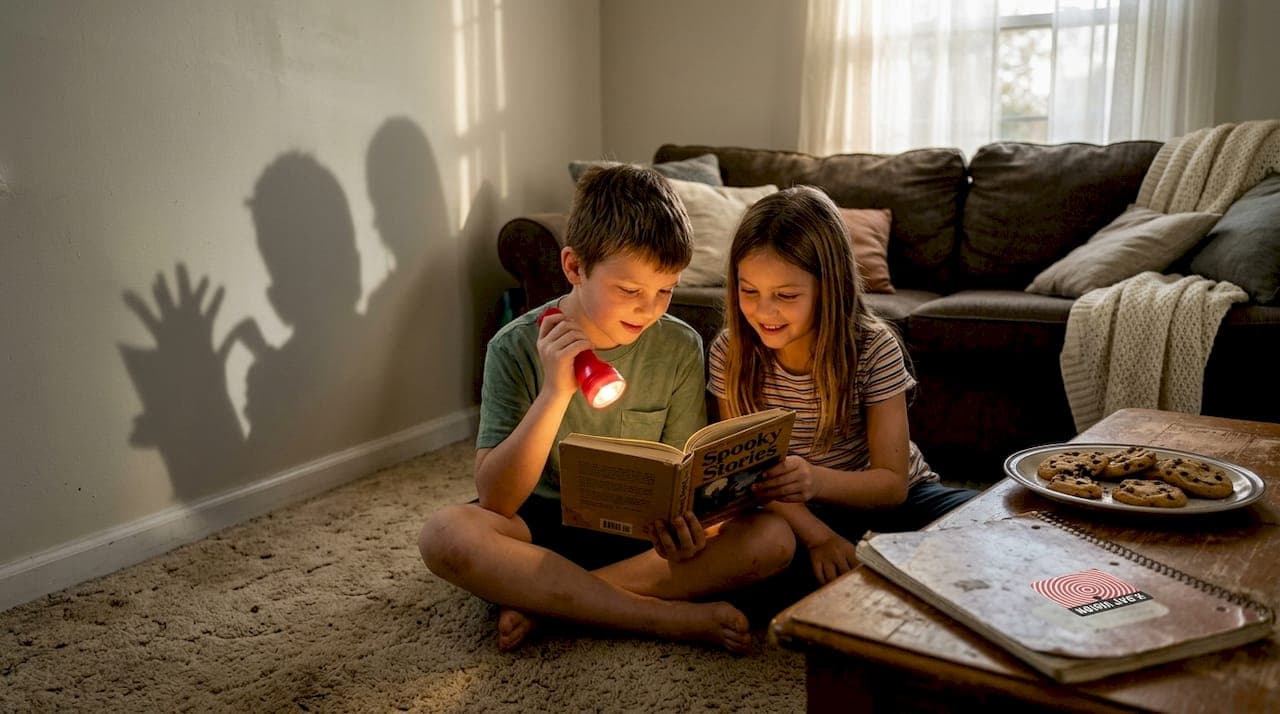
A striking 93% of children enjoy at least one recreational fear activity, yet many parents and educators still worry that spooky tales cause more harm than good. That instinct is understandable. But the research tells a different, far more exciting story. Spooky tales are not just thrilling entertainment. They are powerful tools for emotional growth, literacy, and resilience. This article breaks down the psychology behind children's love of scary stories, what the evidence says about benefits and risks, and how you can use these stories intentionally to spark a lifelong love of reading.
Table of Contents
- What draws kids to spooky tales?
- How spooky stories benefit development
- Navigating the risks: Finding the right balance
- Practical tips for sharing spooky tales
- A fresh take: How adults can embrace the positive side of spooky tales
- Explore safe and smart spooky story options
- Frequently asked questions
Key Takeaways
| Point | Details |
|---|---|
| Kids seek safe thrills | Most children are naturally drawn to recreational fear and spooky tales as part of healthy play. |
| Big benefits, small risks | Age-appropriate scary stories support emotional development and literacy when balanced with guidance. |
| Mind the warning signs | Watch for excessive fear or anxiety and adjust story choices as needed for each child's needs. |
| Parents as guides | Careful story selection and open conversation help spooky tales become powerful tools for learning and bonding. |
What draws kids to spooky tales?
Children are natural thrill-seekers. From the moment they can follow a story, many are drawn to tension, mystery, and the delicious shiver of something just a little bit scary. This is not a sign of trouble. It is actually a healthy and deeply human impulse.
Psychologists call this recreational fear, the voluntary experience of fright in a safe setting. Think haunted houses, ghost stories around a campfire, or a suspenseful picture book read under a blanket. Popular activities include scary stories, spooky games, and thrill rides. Kids seek these out because the brain gets a rush of excitement without any real danger.
So what fuels this pull? A few key forces are at work:
- Curiosity: Children are wired to explore the unknown. Scary stories let them peek behind the curtain of fear safely.
- Sensation-seeking: Some kids crave heightened emotional experiences. A good ghost story delivers that rush in a controlled way.
- Safe risk-play: Just like climbing a tall tree, spooky tales let kids practice managing big feelings without real consequences.
- Social bonding: Sharing a scary story creates connection. The shared gasp, the nervous laughter, the group huddle.
Sensation-seeking and morbid curiosity are recognized drivers of children's interest in scary content, though the American Academy of Pediatrics notes that intensity and age-appropriateness matter enormously.
"The appeal of fear in fiction is not about wanting to be scared. It is about wanting to feel brave."
There is a critical difference between healthy thrill and real distress. A child who laughs nervously at a ghost story and then sleeps soundly is experiencing recreational fear. A child who cries, refuses to sleep, or becomes anxious has crossed into real distress. Understanding this line is the first step for any parent or educator.
Exploring the benefits of ghost stories and understanding the themes of scary stories can help you recognize what makes these tales so magnetic for young readers.
How spooky stories benefit development
Here is something that might surprise you. Age-appropriate scary stories are not just harmless fun. They are actively good for children's development. The AAP highlights benefits including resilience, emotional processing, and literacy gains when stories are prioritized over graphic media.
Here are four key developmental benefits:
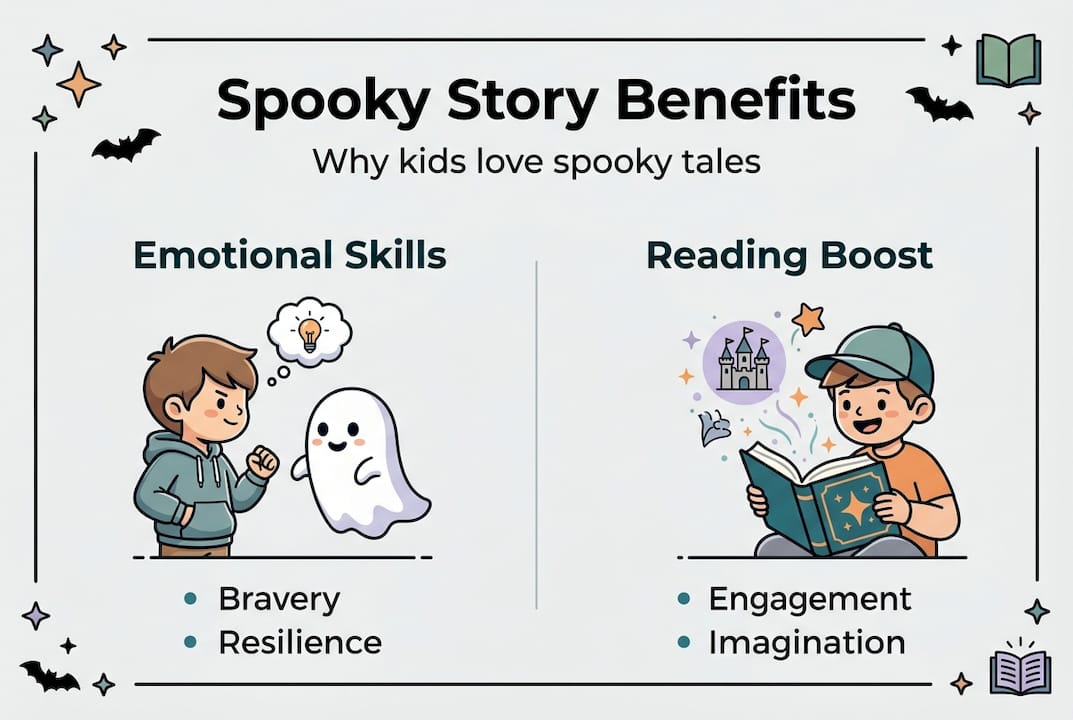
- Emotional regulation: When a child feels scared reading a story and then feels relief at the resolution, they practice managing big emotions in a safe space. Over time, this builds real coping skills.
- Courage and confidence: Facing fictional fears helps children feel braver in real life. Stories where young characters overcome monsters or solve mysteries model problem-solving and resilience.
- Reading motivation: Spooky stories are genuinely exciting. Kids who struggle to engage with reading often light up for a well-crafted scary tale. That motivation translates into stronger literacy habits.
- Social and family connection: Reading spooky stories together creates shared experiences. Discussing what was scary, what was funny, and what was surprising builds communication skills and deepens bonds.
Here is a quick look at how spooky stories compare to other popular genres for key developmental outcomes:
| Outcome | Spooky stories | Adventure stories | Realistic fiction |
|---|---|---|---|
| Reading motivation | Very high | High | Moderate |
| Emotional regulation practice | Very high | Moderate | High |
| Courage building | High | High | Moderate |
| Family discussion prompts | High | Moderate | High |
| Vocabulary growth | High | High | High |
Spooky stories consistently punch above their weight when it comes to engagement and emotional learning. Exploring how courage develops from scary stories and the imaginative benefits of monsters in literature gives you an even richer picture of why these tales matter.
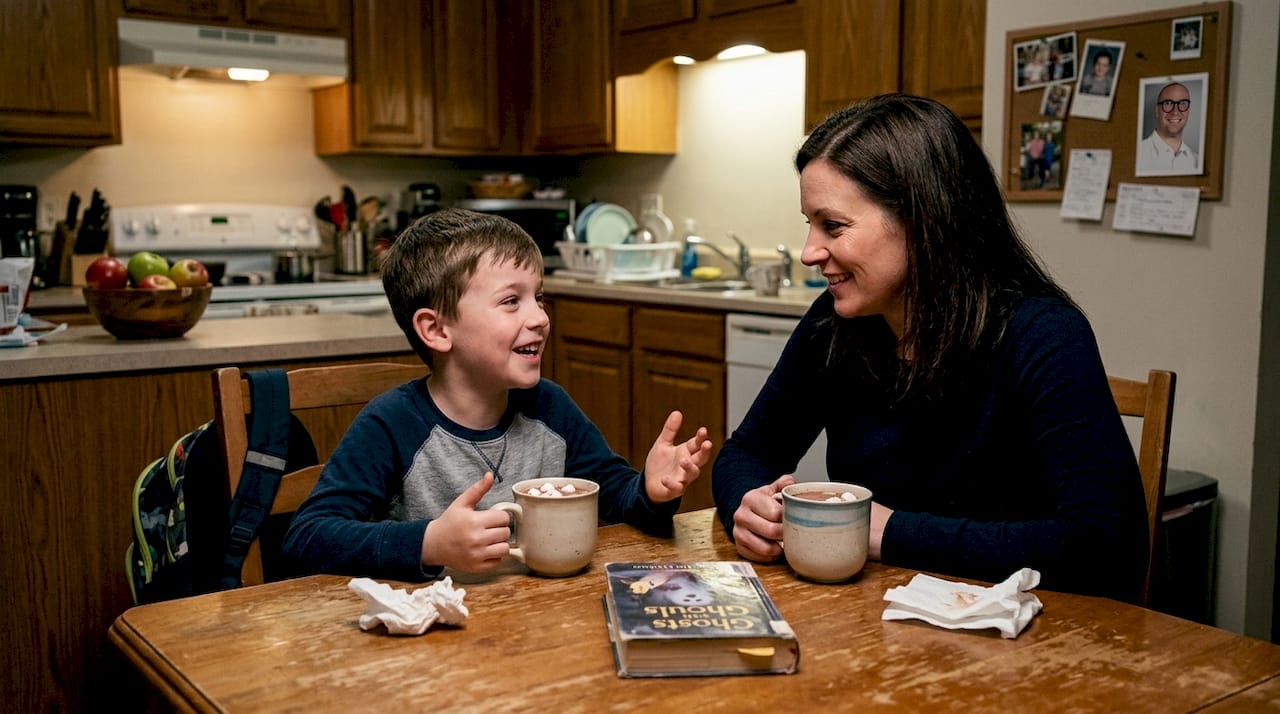
Pro Tip: After reading a spooky story together, ask your child, "What would YOU have done in that moment?" This simple question turns a fun read into a powerful conversation about bravery and problem-solving.
Navigating the risks: Finding the right balance
Spooky tales are not a free-for-all. Like any powerful tool, they need to be used thoughtfully. The AAP warns that violent media can cause nightmares, anxiety, and aggression in children, and that benefits only emerge with age-appropriate, controlled exposure.
Here is a practical guide to age-appropriate intensity levels:
| Age group | Recommended intensity | What to avoid |
|---|---|---|
| Ages 4 to 6 | Mild suspense, friendly monsters | Graphic violence, real-world threats |
| Ages 7 to 9 | Spooky mysteries, light supernatural | Gore, intense psychological horror |
| Ages 10 to 12 | Classic horror themes, ghost stories | Extreme violence, adult horror |
| Ages 13 and up | Teen horror, suspense thrillers | Gratuitous content, trauma-heavy themes |
Watch for these red flags that a story may be too intense for your child:
- Repeated nightmares or sleep disturbances after reading
- Increased anxiety about everyday situations like the dark or being alone
- Avoidance of places or activities connected to story themes
- Sudden aggression or irritability
- Reluctance to discuss the story or visible distress when it is mentioned
"Every child is different. What thrills one may genuinely frighten another. Tune in to your child's signals, not just their words."
It is also worth noting that boys tend to seek out more intense content on average, while some children, regardless of gender, are simply more sensitive. There is no shame in adjusting your choices for a sensitive child. A classic horror guide for children and a solid guide to horror genres can help you navigate the landscape with confidence.
Practical tips for sharing spooky tales
Knowing that spooky stories are beneficial is one thing. Knowing how to share them well is another. Here is a step-by-step approach that works for both parents and educators.
- Preview before sharing. Read or skim the story yourself first. Check for triggers like death of a parent, real-world violence, or intense psychological themes that might hit too close to home for your child.
- Match the story to the child. Use the age guidelines above as a starting point, but adjust for your individual child's temperament. About 7% of children do not enjoy recreational fear at all, so never pressure a reluctant reader.
- Involve kids in choosing. Let children browse and pick stories they are curious about. This builds ownership and trust. When a child chooses the book, they feel in control of the experience.
- Read together when possible. Shared reading amplifies the fun and gives you a natural moment to pause, check in, and discuss what is happening in the story.
- Talk after the story ends. Validate feelings, ask open questions, and celebrate brave moments in the narrative. This turns the story into a learning conversation.
Pro Tip: Create a simple "spooky story ritual" with your child, like reading by flashlight or making hot cocoa beforehand. Rituals signal safety and make the experience feel special rather than alarming.
Understanding the creative power of scary stories and why horror books matter can give you even more confidence in bringing these stories into your home or classroom with purpose.
A fresh take: How adults can embrace the positive side of spooky tales
Here is an uncomfortable truth most parenting articles skip: adults are often more afraid of spooky stories than children are. We project our own anxiety onto kids and assume that anything scary must be harmful. But that instinct can actually rob children of a genuinely valuable experience.
Spooky tales are one of the oldest storytelling traditions in human history. Every culture has them. They exist because fear, when safely contained in fiction, teaches us something real about courage, empathy, and the unknown. When you guide a child through a scary story and come out the other side laughing or talking, you are not just entertaining them. You are building something lasting.
The opportunity here is enormous. Intentional use of spooky stories can strengthen family bonds, ignite a love of reading, and give children emotional tools they will carry for life. Explore the benefits for readers and kids and you will quickly see that the evidence is on your side. The goal is not to shield children from all things scary. It is to be present, curious, and thoughtful as you explore those stories together.
Explore safe and smart spooky story options
Ready to turn these insights into action? Finding the right story makes all the difference, and that is exactly where Mark Watson's carefully crafted collections come in.

Mark Watson writes with young readers and families in mind, blending just the right amount of suspense with heart and humor. Whether you are looking for children's spooky books that spark imagination without overwhelming young readers, or family-friendly horror that older kids and adults can enjoy together, there is something here for every reader. Browse the collections and find a story that thrills, teaches, and brings your family closer. The perfect spooky read is waiting.
Frequently asked questions
Are spooky tales bad for young children?
Spooky tales are safe and even beneficial when they are age-appropriate and followed by open conversation. The AAP recommends avoiding violent or overly intense media and prioritizing controlled, age-matched exposure.
What are some signs a spooky story is too much for a child?
Watch for repeated nightmares, new anxieties, or a child who suddenly refuses to engage with the story. Overwhelming fear can cause sleep issues and ongoing anxiety, which are clear signals to dial back the intensity.
Do all children enjoy spooky tales?
No. About 7% of children do not enjoy recreational fear, and boys tend to seek out more intense content than girls on average. Always follow the individual child's lead.
How can spooky tales help with literacy?
Scary stories are highly engaging, which drives reading motivation and builds stronger literacy habits over time. The AAP prioritizes stories over graphic media specifically because of these literacy gains.