
TL;DR:
- Children enjoy recreational fear activities like scary stories, which promote resilience and emotional development. Safe exposure to age-appropriate horror helps children practice emotion regulation, build self-efficacy, and foster social bonds. Proper curation and debriefing are essential to maximize benefits and minimize risks of scary stories.
Most parents and teachers instinctively want to shield children from anything frightening. That protective urge makes sense. But here's what the research actually says: 93% of children enjoy recreational fear activities like scary stories, and that enjoyment is directly linked to emotional development and anxiety prevention. Far from being harmful, age-appropriate horror can be one of the most powerful tools in your literacy and emotional resilience toolkit. This article explores exactly how scary stories work their magic, what the evidence shows, and how you can use them confidently at home and in the classroom.
Table of Contents
- The emotional laboratory: How scary stories build resilience
- Literacy in the shadows: How scary stories ignite reading skills
- Age-appropriateness and guidance: Balancing benefits and risks
- Practical applications: Bringing scary stories into classrooms and homes
- Rethinking fear: Why hiding from scary stories may do more harm than good
- Explore age-appropriate scary stories and resources
- Frequently asked questions
Key Takeaways
| Point | Details |
|---|---|
| Safe fear is beneficial | Children who enjoy appropriately scary stories build resilience and emotional skills. |
| Literacy gains through horror | Scary tales motivate reluctant readers and teach essential narrative structures. |
| Curate for age and context | Matching stories to children's age limits risks like nightmares while keeping benefits. |
| Discussion amplifies value | Talking about fears after reading strengthens both emotional understanding and reading enjoyment. |
The emotional laboratory: How scary stories build resilience
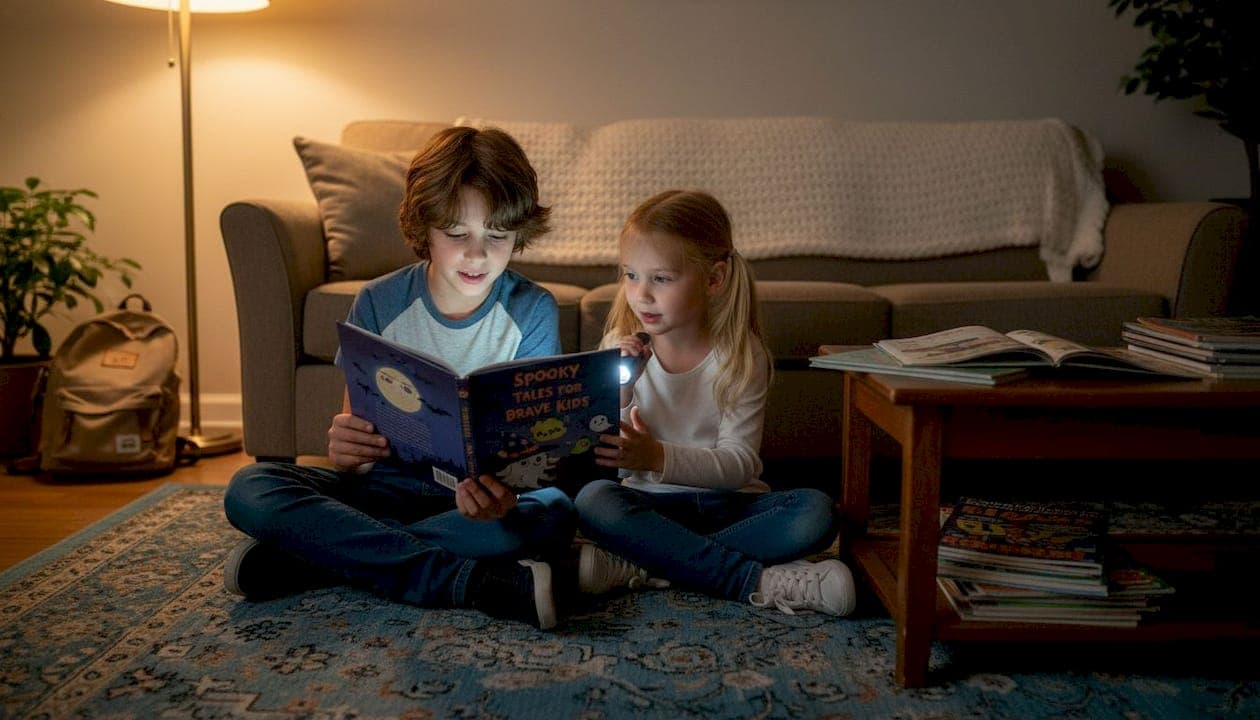
Think of a scary story as a flight simulator for emotions. Kids get to experience fear, tension, and suspense in a completely controlled environment. Nothing bad actually happens to them. But their brains and bodies practice responding to threat, processing dread, and coming out the other side feeling okay. That's powerful.
Scary stories provide safe emotional laboratories for children to explore fear, fostering resilience and social skills. When a child feels their heart race during a spooky chapter and then closes the book feeling fine, they've just practiced emotion regulation without any real-world risk. That's not a small thing. That's a skill they'll carry forever.
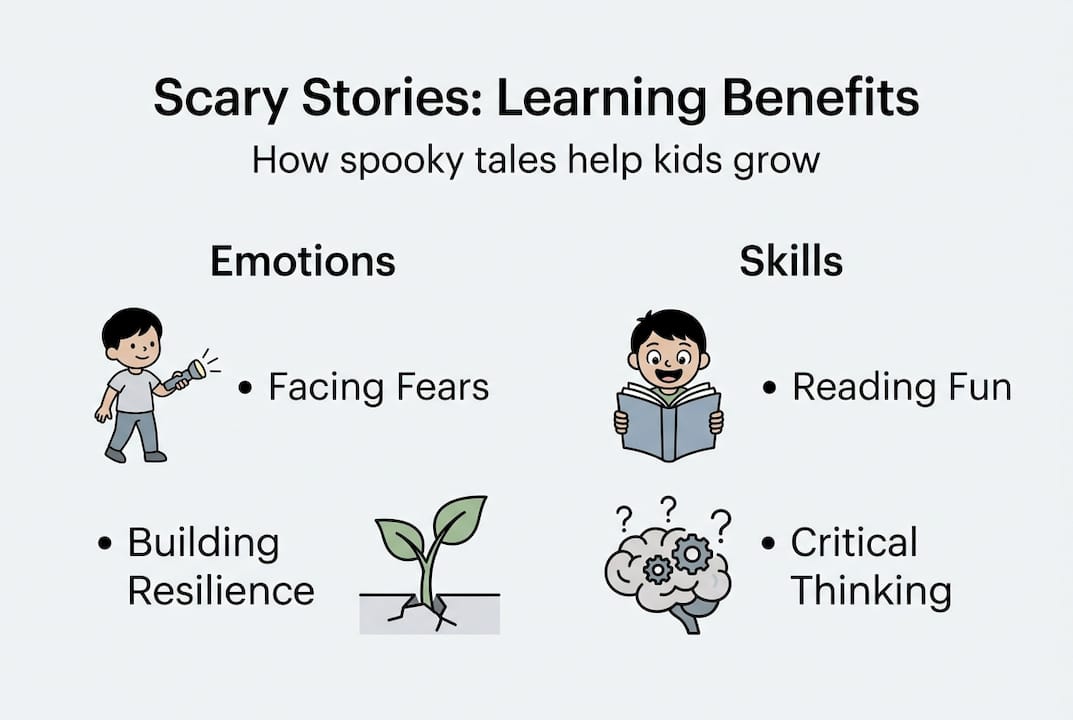
The numbers back this up. High prevalence of recreational fear enjoyment among children is linked to lower anxiety and stronger coping mechanisms, partly because risky play teaches kids that fear is survivable. Scary stories are a form of that risky play, just with words on a page.
Here's what children actually gain from age-appropriate scary stories:
- Increased self-efficacy: Finishing a scary story feels like an achievement. Kids think, "I got through that."
- Emotion regulation: They learn to sit with discomfort without shutting down.
- Social bonding: Sharing a scary story creates connection. Kids talk about it, laugh about it, and process it together.
- Problem-solving: Many horror plots require characters to think creatively under pressure, modeling that behavior for young readers.
"When children encounter fear in a safe, fictional context, they build the emotional muscles they need to handle real-world challenges with confidence."
Explore how scary stories and courage are connected, and you'll see this isn't just theory. It's observable in kids who read widely across genres, including the spooky ones.
Pro Tip: After a scary story session, ask kids two simple questions: "What moment scared you most?" and "How did the character handle it?" This brief debrief turns a fun read into a genuine emotional learning experience.
You can also tap into how monsters and imagination work together in children's literature to understand why these stories resonate so deeply with young minds.
Literacy in the shadows: How scary stories ignite reading skills
Beyond emotional benefit, scary stories also open up powerful opportunities for literacy education. And this is where things get really exciting for educators.
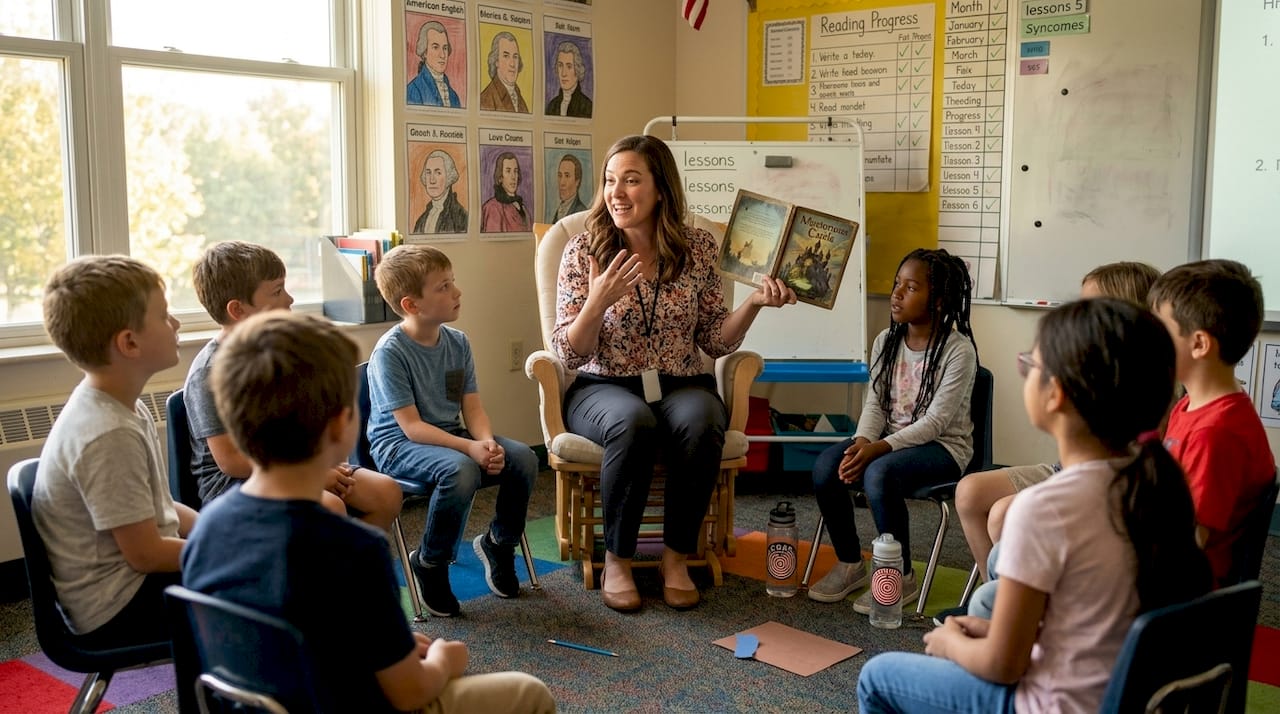
Here's a challenge many classrooms face: reluctant readers. Kids who won't pick up a book voluntarily. Horror changes that equation fast. Scary stories promote literacy by engaging reluctant readers and teaching story elements like suspense, build-up, and consequence in ways that feel urgent and alive. When a child needs to know what happens next, they read faster, more attentively, and with genuine investment.
Horror increases reading for pleasure at a time when overall reading engagement is declining. That's not a coincidence. Scary stories create stakes. And stakes create readers.
| Literacy skill | How scary stories teach it |
|---|---|
| Narrative structure | Clear setup, rising tension, climax, resolution |
| Vocabulary in context | Vivid, atmospheric language used purposefully |
| Inference | Readers must predict and interpret hidden threats |
| Cause and effect | Actions have clear, often dramatic consequences |
| Emotional literacy | Characters model fear, courage, and decision-making |
Practical ways to use scary stories for reading instruction:
- Suspense mapping: Have students chart the tension arc of a story. Where does it rise? Where does it peak?
- Vocabulary spotlighting: Pull out evocative words and discuss why the author chose them.
- Rewrite the ending: Ask students what they would do differently if they were the character.
- Compare two stories: How do different authors build dread? What techniques do they share?
- Read aloud sessions: Hearing a scary story performed builds fluency and comprehension simultaneously.
If you're curious about the craft side, learning about writing scary stories gives educators a behind-the-scenes look at the techniques authors use, which translates directly into richer classroom discussions. You can also explore scary story elements in depth, or discover the specific ghost story benefits for young readers.
Age-appropriateness and guidance: Balancing benefits and risks
Not all scary stories are created equal. That's the honest truth. The benefits we've described depend entirely on the right match between child and content. Get it wrong, and you can cause real distress.
Age-appropriate scary stories build emotional resilience, but mismatched content can cause nightmares, and the American Academy of Pediatrics recommends curation and debriefing as essential practices. The risks are real when content exceeds a child's developmental readiness.
| Factor | Age-appropriate horror | Inappropriate horror |
|---|---|---|
| Themes | Mild mystery, gentle ghosts, manageable suspense | Gore, graphic violence, adult trauma |
| Outcomes | Resilience, curiosity, reading engagement | Nightmares, anxiety, desensitization |
| Character resolution | Problems are solved, fear is overcome | Hopeless endings, unresolved dread |
| Adult role | Guide and debrief | Often absent or reactive |
Potential risks include nightmares, aggression, and desensitization when content is not age-appropriate. The contrast between benefits and risks is stark, and it all comes down to curation.
Here's a numbered framework for responsible scary story use:
- Preview the content yourself before sharing it with children.
- Match the theme to the child's age and emotional maturity, not just their reading level.
- Set the scene positively so kids know it's a fun, safe experience.
- Read together when possible, especially for younger children.
- Debrief afterward with open questions about feelings and plot.
- Watch for signs of distress and be ready to pause or pivot.
- Celebrate their bravery for engaging with something challenging.
Pro Tip: A child's reaction during the story matters less than how they feel an hour later. Some kids scream and laugh simultaneously. That's a good sign. Lingering fear or sleep disruption is your cue to dial back the intensity.
For a deeper look at curating the right content, the age-appropriate horror guide is a fantastic resource, and understanding the science of scary tales helps you make smarter choices.
Practical applications: Bringing scary stories into classrooms and homes
With safety and appropriateness in mind, here's how you can leverage scary stories for emotional and literary growth right now.
Start small. A single short story or picture book with a spooky theme is enough to open the door. You don't need a full horror curriculum. You need one good story and a willingness to talk about it afterward.
Scary stories provide rich opportunities for social bonding and conversation about emotional responses, making them ideal for group settings like classrooms or family read-aloud nights.
Activity ideas that work brilliantly:
- Dramatizations: Let kids act out the scariest scene. Movement and play reduce anxiety and deepen comprehension.
- Draw your fear: Ask children to illustrate the monster or moment that scared them most. Externalizing fear through art is genuinely therapeutic.
- Fear maps: Students draw a story's emotional journey, marking where they felt tense, relieved, or surprised.
- Story circles: Each child adds one sentence to a group scary story. It builds narrative skills and shared confidence.
- Discussion prompts: "Would you have done what the character did?" or "What would have made the story scarier?"
For families, family storytelling highlights show how oral storytelling traditions create connection and emotional vocabulary across generations. It's a reminder that scary stories aren't new. They're ancient, and they've always served a purpose.
Age recommendations to keep in mind: gentle spooky themes work from age five onward. Mild horror with clear resolutions suits ages seven to ten. More complex, atmospheric horror fits ages ten and up. Always trust your knowledge of the individual child over any general guideline.
For a complete overview of how to structure these experiences, the scary storytelling guide walks you through everything from tone to pacing.
Rethinking fear: Why hiding from scary stories may do more harm than good
Here's the uncomfortable truth most parenting advice won't say out loud: blanket avoidance of scary content may actually impair emotional development. When we remove every source of fictional fear from a child's life, we don't protect them. We leave them unpracticed.
Real life is full of uncertainty, loss, and things that go bump in the night. Children who've never practiced sitting with fear in a safe context have fewer tools when real fear arrives. That's not a small gap.
Why horror matters goes beyond entertainment. It's about giving kids a rehearsal space for emotions they will absolutely encounter. The goal isn't to make children fearless. It's to make them fear-capable.
Be a mindful curator, not a censor. Your job isn't to eliminate scary stories. It's to choose wisely, engage actively, and debrief thoughtfully. That's how you raise kids who face hard things with confidence.
Explore age-appropriate scary stories and resources
Ready to put these insights into practice? Mark Watson Books offers a carefully curated selection of stories designed to do exactly what this article describes: spark curiosity, build resilience, and make reading irresistible.

Whether you're a parent looking for the perfect bedtime story with just the right amount of spine-tingling suspense, or an educator building a classroom library that actually excites students, there's something here for you. Browse the children's horror books collection for age-appropriate thrills, or explore the full children's book collection for a broader range of titles. Don't wait. The right scary story could be the one that turns a reluctant reader into a lifelong book lover.
Frequently asked questions
What age is appropriate for introducing scary stories to children?
Scary stories can be introduced as early as age five with gentle, age-suitable themes. Curation and age-matching are essential because inappropriate material can cause distress even in older children.
How can scary stories help prevent anxiety in children?
Safe exposure to controlled fear in stories lets children practice coping strategies in a low-stakes setting. Emotion regulation learning through recreational fear is directly linked to reduced anxiety over time.
What are the risks of scary stories for children?
Inappropriate or overly intense content can cause nightmares, aggression, or emotional desensitization. Potential risks are minimized when adults curate content carefully and debrief with children afterward.
How do scary stories support classroom engagement?
They pull in reluctant readers and teach core narrative skills like suspense, consequence, and character motivation. Engagement with horror themes boosts reading for pleasure and helps students master storytelling mechanics naturally.
Recommended
- Why kids love spooky tales: the science of scares
- Why scary stories help develop courage in children
- Scary stories explained: themes and elements for readers
- Why write scary stories? Creative power and techniques
- Story structure, examined: horror storytelling (and how dread replaces momentum) | Stonington Media LLC
- Storytelling workflow to boost children's creativity