

TL;DR:
- Scary stories offer emotional resilience, cultural connection, and developmental benefits when chosen appropriately for age and control. Both children and adults find safe fear engaging helps regulate emotions, build courage, and foster social bonds through shared storytelling. Responsible storytelling involves understanding individual needs, setting limits, and emphasizing post-story discussions to maximize positive growth.
Few things spark more debate at bedtime than a spine-chilling story. Parents worry about nightmares. Teachers question the value. Yet across generations, children beg for "one more scary tale," and adults keep horror at the top of bestseller lists. What if the thrill wasn't just entertainment? Research and storytelling tradition suggest scary stories carry genuine advantages for emotional health, resilience, and cultural connection. This article breaks down seven evidence-based benefits and gives you a practical framework for choosing the right stories for every age and personality.
Table of Contents
- Why do scary stories attract us?
- Emotional and developmental advantages for children
- Safe thrills for adults: anxiety regulation and emotional growth
- Why scary stories matter for culture and community
- What's the catch? Limitations and expert tips for safe storytelling
- Why everything you've heard about scary stories is only half the truth
- Explore the best in scary and children's horror books
- Frequently asked questions
Key Takeaways
| Point | Details |
|---|---|
| Safe emotional practice | Scary stories let kids and adults rehearse managing fear in a safe, controlled way. |
| Developmental growth | Children gain resilience, coping skills, and emotional awareness from well-chosen scary stories. |
| Cultural connection | Stories about the things that scare us can connect people and teach valuable lessons across generations. |
| Agency matters | The ability for readers—especially kids—to control the intensity makes recreational fear healthy, not harmful. |
| Not all stories fit all | Choosing age-appropriate, culturally relevant scary stories is vital for maximizing benefits and minimizing risk. |
Why do scary stories attract us?
Before exploring the benefits, it helps to understand why fear is so magnetic in the first place. The science of scares reveals something fascinating: humans are wired to seek out safe danger. Think of rollercoasters, haunted houses, and yes, ghost stories around a campfire. The brain gets a rush of adrenaline and dopamine without any real threat.
Recreational fear is widespread, spanning age groups, cultures, and personality types. Children are especially drawn to pretend monsters, scary games, and spooky tales precisely because the experience feels thrilling while remaining controllable.
Several things make a scary story genuinely appealing rather than just distressing:
- Age appropriateness: The story matches where the child or adult is developmentally.
- Control: The reader can pause, stop, or put the book down at any time.
- Social context: Sharing a scary story with others creates bonding and communal laughter.
- Novelty: A fresh monster or unexpected twist triggers curiosity and excitement.
- Empowerment: Confronting fictional fear builds a sense of "I handled that."
"The enjoyment of being scared in a completely safe setting is one of the most universal human pleasures, crossing language and cultural barriers with ease."
Understanding why horror appeals to kids sets the foundation for every benefit that follows. Once you know what draws people in, you can use that attraction deliberately and wisely.
Emotional and developmental advantages for children
While attraction to scary stories is universal, children gain something truly special from the experience. Scary stories function as a kind of emotional training ground. They let kids practice big, uncomfortable feelings without real stakes. A child who reads about a monster under the bed learns to sit with fear, name it, and watch it dissolve by the last page.
Scary stories offer "safe fear" that helps children build emotional regulation and resilience. This is a crucial distinction: the fear is real enough to feel meaningful, but structured enough to feel manageable. Think of it as practice for the harder moments life will eventually deliver.
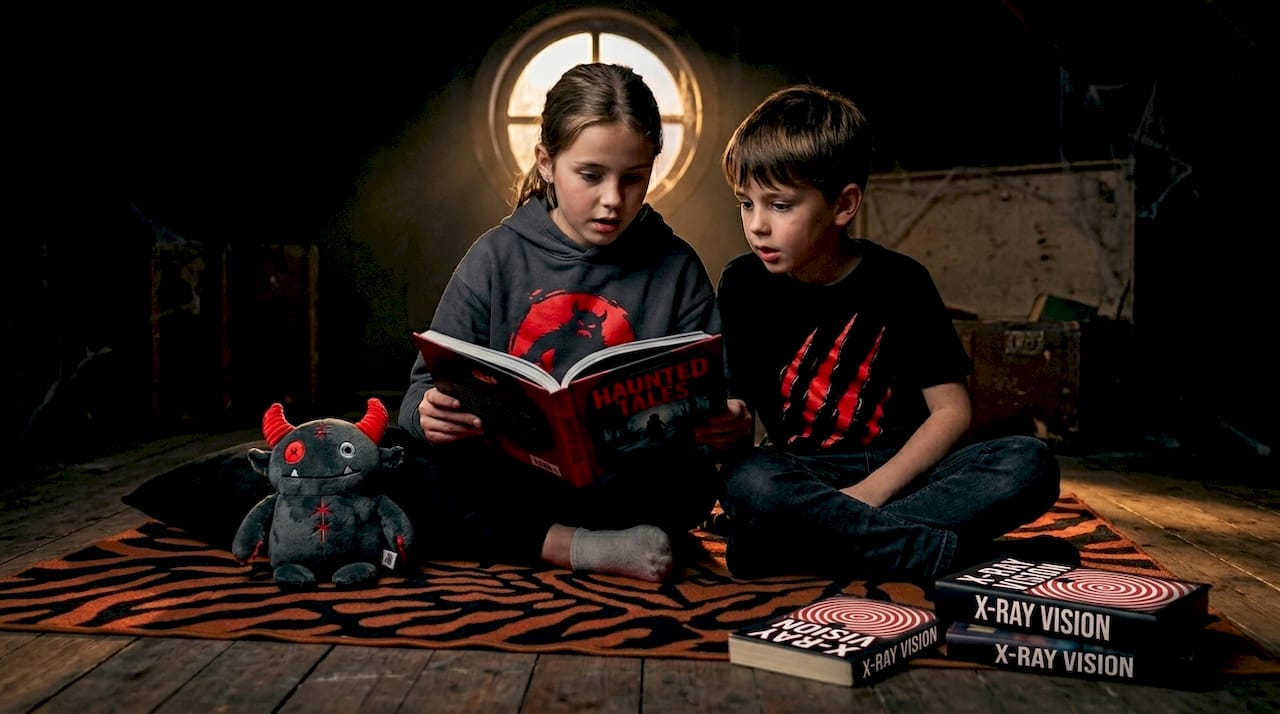
The educational value of scary stories covers more ground than most parents expect. Here is a quick breakdown of what the research supports:
| Developmental benefit | What it looks like in practice |
|---|---|
| Emotional regulation | Child learns to breathe through fear, not run from it |
| Coping skills | Child practices self-soothing strategies during tense moments |
| Reduced anxiety risk | Gradual exposure lowers sensitivity to frightening stimuli |
| Resilience | Child discovers they can face hard things and come out okay |
| Empathy | Reading a scared character builds understanding of others' feelings |
| Vocabulary | Children gain words for complex emotions like dread, unease, relief |
Beyond the table, consider what happens after the story ends. When a parent asks "How did that make you feel?" or "What would you have done?", the conversation does as much work as the story itself. That debrief turns a thrilling tale into a genuine emotional lesson.
Key advantages for children include:
- Practicing real emotions without real danger
- Building the language to describe fear and relief
- Developing problem-solving instincts through story scenarios
- Strengthening the parent-child bond through shared reading
Pro Tip: Choose stories where the child protagonist faces fear and succeeds. That ending matters enormously. A child who watches a fictional peer conquer the monster walks away feeling capable, not crushed.
Developing courage through scary stories is one of the quieter, more powerful benefits. Courage isn't the absence of fear. It's moving forward anyway. Scary stories teach children that lesson on every page.
Safe thrills for adults: anxiety regulation and emotional growth
Children aren't the only ones who benefit. Adults, too, find surprising value in engaging with fictional fear. In fact, the horror genre has seen explosive growth among adult readers in recent years, and the reasons go deeper than simple entertainment.
Seeking scares for sport builds resilience in adults who already have a good grasp on real-world stress. Fiction gives you a sandbox where powerful emotions can be felt, processed, and released without real consequences. That is a powerful tool, especially for anyone navigating anxiety or high-stress environments.
Here is a practical way to use scary stories as an emotional regulation tool:
- Choose your genre carefully. Psychological horror, supernatural thrillers, and creature features each trigger different kinds of fear. Pick the type that challenges you without overwhelming you.
- Set clear limits before you start. Decide how long you'll read and give yourself permission to stop. Knowing you have an exit ramp makes the experience feel safer.
- Notice what the story stirs up. Are you feeling anxious, excited, or something in between? Naming the emotion while you feel it is the core skill that horror helps you practice.
- Process after the story ends. Journal, talk to a friend, or simply sit quietly. Letting the experience settle reinforces the emotional gains.
- Adjust intensity as needed. If one story feels too intense, try something with more humor or a lighter tone. Horror is not a monolith.
"Fear experienced in fiction is fundamentally different from fear experienced in real life. It shares the physical sensation but not the danger, making it a unique tool for anxiety regulation rather than a source of trauma."
The key word in that quote is tool. Horror is most beneficial when you approach it actively, not passively. Knowing why you're engaging with it, and staying aware of how it affects you, transforms a scary story from mere entertainment into something genuinely therapeutic.
You can explore horror's effects on resilience in depth, but the short version is this: every time you choose to face fictional fear and come out the other side, you add a small deposit to your courage account. Over time, that adds up.
Pro Tip: If anxiety spikes to the point where you can't enjoy the story, step back immediately. Recreational fear should feel like an exciting ride, not a panic attack. The difference between those two experiences is consent and control.
Why scary stories matter for culture and community
Beyond personal growth, the advantages of scary stories extend to our communities and our shared history. Horror is one of the oldest storytelling traditions in the world. Every culture has its monsters, and those monsters always mean something.
Horror repackages culturally specific fears and connects communities across generations. A ghost story told around a fire isn't just scary. It's a container for a community's anxieties, values, and moral code. That's remarkable when you think about it.
Consider how different cultures use their scary stories:
| Cultural tradition | Monster or figure | Lesson or purpose |
|---|---|---|
| Japanese folklore | Yokai spirits | Respect for nature and the unseen world |
| Latin American tradition | La Llorona | Warning against abandonment and grief |
| West African folklore | Anansi the spider | Wit and cleverness outsmart brute power |
| American Gothic | Monsters from within | Society's hidden darkness exposed |
| Slavic folklore | Baba Yaga | The value of courage and quick thinking |
These aren't arbitrary. Every monster reflects a real fear, and every story offers a path through it. When parents choose stories that resonate with their child's cultural background, they aren't just providing entertainment. They're passing on a shared emotional heritage.
Common themes across scary stories worldwide include:
- Moral warnings: Don't go into the forest alone. Don't be greedy. Don't ignore the elders.
- Bravery under pressure: The hero who survives is the one who keeps moving.
- Facing the unknown: Every culture teaches its children that the unfamiliar doesn't have to be fatal.
- Social cohesion: Shared stories create shared identity and strengthen community bonds.
Reading ghost stories taps into something ancient and deeply human. You're not just reading. You're participating in a tradition that stretches back thousands of years. And exploring the recurring themes in scary stories shows just how consistent and universal those threads really are.
What's the catch? Limitations and expert tips for safe storytelling
Having explored the upsides, it's equally important to consider how to approach scary stories responsibly. Not every story suits every child. Not every adult is ready for every type of horror. Thoughtful selection makes all the difference.
Direct evidence for improved development from recreational fear is still growing, and researchers acknowledge that more studies are needed to clarify exactly which types of stories benefit which types of children. That's not a reason to avoid scary stories. It's a reason to stay thoughtful and observant.
Over 80% of children enjoy some form of recreational fear, but individual responses vary significantly based on age, temperament, and prior experience with anxiety or trauma.
Here are the criteria to run through before selecting a scary story for a child:
- Age appropriateness: Does the content match the child's developmental stage? Monsters under the bed are very different from graphic violence.
- Child agency: Can the child pause, skip pages, or stop entirely without pressure? Control is essential.
- Post-reading conversation: Plan a brief discussion after. Ask what they thought, felt, and wondered. This seals the benefit.
- Cultural fit: Does the story reflect or respect the child's values and background?
- Emotional baseline: Is the child currently calm and curious, or already anxious? Timing matters.
Pro Tip: Watch for signs of real distress, including sleep disruption, loss of appetite, or avoidance behaviors that last beyond a day or two after reading. If you spot these, ease off and try lighter material. Fear for fun should feel energizing, not draining.
Monster horror for kids sits in a sweet spot when done well, blending fun and learning in a way that keeps children engaged without pushing them past their comfort zone.
Why everything you've heard about scary stories is only half the truth
Here's the uncomfortable reality: the debate around scary stories tends to split into two unhelpful camps. One side says horror is pure entertainment with no real value. The other says it's inherently risky and best avoided. Both camps are missing the point.
The real power of a scary story lives in the reader's agency. When you choose to engage with fear, when you decide how deep to go and when to stop, you're not a passive victim of your own anxiety. You're practicing something profound: the ability to regulate your emotional state while under pressure. That skill doesn't stay on the page.
We believe the most underrated benefit of scary stories is what they teach about consent and boundaries. A child who learns to say "this is too much for me tonight" after three chapters of a ghost story has just practiced a form of self-awareness that will serve them in friendships, classrooms, and eventually workplaces. We don't talk about that enough.
True empowerment doesn't come from shielding kids from all uncomfortable content. It comes from teaching them to engage wisely. Story selection isn't about removing risk. It's about smart curation followed by meaningful conversation. The story opens the door; the talk afterward is where the real growth happens.
"Scary stories, handled with care, build courage, empathy, and cultural literacy. Those are tools for life, not just for reading."
The creative power of scary stories extends far beyond the page. Writers know that fear, handled with craft and intention, illuminates truth in ways that comfortable stories simply cannot reach. Readers feel that. Even children feel it, even if they couldn't articulate why. That instinct toward meaningful darkness is worth honoring, not suppressing.
Explore the best in scary and children's horror books
For those who want to put these benefits into practice today, the right story is closer than you think.

At Mark Watson Books, you'll find carefully crafted stories designed to deliver exactly the kind of thrilling, meaningful experience this article describes. Whether you're searching for horror books that challenge and excite adult readers, or looking for perfectly pitched children's scary stories that spark courage without crossing into distress, the collections are built with intention. Every title is chosen to balance excitement with emotional safety, delivering the vivid, suspenseful reading experience that makes scary stories genuinely valuable. Browse the collections and find the story that's been waiting for you.
Frequently asked questions
Are scary stories okay for young children?
Yes, when stories are age-appropriate and children can control or stop the experience, scary stories are beneficial and genuinely enjoyable for young readers. The key is matching the content to the child's developmental stage and emotional readiness.
How do scary stories help with anxiety?
Experiencing fear in fiction lets readers practice coping and emotion regulation in a safe setting, which can reduce anxiety sensitivity over time. Think of it as a controlled workout for your emotional muscles.
Can scary stories traumatize children?
Normal recreational fear is very different from trauma. Fear and trauma are distinct in entertainment contexts; distress only becomes a concern when fear is overwhelming, age-inappropriate, or beyond the child's control.
What makes a scary story suitable for kids?
A suitable story matches the child's age, allows them control to pause or stop at any time, and aligns with their values and emotional baseline. Age-appropriateness and child control are the two most critical factors.
Why do cultures use horror stories?
Horror repackages cultural fears and helps communities share anxieties, pass on moral lessons, and celebrate a shared heritage through vivid, memorable storytelling. It has served that purpose for thousands of years across every civilization.