

The most effective reading tips for parents come down to eight habits you can start today: read aloud daily, create a dedicated reading spot, model fluent reading yourself, try echo reading, practice segmenting words into sounds, use the 5-finger rule to pick books, set a consistent reading time, and visit the library regularly. These aren't abstract ideals — they're the same strategies backed by the WWC practice guide and recommended across trusted resources like Markwatsonbooks.
Here's your quick-start list:
- Read aloud every day — even 10 minutes builds vocabulary and listening comprehension fast.
- Create a reading spot — a cozy corner with good light signals that reading time is special.
- Model fluent reading — let your child hear what smooth, expressive reading sounds like.
- Try echo reading — you read a line, your child repeats it; low pressure, high confidence.
- Segment words together — tap out sounds in an unfamiliar word before blending them back.
- Use the 5-finger rule — open a random page; if your child stumbles on five or more words, try an easier book.
- Set a reading routine — same time each day makes the habit automatic, not a negotiation.
- Visit the library monthly — free books, new choices, and a reading-positive environment all at once.
Pro Tip: Don't aim for perfection on day one. Pick two of these habits, nail them for a week, then add a third. Small wins compound.
Key Takeaways
Daily read-aloud, consistent routines, smart book choice, and early intervention are the four habits that move children from reluctant to confident readers.
| Point | Details |
|---|---|
| Daily read-aloud | Even 10 minutes of expressive read-aloud builds vocabulary and fluency faster than silent reading alone. |
| Consistent routine | A predictable reading time each day removes negotiation and builds stamina across all age groups. |
| Right-level books | Use the 5-finger rule to confirm a book is accessible; pair level with your child's genuine interests. |
| Decoding support | Segment words into sounds, blend them back, then check with sentence context before supplying the answer. |
| Markwatsonbooks | The children's collection offers story-driven titles suited to bedtime read-aloud and independent reading sessions. |
Table of Contents
- Why does reading at home actually make a difference?
- How do you build reading into your child's daily routine?
- What read-aloud techniques actually teach fluency and comprehension?
- How do you help a child decode words step by step?
- How do you choose books your child will actually read?
- What reading games and activities actually build skills?
- When should you seek extra help for a struggling reader?
- Which resources and booklists can you use right now?
- A quick session checklist you can print or memorize
- How do you build vocabulary and comprehension alongside decoding?
- How do you encourage a reluctant or struggling reader?
- How do you create a literacy-rich home beyond reading sessions?
- Why stories and routines are the real secret
- Mark Watson's children's books for your next bedtime read
- Sources
Why does reading at home actually make a difference?
Home reading works — and the evidence is specific. Everyday interactions and targeted at-home activities help children build foundational skills across the K–3 years: developing language, linking sounds to letters, blending, and reading for understanding. These aren't skills that only happen in classrooms.
The WWC practice guide distills the research into four at-home strategies that reliably move the needle:
- Have conversations before, during, and after reading to build comprehension and vocabulary.
- Teach word segmentation — breaking words into individual sounds is a core decoding skill.
- Help children sound out words smoothly — blending practice transfers directly to independent reading.
- Model fluent reading aloud — children who hear expressive, paced reading internalize what fluency feels like.
Scholastic's teacher fellows add that age-appropriate book choices and daily shared reading are the two habits most likely to build lasting motivation. The research picture is consistent: short, frequent, enjoyable sessions beat long, pressured ones every time. For a deeper look at the cognitive and emotional payoff, the benefits of reading to children are well worth exploring.
How do you build reading into your child's daily routine?
A consistent routine is the single most reliable way to increase reading minutes without a battle. The goal isn't a rigid schedule — it's a predictable anchor in the day your child can count on.
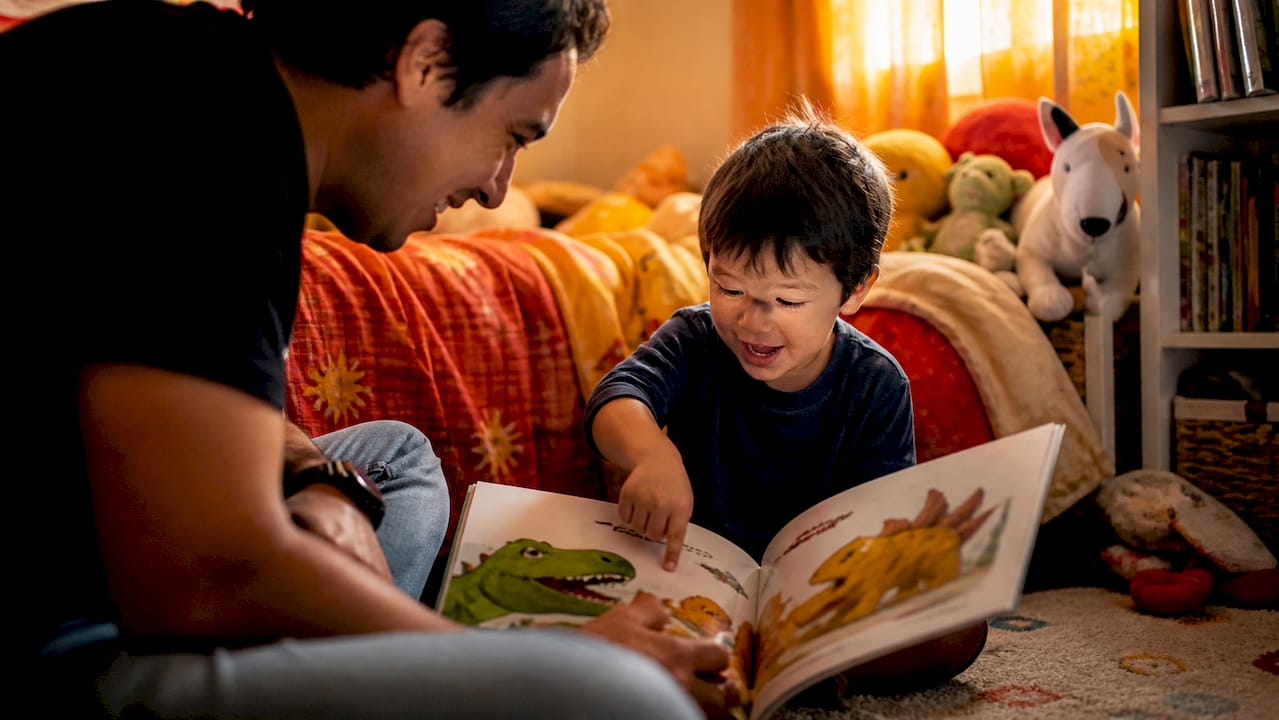
PreK (ages 3–5): 10 minutes at bedtime. Parent reads aloud; child points to pictures and repeats key words. Keep it playful and stop before anyone gets tired.
Early primary (ages 5–8): 15 minutes after school or before bed. Child reads aloud for 5 minutes, parent reads aloud for 5, then spend 5 minutes talking about one thing that happened in the story. Swap roles as confidence grows.
Older primary (ages 8–11): 20 minutes of independent reading, with a 5-minute check-in conversation afterward. Ask one open question ("What do you think happens next?") rather than a quiz.
A few habits that make routines stick:
- Pin a simple reading habits checklist to the fridge so your child can track their own minutes.
- Set a micro-goal: 5 books this month, not "read more."
- Keep the routine flexible on busy days — 5 minutes still counts.
Pro Tip: A reading tracker your child decorates themselves turns a chore into a project. Stickers, stamps, or colored squares work just as well as a printed chart.
What read-aloud techniques actually teach fluency and comprehension?
Expression and pace are the two levers that turn read-aloud from passive listening into active learning. When you read with genuine emotion — slowing down for suspense, speeding up for excitement, changing your voice for different characters — your child absorbs what fluent reading sounds like before they can produce it themselves.
Techniques worth adding to your sessions:
- Echo reading: Read one sentence with expression; your child repeats it back. Builds accuracy and confidence without pressure.
- Choral reading: Read a page together simultaneously. Great for repetitive picture books and poetry.
- Pause for prediction: Stop mid-page and ask, "What do you think is behind that door?" Prediction activates comprehension before the answer arrives.
- Voice acting: Give each character a distinct voice. It sounds silly; it works brilliantly.
Six prompts you can use during any read-aloud:
- Before: "What do you think this book is about from the cover?"
- Before: "Have you ever felt the way this character looks?"
- During: "Why do you think she did that?"
- During: "What would you do if you were him?"
- After: "What was the most surprising part?"
- After: "If you could change one thing in the story, what would it be?"
For storytelling techniques that spark real engagement, voice, pacing, and interactive pauses are the three elements that keep children leaning in. Shift from reading aloud to shared reading — where your child reads alternate pages — once they can decode most words on a page without frustration.
How do you help a child decode words step by step?
Segmenting, blending, and syllable practice are the phonics activities that reliably improve decoding. The good news: you don't need a teaching degree to use them. You need a few minutes and a consistent approach.
Step-by-step decoding support:
- Spot the word: When your child hesitates, point to the word calmly. Don't rush.
- Segment it: Say, "Let's break it into sounds." Tap each sound on your fingers: /c/ /a/ /t/.
- Blend it back: "Now put them together — cat." Let your child say it.
- Check with context: If blending doesn't click, read to the end of the sentence. Does the meaning help?
- Confirm and move on: Once the word is decoded, read the sentence again smoothly so the meaning lands.
Scripts that help:
- "Can you find the first sound?"
- "Tap it out on your fingers."
- "Does that word make sense in the sentence?"
Useful materials: decodable readers (books built around specific phonics patterns), letter-sound flashcards, and magnetic letters for hands-on word building. Avoid over-drilling — two or three new words per session is enough. Pushing through ten unfamiliar words in a row kills motivation fast.
The REL Southeast guide organizes these activities by grade level, making it easy to match the activity to where your child actually is, not just their age.
How do you choose books your child will actually read?
The right book is the one at the right level and on a topic your child already cares about. Level alone isn't enough — a bored child reads nothing, regardless of how perfectly matched the Lexile score is.
The 5-finger rule in practice: Open to a random page in the middle of the book. Ask your child to read it aloud. Hold up one finger for every word they stumble on. Zero to one: probably too easy. Two to three: just right. Four to five: likely too hard for independent reading, though fine for read-aloud together.
Quick strategies by age:
- Ages 3–6: Follow the pictures. Choose books where the illustrations carry half the story — your child can "read" the pictures before they decode the words.
- Ages 6–9: Use series books. Once a child loves a character, they'll read every book in the series without being asked. Scholastic's guidance specifically highlights series and graphic novels as reliable hooks for reluctant readers.
- Ages 9–12: Let them choose the format. Graphic novels, audiobooks, and magazines all count. Reading is reading.
- Start with interest, not level.
- Apply the 5-finger rule to confirm it's accessible.
- If they love it, find the next book in the series immediately.
- Swap formats freely — audiobooks build vocabulary even when a child isn't holding a book.
Pro Tip: Let your child pick one "wild card" book per library visit — something you'd never have chosen. Surprising choices often become favorites.
What reading games and activities actually build skills?
Play-based activities boost reading motivation and transfer real skills — vocabulary, fluency, and comprehension — without feeling like homework. The key is keeping sessions short: 5–15 minutes is enough.
Activities that work:
- Word hunt: Find every word on a page that starts with a specific letter or sound. Ages 4–7.
- Reading theater: Assign characters and read dialogue aloud with full expression. Ages 6–11.
- Book bingo: Create a bingo card with story elements (a funny character, a plot twist, a new word). Ages 6–10.
- Comic strip retell: After reading, draw three panels showing beginning, middle, and end. Ages 5–9.
- Library scavenger hunt: Find a book with a red cover, a book about animals, a book that makes you laugh. All ages.
- Story dice: Roll dice with pictures; use the images to invent a story together. Ages 4–8.
- Alphabet cooking: Find a recipe that starts with the same letter as a character in your current book. Ages 5–10.
- Read and craft: After a story, make something inspired by it. Pair this with a family painting night for a full creative evening.
For more ideas on weaving reading into family activities that strengthen bonds, story-inspired crafts are a natural bridge between the book and the experience.
When should you seek extra help for a struggling reader?
Talk to your child's teacher first — that's the most direct path to targeted support. Don't wait until the end of the school year.
Warning signs by stage:
- PreK–Kindergarten: Can't identify rhyming words, struggles to recognize their own name in print, shows no interest in books even when read to.
- Early primary (ages 6–8): Persistent difficulty blending sounds, avoids reading aloud, guesses words from first letter only, reads the same level books for months without progress.
- Older primary (ages 9–11): Reads slowly and haltingly, loses the thread of a story, avoids reading independently, shows frustration or distress around books.
Next steps:
- Home supports first: Increase read-aloud time, try decodable readers, use the decoding steps above.
- Talk to the teacher: Ask specifically what reading level your child is working at and what the school is doing to support them.
- Request a reading assessment: Schools can screen for phonological awareness gaps and reading fluency.
- Literacy specialist referral: If school intervention isn't moving things, ask about a specialist or educational psychologist assessment.
One important note: neurodivergent learners — including children with dyslexia, ADHD, or auditory processing differences — often need adapted approaches. Literacy experts recommend adjusting activities, using audiobooks, and focusing on strengths alongside targeted skill work.
Which resources and booklists can you use right now?
Start with these: the IES REL Southeast guide, BookTrust, Reading Rockets, Scholastic, and your local library.
- IES REL Southeast guide: Free, evidence-based activities organized by grade and skill. Print it and keep it handy.
- BookTrust: Parent-friendly booklists and reading activities matched to school-age stages. No login required.
- Reading Rockets: Research-informed strategies and printable activities for parents supporting reading development at home.
- Scholastic parent pages: Grade-based book recommendations and teacher-tested tips.
- Gov: Ten quick, practical habits backed by community literacy campaigns.
- Local library: Free books, reading programs, and librarians who know exactly what a 7-year-old who loves dinosaurs should read next.
A quick session checklist you can print or memorize
Ten minutes done well beats thirty minutes done badly. This checklist makes a short session count.
- Warm-up talk: Ask one question about the book before opening it ("What happened last time?").
- Preview the book: Look at the cover and first page together; make one prediction.
- Read aloud or model: Read the first paragraph with expression to set the tone.
- Child reads: Your child reads the next section; you listen without interrupting.
- Decode one tricky word: Use the segment-and-blend steps if a word causes a stumble.
- Ask one comprehension question: "Why do you think that character did that?"
- Praise effort, not just accuracy: "I loved how you figured that word out."
- Log the minutes: Mark it on the tracker — even 10 minutes is a win.
Pro Tip: Keep this checklist on a bookmark inside the current book. No hunting for it, no excuses.
For a more detailed storytelling workflow you can follow session by session, the Markwatsonbooks blog walks through each step with examples.
How do you build vocabulary and comprehension alongside decoding?
Decoding gets a child to the word; vocabulary and comprehension get them to the meaning. Both matter, and you can build them in the same session without doubling the time.
The most reliable vocabulary move: when a new word appears, don't just define it — use it in a sentence from your own life. "Enormous — like the enormous pile of laundry on the sofa." That personal connection makes the word stick. Then ask your child to use it once before you move on.
For comprehension, think in three layers: literal (what happened?), inferential (why did it happen?), and evaluative (was that a good decision?). Most parents stop at literal. Pushing to inferential — "Why do you think she lied?" — is where real comprehension growth happens. The allegory guide for kids' books offers useful framing for older readers ready to explore deeper meaning in stories.
How do you encourage a reluctant or struggling reader?
Choice is the most powerful tool you have. A child who picks the book — even if it's a graphic novel, a joke book, or a magazine about football — is a child who reads. Government guidance and Scholastic both emphasize that reading choice converts reluctant readers faster than any structured program.
Beyond choice, reduce the stakes. Read together instead of asking your child to perform. Celebrate pages, not chapters. Let audiobooks count. A child who listens to a story while following along in the book is building vocabulary, fluency, and comprehension simultaneously.
For tips specifically designed for young readers who resist sitting down with a book, short bursts of reading tied to something they already love — a sport, a game, a TV show with a book tie-in — are often the entry point that changes everything.
How do you create a literacy-rich home beyond reading sessions?
A literacy-rich environment means words are everywhere, not just in books. Labels on kitchen shelves, a whiteboard where the family writes one new word each week, a stack of magazines in the living room — all of it signals that reading and writing are part of normal life, not a school task.
Read in front of your children. When they see you absorbed in a book, a newspaper, or a recipe, they absorb the message that reading is what adults do for pleasure. The family storytelling benefits extend well beyond literacy: shared stories build empathy, vocabulary, and the kind of close family conversation that makes children more likely to talk about what they're reading.
Keep books accessible. A basket of books in the living room gets more use than a shelf in a bedroom. Rotate titles monthly to keep the selection fresh.
Why stories and routines are the real secret
The conventional wisdom says reading improvement is about technique — the right phonics method, the right decodable reader, the right comprehension strategy. Those things matter. But the families where children become genuinely passionate readers almost always share one thing: stories were treated as an event, not a task.
A routine gives reading a place in the day. A great story gives it a reason. When a child is desperate to find out what happens next, they read faster, more carefully, and with more retention than any timed fluency drill produces. The techniques in this article work best when they're wrapped around a story your child actually cares about — which is why book choice and read-aloud expression aren't soft extras. They're the engine.
Mark Watson's children's books for your next bedtime read
If you're looking for age-appropriate children's books that pull young readers in from the first page, the Markwatsonbooks children's collection offers titles built for exactly the kind of bedtime read-aloud sessions this article describes.

Each title is crafted to hold a child's attention — vivid characters, propulsive stories, and the kind of ending that makes them ask for one more chapter. Browse the full children's books collection to find the right fit for your child's age and interests, or explore the wider Mark Watson catalog for family-friendly options across multiple genres.
Sources
These are trusted starting points for parents who want to read further.
- Supporting Your Child's Reading at Home (REL Southeast)
- Tips for Supporting Reading Skills at Home (WWC practice guide)
- Tips for Helping Your Child Read at Home | Scholastic
- Gov
- Parents