
TL;DR:
- Effective storytelling for children involves short, interactive sessions that utilize props, role-play, and sound effects to actively engage learners. Incorporating immersive read-aloud techniques and scaffolding encourages vocabulary growth, neural synchrony, and emotional resilience. Personal, messy, and co-created stories foster confidence, creativity, and deeper connections than passive listening alone.
Getting children genuinely hooked on a story is one of the most rewarding things you can do as a parent or educator. But it's not always easy. Many kids drift during passive read-alouds, lose focus mid-page, or never quite find the magic that makes stories feel alive. These storytelling tips for children move beyond "just read to them daily" and into the kind of vivid, interactive, brain-lighting techniques that actually build listening skills, expand vocabulary, and turn reluctant listeners into kids who beg for one more chapter.
Table of Contents
- Criteria for effective storytelling techniques with children
- Use props, role-play, and voices to inspire storytelling
- Make read-aloud sessions interactive and immersive
- Scaffold storytelling to boost language learning and neural synchrony
- Comparison of effective storytelling activities for different age groups
- Pro tips for mastering storytelling with children
- Why storytelling is more than just reading aloud
- Explore children's books and storytelling resources at Mark Watson Books
- Frequently asked questions
Key Takeaways
| Point | Details |
|---|---|
| Keep sessions short and consistent | Daily storytelling for 10-15 minutes helps children develop confidence and listening skills effectively. |
| Use props and role-play | Incorporating puppets and costumes inspires creativity and makes stories more engaging. |
| Make read-alouds interactive | Pausing for questions and using immersive elements enhances children's comprehension by up to 30%. |
| Scaffold storytelling actively | Engaging children directly improves vocabulary learning and brain synchrony for better outcomes. |
| Tailor activities by age | Different techniques work best at various developmental stages, from picture chats to immersive acting. |
Criteria for effective storytelling techniques with children
Before you pick a technique, know what you're selecting for. Not every storytelling method works equally well across age groups, learning styles, or attention spans. The best approach starts with a few non-negotiable criteria.
Session length matters enormously. Early years storytelling sessions using prompts, puppets, and role-play should last 10 to 15 minutes daily to build children's confidence and story development. Longer sessions often backfire, leaving kids restless and checked out.
Interactivity beats passivity every time. The best storytelling techniques for kids involve them physically, vocally, and emotionally. Think prompts, puppets, costumes, and questions woven into the story itself, not bolted on at the end.
Consistency builds the real results. Repeating the same story or story type across 2 to 4 weeks gives children time to internalize structure, anticipate patterns, and practice retelling. One-off sessions are fun. Repeated sessions build skills.
Here's what to look for when evaluating any storytelling technique:
- Does it invite the child to participate, not just observe?
- Is it short enough to hold attention without feeling rushed?
- Does it use sensory elements like sound, texture, or movement?
- Can it be repeated across multiple sessions in different ways?
- Does it support planning engaging children's stories with a clear beginning, middle, and end?
With these criteria in mind, let's explore some engaging storytelling tips for children.
Use props, role-play, and voices to inspire storytelling
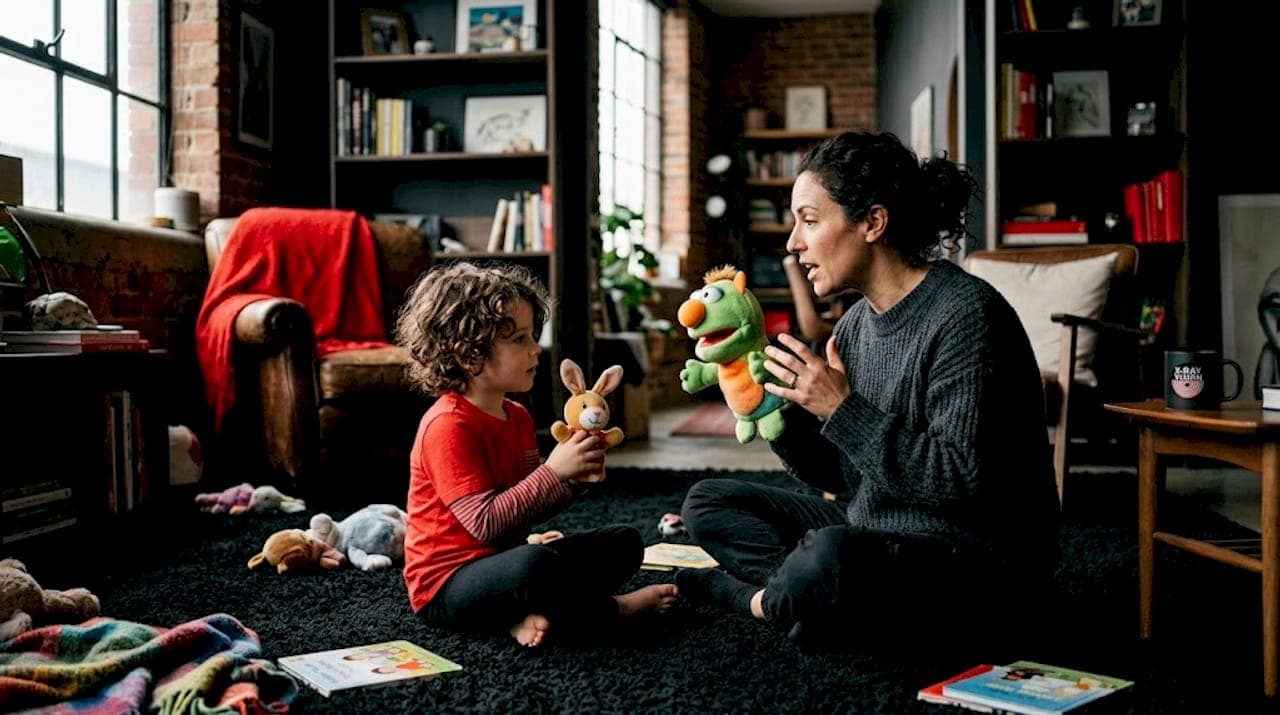
Walk into a room holding a dragon puppet and watch a four-year-old transform. Props are not just decoration. They are story activation tools. Modeling storytelling with props and different voices inspires children aged 3 to 7 to find their own voices and explore vocabulary in ways that passive listening simply cannot match.
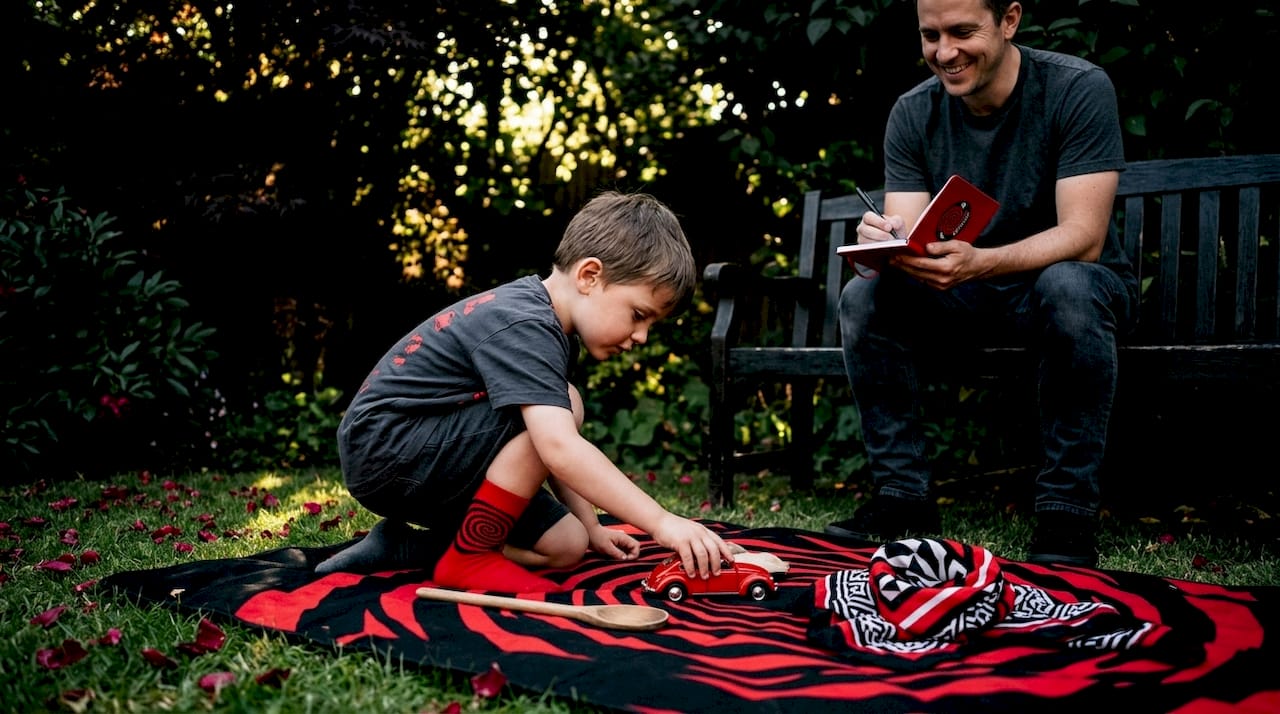
The key is to make props accessible to the child, not just the adult. Let kids wear the cape, hold the puppet, or bang the tambourine when a monster appears. This physical engagement anchors the story in their body and memory.
Here are the most effective prop and role-play strategies to try:
- Simple puppets: Even a sock puppet gives a child "permission" to speak through a character. The benefits of puppet toys include improved language production and confidence, especially in shy children.
- Voice modulation: Use a deep rumble for villains, a bright whisper for secrets, and an urgent rush for chase scenes. Kids mirror what they hear, and varied voices teach them that storytelling has rhythm.
- Costume pieces: A single hat or a pair of wings does more than you'd expect. Children shift into character instantly and stay engaged longer.
- Child-led props: After you model the story, hand over the storytelling prompts and props and let kids retell it in their own words.
Pro Tip: If you only have five minutes to prepare, grab three household objects before your session and let the child choose two of them. Building a story around their selection creates instant ownership and excitement.
Building on the importance of interactive methods, let's examine immersive read-aloud techniques.
Make read-aloud sessions interactive and immersive
There's a vivid difference between reading aloud and performing a story. Interactive read-alouds with pauses, props, and sound effects improve comprehension by 20 to 30%. That number should stop you mid-sentence.
Immersive storytelling does not require a theater degree. It requires intention. Here's a step-by-step approach that works for children aged 5 to 10:
- Set the scene physically. Dim the lights, add a flashlight, or arrange cushions into a "story circle" before you begin. Environment primes the brain for attention.
- Pause every 3 to 4 pages and ask a prediction question. "What do you think is behind the door?" This pause keeps children actively building the story in their minds, not just receiving it.
- Layer in sound effects. Knock on the table for footsteps. Rustle paper for wind. Tap a glass for a bell. Sound effects engage immersive storytelling techniques that activate multiple senses at once.
- Hand over the narration. Let a child read one page, voice one character, or narrate a scene in their own words. Participation shifts them from audience to co-author.
"The best stories are the ones children feel they helped create." This is especially true for reluctant readers who need a point of entry beyond just decoding words on a page.
Key tactics to weave into every session:
- Use costumes and props to mark when a new scene begins
- Ask "how do you think the character felt?" rather than "what happened next?" to build emotional comprehension
- Celebrate wild predictions, right or wrong, to reward active thinking
Pro Tip: Record a session on your phone occasionally. Children love hearing their own voices in a story, and it gives you a clear picture of their growing vocabulary and narrative confidence over time.
Next, we look at how scaffolding storytelling supports word learning and comprehension.
Scaffold storytelling to boost language learning and neural synchrony
Scaffolding means guiding without replacing. When you ask "and then what happened?" instead of filling in the answer yourself, you are scaffolding. And the science behind it is striking. Scaffolded storytelling improves word learning by increasing neural synchrony between teller and listener compared to passive listening. In plain terms: the child's brain literally syncs up with yours when you engage them actively, and that synchrony drives vocabulary retention.
Face-to-face storytelling produces stronger outcomes than screen-based or remote alternatives. The physical presence, eye contact, and real-time response between adult and child all contribute to richer learning.
Key scaffolding techniques to use right now:
- Elaborate, don't correct. If a child says "the dog runned away," respond with "Yes! The dog ran so fast!" You've modeled the right form without shutting down their contribution.
- Ask open-ended questions during pauses, not after the story ends. In-the-moment questions build active comprehension.
- Return to new words in context. Introduce one or two vivid words per session (try "peculiar" or "luminous") and revisit them across multiple bedtime storytelling techniques to cement retention.
- Celebrate attempts. Every child who tries to tell part of the story is building neural pathways. Treat it like a small victory, because it is.
After understanding scaffolding, let's compare various storytelling activities for different age groups.
Comparison of effective storytelling activities for different age groups
One size does not fit all in storytelling. A technique that captivates a six-year-old can frustrate a toddler or bore a nine-year-old. Use this comparison to match your method to your child's stage.
| Age group | Best activity | Session length | Key technique | Avoid |
|---|---|---|---|---|
| Under 5 | Picture chats and simple story-making | 5 to 10 minutes | Sharing stories daily using pictures | Long narratives without visuals |
| Preschool (3 to 7) | Puppet play and repetitive nursery tales | 10 to 15 minutes | Props, repetition, role-play over several weeks | Introducing too many characters at once |
| Elementary (5 to 10) | Immersive read-alouds with costumes and sound effects | 15 to 20 minutes | Pausing for predictions, child narration | Passive listening without interaction |
A few extra tips that apply across all ages when using these family storytelling benefits:
- Repetition is not boring to children. It is how they learn structure, predict outcomes, and eventually retell stories independently.
- Let the child set the pace occasionally. Asking "should we slow down or keep going?" gives them agency and keeps them engaged.
- Stories from your own life are often the most powerful. A funny story about your childhood creates connection and gives children a model for personal narrative.
With this comparison in mind, consider these pro tips to maximize storytelling success.
Pro tips for mastering storytelling with children
These are the things experienced storytellers know but rarely spell out. Each one is small. Together, they transform a decent session into an unforgettable one.
- Master the pause. Teach pacing with strategic pauses and anchor phrases like "then suddenly..." or "but what they didn't know was..." to hold suspense without breaking story flow. A two-second pause before a reveal can make a child grip the nearest cushion.
- Limit new vocabulary. One or two new words per session, maximum. More than that and children start tuning out rather than absorbing. Revisit those words repeatedly across sessions.
- Recite before you expand. Tell a simple repetitive tale across two or three days before adding puppets, costumes, or new plot elements. Familiarity builds confidence before creativity can flourish.
- Adapt for every child. Children with motor or communication differences may need visual story boards, sign language cues, or seated role-play alternatives. The storytelling planning tips that work best are the ones flexible enough to include every child in the room.
- Get kids moving. Kinesthetic learners absorb stories through their bodies. Let them stomp like giants, tiptoe like mice, or freeze like statues when you call "pause!" Acting it out is not a distraction. It is the lesson.
Pro Tip: Write down three storytelling prompts for kids before each session, for example "a lost key," "a talking animal," and "a hidden door," and let the child pick one to launch the story. Choice creates buy-in instantly.
Let's now explore our unique perspective on storytelling's transformative power for children.
Why storytelling is more than just reading aloud
Here's the part most articles skip: reading aloud is a delivery method. Storytelling is an experience. Those are not the same thing, and treating them as interchangeable is where most well-meaning parents and educators miss the real opportunity.
The importance of storytelling for children goes far beyond literacy scores. Stories are how human brains organize experience, process emotion, and build identity. When a child hears a story about their grandmother crossing a border, surviving hardship, or falling in love, something neurological happens that no vocabulary worksheet can replicate. Knowing family stories enhances children's resilience to fear and uncertainty by providing age-appropriate understanding. That's not a soft benefit. That's measurable emotional architecture being built in real time.
The storytelling sessions that build the most are not the polished ones. They're the messy, interactive, co-created ones where the adult doesn't always know what comes next either. When you let a child drive the plot, ask "what should happen now?", or hand them the puppet in the middle of a crisis scene, you're teaching metacognition, narrative structure, and creative problem-solving simultaneously.
Traditional read-alouds have enormous value. But the family storytelling benefits available through interactive, immersive, and personally meaningful storytelling are richer, deeper, and far more lasting. The goal isn't a child who can listen quietly. It's a child who believes their own voice belongs in the story.
Explore children's books and storytelling resources at Mark Watson Books
Ready to put these techniques into action? You need stories worth telling. Mark Watson Books offers a hand-selected children's books collection designed for exactly the kind of vivid, immersive sessions described in this article. These are books built for reading aloud, built for voices, and built to spark imagination.

Beyond the books themselves, the Mark Watson Books blog goes deep on the craft. From bedtime storytelling tips to the science of why children love certain stories, you'll find resources that make every session feel fresh. Explore the storytelling benefits blog to discover how stories shape not just readers, but resilient, creative, emotionally intelligent children. START EXPLORING TODAY and bring your next storytelling session to life.
Frequently asked questions
How long should storytelling sessions with young children last?
For children under 5, 5 to 10 minutes daily focusing on pictures and simple story-making works well. For early years children up to age 7, aim for 10 to 15 minutes daily using prompts, role-play, and puppets for best results.
What are effective ways to make read-alouds more engaging for children?
Interactive read-alouds with pauses for predictions, props, costumes, and sound effects improve comprehension by 20 to 30%. Involving children as narrators or characters inside the story is one of the fastest ways to boost both engagement and understanding.
Why is scaffolding important in storytelling for school-aged children?
Scaffolding actively draws children into the storytelling process rather than keeping them as passive listeners. Neural synchrony research shows this active engagement improves word learning and overall comprehension significantly compared to one-way delivery.
How can storytelling help children build emotional resilience?
Sharing family and cultural stories gives children an age-appropriate framework for understanding hardship and uncertainty. Children who know multi-generational family stories consistently demonstrate greater resilience to fear and stress compared to those without that narrative foundation.
What is a simple storytelling activity that also supports math and language skills?
The roll-a-story activity uses dice or playing cards to build a cooperative story, supporting language, communication, numeracy, imagination, and focus at the same time. It's quick to set up and endlessly replayable.