
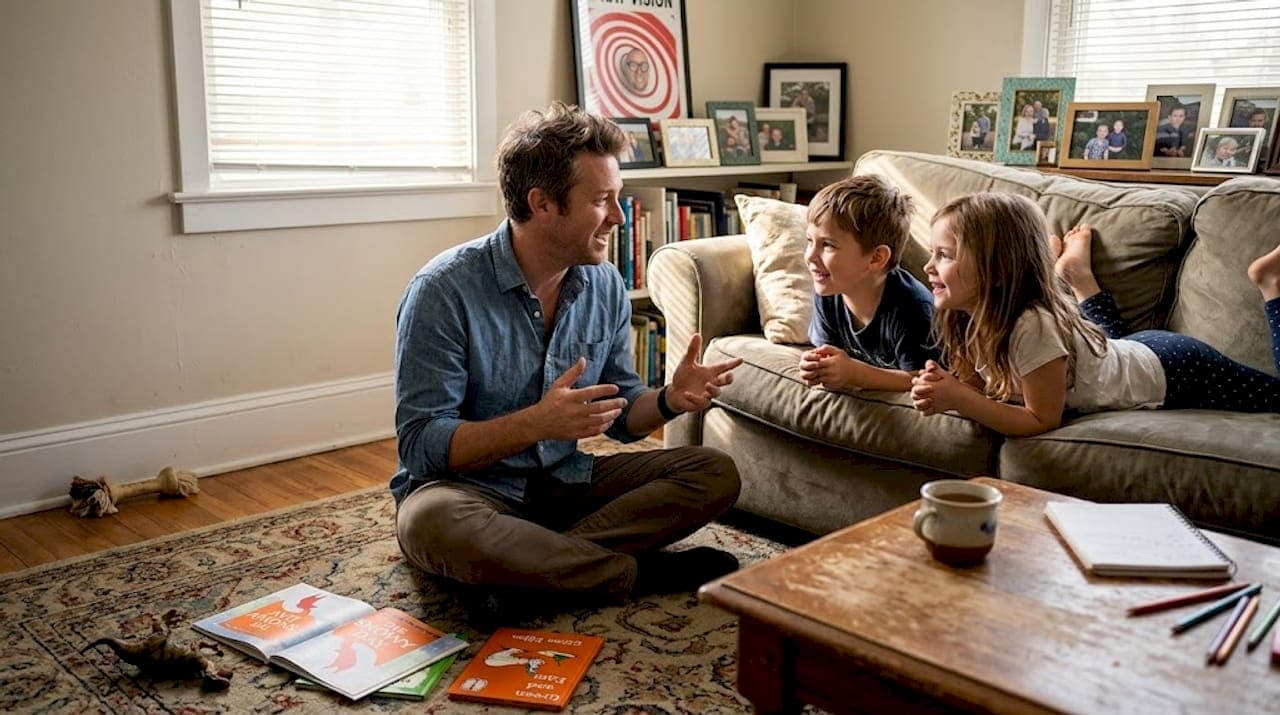
TL;DR:
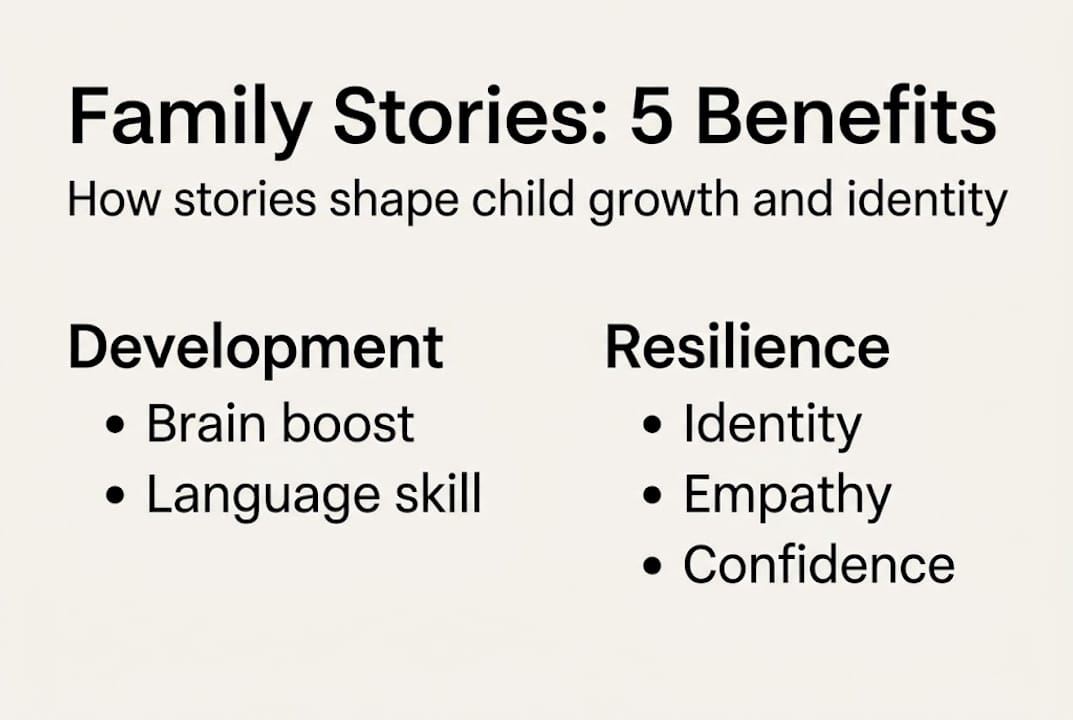
- Family storytelling enhances children's cognitive, emotional, and social development uniquely compared to media.
- Regular storytelling builds identity, resilience, empathy, and language skills through personal and literary narratives.
- Sharing stories about family fosters a sense of belonging, emotional security, and strong relationship bonds.
Storytelling isn't just a bedtime ritual. When families share stories, something remarkable happens inside children's minds. Family storytelling enhances children's cognitive, emotional, and social development in ways that cartoons and apps simply can't replicate. This guide unpacks why family narratives are so powerful, how they shape identity and resilience, and how horror and children's literature each use family as a core literary force. By the end, you'll have practical tools to make storytelling a living tradition in your home.
Table of Contents
- How family storytelling shapes children's development
- Family stories as tools for identity and resilience
- Family as a literary device: Contrast in children's and horror genres
- Practical strategies for making storytelling a family tradition
- Why family storytelling matters more than ever
- Explore stories that matter: Next steps for your family
- Frequently asked questions
Key Takeaways
| Point | Details |
|---|---|
| Brain power boost | Family storytelling strengthens attention, language, and emotional skills in children. |
| Resilience and identity | Family stories help kids build self-esteem, cope with stress, and feel they belong. |
| Genre matters | Children’s and horror narratives use family in dramatically different ways that shape empathy and fear. |
| Practical application | Regular family storytelling can easily be started and maintained with simple routines. |
How family storytelling shapes children's development
Every time a parent shares a story, something lights up in a child's brain. It isn't metaphor. fMRI research shows that parental stories directly activate executive function and attention networks in children's brains. That means better focus, stronger self-control, and sharper memory, all from a simple story shared at the dinner table.
The cognitive and emotional benefits of storytelling span language expansion, identity formation, empathy-building, and social skill development. Children who hear regular family stories don't just learn vocabulary. They learn how to process emotions, relate to others, and see themselves in a broader context.
Two activities stand out as especially effective: storytelling and story-acting. When children don't just hear a story but act it out or retell it in their own words, comprehension deepens. The story becomes theirs. It sticks.
Here's a quick snapshot of what families gain from regular storytelling:
| Benefit | What it looks like in daily life |
|---|---|
| Richer language | Children use more complex vocabulary naturally |
| Better self-regulation | Kids manage emotions during conflict more calmly |
| Closer family bonds | Shared stories create a sense of "us" |
| Stronger reading readiness | Narrative exposure builds pre-literacy skills |
| Improved empathy | Children understand others' feelings more readily |
Key benefits at a glance:
- Wider emotional vocabulary
- Greater ability to sequence events (critical for writing and reasoning)
- A stronger sense of personal and family identity
- Increased confidence in social situations
"Narrative activities like storytelling and story-acting build the kind of deep cognitive engagement that lasts well beyond childhood." This is why the educational value of scary stories for kids is also being taken seriously by educators.
Pro Tip: Don't wait for bedtime. Share a quick story during car rides, meals, or even while folding laundry. Frequency matters more than setting.
Family stories as tools for identity and resilience
Here's a finding that might surprise you: children who know their family history show measurably higher self-esteem and coping skills compared to those who don't. Not just marginally higher. Significantly.
When a child hears stories about how grandma survived a difficult winter, or how dad failed his first job interview and bounced back, they absorb a crucial lesson: hard times are survivable. They belong to a lineage of people who kept going.
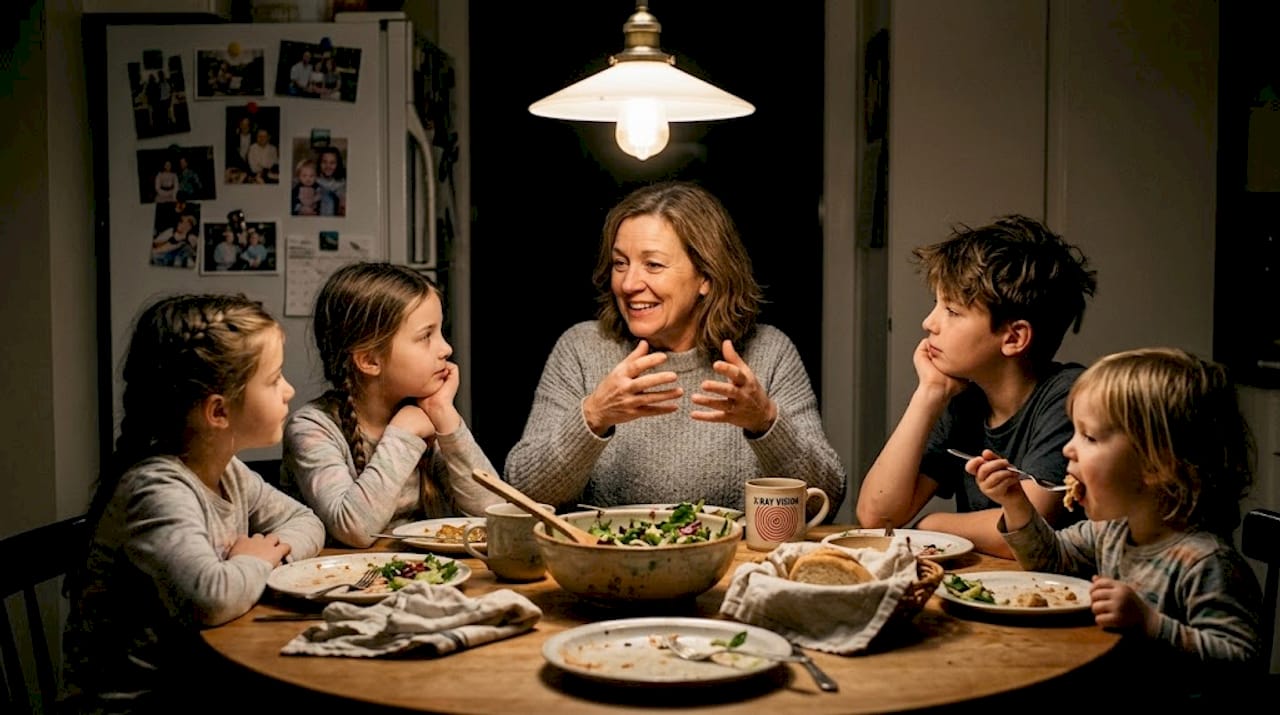
Children's literature leans into this deeply. The "mirrors and windows" framework helps explain why. Mirrors reflect a child's own experience back to them. Windows open views into unfamiliar lives. Books that work as mirrors help children feel seen. Books that work as windows build empathy for people unlike themselves. Both functions depend on strong family and identity narratives. You can explore children's book themes to find stories that serve both roles beautifully.
Not all children's books are created equal when it comes to this. Compare two common approaches:
| Approach | Effect on child |
|---|---|
| Stories with diverse family structures | Children see their own family as valid and valued |
| Stories with resilience-centered plots | Children internalize problem-solving and hope |
| Stories with absent or distant family | Can create disconnection or anxiety without proper framing |
The stories that foster belonging are often the ones children ask to hear again and again. That repetition isn't boredom. It's integration.
Here are four ways parents can actively use stories to build resilience:
- Share honest stories about family struggles and how they were overcome.
- Ask children to retell family stories in their own words.
- Introduce children's book genres that center identity and belonging.
- Validate children's emotions within the story context, not just the plot.
"When children see themselves reflected in stories, both family and literary, they develop a more secure sense of who they are and where they belong."
Family as a literary device: Contrast in children's and horror genres
Now let's get to the really exciting part. Family isn't just a theme in literature. It's a mechanism. And depending on the genre, it does completely different things.
In children's literature, family depicts identity and empathy through diverse representations. Family is the anchor. The safe harbor. Even when conflict arises in a story, the family unit is usually where resolution and warmth return. Think of the quiet reassurance at the end of a picture book, where home means safety.
In horror, the dynamic flips entirely. Horror narratives use family to explore ambivalence, dysfunction, and something Freud called the "family romance," where the familiar becomes unsettling. Horror weaponizes intimacy. The monster isn't a stranger. It's someone you trust. That's what makes it so viscerally disturbing.
Here's how the two genres compare in their use of family:
Children's literature:
- Family as security and stability
- Conflict resolved through togetherness
- Identity built through shared belonging
- Emotional warmth at the center of the narrative
Horror literature:
- Family as a source of dread or ambiguity
- Relationships strained by secrets or supernatural forces
- Identity threatened or fractured
- Tension amplified by the closeness of characters
If you want to explore how this tension plays out across the horror genre roots, you'll find family dysfunction woven through the classics. And why horror books matter becomes clearer when you see how they process real anxieties through story.
For families with older children, classic horror for children offers a brilliant bridge between both genres. Spooky enough to thrill, but structured around family enough to feel safe.
Pro Tip: After reading a horror-adjacent story with your child, ask: "How do you think the family in this story could have helped each other more?" It's a surprisingly rich conversation starter.
The power of family stories as explored in psychology podcasts reinforces this: the stories we tell about family shape how children understand relationships for years to come.
Statistic callout: Studies consistently find that children exposed to diverse family narratives in literature show stronger emotional regulation and social awareness by age 8.
Practical strategies for making storytelling a family tradition
Knowing that storytelling matters is one thing. Building a real habit is another. The good news? Parental storytelling is more effective than stories delivered by educators or researchers, and it directly correlates with stronger pre-literacy and reading skills. You don't need to be a skilled narrator. You just need to show up consistently.
Here's how to build a family storytelling practice that actually sticks:
- Start with what you know. Personal family anecdotes are the most powerful place to begin. Funny, embarrassing, or triumphant moments from your own childhood work perfectly.
- Set a regular time. Bedtime, dinner, or a weekend morning. Consistency signals to children that stories are valued in your home.
- Invite children to lead. Ask them to tell you a story. Listen actively. Respond with curiosity, not correction.
- Use books as springboards. A good picture book or chapter book can prompt real family conversations. Browse the children's books collection for titles that spark those moments.
- Revisit old stories. Don't worry about repeating favorites. Repetition builds memory and emotional security.
Common pitfalls to watch for:
- Pressuring kids to perform or "get the story right"
- Losing consistency after the first week
- Treating storytelling as a lesson rather than a shared experience
- Letting screen time routinely replace story time without intention
Pro Tip: Keep a simple family story jar. Write short prompts like "Tell about a time you were brave" on slips of paper. Pull one out during dinner once a week. Low pressure, high reward.
Consistency is the ingredient most families underestimate. The brain benefits of storytelling build cumulatively. A single memorable story is powerful. A year of shared stories is transformative.
Why family storytelling matters more than ever
Here's an uncomfortable truth: we are living in the golden age of distraction. Every app, streaming service, and educational platform promises to enrich your child's mind. And some do. But none of them can replicate what happens when you tell your child a story about your own life.
Parental emotional expression in storytelling creates a uniquely rich brain environment, one that no algorithm can match. A grandmother's voice catching when she describes leaving her hometown. A father laughing mid-sentence at his own embarrassing memory. These emotional textures aren't data. They're attachment.
Family storytelling is sometimes dismissed as old-fashioned, something people did before television. That framing gets it exactly backwards. The very fact that screens are everywhere makes the intimate, personal, slightly imperfect family story more powerful, not less. It's the contrast that gives it weight.
Consider this: a child who grows up hearing family stories doesn't just develop better language skills. They develop a felt sense that they come from somewhere, that their life is part of something larger. That's not nostalgia. That's the educational value of scary stories and family narratives working together, building children who feel rooted enough to be brave.
There's no app for that.
Explore stories that matter: Next steps for your family
If this has you thinking differently about the stories your family tells and reads, that's exactly the point. Family narratives aren't a relic. They're one of the most powerful tools you have as a parent or caregiver.

At Mark Watson Books, you'll find a curated selection of titles that take storytelling seriously, whether you're looking for warm, identity-rich children's books or suspense-filled horror books that explore family in darker, more complex ways. Both genres have something vital to offer. Start browsing, find a story that speaks to your family, and make tonight the beginning of a new tradition. Stories are waiting.
Frequently asked questions
How does family storytelling improve child development?
Family storytelling enhances children's cognitive, emotional, and social development by building language skills, emotional literacy, and a strong sense of identity through meaningful family connection.
What makes family stories different from stories read in books?
Family stories anchor children to their own history and personal identity, while parental storytelling builds stronger brain networks than stories delivered by outside educators or researchers.
Why are families central in horror and children's books?
In children's books, family signals safety and belonging. In horror, family explores dysfunction and the uncanny, turning intimacy into a source of dread and psychological tension.
How can parents start a family storytelling tradition?
Begin with personal anecdotes, set a regular story time, and invite children to share their own versions. Parental storytelling activates brain networks for attention and executive function, so even short, simple stories deliver real benefits.
Recommended
- Why kids love spooky tales: the science of scares
- The educational value of scary stories for kids
- The real power of illustrations in storytelling: kids & horror
- Why scary stories help develop courage in children
- 7 powerful benefits of community events for families
- Family photography: capturing real moments and connections