

TL;DR:
- Effective horror relies on core fears, atmosphere, character vulnerability, and suspense mechanics.
- Building tension gradually and grounded settings amplify fear more than gore or clichés.
- Tailor horror approaches for adults or children, focusing on unresolved dread or reassurance respectively.
You have a spine-tingling idea. A shadowy figure. A house that breathes. A child who knows too much. But when you sit down to write, the story stalls, the scares fall flat, and the whole thing feels more awkward than terrifying. Sound familiar? You are not alone. Most aspiring horror writers struggle not with imagination but with structure. This guide breaks down the step-by-step process for crafting a horror story that genuinely chills, from first premise to final twist. Follow these steps and you will write with more confidence, more clarity, and a whole lot more dread.
Table of Contents
- Understand the essentials: What makes horror fiction work?
- Step-by-step process: Building your horror story
- Avoid pitfalls: Common mistakes and expert corrections
- Tailoring horror: Writing for adults vs. children
- Our perspective: What most guides miss about writing horror
- Take your horror writing further with Mark Watson Books
- Frequently asked questions
Key Takeaways
| Point | Details |
|---|---|
| Foundation matters | Begin with a strong premise and relatable core fear to anchor your horror story. |
| Step-by-step process | Following structured steps makes writing horror easier and produces more memorable scares. |
| Avoid clichés | Twist popular tropes and edit ruthlessly to keep your horror fresh and engaging. |
| Audience adaptation | Tailor the ending and tone to your readers, especially for children’s horror. |
| Authentic fear wins | Stories based on real, personal fears often resonate stronger than those built on formula alone. |
Understand the essentials: What makes horror fiction work?
Before you type a single word, you need to understand what horror actually does to a reader. It is not just about monsters or blood. Great horror taps into something primal. It makes the familiar feel threatening. It turns a creaking floorboard into a countdown.
The best horror stories are built on core fears. These fall into three broad categories:
- Psychological fears: Loss of sanity, paranoia, isolation, and the terror of not trusting your own mind.
- Supernatural fears: Ghosts, demons, and forces that defy explanation.
- Ordinary situations turned sinister: A babysitter. A neighbor. A phone call. The mundane made monstrous.
When you are exploring horror genres, you will notice that the most enduring stories rarely rely on gore alone. Atmosphere does the heavy lifting. A fog-soaked street. A locked room with scratching sounds. The sense that something is just out of sight.
Atmosphere vs. gore is one of the most important distinctions in horror writing. Gore can shock, but atmosphere sustains dread. Readers who feel unsettling tension across an entire story remember it far longer than a single gruesome scene.
Here is a quick breakdown of horror's core building blocks:
| Element | What it does | Example |
|---|---|---|
| Core fear | Anchors the story emotionally | Fear of being watched |
| Atmosphere | Creates sustained dread | Dark, isolated setting |
| Character vulnerability | Makes readers care | Protagonist with a secret |
| Suspense mechanics | Keeps pages turning | Foreshadowing, slow reveals |
Suspense is the engine of horror. You build it through sensory details, foreshadowing, and pacing. Show the reader the shadow before the monster. Let them hear the sound before the character does. These techniques work because they activate the reader's imagination, and imagination is always scarier than anything you can describe directly.
Understanding thrills and fears at a structural level also helps you control your reader's emotional experience. You decide when to tighten the tension and when to release it. That rhythm is what keeps readers glued to the page.
Pro Tip: Study the openings of your favorite horror stories. Notice how quickly they establish an unsettling tone without revealing the threat directly. That restraint is intentional and powerful.
Step-by-step process: Building your horror story
Understanding the essentials is key, but here is a step-by-step guide you can follow every time. Whether you are writing a short story or a full novel, this process keeps you on track.
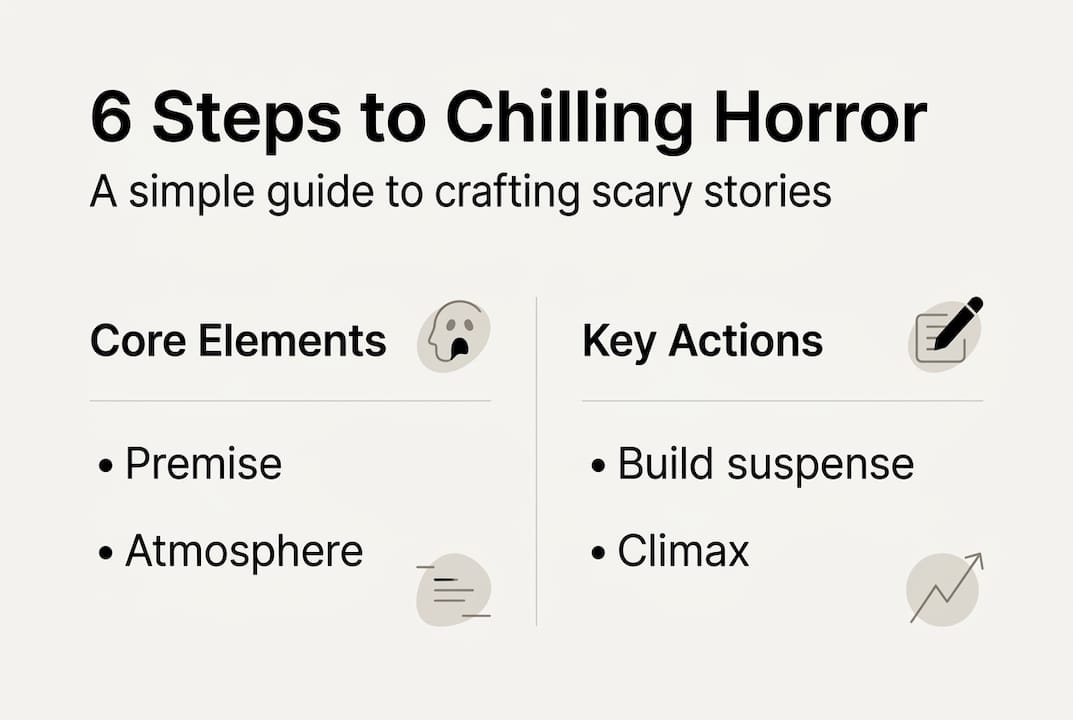
- Develop your premise and core fear. What is the story really about? Not the plot, but the fear beneath it. A strong horror premise starts with a specific, emotionally resonant fear.
- Create relatable, vulnerable characters. Readers need someone to root for. Give your protagonist flaws, relationships, and something to lose. Vulnerability is what transforms a character into a target.
- Build an immersive setting. Your setting is not just a backdrop. It is a character. Choose a location that amplifies your core fear. An isolated cabin. A hospital at night. A perfectly normal suburb.
- Escalate tension with rising dread. Introduce small, unsettling moments before the horror fully arrives. Each scene should feel slightly more threatening than the last. This is where writing gripping horror stories becomes an art form.
- Build to a confrontation or climax. The protagonist must face the source of fear directly. This is the story's emotional peak. Make it earned, not rushed.
- Deliver a twist or resonant resolution. Great horror endings linger. Whether you resolve the threat or leave it open, the final image or revelation should echo in the reader's mind.
Here is a comparison of psychological versus supernatural approaches at each stage:
| Story stage | Psychological horror | Supernatural horror |
|---|---|---|
| Premise | Paranoia, mental unraveling | Unexplained entity or curse |
| Setting | Familiar spaces turned strange | Isolated or haunted locations |
| Climax | Internal breakdown or revelation | Direct confrontation with the unknown |
| Resolution | Ambiguous, unsettling | Threat defeated or escaped |
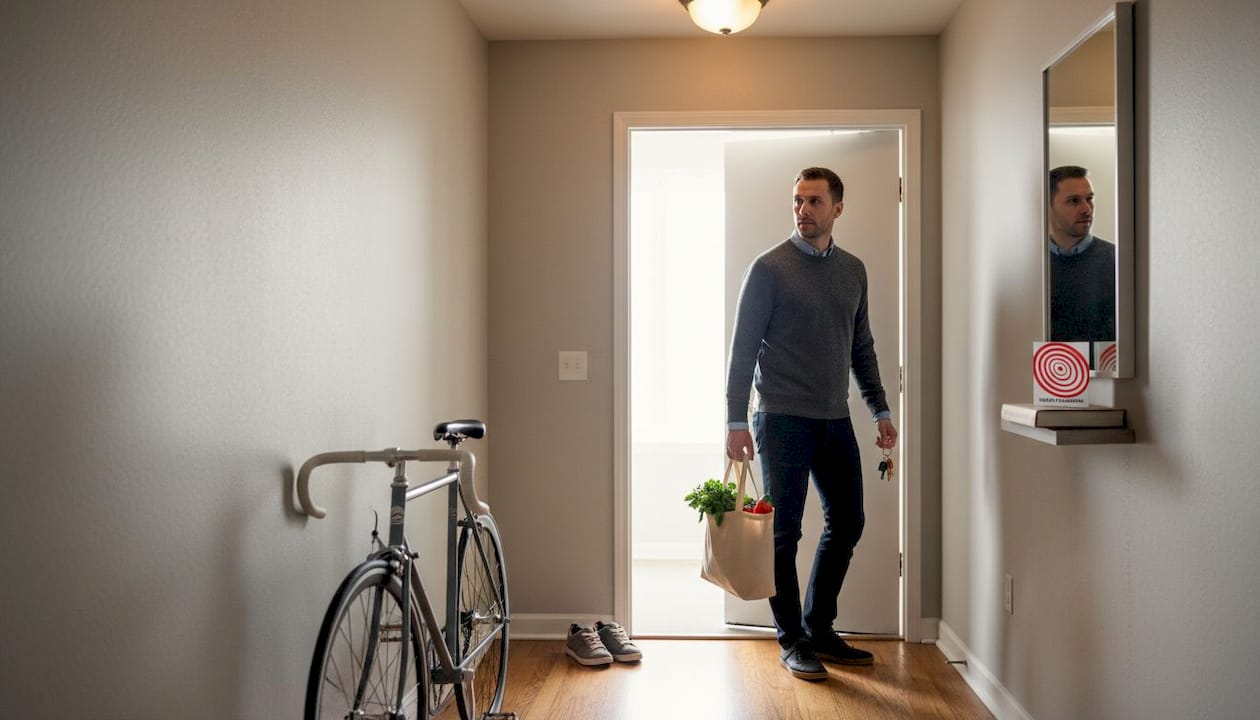
One of the most effective techniques when you write horror stories is to begin in ordinary life. Show your character making coffee, driving to work, laughing with a friend. Ground them in normalcy. Then let the horror creep in. The contrast makes everything scarier.
Also consider the themes and elements that resonate most with your target readers. Themes like betrayal, grief, and identity add emotional depth that elevates horror beyond simple shock.
Pro Tip: Write your climax scene early in the drafting process. Knowing where you are headed keeps your tension-building focused and purposeful throughout.
Avoid pitfalls: Common mistakes and expert corrections
Now that you have mapped out the process, it is time to sidestep the mistakes that trip up even seasoned writers. Horror has a long list of traps, and falling into them can deflate even the most promising story.
Here are the most common mistakes and how to fix them:
- Relying on clichés. The jump scare. The killer who never stays dead. The group that splits up. These tropes are exhausted. Twist them. Subvert reader expectations. Make the safe choice the dangerous one.
- Inconsistent supernatural logic. If your ghost can walk through walls, it cannot also be stopped by a locked door. Establish your rules early and stick to them. Readers forgive a lot, but they will not forgive broken logic.
- Excessive gore as a substitute for tension. Gore without emotional stakes is just noise. Haunting your reader means getting under their skin, not just shocking them.
- Flat pacing. If every scene runs at maximum intensity, readers go numb. Horror needs breathing room. Quiet moments make the loud ones hit harder.
- Overexplaining the monster. Mystery is terrifying. The moment you fully explain what the creature is, you rob readers of their imagination.
Stephen King, arguably the master of modern horror, offers a rule worth tattooing on your writing desk:
"The second draft equals the first draft minus ten percent."
King's approach is rooted in the belief that psychological horror, the kind that targets the mind and paranoia, is far more durable than surface-level scares. Cutting ruthlessly forces you to keep only what earns its place.
The creative power and techniques behind effective horror also connect to the history of horror literature, where the best stories have always relied on emotional truth over spectacle.
Pro Tip: Share a draft scene with a trusted reader and ask them to mark where their attention drifted. Those spots are your pacing problems. Fix them before anything else.
Tailoring horror: Writing for adults vs. children
With the basics mastered and mistakes avoided, let us see how to adapt horror story techniques for different readers. Horror is not one-size-fits-all, and the audience you are writing for shapes almost every decision you make.
Adult horror leans into lingering dread and unresolved endings. Adults can sit with ambiguity. They can handle a story that ends without comfort. In fact, that discomfort is often the point.
Children's horror works differently. Young readers need tension and excitement, but they also need resolution and reassurance. The monster can be scary, but it should ultimately be defeated or explained. Fear should build resilience, not leave lasting anxiety.
Here is a comparison of the two approaches:
| Element | Adult horror | Children's horror |
|---|---|---|
| Tone | Dark, unrelenting | Tense but ultimately safe |
| Resolution | Ambiguous or bleak | Clear and reassuring |
| Fear type | Existential, psychological | Situational, imaginative |
| Character arc | May end in loss or trauma | Protagonist overcomes the threat |
When writing for younger audiences, keep these guidelines in mind:
- Build tension gradually. Do not rush to the scare. Let curiosity and unease develop naturally.
- Use age-appropriate fears. Darkness, being lost, and strange adults are universally understood by children.
- Always provide a way out. The protagonist should have agency. They solve the problem, escape the threat, or find safety.
- Avoid graphic violence or hopeless endings. The goal is a thrilling experience, not a traumatic one.
For a deeper look at age-specific storytelling, the parent's guide to spooky stories offers excellent context. You can also explore horror books to see how published authors balance these elements across audiences.
Our perspective: What most guides miss about writing horror
Most step-by-step guides give you the framework. Few tell you what actually makes horror stick. Here is the uncomfortable truth: flawless structure cannot save a story that lacks emotional authenticity.
The writers who genuinely scare readers are not following a formula. They are writing from a place of real fear. King's methodology is clear on this: write from your personal fears, and let your characters drive the plot. When a writer is genuinely unsettled by their own story, that energy transfers to the page.
Ordinary settings amplify extraordinary events. A horror story set in a familiar kitchen is more frightening than one set in a haunted castle, because the kitchen belongs to the reader too.
The steps in this guide are tools, not rules. Great horror often breaks the formula. It subverts expectations, bends structure, and surprises even experienced readers. Understanding the impact of horror books on readers reminds us that the goal is emotional resonance, not technical perfection. Use the steps as a scaffold. Then tear pieces of it down and see what happens.
Take your horror writing further with Mark Watson Books
Ready to go from idea to finished story? Mark Watson Books is your next stop.

Whether you are crafting your first horror tale or refining a children's spooky adventure, the resources at Mark Watson Books are built for writers like you. Browse horror books to study how atmosphere, character, and tension work in published stories. Discover children's horror stories that show exactly how to balance scares with reassurance for young readers. And when you are ready to go deeper, explore Mark Watson Books for guides, inspiration, and a community of writers who love the craft as much as you do. Your story deserves to be told. Start writing it today.
Frequently asked questions
What is the first step in writing a horror story?
The first step is developing a strong premise rooted in a core fear, whether psychological or supernatural. Everything else, character, setting, and tension, grows from that foundation.
How can I make my story genuinely scary without using gore?
Focus on building suspense through pacing, sensory details, atmosphere, and relatable fears. Readers are far more frightened by what they imagine than what you describe directly.
What's the difference between psychological and supernatural horror?
Psychological horror targets the mind and paranoia, while supernatural horror relies on unexplained and otherworldly elements. Both can be deeply effective when executed with emotional truth.
How should horror stories for children be structured?
Children's horror stories should end with resolution and reassurance, helping young readers process fear safely. The protagonist should always have agency and a clear path to safety.
How much editing does a horror story need?
Many experts recommend cutting at least 10% on the second draft, focusing on tightening tension and removing anything that slows the dread. Ruthless editing is what separates a good horror story from a great one.