
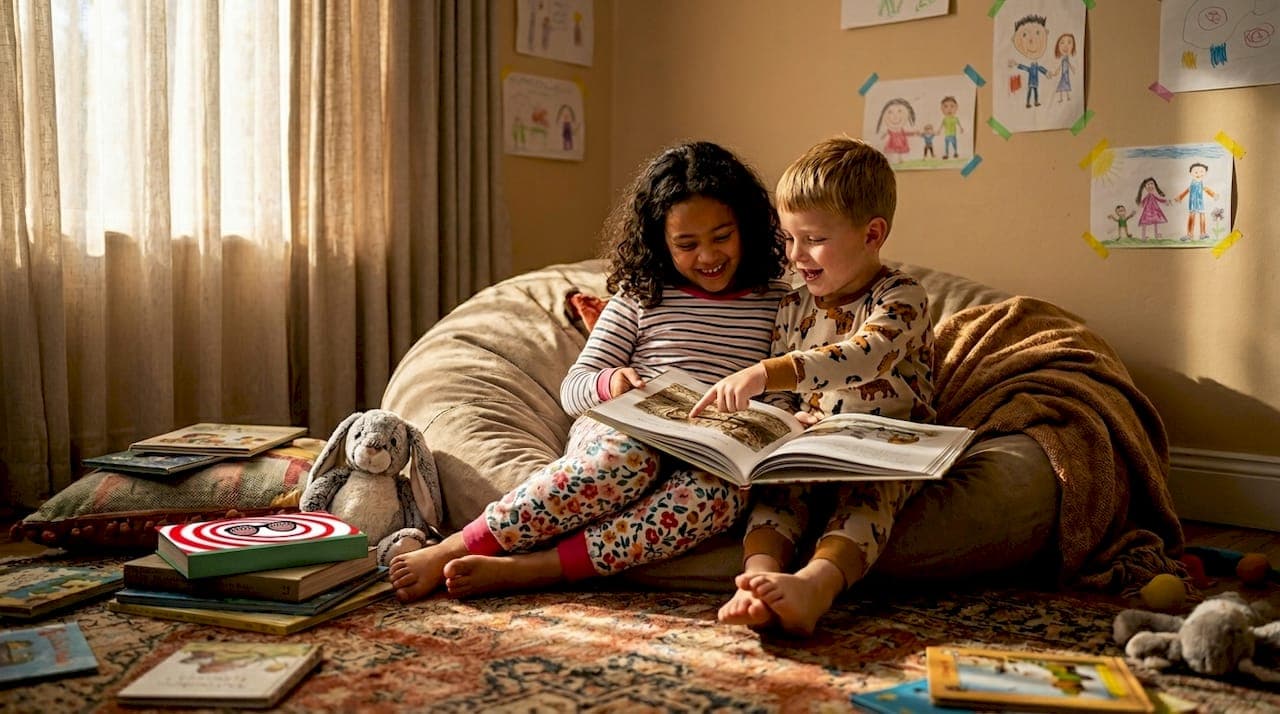
Many parents and educators assume children's books are just simple tales meant for entertainment. In reality, these stories carry powerful themes that shape how kids understand the world, build empathy, and develop critical thinking skills. Understanding these underlying messages transforms reading time from passive entertainment into meaningful conversations that boost literacy and emotional growth. This guide explores core themes in children's literature and shows you practical ways to recognize and discuss them with young readers, turning every story into an opportunity for deeper learning and connection.
Table of Contents
- Understanding Children's Book Themes And Why They Matter
- Common Children's Book Themes Explained With Examples
- How To Identify And Discuss Themes With Children Effectively
- Nuances And Challenges In Interpreting Children's Book Themes
- Explore Children's Books With Rich Themes At Mark Watson Books
- Frequently Asked Questions About Children's Book Themes
Key takeaways
| Point | Details |
|---|---|
| Themes teach values | Children's books use underlying messages to introduce complex ideas like courage, friendship, and identity in age-appropriate ways. |
| Recognition boosts literacy | Identifying themes helps children connect stories to real experiences, deepening comprehension and engagement with reading. |
| Discussion builds empathy | Talking about themes with kids fosters emotional intelligence and critical thinking through relatable story contexts. |
| Cultural context matters | Theme interpretation varies by background and age, requiring sensitive and flexible approaches from adults. |
Understanding children's book themes and why they matter
Themes are the underlying messages or central ideas woven throughout a story, going beyond plot to explore universal human experiences. In children's literature, themes introduce complex ideas in relatable ways, making abstract concepts like justice, belonging, or perseverance accessible to young minds. Unlike the surface-level events of a story, themes provide the framework that helps children process emotions and situations they encounter in their own lives.
Recognizing themes supports literacy development by encouraging children to think beyond what happens in a story to why it matters. When kids identify that a book explores friendship, they start making connections between the characters' experiences and their own relationships. This cognitive bridge between text and personal experience strengthens reading comprehension and retention. Children who engage with themes become active readers rather than passive consumers of words on a page.
Theme understanding directly links to social and emotional development. Stories exploring fear help children process their own anxieties in a safe, fictional context. Books about family dynamics validate their experiences and show different ways relationships can work. Through themed narratives, kids develop empathy by stepping into characters' shoes and considering perspectives different from their own.
Deeper reading engagement emerges when children move past surface-level plot enjoyment to thematic analysis. A child who recognizes courage as a theme will notice how different characters demonstrate bravery in unique ways, comparing their approaches and considering which resonates most. This analytical thinking builds critical literacy skills that extend far beyond childhood reading.
Pro Tip: Start theme discussions by asking what the character learned or how they changed, rather than directly asking about the theme. This approach feels more natural and helps children discover themes through guided reflection.
Key benefits of theme awareness include:
- Enhanced vocabulary as children learn words to describe abstract concepts
- Improved memory retention through emotional and conceptual connections
- Greater motivation to read when stories connect to personal interests and experiences
- Foundation for academic literary analysis in later school years
Common children's book themes explained with examples
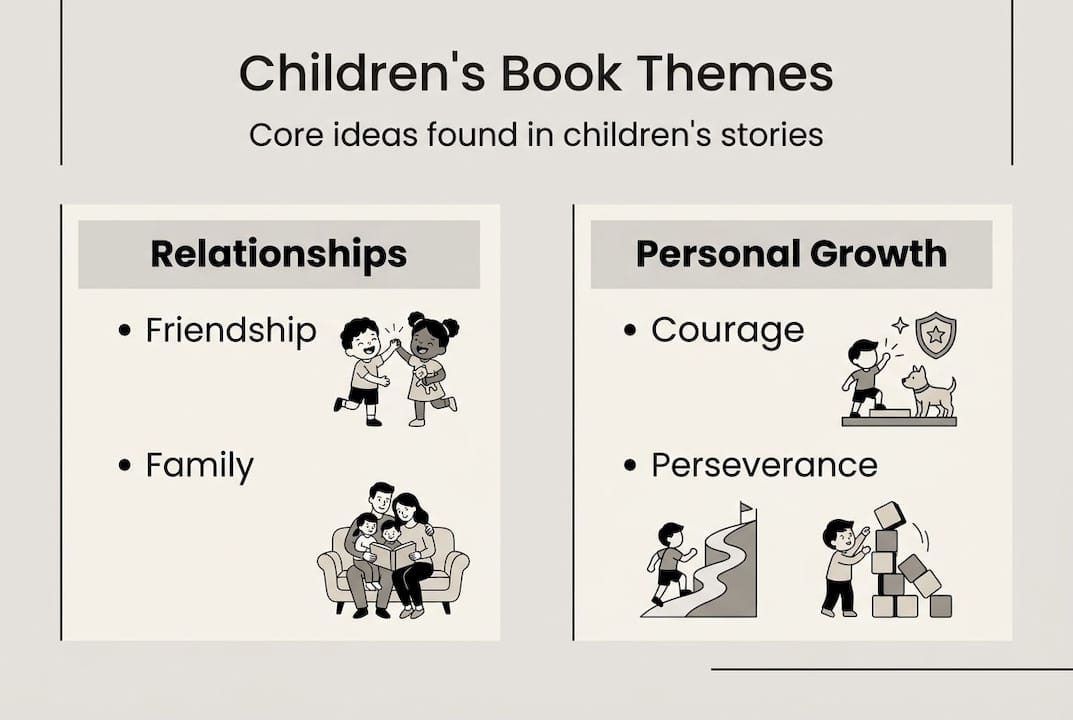
Popular children's books explore recurring themes that resonate across age groups and cultures. Friendship stands as one of the most prevalent, teaching children about loyalty, conflict resolution, and the value of connection. Stories featuring friendship themes show characters navigating disagreements, supporting each other through challenges, and celebrating differences. These narratives provide templates for how healthy relationships function.
Courage and overcoming fears appear frequently in children's literature, helping kids face their own anxieties. These themes manifest in stories about trying new things, standing up for beliefs, or confronting literal or metaphorical monsters. The message typically emphasizes that bravery doesn't mean fearlessness but rather acting despite fear. This distinction empowers children to recognize their own courageous moments.
Identity and self-discovery themes help children understand who they are and where they belong. Books exploring these concepts often feature characters questioning their place in family, community, or peer groups. Through these stories, children learn that identity develops over time and that being different can be a strength rather than a weakness.
| Theme | Typical Story Focus | Learning Outcome |
|---|---|---|
| Friendship | Characters building or repairing relationships | Social skills and conflict resolution |
| Courage | Facing fears or standing up for beliefs | Emotional resilience and self-confidence |
| Family | Navigating family dynamics and love | Understanding relationships and belonging |
| Identity | Discovering personal strengths and uniqueness | Self-awareness and acceptance |
| Perseverance | Overcoming obstacles through persistence | Growth mindset and determination |
Family themes explore the bonds, challenges, and diverse structures that define home life. These stories validate children's experiences whether they live with two parents, single parents, grandparents, or blended families. The underlying message emphasizes that love and support matter more than family configuration.
Perseverance themes teach the value of persistence when facing difficulties. Characters in these stories fail, try again, and eventually succeed through effort rather than natural talent. This growth mindset messaging helps children understand that abilities develop through practice and that setbacks are part of learning.
Pro Tip: Create a theme journal where children draw or write about how story themes connect to their lives, building a personal reference that makes abstract concepts concrete.
Additional common themes include:
- Kindness and compassion toward others
- Environmental stewardship and nature appreciation
- Honesty and integrity in challenging situations
- Adventure and curiosity about the world
How to identify and discuss themes with children effectively
Identifying themes starts with paying attention to what characters want, what obstacles they face, and how they change by the story's end. Look for repeated ideas, symbols, or lessons that appear throughout the narrative. Discussing themes develops critical thinking by encouraging children to look beyond surface events to deeper meanings.
Asking open-ended questions guides children to discover themes themselves rather than having adults simply tell them. Instead of "What's the theme?", try "What do you think the author wanted us to learn?" or "How did the main character change?" These questions prompt reflection and personal interpretation, making theme identification feel like detective work rather than a test.
Relating themes to real-life experiences makes abstract concepts tangible and memorable. When a story explores friendship conflicts, ask if the child has experienced similar situations and how they handled them. This connection validates their experiences and provides a framework for processing emotions. Children internalize themes more deeply when they see direct applications to their world.
- Read the story together without interruption to allow natural engagement and enjoyment.
- Discuss initial reactions and favorite parts to build comfort with sharing thoughts.
- Ask what the character learned or how they solved their main problem.
- Identify patterns or repeated ideas throughout the story.
- Connect the theme to the child's experiences with specific examples.
- Encourage the child to predict how theme understanding might help in future situations.
Fostering empathy through theme discussion involves exploring characters' motivations and feelings. Ask why a character made certain choices or how they might have felt in key moments. This perspective-taking exercise builds emotional intelligence and helps children understand that people act based on their unique experiences and feelings.
Critical thinking emerges when children compare how different characters approach the same theme. In a story about courage, one character might face physical danger while another stands up to peer pressure. Discussing these variations shows that themes manifest in multiple ways and that there's no single "right" approach to life's challenges.
Pro Tip: Use "I wonder" statements to model curiosity about themes without imposing interpretations, such as "I wonder why the author made the character afraid of the dark" to spark organic discussion.
Effective discussion strategies include:
- Validating all interpretations as long as children can support them with story evidence
- Sharing your own connections to themes to model vulnerability and openness
- Revisiting favorite books to discover new thematic layers with developing maturity
- Using art, drama, or writing to explore themes through multiple modalities
Nuances and challenges in interpreting children's book themes
Cultural and familial backgrounds significantly influence how children perceive and relate to themes. A child from a collectivist culture might interpret independence themes differently than one from an individualist background. Theme interpretation varies by cultural context, requiring adults to remain open to diverse perspectives and avoid imposing single "correct" readings.
Age and developmental stage dramatically affect theme comprehension. Preschoolers might grasp concrete themes like sharing but struggle with abstract concepts like justice. Elementary students can handle more nuanced themes involving moral complexity. Teenagers engage with sophisticated themes exploring identity, social systems, and philosophical questions. Matching thematic complexity to developmental readiness prevents frustration and ensures meaningful engagement.
| Age Group | Theme Complexity | Example Themes | Discussion Approach |
|---|---|---|---|
| Ages 3-5 | Concrete and immediate | Sharing, kindness, family love | Focus on character actions and feelings |
| Ages 6-8 | Emerging abstract thinking | Friendship, honesty, trying new things | Connect to personal experiences |
| Ages 9-12 | Complex social themes | Identity, justice, perseverance | Explore multiple perspectives |
| Ages 13+ | Abstract and philosophical | Morality, social systems, existential questions | Analyze author intent and societal implications |
Balancing entertainment and meaningful themes presents an ongoing challenge for parents and educators. Children resist heavy-handed moralizing but benefit from thoughtful messages. The best themed books integrate lessons naturally into engaging plots rather than stopping the story to teach. Adults should prioritize books where themes emerge organically through character development and plot rather than feeling forced or preachy.
Diverse interpretations can create uncertainty for adults seeking "right" answers. Two children might identify different themes in the same book based on what resonates with their experiences. This variation is healthy and demonstrates active engagement rather than passive reception. Adults should embrace multiple valid interpretations while helping children support their ideas with story evidence.
Sensitive topics require careful navigation when discussing themes. Books addressing death, divorce, or discrimination serve important purposes but need age-appropriate framing. Adults should preview books, consider individual children's readiness, and create safe spaces for questions and emotional reactions. The goal is processing difficult themes constructively, not avoiding them entirely.
Common interpretation challenges include:
- Children focusing solely on exciting plot elements and missing thematic depth
- Adult assumptions about what themes "should" matter to children
- Difficulty distinguishing between topics and themes
- Resistance from children who view theme discussions as schoolwork rather than exploration
Explore children's books with rich themes at Mark Watson Books
Now that you understand how themes enrich children's reading experiences and support literacy development, finding quality books becomes the next step. Mark Watson Books offers carefully selected children's literature featuring meaningful themes that spark imagination while teaching valuable life lessons. Each book in the collection balances engaging storytelling with thoughtful messages, making it easy to find stories that match your child's interests and developmental stage.

For families seeking unique thematic experiences, the horror collection introduces age-appropriate spooky stories that explore courage, problem-solving, and facing fears in entertaining ways. These books prove that meaningful themes exist across all genres, even ones that make you check under the bed. Visit Mark Watson Books to discover stories that transform reading time into opportunities for growth, connection, and literacy development.
Frequently asked questions about children's book themes
What exactly are themes in children's books?
Themes are the underlying messages or central ideas that give stories deeper meaning beyond the plot. They explore universal human experiences like friendship, courage, or identity through characters and events children can understand.
Why do themes matter for my child's reading development?
Themes help children connect stories to their own lives, which strengthens comprehension and makes reading more meaningful. This connection builds critical thinking skills and emotional intelligence while increasing engagement with books.
How can I spot themes when reading with my child?
Look for what the main character wants, what challenges they face, and how they change by the end. Repeated ideas, lessons the character learns, or messages the author emphasizes usually point to the theme.
What if my child interprets a theme differently than I do?
Different interpretations are healthy and show active thinking as long as your child can support their ideas with story details. Multiple valid themes often exist in the same book based on what resonates with each reader.
At what age should I start discussing themes with children?
You can introduce simple theme discussions with preschoolers using concrete concepts like sharing or kindness. As children mature, gradually introduce more complex themes matching their developmental stage and life experiences.
How do themes help with social and emotional learning?
Themes provide safe fictional contexts for children to explore emotions, practice perspective-taking, and consider how to handle challenging situations. Stories let kids process feelings and develop empathy without real-world consequences.