

TL;DR:
- Understanding target age groups and genres is crucial for engaging children's books.
- Crafting authentic stories with strong themes and visual storytelling makes books memorable.
- Whether self-publishing or traditional, thorough editing and genuine passion determine success.
You have a story inside you that could light up a child's face. But sitting down to actually write, structure, and publish a children's book? That's where the excitement can turn into overwhelm fast. The good news is that thousands of first-time authors have walked this exact path and come out the other side with a published book kids love. This guide breaks down every stage of the journey, from choosing your genre and crafting your story to working with illustrators and navigating publishing decisions. By the end, you'll have a clear, actionable roadmap to bring your children's book to life.
Table of Contents
- Understanding children's book genres and audiences
- Crafting engaging stories: themes, structure, and flow
- Bringing your story to life: illustrations and visual storytelling
- Preparing and publishing your children's book
- What most guides miss about children's book success
- Explore inspiring children's books and resources
- Frequently asked questions
Key Takeaways
| Point | Details |
|---|---|
| Know your audience | Tailoring your book's theme and format to your audience boosts engagement and sales. |
| Emphasize storytelling | Great character arcs and relatable themes make your story memorable for young readers. |
| Quality illustrations matter | Strong, age-appropriate visuals increase comprehension and enjoyment. |
| Revise and seek feedback | Multiple rounds of revision and feedback improve your book's final quality. |
Understanding children's book genres and audiences
Before you write a single word, you need to know who you're writing for. Children's books come in a variety of genres, each tailored to specific age groups and reading levels. Getting this wrong means your story could land flat, even if it's beautifully written.
Here's a quick breakdown of the main formats:
- Board books (ages 0–2): Sturdy pages, minimal text, bold visuals. Think 50–100 words.
- Picture books (ages 3–8): Story-driven with heavy illustration support. Usually 300–1,000 words.
- Early readers (ages 5–8): Simple sentences, short chapters, repetitive patterns. Around 1,000–2,500 words.
- Chapter books (ages 6–10): More plot complexity, longer arcs, limited illustration. Typically 4,000–10,000 words.
- Middle grade (ages 8–12): Character-driven, layered themes, near-novel length at 20,000–50,000 words.
Choosing an age-appropriate genre increases engagement and learning, which matters enormously when parents and educators are the ones selecting books.
Here's a handy comparison table to guide your format decision:
| Book type | Age range | Word count | Key feature |
|---|---|---|---|
| Board book | 0–2 | 50–100 | Sensory, tactile |
| Picture book | 3–8 | 300–1,000 | Strong visuals |
| Early reader | 5–8 | 1,000–2,500 | Simple sentences |
| Chapter book | 6–10 | 4,000–10,000 | Short chapters |
| Middle grade | 8–12 | 20,000–50,000 | Complex themes |
Once you know your format, think about genre within that format. Are you writing a funny adventure? A heartfelt story about loss? A gentle fantasy? Exploring children's book themes early helps you stay focused and write with intention.
Knowing your audience's developmental stage also shapes your vocabulary choices, sentence length, and even how much white space belongs on each page. A five-year-old and a ten-year-old process stories in completely different ways. Match your language and pacing to where your reader actually is, not where you wish they were.
Crafting engaging stories: themes, structure, and flow
Once you've identified your genre and audience, it's time to develop the heart of your story. Strong themes and well-structured stories keep children engaged and foster early literacy. So where do you actually start?
Begin with your core theme. What's the one emotional truth you want young readers to walk away with? Courage, kindness, belonging, curiosity? Choosing universal and age-appropriate themes makes books more appealing to parents and educators, which directly affects whether your book ends up in classrooms and libraries.
Once your theme is locked, build your plot using this simple framework:
- Establish the world: Introduce your character and their everyday life in the opening pages.
- Present the problem: Something disrupts that world. Your character wants or needs something.
- Raise the stakes: Obstacles appear. The character tries, fails, and tries again.
- Reach the turning point: A moment of decision or discovery shifts everything.
- Resolve with meaning: The problem is solved, but more importantly, the character has changed or learned.
Characters are just as critical as plot. Kids don't just read stories; they inhabit them. Your main character should feel specific, flawed, and real. Give them a desire that drives the plot and a fear that creates tension.
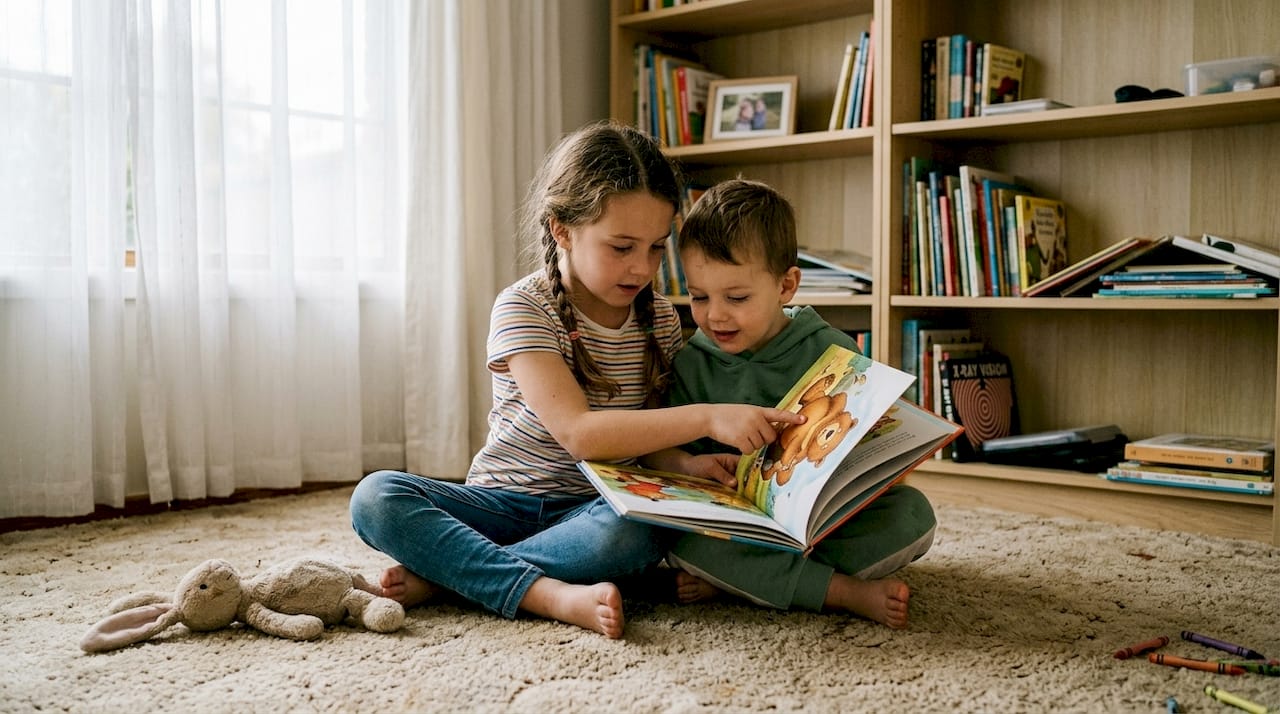
For picture books, don't forget the power of patterned language. Repeating phrases and rhythms aren't just fun to read aloud; they help young children anticipate and participate in the story. That sense of delight is exactly what makes a book get requested at bedtime, night after night.
Pro Tip: Read your manuscript aloud to yourself. If you stumble over a sentence or lose your breath mid-paragraph, your young reader will too. Rhythm and flow matter as much as the words themselves. You can also check out benefits of ghost stories in children's books for ideas on how suspense and pacing can add energy to any genre.
Bringing your story to life: illustrations and visual storytelling
With your storyline mapped out, the next challenge is translating words into visuals that captivate kids. Illustrations deepen children's comprehension and enjoyment in picture books, often carrying as much narrative weight as the text itself.
If you're not an illustrator, you have two main options. You can hire a freelance illustrator through platforms like Reedsy or Upwork, or you can approach small presses that handle illustration as part of their publishing process. Either way, strong visual storytelling can compensate for limited text and facilitate learning, especially for the youngest readers.
Here's a quick look at illustration styles and their impact:
| Style | Best age range | Mood/effect |
|---|---|---|
| Bold, flat color | 0–4 | Bright, stimulating |
| Watercolor | 3–8 | Warm, gentle, whimsical |
| Ink and line art | 6–12 | Detailed, imaginative |
| Digital illustration | All ages | Versatile, polished |
| Collage/mixed media | 4–10 | Textured, playful |
When working with an illustrator, give clear but open-ended art direction. Share your theme, the emotional tone of each scene, and any key visual details that matter to the story. Don't over-script it. The best illustrators bring ideas you never imagined, and those surprises often make the book better.
Also, think about what your text doesn't need to say. If the illustration shows a character crying, your words don't need to state "she was sad." Let the visuals do the emotional heavy lifting. This kind of text-image synergy is what makes top illustrated children's books so memorable.
Pro Tip: Leave intentional visual space in your manuscript. Notes like "[illustration: character discovers the hidden door]" help your illustrator understand what the picture needs to accomplish without locking them into rigid descriptions.
Preparing and publishing your children's book
Once the story is written and illustrated, make sure your work is ready for the world to see. Self-publishing and traditional publishing both require polished manuscripts and attention to formatting. Don't skip this stage.
Here's a clear path to follow:
- Edit for clarity and flow: Cut unnecessary words. Trim repetitive ideas. Read the manuscript as if you've never seen it before.
- Get a professional edit: Hire a developmental editor or at minimum a copy editor. Fresh eyes catch what yours miss.
- Format for your medium: Choose legible fonts (at least 14pt for early readers), generous line spacing, and a layout that breathes. For picture books, consider how text placement interacts with illustration zones.
- Choose your publishing path: Traditional publishers offer distribution and editorial support but require a literary agent and long timelines. Self-publishing gives you speed and full creative control but demands more upfront investment.
- Prepare submission materials or upload files: For traditional routes, you'll need a query letter and sample pages. For self-publishing, format your files for platforms like Amazon KDP or IngramSpark.
- Launch with a plan: Think about your audience before release day. Reach out to local libraries, schools, parent blogs, and book clubs.
Successful children's books often go through multiple rounds of revision and feedback before they ever reach readers. That's not a sign of failure. That's the process.
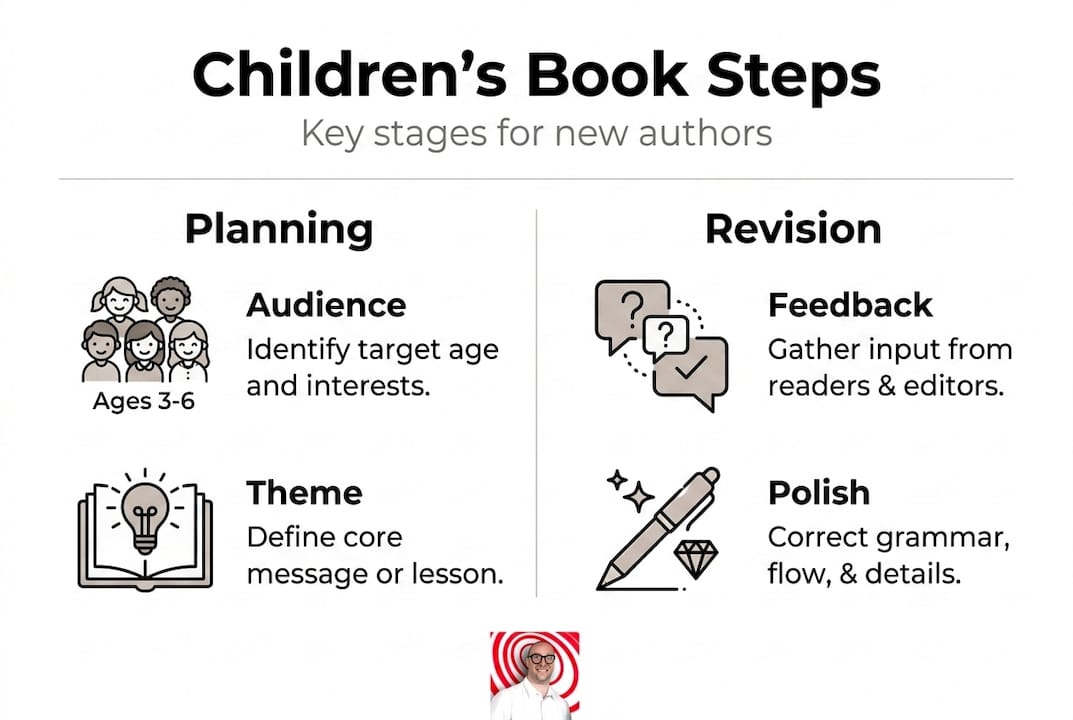
Pro Tip: Before you finalize your manuscript, test it live. Read it aloud to actual children in your target age range. Watch their faces. Notice where they zone out or light up. That real-world feedback is worth more than any writing guide, including this one.
What most guides miss about children's book success
Most writing guides tell you to follow the formula. Pick a theme, structure your plot, hire an illustrator, publish. But here's the uncomfortable truth: formula alone doesn't create books that children beg to read again.
What separates the forgettable from the beloved is authentic connection. The books that stand the test of time aren't the ones written to chase trends. They're the ones where you can feel the writer genuinely cared. Lasting children's books are those where the writer's passion and authenticity resonate with young readers in a way no market research can manufacture.
Iterate ruthlessly, but from a place of genuine curiosity. Ask kids what confused them. Ask parents what they'd skip. Ask teachers whether the theme landed. Then revise not to please everyone, but to better serve the story you set out to tell.
Chasing trends is the fastest way to arrive late to a party that's already over. The writers who build lasting careers in children's literature do it by finding writing captivating children's books starts with their own honest fascination, then channeling that energy into a story only they could tell.
Explore inspiring children's books and resources
The best way to sharpen your craft as a children's book author is to study what's already working. Reading widely in the genre gives you an instinctive feel for pacing, character, and the kind of storytelling that makes kids lean in.

At markwatsonbooks.com, you'll find a curated selection of children's titles alongside a rich blog packed with actionable writing guidance. Whether you want to browse children's books for inspiration or explore the full range of storytelling styles across the all books collection, there's something to spark your next great idea. Dive in, take notes, and let the best examples fuel your own creative vision.
Frequently asked questions
What is the typical word count for a children's book?
Children's book word counts vary: picture books often range from 300 to 1,000 words, while chapter books can be 1,000 to 10,000 words depending on the age group.
Do I need to hire an illustrator for my children's book?
You can collaborate with an illustrator or use your own art, but high-quality, age-appropriate illustrations are essential for most children's books, particularly picture books where visuals carry the story.
Should I self-publish or look for a traditional publisher?
Both paths are valid: self-publishing offers speed and creative control, while traditional publishers provide editorial support and wider distribution. Your choice depends on your timeline, budget, and long-term goals. For a detailed breakdown, explore expert tips for early readers to see what approach fits your project best.