
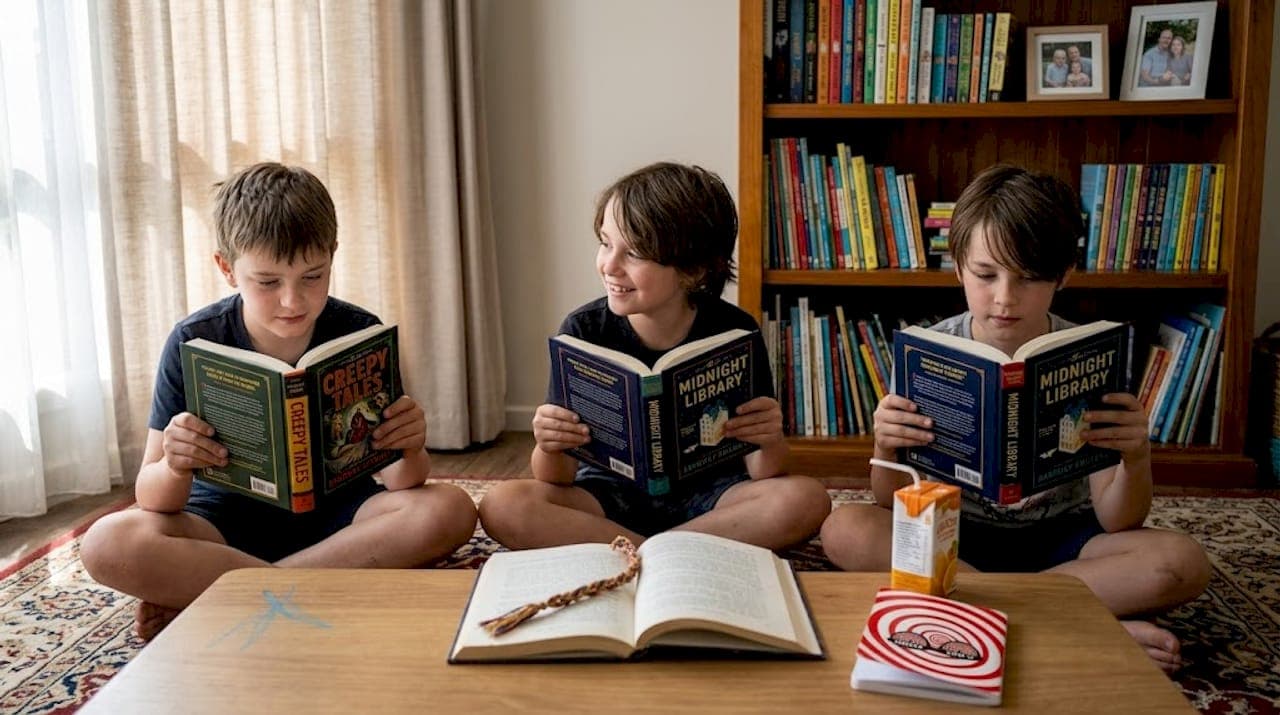
TL;DR:
- Curated horror anthologies provide safe, engaging stories that build resilience and critical thinking in children.
- Modern anthologies focus on atmosphere, diversity, and age-appropriate content to ensure safety and enjoyment.
- Parents and educators can select suitable collections by considering age, themes, and sample stories beforehand.
Horror and children's books might sound like an odd pairing, but educators across the USA are increasingly recommending curated horror anthologies as a powerful reading tool. These collections introduce young readers to spine-tingling stories without crossing into truly frightening territory. Many parents assume "horror" means nightmares and trauma, but children's anthologies are curated for safe, educational comparison of stories across genres, themes, and styles. This guide breaks down what anthologies are, why the horror variety works so well for kids, and how you can confidently choose the right one for your young reader.
Table of Contents
- What is a children's anthology?
- Why choose horror-themed anthologies for children?
- How are scary anthologies curated for safety?
- Tips for choosing the right anthology for your child
- A fresh look: What safe scares really teach kids
- Find the perfect anthology for your young reader
- Frequently asked questions
Key Takeaways
| Point | Details |
|---|---|
| Anthologies offer variety | Children's anthologies provide diverse stories in one book, making reading more engaging. |
| Safe horror builds confidence | Carefully chosen scary tales help kids learn to manage fear in a safe environment. |
| Curation ensures appropriateness | Modern editors and educators oversee that content matches age and developmental needs. |
| Selection tips matter | Reading reviews, checking age guidelines, and sampling stories ensure the right fit for your reader. |
What is a children's anthology?
Now that you understand the broad appeal, let's define anthologies and how they work. At its core, an anthology is a curated collection of stories, poems, or excerpts gathered around a central theme or genre. Think of it as a literary sampler platter. Each piece offers its own flavor, but together they create a satisfying, varied reading experience.
Anthologies are themed collections with diverse formats, meaning a single volume might include short stories, folklore retellings, verse, and illustrated vignettes all under one cover. That variety keeps young readers engaged and prevents the fatigue that can come from a single long novel.
For educators, anthologies are genuinely powerful classroom tools. A teacher can assign one story for discussion, compare two tales from different cultures, or use a poem to introduce a longer thematic unit. The short format suits classroom schedules perfectly. Kids who struggle with full novels often thrive with anthology-style reading because the wins come faster.
What you'll typically find inside a children's anthology:
- Short stories (usually 2–15 pages each)
- Poems and verse
- Folklore and legend retellings
- Illustrated excerpts
- Author notes or contextual introductions
Here's a quick look at common anthology formats and how they're typically used:
| Format | Best for | Typical length |
|---|---|---|
| Short story collection | Independent reading | 5–15 pages per story |
| Poetry anthology | Classroom discussion | 1–3 pages per poem |
| Mixed genre anthology | Comparative learning | Varies |
| Themed folklore collection | Cultural exploration | 5–10 pages per tale |
Age-level appropriateness is carefully considered in quality anthologies. Publishers and editors work to match vocabulary, theme intensity, and narrative complexity to the target age group. You'll find children's book collections organized by reading level and theme, which makes browsing far less overwhelming for busy parents.
Pro Tip: If your child is a reluctant reader, start with an anthology rather than a novel. The short story format delivers a sense of accomplishment quickly, which builds reading confidence over time.
The value of anthologies extends beyond convenience. Exposure to multiple authors, styles, and themes within a single book builds critical thinking skills. Kids start noticing how different writers build tension, develop characters, or use setting to create mood. Those are the themes in children's anthologies that make literary analysis feel natural rather than forced.
Why choose horror-themed anthologies for children?
Understanding what an anthology is, the next question is: Why horror, and why now? The answer is more grounded in child development than you might expect.
Age-appropriate scary stories give children a controlled space to experience and manage fear. When a child reads a suspenseful story, their heart rate rises slightly, their imagination sparks, and then the story ends safely. That cycle builds emotional resilience. It's a low-stakes rehearsal for handling anxiety in real life.
Horror anthologies are often recommended as safe, enjoyable, and age-appropriate for building resilience in young readers. Unlike horror movies or video games, which can deliver uncontrolled, intense stimuli, anthologies give kids the power to pause, re-read, and process at their own pace.
Popular series like Scary Stories to Tell in the Dark and Don't Turn Out the Lights have captured the imagination of generations of young readers. Modern titles have refined the formula, using classic horror anthologies for kids as a benchmark while adding more culturally diverse stories and tighter content controls.
Here's a comparison of classic versus modern anthology approaches:
| Feature | Classic anthologies | Modern anthologies |
|---|---|---|
| Content focus | Folklore, urban legends | Diverse genres, global tales |
| Scare intensity | Occasionally graphic | Atmosphere-focused |
| Diversity of voices | Limited | Broad and inclusive |
| Educator endorsements | Mixed | Widely recommended |
The educational value of scary stories is backed by experience from classrooms across the country. Here are the top reasons educators reach for horror anthologies:
- They build reading stamina through suspense and cliffhangers.
- They develop empathy by placing characters in vulnerable situations.
- They spark discussion about fear, bravery, and consequence.
- They introduce literary devices like foreshadowing and atmosphere naturally.
- They make reluctant readers genuinely excited to turn the page.
"The short format and cliffhanger structure of anthologies make age-gated scares both effective and essential for young readers who are just beginning to explore complex emotions."
Knowing why kids love spooky tales helps parents stop seeing horror as a threat and start seeing it as a tool. Fear, when experienced safely through story, is genuinely fun for most children. That excitement is what turns a reluctant reader into a book lover.
How are scary anthologies curated for safety?
Once you see the value of horror, it's natural to ask how publishers keep things safe for children. The short answer: it's a deliberate, multi-step process.
Editors and publishers who specialize in children's horror use a careful story selection process. They screen submissions for age-appropriate vocabulary, thematic intensity, and the degree of perceived threat in each story. The goal is atmosphere and suspense, not violence or explicit harm.
Modern anthologies use controlled scares, focusing on atmosphere rather than explicit harm, which is exactly what separates a great children's horror anthology from one you'd want to keep off the shelf. Editors ask: Does this story build dread through setting and sound? Or does it rely on graphic imagery? The former earns a place in the collection.
What makes a story safe for a children's anthology:
- Threat is implied or atmospheric, not graphic
- Monsters or antagonists are fantastical, not realistic predators
- Resolution provides closure or a clear moral
- Vocabulary and sentence complexity match the target age
- Cultural content is reviewed for sensitivity
Pro Tip: Look for anthologies that include editorial notes explaining how stories were selected. That transparency is a strong signal of a thoughtful, well-curated collection.
Exploring monster horror for learning reveals that fantastical monsters, like vampires, ghosts, and witches, are far less psychologically threatening to children than realistic scary scenarios. Publishers know this, which is why the best children's anthologies lean into folklore creatures and supernatural settings.
Understanding horror story themes and elements helps parents evaluate a book before handing it over. Look for themes of bravery overcoming fear, community solving a mystery, or a child outsmarting a supernatural threat. Those narrative arcs signal a story built to empower rather than traumatize.
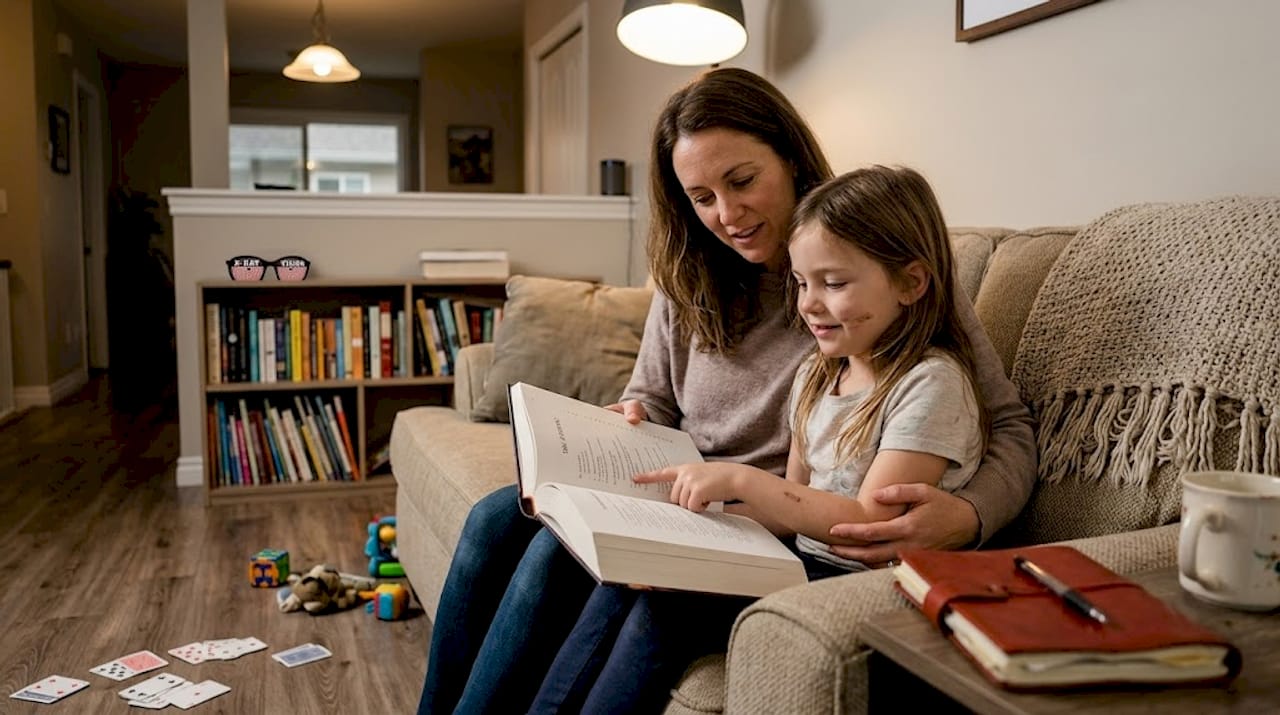
It's worth noting that some older classics were challenged for content deemed too intense. Modern anthology editors study those cases carefully, using them as a blueprint for what to avoid while preserving the thrilling, genre-defining energy that makes these books so beloved.
Tips for choosing the right anthology for your child
Knowing how these books are curated, here's how you can confidently pick the best anthology for your child.
Start with age recommendations. Most publishers include a recommended age range on the cover or in the product description. Take those seriously. A book designed for ages 10–14 may include themes that overwhelm a sensitive seven-year-old, even if that child reads above grade level.
Some classic horror anthologies are still challenged for their content, which is a reminder that not all "children's horror" is created equally. Modern collections use more careful threat management, but it still pays to read reviews before purchasing.
Here's a practical checklist for choosing wisely:
- Check the publisher's age recommendation and reading level.
- Read reviews from Common Sense Media and educator blogs.
- Identify the thematic focus: folklore, urban legend, supernatural, or monster-based.
- Consider format: does your child prefer stories, poems, or a mix?
- Sample one or two stories before giving the full book to a sensitive reader.
- Ask your child's teacher or librarian for classroom-tested picks.
"Parental screening is always worthwhile. Read one story aloud together first, gauge your child's reaction, and use that as your compass for whether to continue."
Think about what excites your child specifically. A kid obsessed with ghost legends will respond differently to a folklore anthology than to a sci-fi horror collection. Matching the anthology's theme to your child's existing interests dramatically increases engagement.
Building courage in children through story is a real, measurable benefit. When children navigate fear safely through reading, they build confidence that extends into real-world situations. That's a meaningful return on a single book purchase.
A fresh look: What safe scares really teach kids
Conventional wisdom often pushes parents toward removing all scary content from a child's reading life. The instinct is understandable, but the evidence tells a different story.
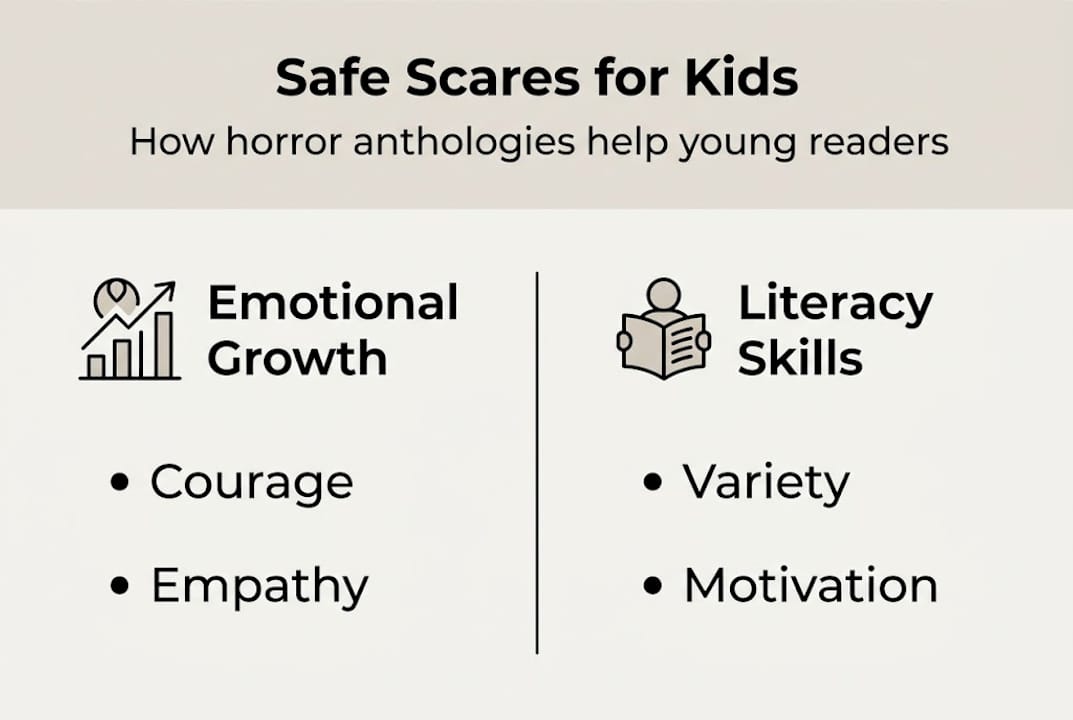
Children who engage with age-appropriate scary stories develop emotional tools that purely comfortable reading simply cannot provide. Processing fear in a safe, story-based environment teaches kids to sit with discomfort, regulate their emotions, and emerge on the other side feeling capable. That's not a side effect. That's the point.
Carefully curated anthologies build empathy by placing kids inside the perspective of a frightened character. They build courage by showing that fear can be faced and survived. They build a love of reading by making the act feel genuinely thrilling. The right anthology isn't just a book. It's a formative experience that shapes how a child relates to challenge, imagination, and story for the rest of their life.
Find the perfect anthology for your young reader
Ready to discover anthologies your child will love? Here's where to start.
Mark Watson Books offers a handpicked range of children's anthologies designed to thrill without overwhelming. Whether you're looking for classic folklore chills, modern supernatural suspense, or something delightfully creepy, there's something in the collection for every young reader.

Browse age-appropriate horror books curated with both parents and educators in mind, or explore the fan-favorite creepypasta stories for kids that blend internet folklore with classic scare craft. Every title is selected with the same care this article describes. Safe scares, big imagination, and stories your child will be talking about for weeks.
Frequently asked questions
What age groups are children's horror anthologies suitable for?
Most horror anthologies are designed for ages 8 to 12, with content carefully tailored for tweens and older kids to deliver balanced, age-appropriate scares.
Are horror stories in anthologies too scary for sensitive readers?
Curated collections prioritize atmosphere and controlled tension over shock, but parents of sensitive readers should always sample a story or two before sharing the full book.
How do educators use anthologies in learning?
Educators rely on anthologies to compare genres, writing styles, and themes side by side, making them ideal for building reading comprehension and critical thinking skills.
Why are some classic children's horror anthologies challenged or banned?
Books like Scary Stories have faced challenges for content considered too intense, though today's modern anthologies emphasize safer, atmosphere-driven themes that sidestep those concerns.