
TL;DR:
- Metafiction in horror explicitly acknowledges itself as a story to deepen fear. It makes the audience aware they are inside a constructed narrative, heightening unsettling feelings.
Metafiction in horror is defined as a narrative technique where the story explicitly recognizes itself as a fictional construct, using that self-awareness to deepen fear and suspense. This goes far beyond a character winking at the camera or joking about genre tropes. Metafictional horror engages existential questions of authorship and narrative awareness, forcing audiences to confront the act of storytelling itself as a source of dread. If you write or read horror, understanding this technique unlocks a whole new layer of what the genre can do.
What is metafiction in horror, and how does it work?
Metafiction is the formal term for fiction that self-consciously reflects on its own nature as a story. In horror, that self-reflection becomes a weapon. The narrative does not just scare you with monsters or murderers. It scares you by making you aware that you are inside a constructed story, and that awareness itself becomes unsettling.
The key distinction from parody is stakes. A parody mocks genre conventions for laughs. Metafictional horror uses those same conventions to create genuine dread. Successful metafiction balances self-awareness with real existential threat, such as loss of agency or narrative collapse. Without that threat, the technique slides into comedy rather than fear.
This is why metafiction in horror is so demanding to write well. The story must hold two things at once: the reader's awareness that they are reading a story, and their genuine emotional investment in what happens next. That tension, when executed correctly, produces a fear unlike anything conventional horror can generate.
Key techniques used in metafictional horror
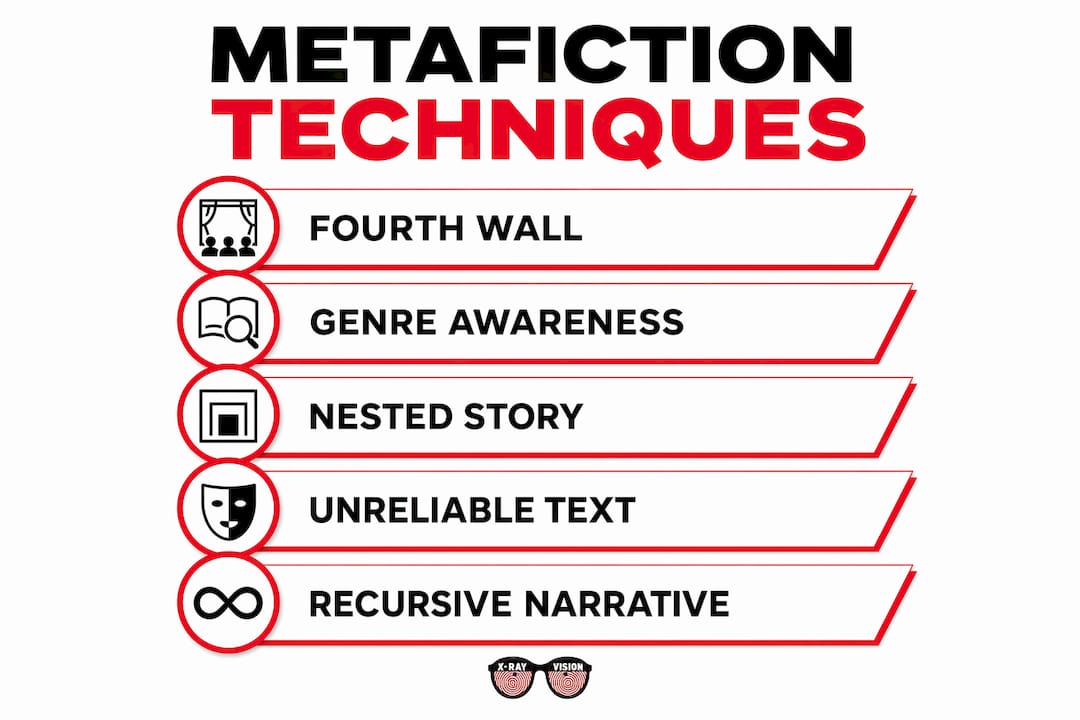
Writers and filmmakers use several specific devices to make metafiction work in horror. Each one targets a different layer of the audience's relationship with the story.
- Fourth-wall breaks: A character directly addresses the reader or viewer, collapsing the distance between fiction and reality. This works in horror because it implies the story knows you are there.
- Recursive or nested storytelling: A story contains another story, and the inner story begins to bleed into the outer one. The horror comes from watching the boundaries dissolve.
- Reflexive found footage: The camera or document itself becomes a character. Techniques like reflexive found footage and narrative collapse fuse intellectual and visceral horror in ways traditional filmmaking cannot.
- Narrative collapse: The story's own structure begins to fail, characters realize they are fictional, or the plot refuses to resolve. This creates a specific kind of dread rooted in loss of control.
- Mockumentary framing: Presenting horror events as documentary footage makes the audience complicit in watching, which heightens discomfort.
Pro Tip: Use metafictional devices sparingly and anchor each one to a real narrative consequence. A fourth-wall break with no follow-through reads as a gimmick. A fourth-wall break that changes what the character can do, or what the reader feels safe doing, becomes genuinely frightening.
The most effective metafictional horror keeps the audience slightly off-balance. They should never be fully certain whether the self-awareness is a joke or a threat. That uncertainty is where the fear lives. You can study how literary devices in horror create lasting fear to see how these techniques interact with broader narrative structure.
How metafiction enhances the horror experience
The dual impact of metafiction on audiences is what makes it so powerful. Most horror works on one level: emotional fear. Metafictional horror works on two levels simultaneously, and self-reflexivity produces new fear forms where cognition and emotion coexist rather than cancel each other out.
"Metafictional horror uses storytelling as a monster itself, making the act of telling or consuming a story a source of fear." — The Allure of Metafictional Supernatural Horror
That quote captures the core mechanism. When the story itself becomes the threat, the audience cannot escape by reminding themselves it is fiction. The reminder only deepens the trap. Self-awareness in metafictional horror does not lessen fear. It produces a simultaneous intellectual and emotional effect that enhances the experience.
The most unsettling dimension of this technique is audience complicity. Metafictional horror frames the audience as complicit in sustaining the narrative horror. You are not just watching the monster. You are feeding it by continuing to read or watch. That shift from observer to participant is a genuinely new form of dread, and it explains why metafictional horror resonates so strongly with readers who have grown up consuming horror as a genre they know well.
Modern digital culture amplifies this effect. Recursive storytelling and digital perspectives heighten the porous boundary between fiction and reader reality, especially when the story uses surveillance footage, AI-generated content, or social media as narrative devices. The more familiar the medium, the more disturbing the intrusion.
Metafiction examples in horror literature and film
Concrete examples show how these techniques function across different media. The following table maps key works to their primary metafictional technique.
| Work | Medium | Primary technique | Effect |
|---|---|---|---|
| Scream (1996) | Film | Genre self-awareness | Characters cite horror rules while living them |
| The Cabin in the Woods (2012) | Film | Narrative deconstruction | Horror tropes revealed as a controlled system |
| Lake Mungo (2018) | Film | Reflexive mockumentary | Documentary format implicates the viewer |
| House of Leaves by Mark Z. Danielewski | Literature | Nested footnotes and documents | The text itself becomes unstable and threatening |
| Cabin at the End of the World by Paul Tremblay | Literature | Refusal of narrative resolution | Reader expectations become the source of dread |
Films like Scream, The Cabin in the Woods, and Lake Mungo use self-awareness and genre deconstruction to challenge horror conventions in distinct ways. Scream keeps the horror real while the characters discuss horror films. The Cabin in the Woods reveals the genre machinery behind the scenes. Lake Mungo uses documentary framing to make the audience feel like voyeurs.
In literature, House of Leaves is the benchmark. The book contains a fictional academic analysis of a fictional documentary about a house that is larger on the inside than the outside. Each layer of the text destabilizes the one above it. Paul Tremblay's work takes a different approach. The novel refuses typical explanations, drawing attention to reader expectations and the nature of stories themselves. Both methods work, but they produce very different kinds of fear.
The difference between print and visual metafiction is worth noting. Film can use the camera as a self-aware device, making the act of watching feel dangerous. Literature can make the text itself unreliable, so the reader cannot trust what they are reading. Both exploit the specific relationship between the audience and the medium.
Metafiction vs. parody and meta-humor in horror
The most common misunderstanding about metafictional horror is confusing it with parody or genre humor. They are not the same thing, and the distinction matters for both writers and readers.
Metafiction demands genuine engagement with the reality of being inside a fictional and often threatening narrative framework. True metafiction demands engagement with the experience of being inside a malicious narrative, beyond merely pointing out tropes. The horror is real within the story's logic, even as the story acknowledges it is a story.
Parody uses genre awareness for comic effect. The horror conventions are mocked, not weaponized. The audience laughs because they recognize the tropes, not because they fear them.
Meta-humor is a lighter version of the same impulse. A character might say "I've seen enough horror movies to know not to split up." That line is funny and self-aware, but it does not make the audience question the nature of the story they are consuming.
The practical difference comes down to stakes. Over-reliance on fourth-wall breaking without narrative threat risks parody rather than horror. If the self-awareness has no consequence, it is a joke. If the self-awareness changes what is possible within the story, or what the audience feels safe doing, it is metafiction.
Pro Tip: Ask this question about every metafictional moment you write: does this self-awareness make things worse for the characters or the reader? If the answer is no, cut it or rewrite it until it does.
Writers who want to understand how horror suspense techniques interact with self-reflexive storytelling will find that the best metafictional horror never lets the audience relax into knowing irony. The awareness is always a trap, not a comfort.
Key Takeaways
Metafiction in horror works because it turns narrative self-awareness into a genuine source of fear, implicating the audience as participants rather than observers.
| Point | Details |
|---|---|
| Core definition | Metafictional horror explicitly acknowledges its fictional nature to deepen fear, not just for laughs. |
| Audience complicity | Readers and viewers become participants who sustain the horror through the act of consuming the story. |
| Technique over gimmick | Fourth-wall breaks and recursive storytelling only work when they carry real narrative consequences. |
| Distinct from parody | Parody mocks genre conventions; metafiction weaponizes them to create genuine existential dread. |
| Dual impact | Effective metafictional horror produces intellectual reflection and visceral fear at the same time. |
Why metafiction in horror is the most honest form of the genre
I have spent years writing horror across multiple formats, from thriller novels to creepypasta collections, and metafiction keeps pulling me back. Not because it is fashionable, but because it is the most honest thing horror can do.
Every horror story is, at some level, a contract with the reader. You agree to be scared. The story agrees to scare you. Metafiction tears up that contract in front of you and asks: what happens now? That question is genuinely frightening in a way that no monster can replicate.
The challenge I see writers struggle with most is the temptation to use self-awareness as a shield. If the story acknowledges it is a story, the writer feels protected from criticism. But that is exactly backwards. Metafiction raises the stakes for the writer, not lowers them. You have to earn the fear twice: once through the story's events, and once through the story's structure.
The digital era makes this more urgent, not less. Creepypasta, AI-generated horror, and viral ghost stories already blur the line between fiction and reality for millions of readers. Metafiction gives writers a formal framework for that blurriness. Used well, it does not feel like a literary trick. It feels like a warning.
— Mark
Horror that plays with its own rules, at Markwatsonbooks

Markwatsonbooks publishes horror that does not play it safe. The horror collection includes titles that push narrative boundaries, including works that use the kind of self-aware, genre-bending storytelling this article explores. For readers drawn to the metafictional side of horror, the creepypasta collections are a natural fit. Creepypasta as a format is inherently metafictional: stories designed to feel real, shared as if they are real, and consumed by readers who know they are fiction but feel the fear anyway. Browse the full books catalog to find your next unsettling read.
FAQ
What is metafiction in horror, exactly?
Metafiction in horror is a narrative technique where the story consciously acknowledges its own fictional construction, using that self-awareness to create fear rather than comedy. It differs from parody by maintaining genuine existential stakes within the narrative.
What are the best metafiction examples in horror films?
Scream, The Cabin in the Woods, and Lake Mungo are the most cited examples. Each uses a different technique: genre self-awareness, narrative deconstruction, and reflexive mockumentary framing, respectively.
How does metafiction work in horror literature?
Metafictional horror literature uses devices like nested documents, unreliable texts, and recursive storytelling to make the act of reading feel dangerous. House of Leaves by Mark Z. Danielewski is the most studied example.
Is metafictional horror effective, or does it undermine the fear?
Metafictional horror is effective when self-awareness carries real narrative consequences. Research shows self-reflexivity produces a simultaneous intellectual and emotional effect that enhances rather than diminishes fear.
How is metafiction different from a horror parody?
Parody uses genre awareness for laughs. Metafiction uses the same awareness to create dread, implicating the audience as participants in the horror rather than observers laughing at it from a safe distance.