
TL;DR:
- Horror novellas are short, intense works of fiction that build sustained dread within a concise structure. They focus on a single conflict and maintain cinematic pacing, making them highly effective for delivering focused terror. The format is increasingly popular due to ease of publication, rapid releases, and strong adaptation potential.
A horror novella is a work of fiction between 17,500 and 40,000 words designed to deliver sustained, focused terror from the first page to the last. The form sits between the short story and the novel, and that middle ground is exactly where horror thrives. A novella gives a writer enough space to build dread, develop a protagonist under pressure, and deliver a gut-punch finale without the pacing drag that longer novels risk. If you want to understand what makes horror novellas so effective, and why so many readers and writers are drawn to the format, this guide covers everything you need.
Why is the novella the perfect length for horror stories?
Fear is fragile. Sustain it too long and it dulls. Cut it too short and it never fully lands. The novella solves both problems at once.
Horror novellas stay under 200 pages and deliver narrative intensity comparable to a 90-minute film. That cinematic quality is not accidental. The format forces writers to keep every scene tight, every image unsettling, and every character choice meaningful. There is no room for filler, and filler is where fear goes to die.
"Horror uniquely understands that fear is fragile, and the novella format sustains its tension better than longer forms. The brevity is not a limitation. It is the weapon."
Longer horror novels can lose momentum across 400 pages. Subplots multiply, secondary characters dilute the central threat, and readers get breathing room that breaks the spell. A horror novella refuses to give that breathing room. The dread stays dense and suffocating from chapter one.
- Focused conflict: One protagonist, one central threat, one escalating crisis.
- No subplot dilution: Every scene feeds directly into the core horror.
- Cinematic pacing: Readers move through the story at the speed of a film, not a series.
- Emotional payoff: The finale hits harder because nothing has been wasted getting there.
Pro Tip: If you are writing a horror novella, treat every chapter like a scene in a film. If a scene does not raise tension or deepen dread, cut it.
The literary devices in horror that sustain tension, such as foreshadowing, unreliable narration, and sensory imagery, work best when the story is short enough to keep readers in a constant state of unease. The novella format amplifies all of them.

What defines horror novellas compared to novels and short stories?
The three formats of short horror fiction differ in length, structure, and reader experience. Each serves a different purpose, and horror novellas occupy a uniquely powerful position among them.
| Format | Word count | Structure | Horror strength |
|---|---|---|---|
| Short story | Under 7,500 words | Single scene or moment | Shock and atmosphere |
| Novella | 17,500–40,000 words | Single conflict arc | Sustained dread and intensity |
| Novel | 80,000+ words | Multiple arcs and subplots | World-building and complexity |
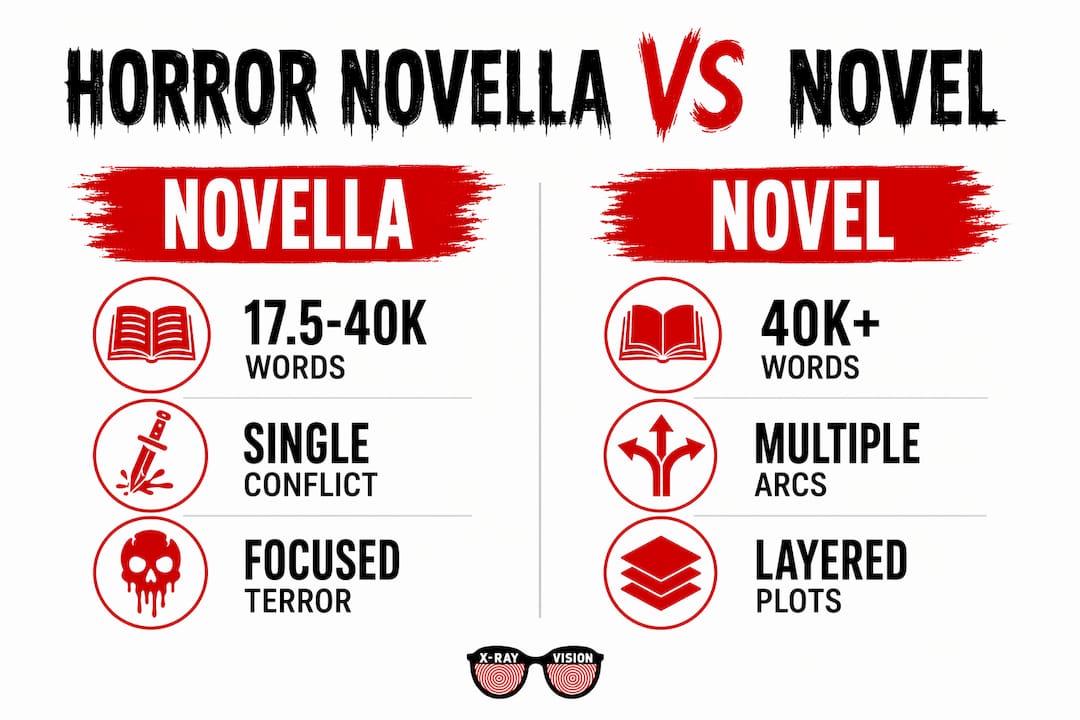
Effective horror novellas focus on a singular central conflict with one protagonist and minimal subplots. That structural discipline is what separates the format from longer novels. A novel can afford to wander. A novella cannot.
What defines horror novellas at the craft level is extreme minimalism. Novella writers must strip characters to core motivations, focusing on intense emotional payoffs rather than long-term development. The protagonist does not grow across years of fictional time. They survive, or they do not, and the reader feels every moment of that pressure.
Short stories, by contrast, work best as snapshots. They deliver a single image of horror, a moment of realization, or a twist ending. They rarely have space to build genuine dread. The novella gives writers the room to let fear accumulate, scene by scene, until it becomes unbearable.
- Short stories create impact through brevity and surprise.
- Horror novellas create impact through relentless, focused tension.
- Horror novels create impact through scale and immersion.
Pro Tip: When choosing your format, ask yourself one question: does my horror concept need time to breathe, or does it need to suffocate the reader quickly? If the answer is the latter, write a novella.
The history of horror literature shows that the novella has been a vehicle for the genre's most enduring ideas since the 19th century.
What are the best horror novella examples?
The most influential horror novellas prove the format's power through their staying power. Many are under 200 pages. Several have been adapted into major films. All of them demonstrate what focused horror storytelling can achieve.
- Frankenstein by Mary Shelley (1818): Often cited as the first science-horror novella, it runs under 280 pages and builds its dread through moral consequence rather than monsters. The horror is philosophical and visceral at once.
- The Strange Case of Dr. Jekyll and Mr. Hyde by Robert Louis Stevenson (1886): A masterclass in psychological horror. Classic horror novellas like Jekyll and Hyde remain essential examples of the form, many running under 100 pages.
- The Turn of the Screw by Henry James (1898): Ambiguity as horror. James never confirms whether the ghosts are real, and that uncertainty is more terrifying than any monster.
- Crossroads by Laurel Hightower: A modern example praised for its emotionally potent finale delivered in a concise form. Hightower uses grief and the supernatural together to devastating effect.
- Works by Stephen King in novella form: King's Different Seasons and Four Past Midnight collections include novellas that became major films, including The Body (adapted as Stand by Me) and The Mist. These prove the format's cinematic adaptability.
Each of these works shares a common trait: a single, relentless conflict that the reader cannot escape. The best horror novella examples do not give you room to look away. They trap you in the story and hold you there until the final line.
Understanding cinematic storytelling techniques helps explain why so many horror novellas translate so naturally to film. The pacing, the tight focus, and the single-arc structure mirror how screenwriters build tension across 90 minutes.
How do horror authors use the novella format for creative and market advantages?
The novella format offers real, practical benefits for horror authors beyond the creative ones. Publishing trends, reader habits, and digital markets all favor the form right now.
-
Indie publishing is more welcoming. Novellas are easier to self-publish and find niche publishers willing to promote them, given traditional publishing hesitance toward the format. The big five publishers rarely acquire standalone novellas. Indie presses and self-publishing platforms have filled that gap.
-
Modern readers want bite-sized reads. Horror novellas are described as "bite-sized screams" that capture dense, suffocating atmosphere for time-strapped readers. A novella can be read in one or two sittings, which suits on-demand reading habits and binge culture perfectly.
-
Frequent releases build author visibility. A horror author can publish three novellas in the time it takes to write one full novel. More releases mean more discoverability, more reader touchpoints, and a faster-growing catalog.
-
Novellas serve as entry points. New readers are more likely to try a 150-page horror novella than commit to a 500-page novel. A strong novella can convert a casual reader into a dedicated fan.
-
Adaptation potential is high. Horror novellas' cinematic pacing and length allow easy adaptation into films and audiobooks, unlocking additional markets for authors and publishers. The Mist, The Body, and dozens of other adaptations started as novellas.
Over 70% of horror readers now prefer the novella format for visceral, focused horror experiences. That statistic reflects a real shift in how readers consume genre fiction. Horror authors who ignore the novella format are leaving a significant audience unserved.
Pro Tip: If you are building a horror author platform, lead with a novella. It is the fastest way to demonstrate your voice, build a readership, and create something adaptable.
Key Takeaways
The horror novella is the most effective format for sustained, focused terror because its length forces structural discipline that longer forms cannot match.
| Point | Details |
|---|---|
| Core length definition | Horror novellas run 17,500–40,000 words, sitting between short stories and full novels. |
| Why length matters | The format sustains dread without dilution, like a 90-minute horror film in prose form. |
| Structural discipline | Novellas strip subplots and focus on one protagonist, one conflict, and one emotional payoff. |
| Market advantage | Indie presses favor novellas, and modern readers prefer their bite-sized, high-intensity format. |
| Adaptation potential | Cinematic pacing makes horror novellas natural candidates for film and audiobook adaptation. |
Why I think the novella is horror's most underrated weapon
Most horror conversations center on novels. King's It, Shirley Jackson's The Haunting of Hill House, or the latest 400-page doorstop from a debut author. The novella gets treated as a lesser form, a stepping stone, or something you write when you cannot sustain a full novel. That view is wrong, and I think it costs writers and readers a lot.
The novella does not ask less of a writer. It asks more. Stripping a horror story to its core, removing every subplot, every digression, every comfortable pause, and still delivering a finale that leaves the reader shaken? That is harder than writing a long novel. The discipline required is intense.
What I have found, both as a reader and as someone who thinks deeply about horror craft, is that the novella format creates a specific kind of fear that longer works rarely achieve. It is the fear of no escape. You are in the story, the walls are closing, and there is no subplot to duck into for relief. That sustained, suffocating quality is what makes the best horror novellas unforgettable.
For aspiring horror writers: do not skip the novella. Write one before you write a novel. It will teach you more about pacing, tension, and character economy than any craft book. The constraints are the lesson.
— Mark
Horror novellas worth reading, available at Markwatsonbooks
If the format has caught your attention, the best next step is to read one.

Markwatsonbooks offers a curated selection of horror fiction that includes intense, focused reads built for fans who want their fear delivered fast and hard. The collection spans classic horror storytelling styles and modern takes on the genre, giving readers a range of entry points. For fans of short horror fiction and internet horror, the Creepypasta collections deliver that same bite-sized, high-tension experience in anthology form. Browse the full catalog at Markwatsonbooks and find your next read.
FAQ
What is the word count for a horror novella?
A horror novella typically runs between 17,500 and 40,000 words. That range places it between a short story and a full novel, giving writers enough space to build sustained dread.
How does a novella differ from a novel in horror?
A horror novella focuses on a single conflict with minimal subplots, while a horror novel supports multiple arcs and a larger cast. The novella's tighter structure keeps tension higher throughout.
What are some well-known horror novella examples?
Classic examples include Frankenstein by Mary Shelley, The Strange Case of Dr. Jekyll and Mr. Hyde by Robert Louis Stevenson, and The Turn of the Screw by Henry James. Modern examples include Laurel Hightower's Crossroads and Stephen King's novella-length works collected in Different Seasons.
Why do horror readers prefer novellas?
Horror readers prefer novellas because the format delivers intense, focused fear without the pacing dips common in longer novels. The reading experience mirrors a 90-minute horror film, which suits modern reading habits.
Are horror novellas easier to publish than novels?
Indie presses and self-publishing platforms are more receptive to novellas than traditional big-five publishers. Authors can also release novellas more frequently, which builds catalog depth and reader visibility faster than novel-length works.