
TL;DR:
- Gothic horror combines atmospheric dread, supernatural tension, and psychological unease to explore dark pasts. It emphasizes ambiguity and setting to evoke fear rooted in history and moral decay. The genre originated with Walpole's The Castle of Otranto in 1764 and remains influential through authors like Poe and Jackson.
Gothic horror is defined as a literary genre that fuses atmospheric dread, supernatural tension, and psychological unease to expose the dark forces lurking beneath the surface of ordinary life. Unlike general horror, which often relies on shock and explicit violence, gothic horror builds its terror slowly, through crumbling settings, haunted pasts, and the creeping sense that something is deeply, irreversibly wrong. If you've ever felt that particular chill reading about a decaying mansion or a family curse that refuses to die, you already understand what gothic horror does best. This guide breaks down the genre's defining elements, its origins, its key works, and what separates it from every other kind of scary story.
What is gothic horror and what makes it distinct?
Gothic horror is a genre built on atmosphere, ambiguity, and the weight of the past. The Gothic literary tradition emphasizes sustained suspense and pseudo-medieval settings that symbolize a burdensome history pressing down on present-day characters. That pressure is the engine of the genre. Readers don't just feel scared. They feel trapped, watched, and uncertain whether the threat is real or imagined.
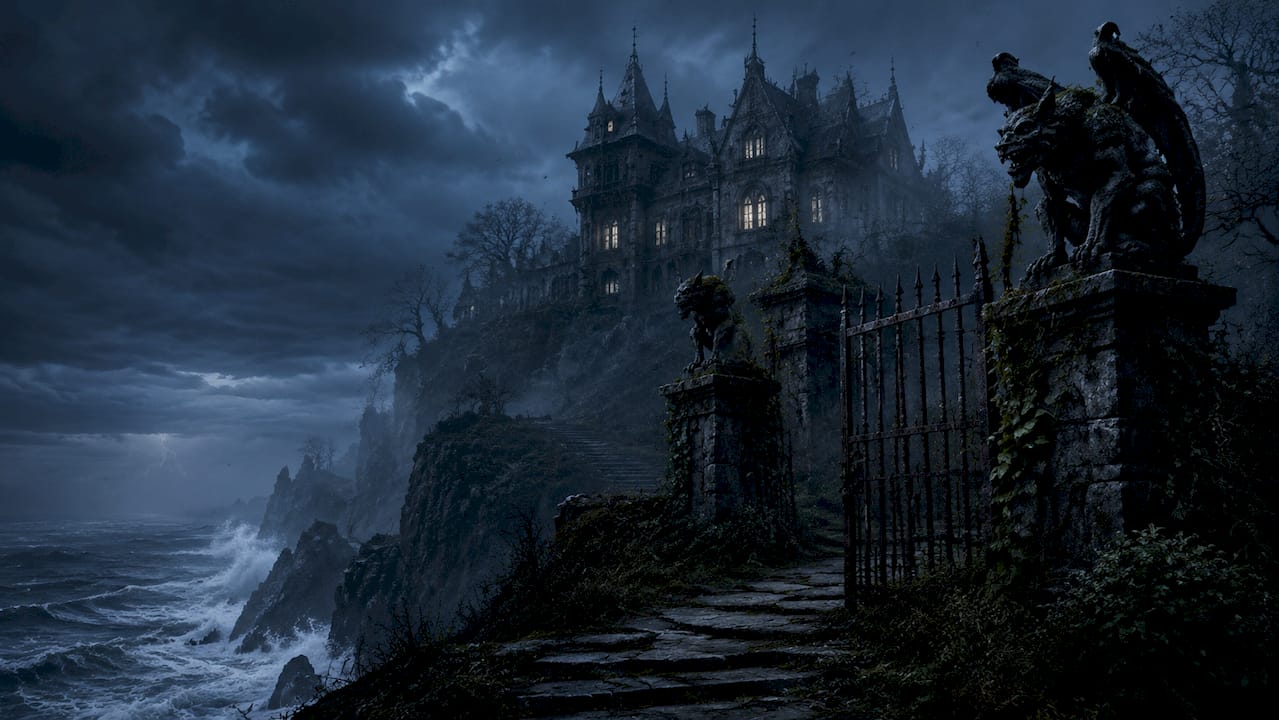
The genre sits at the intersection of horror and Romanticism. It borrows horror's emotional intensity and Romanticism's obsession with nature, beauty, and the sublime. The result is a kind of fear that feels literary and psychological rather than visceral. You're not recoiling from gore. You're unsettled by the sense that the world you thought you understood is far more fragile than it appears.
One key distinction separates gothic horror from the broader horror category: the haunting of the present by the past. Without this historical burden, a story typically belongs to another horror subgenre. A ghost story set in a modern apartment building can be terrifying, but it isn't gothic unless that ghost carries the weight of a dark lineage, a repressed secret, or a sin that was never paid for.
What are the defining elements and themes of gothic horror?
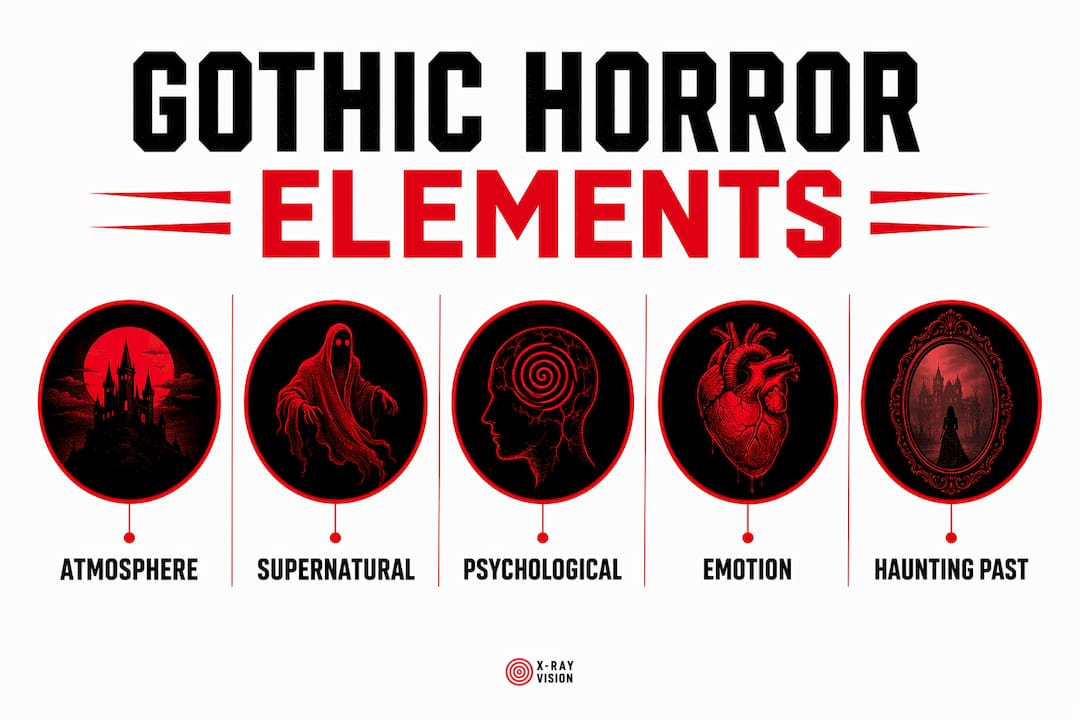
Gothic horror features five core elements that appear across the genre's most celebrated works. Understanding these elements helps you recognize the genre on sight and appreciate what each author is doing beneath the surface.
- Oppressive atmosphere. Settings like abbeys, dungeons, and crumbling castles do more than provide a backdrop. They evoke a dark history that actively shapes the characters' fates. The environment feels alive and hostile.
- Supernatural threat. Ghosts, curses, and monsters appear throughout gothic horror, but their function is rarely literal. Supernatural elements serve as metaphors for repressed guilt, trauma, or desire. The monster outside often mirrors the monster within.
- Psychological dread. Gothic horror keeps readers in a state of liminal uncertainty, never quite sure whether events are supernatural or the product of a fractured mind. That ambiguity is the genre's sharpest tool.
- Intense, overwhelming emotion. Characters in gothic horror don't experience mild anxiety. They spiral into obsession, madness, and grief. The emotional register is operatic.
- The haunted past. Hereditary curses, dark family secrets, and ancestral guilt define the genre. The history of ghouls and ancestral spirits in folklore directly fed this tradition, giving gothic authors a rich well of inherited dread to draw from.
The aesthetic of the sublime runs through all five elements. Authors use vast, awe-inspiring settings like jagged mountains and decaying mansions to overwhelm both characters and readers, blending fear with a strange, almost involuntary admiration. The environment becomes a character itself.
Pro Tip: When reading gothic horror, pay attention to the physical state of the setting. A crumbling wall or a flooded cellar is never just description. It mirrors the psychological and moral state of the characters inside.
How did gothic horror originate and evolve as a literary genre?
Gothic horror emerged as a distinct literary category in the late 18th century, born from a fascination with medieval architecture, history, and the social anxieties of the Enlightenment era. Here is how the genre developed across three centuries:
- 1764: The Castle of Otranto. Horace Walpole published the first recognized gothic novel, complete with a crumbling Italian castle, a tyrannical patriarch, and supernatural visitations. Walpole invented the genre's template almost entirely on his own.
- Late 18th century: Ann Radcliffe and the explained supernatural. Radcliffe's novels, including The Mysteries of Udolpho, popularized gothic fiction for a mass audience. She introduced the technique of the "explained supernatural," where seemingly ghostly events receive rational explanations by the story's end.
- Early 19th century: Romantic gothic. Mary Shelley's Frankenstein and John Polidori's The Vampyre pushed the genre into Romantic territory, blending gothic dread with philosophical questions about creation, ambition, and monstrosity.
- Mid-to-late 19th century: American gothic. Edgar Allan Poe and Nathaniel Hawthorne developed a distinctly American strand of the genre, rooted in Puritan guilt, isolation, and the psychological collapse of the individual. Poe's classic horror elements remain the clearest model for the genre's emotional mechanics.
- 20th century onward: Horror as a marketing category. The modern term "horror" gained traction in the 1930s with monster cinema. Gothic horror's literary tradition continued through authors like H.P. Lovecraft, Shirley Jackson, and later, Stephen King, each of whom absorbed and transformed the genre's core conventions.
| Era | Key Development |
|---|---|
| 1764 | Walpole establishes the gothic template with The Castle of Otranto |
| Late 1700s | Radcliffe popularizes gothic fiction for mass readership |
| Early 1800s | Shelley and Polidori merge gothic with Romantic philosophy |
| Mid-to-late 1800s | Poe and Hawthorne create American gothic literature |
| 1900s onward | Gothic themes absorbed into broader horror genre and cinema |
How does gothic horror differ from modern horror and other subgenres?
Gothic horror and modern horror share a goal: to frighten the reader. But they pursue that goal through completely different methods. Understanding the difference sharpens your appreciation of both.
Gothic horror relies on atmosphere, psychological tension, and moral ambiguity. Modern horror tends toward realism, graphic shocks, and contemporary social fears. A gothic story asks you to feel dread building over hundreds of pages. A modern horror story often delivers its terror in a single, visceral scene. Neither approach is superior. They are simply different instruments playing different music.
The supernatural also functions differently across the two modes. In gothic horror, the genre suggests our familiar world is a fragile shell concealing a threatening reality. The ghost or demon is a symbol first and a monster second. In modern horror, the monster is often the point. Its biology, its rules, and its kills are the story's engine.
- Gothic horror: Dread builds slowly through setting and suggestion. The threat is often ambiguous or metaphorical. The past haunts the present. Moral and psychological decay drive the plot.
- Modern horror: Fear arrives through confrontation and shock. The threat is usually explicit and physical. Contemporary social anxieties (surveillance, pandemic, identity) replace ancestral guilt.
- Psychological horror: Overlaps significantly with gothic horror but removes the supernatural entirely. The terror is purely internal.
The haunted mansion setting illustrates the contrast perfectly. In gothic horror, the mansion is a symbol of family sin and repressed history. In modern horror, it's a location where something dangerous happens. Same building, entirely different meaning.
What are some iconic works and authors that define gothic horror?
The gothic horror canon is surprisingly compact at its core. A handful of works established the genre's conventions so completely that every subsequent author has had to reckon with them.
- Horace Walpole, The Castle of Otranto (1764). The founding text. Every gothic trope, from the tyrannical patriarch to the supernatural omen, appears here in its earliest form.
- Ann Radcliffe, The Mysteries of Udolpho (1794). Radcliffe's novel defined the "female gothic," centering a young woman's psychological ordeal in a threatening, male-controlled environment.
- Edgar Allan Poe, The Fall of the House of Usher (1839). Poe's story is the clearest example of the decaying estate as psychological mirror. The house and its owner collapse simultaneously. No other story makes the genre's central metaphor more explicit.
- Nathaniel Hawthorne, The House of the Seven Gables (1851). Hawthorne used gothic conventions to critique Puritan New England, turning ancestral guilt into a literal curse on a family bloodline.
- H.P. Lovecraft, The Call of Cthulhu (1928). Lovecraft extended gothic horror into cosmic territory, replacing ancestral guilt with the terror of humanity's insignificance in an indifferent universe.
Later authors like Shirley Jackson (The Haunting of Hill House) and Daphne du Maurier (Rebecca) brought gothic horror into the 20th century with sharper psychological focus and more complex female protagonists. The history of horror literature shows a clear line from Walpole's Italian castle to Jackson's New England mansion, each generation inheriting and reinterpreting the same core anxieties.
Pro Tip: Start with Poe if you're new to gothic horror. His short stories deliver the genre's full emotional range in under an hour of reading, making them the most efficient introduction to what the form can do.
Key Takeaways
Gothic horror is defined by the haunting of the present by a dark past, expressed through oppressive settings, psychological ambiguity, and supernatural metaphor rather than explicit shock.
| Point | Details |
|---|---|
| Core definition | Gothic horror fuses atmospheric dread, psychological tension, and the weight of a haunted past. |
| Five defining elements | Oppressive setting, supernatural threat, psychological dread, intense emotion, and ancestral guilt. |
| Historical origin | Horace Walpole's The Castle of Otranto (1764) established the genre's foundational template. |
| Key distinction | Gothic horror uses the supernatural as metaphor; modern horror treats it as a literal threat. |
| Canonical authors | Walpole, Radcliffe, Poe, Hawthorne, Lovecraft, Jackson, and du Maurier define the genre's range. |
Why gothic horror still gets under your skin
I've written horror across multiple formats, and gothic horror is the subgenre I return to most. Not because it's the scariest in the conventional sense, but because it's the most honest about what actually frightens people. We're not really afraid of monsters. We're afraid of what we've inherited, what we've buried, and what refuses to stay buried.
The most common misconception I encounter is that gothic horror requires a castle or a Victorian setting. It doesn't. The genre's real requirement is that the past must be present. A story set in a modern suburb can be fully gothic if a family's hidden history is actively destroying its present members. The architecture is symbolic, not mandatory.
What I find genuinely underappreciated is how gothic horror functions as social critique. Gothic literature reveals the fragility of the familiar world and exposes the threatening forces that polite society pretends don't exist. Poe wasn't just writing ghost stories. He was writing about the psychological cost of repression. Hawthorne wasn't just writing about curses. He was writing about what happens when a community builds its identity on violence and calls it virtue.
If you want to write gothic horror, resist the urge to explain everything. The genre's power lives in liminal uncertainty. The moment you confirm the ghost is real or definitively isn't, you've broken the spell. Let the ambiguity breathe. That discomfort is the point.
— Mark
Gothic and horror fiction at Markwatsonbooks
If gothic horror has sharpened your appetite for dark fiction, Markwatsonbooks has a collection worth exploring.

The horror collection at Markwatsonbooks brings together titles that capture the genre's atmosphere, psychological tension, and unsettling suspense. Whether you're drawn to slow-burn dread or the kind of story that makes you question what's real, there's something waiting for you. Readers who love the psychological richness of gothic horror often find that internet horror anthologies, like the Creepypasta collections at Markwatsonbooks, carry that same sense of inherited unease into a modern format. Browse the full range and find your next obsession.
FAQ
What is the simplest definition of gothic horror?
Gothic horror is a literary genre defined by atmospheric settings, psychological dread, and the haunting of the present by a dark past. It uses the supernatural as metaphor for repressed guilt, trauma, or desire rather than as a literal threat.
How did gothic horror start?
Gothic horror emerged in 1764 with Horace Walpole's The Castle of Otranto, the first novel to combine medieval settings, supernatural events, and psychological tension into a single narrative. The genre grew rapidly through the late 18th and early 19th centuries.
What are the key elements of gothic horror?
The five core elements are oppressive atmosphere, supernatural threat, psychological dread, intense emotion, and the haunted past. Every recognized gothic horror work contains most or all of these features.
Is gothic horror the same as regular horror?
Gothic horror and general horror overlap but are not the same. Gothic horror emphasizes atmosphere, ambiguity, and ancestral guilt, while modern horror tends toward explicit threats and contemporary social fears. The supernatural in gothic horror is almost always symbolic.
What are some famous gothic horror novels?
The most recognized gothic horror novels include The Castle of Otranto by Horace Walpole, The Mysteries of Udolpho by Ann Radcliffe, The Fall of the House of Usher by Edgar Allan Poe, and The Haunting of Hill House by Shirley Jackson. Each defines a distinct phase of the genre's development.