

TL;DR:
- Fear is the core of horror, activating survival instincts and sustaining emotional tension. It builds resilience by training audiences to tolerate and recover from intense emotions through controlled exposure.
Fear is the engine of horror. It activates primal survival instincts, floods the body with adrenaline, and forces the brain to treat fictional threats as real ones. The role of fear in horror goes far beyond simple shock. It operates through layered psychological mechanisms, from excitation transfer to morbid curiosity, that explain why audiences keep returning to stories designed to terrify them. Understanding how fear works in horror reveals something surprising: the genre is not just entertainment. It is a training ground for emotional resilience.
What is the role of fear in horror storytelling?
Fear is the defining emotional mechanism of the horror genre. Without it, horror becomes thriller, drama, or dark fantasy. Fear signals danger, compresses attention, and forces characters and audiences alike into a state of heightened awareness. That state is exactly what horror writers and filmmakers engineer on purpose.
The psychology of fear in horror operates through the brain's threat appraisal system. When a story presents a vulnerable character facing an overwhelming threat, the audience's nervous system responds as if the danger is real. Heart rate climbs. Muscles tighten. The brain begins scanning for exits. Horror uses this response as its core aesthetic tool.
Fear also functions as a narrative device that controls pacing and attention. A scene without fear is a scene without stakes. When stakes are high, readers and viewers lean in. When stakes collapse, they disengage. This is why the most effective horror stories never fully remove the threat. They sustain fear across the entire arc, not just in isolated moments.
How does protagonist vulnerability create fear in horror?
The Protagonist Vulnerability Index, or PVI, is a measurable framework for understanding how horror narratives generate fear. Researchers studying the computational logic of fear in film found that PVI scores predict increased heart rate and physiological fear markers in viewers. The concept is straightforward: the greater the imbalance between a protagonist's resources and the antagonist's power, the more fear the audience experiences.
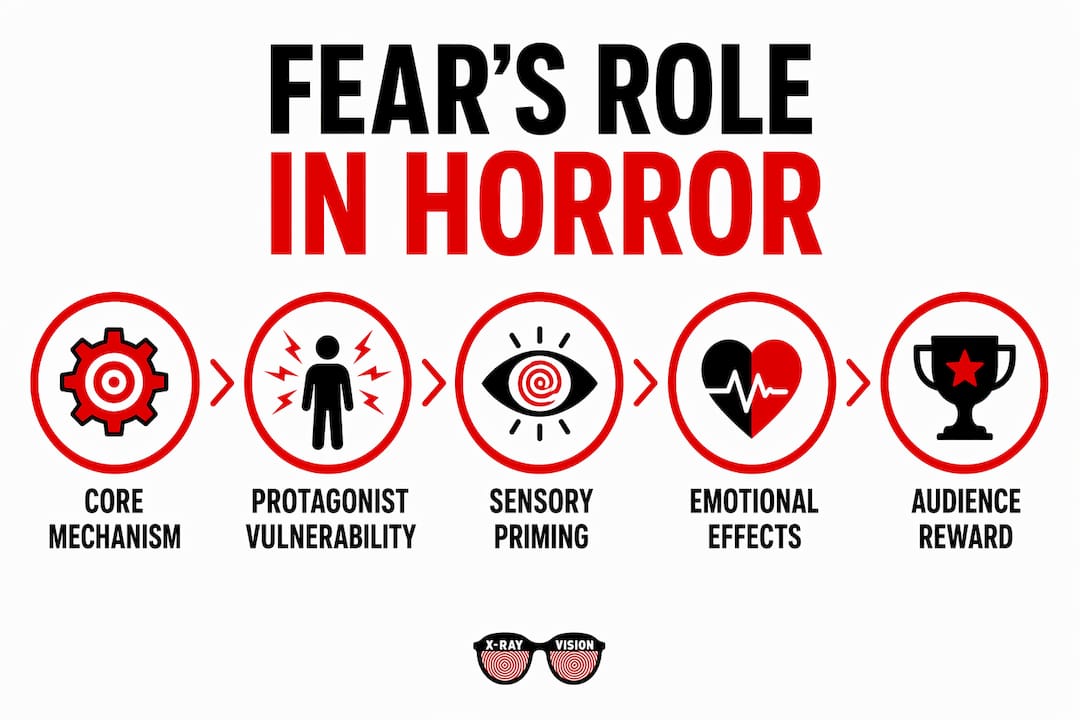
Protagonist vulnerability, more than monster power alone, drives fear by creating asymmetric conflict with poor survival odds. Think of Laurie Strode in Halloween, a teenager with no weapons facing Michael Myers. Or the Torrance family in The Shining, isolated in a snowbound hotel with no escape. In both cases, the protagonist's weakness amplifies the threat far more than the antagonist's strength alone.
High PVI scenarios share several features:
- Limited resources. The protagonist lacks weapons, allies, or escape routes.
- Isolation. Physical or social separation removes outside help.
- Escalating stakes. Each scene increases the cost of failure.
- Credible antagonist. The threat is capable, relentless, and unpredictable.
These elements combine to create sustained dread rather than isolated shock. Sustained dread is what separates genuinely frightening horror from stories that simply startle.
Pro Tip: When writing horror, resist the urge to give your protagonist a skill set that neutralizes the threat too early. The longer the power imbalance holds, the deeper the fear runs.
Why do people seek out fear in horror entertainment?
The psychology of fear in horror entertainment rests on three well-studied theories. Each one explains a different dimension of why audiences actively choose to be scared.
- Excitation transfer theory. Fear followed by relief creates a powerful emotional reward. Negative emotions during horror shift to euphoric highs when the threat resolves. The relief hits harder because the fear preceded it. This is why the final scene of a horror film, when the survivor escapes, feels so satisfying.
- Benign masochism. This concept describes the enjoyment of negative-valence experiences when the context is perceived as safe. Watching a monster attack on screen triggers real fear responses, but the brain simultaneously knows no actual harm is occurring. That gap between felt danger and actual safety creates a unique pleasure.
- Morbid curiosity. Safe exploration of taboo fears like death, violence, and the unknown sustains horror's appeal across generations. Morbid curiosity allows audiences to engage with existential threats without real consequences, and over time it fosters a kind of psychological desensitization that makes the genre more enjoyable with repeated exposure.
Gender also shapes the fear response in horror. Females experience greater fear and anxiety to the same horror stimuli compared to males, while males report higher overall enjoyment. This difference likely reflects both biological and social factors in threat appraisal. It also explains why horror marketing often targets different emotional registers depending on audience demographics.
How do jump scares and sound design manipulate fear?
Jump scares are more complex than most critics acknowledge. The common assumption is that they are cheap reflexes, simple startle responses with no artistic value. Research tells a different story. Jump scares combine music, sound, and imagery to bias threat perception beyond simple reflexes. They engage multiple brain systems simultaneously, including conscious fiction awareness and unconscious fear circuitry.
Here is how the mechanics work in sequence:
- Sound priming. A low-frequency rumble or sudden silence signals threat. The brain begins scanning for danger before any visual cue appears.
- Visual ambiguity. A neutral image, a dark hallway, a closed door, is presented after the audio prime. The brain, already primed, interprets it as threatening.
- Startle trigger. A sudden loud sound or fast visual cut activates the startle reflex. The body reacts before conscious thought can intervene.
- Cognitive reappraisal. The viewer recognizes the fictional context and the fear converts to excitement or relief.
Sound design in horror acts as an affective primer that influences perception of subsequent visual cues. This is why films like Hereditary and The Conjuring use silence as aggressively as noise. The absence of sound creates anticipation that makes the eventual scare land with far greater force.
Pro Tip: In horror writing, use sensory detail to prime the reader before a scare lands. Describe a smell, a texture, or a sound that feels slightly wrong. By the time the threat appears, the reader's imagination has already done half the work.
What are the emotional effects of fear on horror audiences?
Horror consumption does more than entertain. Horror acts as a risk-free threat simulation that helps fans regulate emotions and build resilience. This is not a metaphor. Empirical research shows that horror fans reported better emotional preparedness and less distress during global lockdowns compared to non-fans. The genre trains the nervous system to tolerate and recover from fear.
The mechanism is similar to stress inoculation in clinical psychology. Repeated exposure to controlled fear responses, in a safe fictional context, builds tolerance and coping flexibility. Horror fans display higher resilience in anxiety-provoking situations, and research finds they possess strong capacities for emotional regulation and crisis navigation. This directly contradicts the stereotype of horror fans as thrill-seekers with poor impulse control.
The table below summarizes the key emotional and psychological effects documented in research:
| Effect | Description | Relevant subgenre |
|---|---|---|
| Emotional regulation | Repeated fear exposure builds tolerance and recovery speed | Psychological horror |
| Crisis preparedness | Horror fans report lower distress during real-world emergencies | Apocalyptic, disaster horror |
| Cognitive rehearsal | Audiences simulate survival strategies through narrative | Survival horror |
| Catharsis | Safe engagement with dark themes releases emotional tension | Gothic, supernatural horror |
| Morbid desensitization | Gradual comfort with taboo subjects reduces existential anxiety | Creepypasta, body horror |
Apocalyptic and disaster horror subgenres are particularly effective for this kind of emotional rehearsal. Stories like The Road by Cormac McCarthy or films like 28 Days Later force audiences to mentally rehearse resource scarcity, social collapse, and survival decisions. That rehearsal has measurable real-world benefits.
My take on why fear will always define the genre
I have spent years writing horror across multiple formats, from thriller novels to Creepypasta anthologies, and one truth keeps proving itself: fear is not a feature of horror. It is the genre's entire architecture. Every other element, character, setting, pacing, dialogue, exists to serve the fear response.
What surprises most readers when they dig into the research is how purposeful great horror fear actually is. It is not random shock. The best horror engineers vulnerability with precision. It places a character you care about in a situation where the odds are genuinely terrible, and then it holds that tension without flinching. That sustained dread is what separates a story that haunts you for weeks from one you forget by morning.
I also think horror gets unfairly dismissed as escapism. The literary devices in horror that extend fear's impact are the same tools that build emotional depth in any serious literature. The genre just uses them in service of a more visceral goal. And the research now confirms what horror fans have always known: engaging with fear in fiction makes you better at handling it in real life. That is not a small thing.
— Mark
Explore horror that puts these ideas into practice
If this breakdown of fear's mechanics has you hungry for stories that actually deliver on these principles, Markwatsonbooks has you covered.

Mark Watson's horror book collection includes titles built around exactly the kind of protagonist vulnerability and sustained dread discussed here. From horror thrillers to Creepypasta anthologies packed with unsettling tension, each book is designed to trigger the fear response in ways that feel vivid and real. If you want to experience the psychology of fear firsthand, the Creepypasta collections are a perfect starting point. These stories use the internet horror format to deliver short, sharp doses of dread that linger long after the last page. Browse the full catalog and find your next favorite fear.
FAQ
What is the role of fear in horror?
Fear is the core emotional mechanism that drives horror. It activates survival instincts, sustains narrative tension, and creates the physiological responses that make horror stories feel urgent and real.
Why do people enjoy being scared by horror movies and books?
Excitation transfer theory explains that fear followed by relief produces a strong positive emotional reward. Benign masochism and morbid curiosity also drive enjoyment by making safe engagement with dark themes pleasurable.
How does protagonist vulnerability affect fear in horror?
Higher Protagonist Vulnerability Index scores correlate directly with stronger physiological fear responses in audiences. When a character has few resources and faces an overwhelming threat, sustained dread replaces isolated shock.
Do horror fans have better coping skills than non-fans?
Research shows horror fans reported better emotional preparedness and less distress during real-world crises like global lockdowns. The genre functions as a form of stress inoculation that builds emotional flexibility.
How do jump scares work psychologically?
Jump scares combine sound priming, visual ambiguity, and startle reflexes to activate fear responses even when viewers are consciously aware they are watching fiction. Sound design primes threat perception before the visual scare arrives.
Key takeaways
Fear is the foundational mechanism of horror, engineering emotional responses through protagonist vulnerability, sensory priming, and psychological reward cycles that build genuine resilience in audiences.
| Point | Details |
|---|---|
| Fear drives horror's structure | Every narrative element in horror exists to create and sustain the fear response. |
| Protagonist vulnerability amplifies dread | High PVI scores predict measurable physiological fear, making character weakness more powerful than monster strength. |
| Psychology explains horror's appeal | Excitation transfer, benign masochism, and morbid curiosity each explain why audiences seek out fear. |
| Jump scares are multimodal tools | Sound priming and visual ambiguity make jump scares complex cognitive events, not simple reflexes. |
| Horror builds real-world resilience | Horror fans show stronger emotional regulation and crisis coping skills than non-fans, backed by empirical research. |