
TL;DR:
- Survival themes in horror impose vulnerability, scarcity, and threat, shaping characters' morals and audience tension. These narratives emphasize endurance over power, highlighting environmental hostility and ethical compromises in extreme circumstances. This focus on restriction and moral weight deepens horror's psychological impact and cultural relevance.
Survival themes in horror are narrative mechanisms that impose limitation, vulnerability, and escalating threat, compelling characters and audiences to confront fear, moral dilemmas, and the instinct to endure under dire circumstances. These themes are not decorative. They are the structural engine of horror tension, shaping every decision a character makes and every emotion a reader or viewer feels. From Carol J. Clover's Final Girl framework to Cormac McCarthy's moral collapse in The Road, survival in horror has always been about more than staying alive. It is about what you become in the process.

What are the core survival themes in horror narratives?
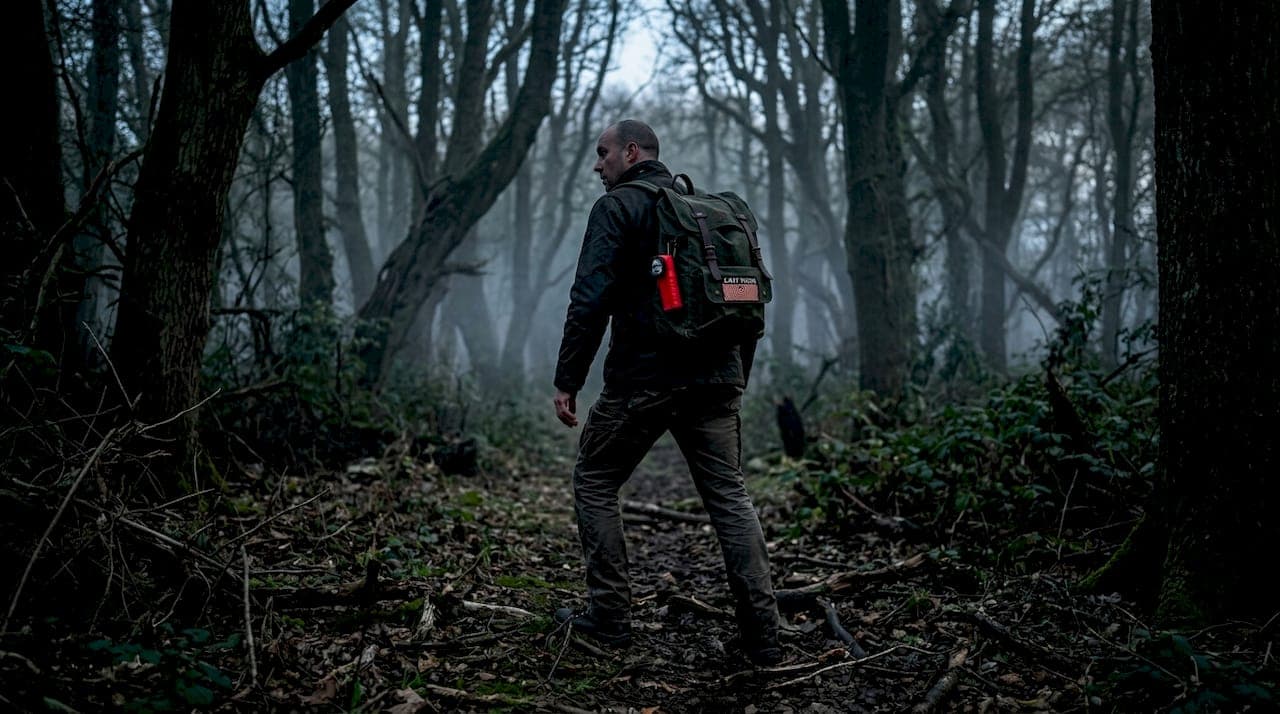
Survival horror is defined by one foundational principle: restriction. Protagonists are vulnerable and under-armed, with limited ammunition, complex inventory management, and no reliable path to rescue. That scarcity is not a gameplay mechanic borrowed from video games. It is a storytelling philosophy that applies equally to literature, film, and interactive media. When a character cannot fight their way out, every choice carries weight.
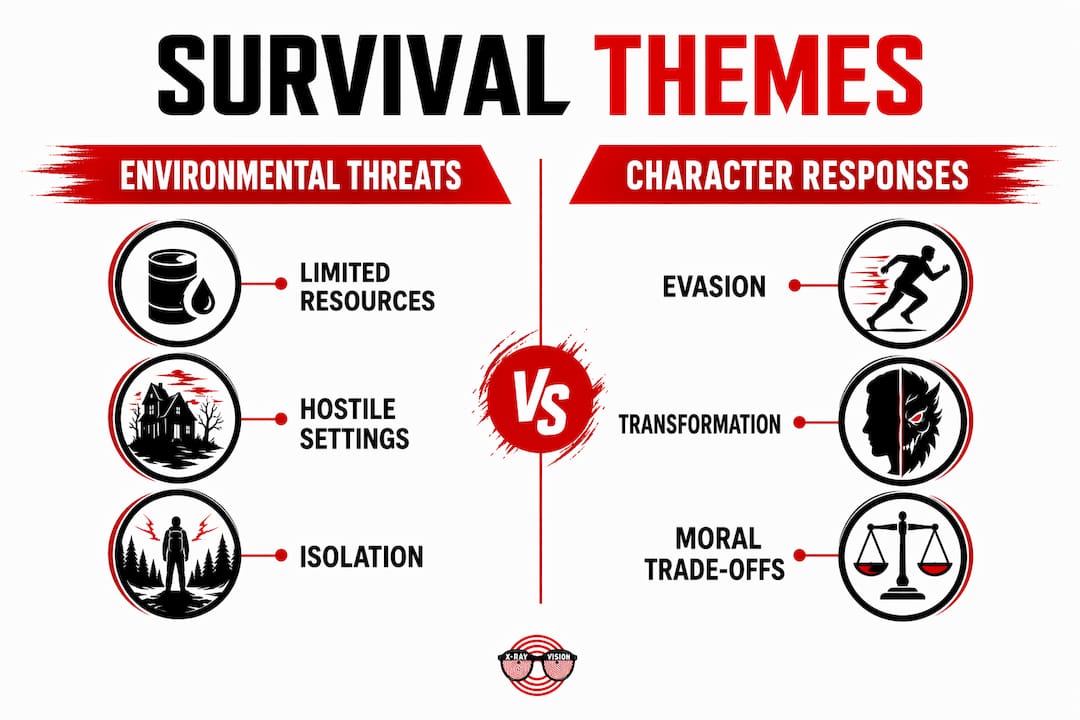
The four pillars of survival horror tension are vulnerability, scarcity, isolation, and environmental hostility. Each one compounds the others.
- Vulnerability strips protagonists of the power fantasy. They bleed, tire, and panic.
- Scarcity forces triage. What do you carry? What do you leave behind? Inventory decisions become narrative engines that reveal character under pressure.
- Isolation removes the social safety net. No cavalry is coming. The horror is yours alone.
- Environmental hostility transforms the setting into an active antagonist. The house, the forest, the abandoned hospital: none of these spaces are neutral.
Horror survival stories that master these elements create a specific kind of dread. Relentless escalation and limited rescue define the genre's emotional signature, distinguishing it from thrillers where competent heroes solve problems with force. In survival horror, the environment wins most of the time. Characters survive by endurance, not dominance.
Pro Tip: When analyzing horror survival stories, ask whether the environment itself has agency. If the setting can be neutralized or escaped easily, the survival tension collapses. The best horror enforces restriction and risk in every movement the protagonist makes.
The Resident Evil franchise illustrates this perfectly in its game and novelization forms. Rooms that felt safe become dangerous the moment resources run dry. Silent Hill uses fog and sound design to make navigation itself a source of dread. In literary horror, Shirley Jackson's The Haunting of Hill House achieves the same effect through psychological disorientation rather than physical threat. The house does not need monsters. It needs only to make Eleanor doubt every step.
How do survival themes shape character development in horror?
The most studied framework for survival and character development in horror is Carol J. Clover's Final Girl, introduced in her 1992 book Men, Women, and Chain Saws. The Final Girl is the surviving protagonist who moves from passivity to agency, challenging patriarchal structures by outlasting threats through intelligence and adaptability rather than brute strength. She is a victim-hero. Her survival is earned through pattern recognition, not power.
Laurie Strode in John Carpenter's Halloween and Carrie White in Brian De Palma's Carrie represent two contrasting survival arcs worth examining side by side.
| Character | Survival strategy | Narrative outcome |
|---|---|---|
| Laurie Strode (Halloween) | Evasion, resourcefulness, pattern recognition | Survives through agency; embodies the classic Final Girl arc |
| Carrie White (Carrie) | Suppression, then explosive release of power | Survival through destruction; subverts victimhood but at catastrophic cost |
Laurie survives by reading danger correctly. Carrie survives by becoming the danger. Both arcs are survival stories, but they encode radically different messages about agency, gender, and social belonging. Laurie's survival affirms the value of vigilance. Carrie's survival indicts the social systems that made her a target in the first place.
Contemporary horror has pushed this further. Survival for Black horror protagonists is an act of defiance that reweights traditional Final Girl survival themes, challenging the assumption that survival is a reward for moral purity. Jordan Peele's Get Out and Us reframe survival as a political act. The protagonist does not simply endure. They resist a system designed to consume them. This shift from personal survival to cultural defiance is one of the most significant evolutions in horror storytelling over the past decade.
Pro Tip: When reading or writing survival horror, pay attention to what the character must sacrifice to survive. That sacrifice, whether it is innocence, relationships, or moral clarity, is where the real character development lives.
Monstrous figures in horror also invite diverse audience interpretations, permitting queer and marginalized readers to find empowerment and identification in figures the text positions as threats. This is not a misreading. It is a sign that survival narratives carry more cultural freight than their surface plots suggest. The monster and the survivor are often two sides of the same outsider coin.
What moral trade-offs do characters face in survival horror?
Survival horror's deepest literary territory is ethical, not physical. In Cormac McCarthy's The Road, survival becomes compliance with new norms involving killing, hoarding, and exclusion, reflecting isolationist protectionism at its most raw. The father's singular focus on keeping his son alive requires the systematic abandonment of every other human solidarity. He does not become a monster. He becomes something more unsettling: a man who has narrowed his humanity to a single point.
This moral narrowing is a recurring pattern in horror survival stories. Consider what it costs characters to endure:
- Abandonment of community. Survival often demands leaving others behind, a choice that horror narratives rarely let characters make without consequence.
- Hoarding as moral failure. Characters who stockpile resources while others starve are positioned as survivors, but the narrative frequently codes this as corruption.
- Violence as necessity. The first kill is always a threshold. Horror stories track what happens to characters after they cross it.
- Exclusion of the vulnerable. Survival groups in horror consistently face the question of who is worth saving, and the answers reveal the group's true values.
Moral trade-offs in survival narratives reflect shrinking ethical horizons, forcing characters to redefine humanity under pressure. This is what separates literary horror from genre entertainment. A slasher film asks whether the protagonist will live. A survival horror novel asks whether living is worth what it costs. The Walking Dead comic series, available through horror comic collections, builds its entire arc around this question. Rick Grimes does not fight zombies. He fights the version of himself that the apocalypse is trying to create.
The best horror survival stories use these trade-offs to deepen narrative complexity in ways that pure action cannot achieve. When a character chooses to abandon a stranger to save their child, the horror is not the monster outside the door. It is the recognition that you might make the same choice. That identification is what makes survival horror literature so persistently compelling. You can read more about why horror books matter and how they use exactly this kind of moral weight to create lasting impact.
How do survival themes create psychological tension for audiences?
Fear in survival horror arises from limited options and compelling forward motion despite dread, not from action or combat. This is the insight that separates survival horror from action horror. The emotional payload is not excitement. It is the specific weight of knowing you must keep moving even though moving might kill you.
Director Zach Cregger, discussing the Resident Evil franchise, described this precisely: survival horror is about dread and compulsion, not spectacle. That framing applies equally to literary horror. The reader of a survival horror novel is not cheering for the protagonist to win. They are dreading the next page because they know the protagonist might not.
Psychological survival in horror operates through several interlocking mechanisms:
- Bounded agency. Constrained agency forces problem-solving and evasion rather than direct confrontation, transforming survival into character testing rather than spectacle.
- Environmental design as narrative. Making movement risky and relief rare sustains pressure rather than allowing the tension to collapse into a generic thriller rhythm.
- Audience identification with vulnerability. Readers and viewers align with characters who are frightened and under-resourced because that alignment is more honest than identifying with an invincible hero.
- Escalation without resolution. Survival horror resists the clean catharsis of victory. Each solved problem reveals a larger threat.
Pro Tip: Pacing in survival horror should never allow the reader to feel safe for long. Every moment of relief should plant the seed of the next threat. Comfort in horror is always a setup.
The psychological dimension of survival horror also explains why the genre translates so effectively across media. Whether you are reading Stephen King's The Shining, playing a survival horror game, or watching 28 Days Later, the core emotional experience is identical: you are trapped, you are afraid, and you cannot stop. That universality is why survival themes in horror have endured across every format the genre has inhabited. Exploring horror movies and their literary roots reveals just how consistently these psychological mechanics appear across decades of storytelling.
Key takeaways
Survival themes in horror work because they impose restriction, force moral calculation, and transform vulnerability into the primary engine of character development and narrative tension.
| Point | Details |
|---|---|
| Restriction drives tension | Scarcity of resources and limited agency create dread more effectively than action or combat. |
| Final Girl as cultural mirror | Carol J. Clover's framework reveals survival as a gendered performance that evolves with cultural values. |
| Moral cost of survival | Characters in horror survival stories face ethical narrowing, abandonment, and identity loss as the real horror. |
| Environment as antagonist | Hostile settings that make movement itself dangerous sustain psychological pressure throughout the narrative. |
| Survival as defiance | For marginalized protagonists, surviving is a political act that challenges who horror considers worth saving. |
Why survival horror still gets under my skin after all these years
I have written horror across multiple formats, and the one element I return to obsessively is restriction. Not monsters. Not gore. Restriction. The moment a character realizes they cannot run, cannot fight, and cannot call for help is the moment the story becomes genuinely frightening. Everything else is atmosphere.
What strikes me most about survival horror literature is how honestly it reflects real human fear. We are not afraid of sharks or serial killers in our daily lives. We are afraid of being helpless. Of making the wrong choice under pressure. Of discovering what we are capable of when the stakes are absolute. Survival horror gives those fears a shape and a story.
The evolution toward more inclusive survival narratives excites me as both a reader and a writer. When survival is reframed as defiance for characters who have always been told the genre was not for them, the stories become richer and more truthful. The Final Girl trope was a starting point, not a ceiling. The horror writers doing the most interesting work right now are the ones asking who gets to survive, and why, and at what cost. Those are the questions worth exploring. I encourage you to seek out horror that makes you uncomfortable not because of what happens, but because of what the characters choose.
— Mark
Explore survival horror that goes beyond the surface
If survival horror's moral depth and psychological intensity resonate with you, Markwatsonbooks has a collection built for readers who want more than jump scares.

Mark Watson's horror book collection features titles that put characters under genuine pressure, forcing the kind of choices that linger long after the last page. From psychological horror to survival-driven narratives, the range covers the full emotional spectrum of the genre. If you are drawn to internet horror and modern survival mythology, the Creepypasta collection offers a different angle on the same primal fears. Browse the full catalog of books and find your next unsettling read.
FAQ
What are survival themes in horror?
Survival themes in horror are narrative devices that impose vulnerability, scarcity, and escalating threat on protagonists, forcing them to confront fear and moral dilemmas rather than overcome obstacles through strength. These themes drive both character development and audience tension across literature, film, and games.
What is the Final Girl trope in survival horror?
The Final Girl, defined by scholar Carol J. Clover, is the surviving protagonist in slasher horror who shifts from victimhood to active agency, challenging patriarchal structures through intelligence and pattern recognition rather than physical power. Laurie Strode in Halloween is the defining example.
How do survival themes create psychological tension in horror?
Survival horror generates dread through bounded agency, where characters must keep moving despite limited options and no guarantee of rescue. Dread and compelled forward motion are the core emotional experiences, not action or spectacle.
What moral trade-offs appear in horror survival stories?
Characters in survival horror regularly face choices involving abandonment, hoarding, exclusion, and violence, each of which narrows their ethical identity. The Road by Cormac McCarthy is the clearest literary example of survival as moral decay rather than heroic endurance.
How has survival horror evolved to include diverse perspectives?
Contemporary horror reframes survival as cultural defiance for marginalized protagonists, particularly in Black horror, where surviving a system designed to exclude you carries political weight beyond the personal. Jordan Peele's films and recent horror literature reflect this shift most visibly.