
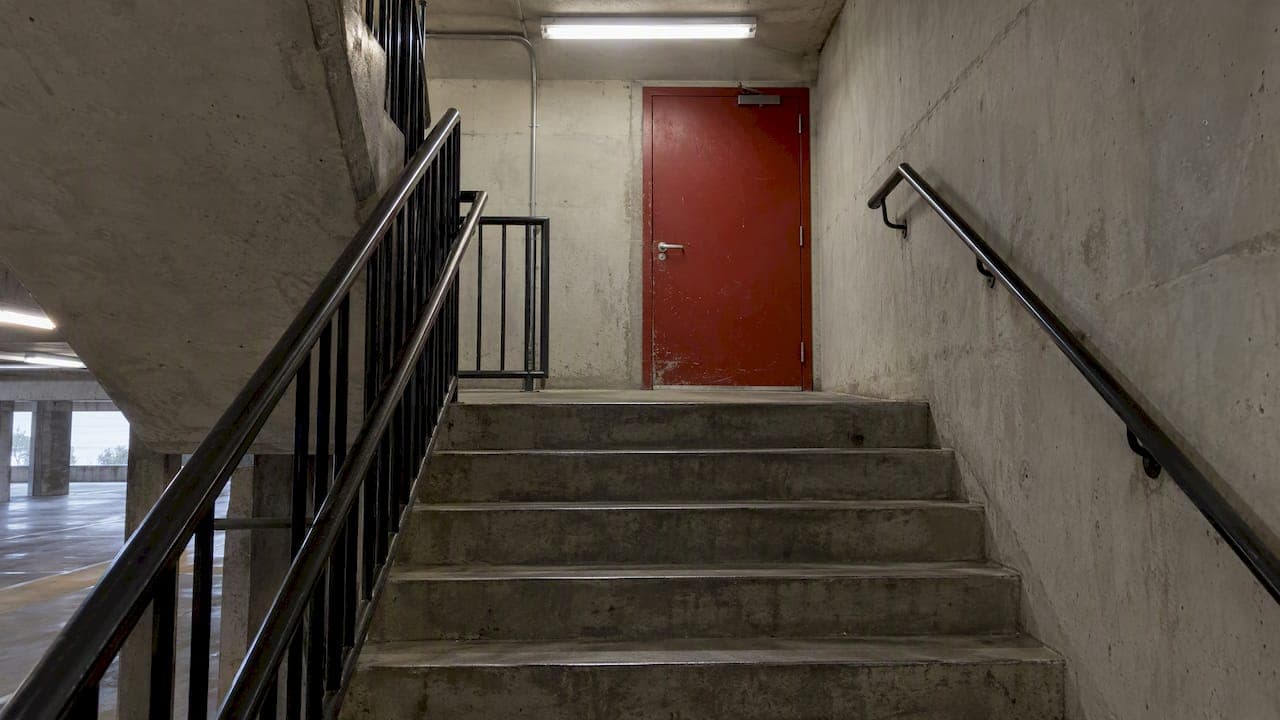
A liminal space is a transitional place, like a hallway, an empty hotel lobby, or an airport at a late hour, that exists for passing through rather than staying in, and the term now also describes an internet aesthetic built around photos of these empty, in-between settings. The look draws on old anthropological ideas about "betwixt and between" states and newer online imagery like the Backrooms. The effect on most viewers is the same: an eerie, nostalgic pull that feels familiar and wrong at once.
TL;DR:
- Familiar transitional spaces evoke unease because deviations in architecture, lighting, or emptiness trigger an uncanny response and a sense of missing purpose.
- The aesthetic gained popularity through the Backrooms legend and surged during the pandemic when real spaces emptied, reinforcing the link between emptiness and discomfort.
- Cultural traditions recognize extreme importance in thresholds and in-between zones, framing them as spiritual or ritualistic points of transition.
- Creating liminal space imagery involves emphasizing absence, inconsistent lighting, and ambiguous scale, leaving potential threat to viewers' imagination.
- Modern horror leverages these settings, with the most effective scenes suggesting what might happen rather than showing explicit threats.
Table of Contents
- What liminal spaces mean, from anthropology to the internet
- Why liminal images unsettle us
- How the Backrooms and the pandemic spread the aesthetic online
- Everyday liminal spots and the feelings they trigger
- How creators use liminal spaces, and where horror begins
- Mark Watson on liminal spaces in fiction
- Liminal spaces outside the Western lens
- Thresholds, rituals, and mythology through history
- A short take on why these spaces stick with us
- Where to find more liminal, atmospheric horror
- FAQ
- Sources
What liminal spaces mean, from anthropology to the internet
The word "liminal" started in anthropology, not on social media. Early twentieth century scholar Van Gennep mapped rites of passage into three stages: separation from an old identity, a middle transitional phase, and reintegration into a new one. Victor Turner picked up that middle stage and ran with it, describing it as "betwixt and between," a state where a person has left one identity but hasn't yet claimed another. A teenager mid-initiation ritual, a bride at the altar before her vows, a patient on a hospital gurney: all occupy that same ambiguous middle ground.
Online culture borrowed the word and shifted it from people to places. A liminal space now usually means a physical setting built for passage, not permanence:
- A hotel corridor between the elevator and your room.
- A shopping mall after closing, lit but empty.
- An airport terminal at an hour when no flights are boarding.
Nobody lives in these spaces. We just move through them, and that in-between purpose is exactly what makes them visually strange when photographed without the people they were built for.
Why liminal images unsettle us
Part of the discomfort comes from how our brains process familiar architecture. Research summarized in academic sources) suggests that deviations from expected architectural patterns can trigger an uncanny-valley-like response, the same unease people feel looking at a nearly-but-not-quite-human robot. A hallway with slightly wrong proportions or lighting that doesn't match the time of day reads as off before we consciously register why.
Writer Mark Fisher described something related as a "failure of presence," the sense that a space is missing something it should contain, usually people or purpose. Strip the context from a scene, a mall with no shoppers, a classroom with no students, and the brain keeps searching for the missing piece. That search is uncomfortable, and discomfort reads as dread even when nothing threatening is present.
A few other factors shape whether a scene lands as cozy or creepy:
- Lighting temperature: fluorescent or sodium-vapor light tends to read as clinical and cold, while warm light reads as safe.
- Personal memory: a space resembling a childhood location can feel nostalgic to one viewer and unsettling to another.
- Time of day cues: spaces that look like they should be busy but aren't (a food court at noon with no one in it) create a stronger effect than spaces that are naturally quiet, like a library at midnight.
How the Backrooms and the pandemic spread the aesthetic online
The modern liminal space aesthetic has a traceable path online, even though the underlying feeling is old.
- The Backrooms began as a creepypasta built around an endless maze of beige office-style rooms, lit by humming fluorescent lights, with no exit and no people. It gave the aesthetic its first widely shared visual shorthand.
- 2019 to 2020 saw the look spread fast across 4chan, Reddit, and Tumblr, where users traded photos of empty malls, pools, and parking structures tagged as "liminal."
- The pandemic amplified the trend by accident: lockdowns genuinely emptied public spaces, and photos of real vacant streets and stores fed directly into the aesthetic that was already building online, as documented in cultural commentary on the term.
Related aesthetics grew alongside it. Dreamcore leans softer and more surreal, often adding impossible geometry or childhood imagery, while weirdcore pushes toward glitchy, unsettling visuals. Each platform favors a slightly different flavor, but all three share the same core trick: familiar places, stripped of people and context. Our own look at modern horror trends traces how this kind of platform-driven imagery keeps reshaping what counts as scary.
Everyday liminal spots and the feelings they trigger
You've stood in these spaces more often than you'd think:
- Hotel corridors stretching past identical doors.
- Empty shopping malls lit but closed for the night.
- School hallways after the last bell, lockers lining silent walls.
- Airport terminals in the dead hours between flights.
The same hallway can feel completely different depending on when you encounter it. A school hallway at 8 AM full of students feels ordinary. The same hallway at 11 PM, empty and echoing, feels like a different place entirely. Personal memory plays a role too: a space that resembles somewhere from your childhood can tip the feeling toward nostalgia instead of dread.
Try this: next time you're in a transitional space alone, like a stairwell or a parking garage, notice the lighting and the silence before you notice anything else. That's usually where the feeling starts.
How creators use liminal spaces, and where horror begins
Liminality in art depends on absence. The moment a creator adds a clear, threatening figure, a shadow in the doorway, a figure at the end of the hall, the image stops being liminal and becomes conventional horror. Research-starter analysis on the topic notes that the defining feature of liminal imagery is the lack of a subject; introduce one, and audience attention shifts from the unsettling potential of the space to a specific narrative threat.
A few practical notes for anyone building this kind of atmosphere:
- Keep lighting slightly inconsistent with the time of day implied by the scene.
- Use scale to make rooms feel larger or more repetitive than expected.
- Remove any sign of the purpose the space was built for, like empty shelves in a store.
Pro Tip: Let the space suggest what might happen rather than showing what is happening. A hallway that could hold something is scarier than a hallway that does.
Our guide to building atmosphere in horror goes deeper into these techniques for writers working with setting.
Mark Watson on liminal spaces in fiction
Liminal settings often appear in Creepypasta collections, where an empty office or a stretch of unused hallway does more narrative work than any monster could. The trick is restraint: describe the space fully, then resist the urge to populate it with an explicit threat until the last possible moment.
A quick exercise we'd suggest to any reader or writer: pick a real transitional space you've walked through, a stairwell, a motel breezeway, and write three sentences describing it with no people in the scene at all. Notice how much tension builds from absence alone.
— Mark
Liminal spaces outside the Western lens
Transitional spaces carry weight far beyond the English-speaking internet. Many cultures have long traditions of marking thresholds as spiritually significant rather than just architecturally neutral. In Japanese Shinto practice, the torii gate marks the boundary between the ordinary world and sacred ground, a literal threshold meant to be noticed and respected rather than passed through without thought. In West African traditions, crossroads often carry associations with spirits or deities who govern transition and choice, making the physical meeting point of two paths a place of ritual importance rather than mere geography.

Hindu and Buddhist traditions across South and Southeast Asia treat certain gateways, bridges, and doorways as liminal in a spiritual sense, places where offerings are left or rituals performed specifically because the location sits between defined zones. These practices suggest that the discomfort or significance Western internet culture now attaches to empty hallways and parking structures is a secular, aestheticized version of something many cultures have formalized for centuries: the idea that in-between places deserve their own kind of attention, whether that attention is reverence, caution, or ritual.
The internet aesthetic strips away the spiritual framework and keeps the feeling, which is part of why it translates so easily across cultures that otherwise have little in common.
Thresholds, rituals, and mythology through history
Long before anyone coined the term "liminal space" online, cultures built entire rituals around the discomfort of in-between states. Coming-of-age ceremonies across the globe, from vision quests to initiation rites, deliberately place participants in a transitional status: no longer a child, not yet an adult, often physically isolated from the community during that phase. Van Gennep's original framework was built by observing exactly this pattern repeated across dozens of distinct cultures.

Mythology is full of literal liminal geography. The Greek underworld required crossing the river Styx, a physical threshold between life and death, ferried by Charon. Doorway deities like the Roman god Janus, who gave his name to January, were worshipped specifically because thresholds were considered dangerous or powerful, points where anything might cross in either direction.
Funeral rites, wedding ceremonies, and seasonal festivals across history often include a deliberate liminal phase, a wake before burial, a betrothal before marriage, a harvest festival marking the turn from one season to another. These rituals treated the in-between state as something to be managed carefully, not rushed through. That instinct, that transitional states deserve attention and even caution, is the same instinct firing when a photo of an empty hallway makes a modern viewer uneasy for reasons they can't quite name.
A short take on why these spaces stick with us
Liminal spaces resonate now because so much of modern life feels like waiting: between jobs, between homes, between versions of ourselves we no longer fit. The aesthetic gives that formless feeling a shape we can actually look at. Next time you're stuck in a hallway or a terminal, notice it. That discomfort is worth sitting with for a second.
Where to find more liminal, atmospheric horror
If the eerie pull of empty hallways and half-lit corridors appeals to you, our fiction leans into that same mood on purpose. We build entire stories around the discomfort of in-between places, no jump scares required.

- Our Creepypasta series collects internet-horror stories that often share liminal space's quiet dread.
- Creepypasta Volume 1: The First Fifty Stories is a solid starting point for new readers.
- Browse our full Horror collection for more atmospheric reads, or sign up for our mailing list for free book offers.
FAQ
Why are liminal spaces so unsettling?
Liminal spaces unsettle us because they strip away the people and purpose a setting normally has, triggering an uncanny-valley-like response to architecture that looks almost right but not quite. The brain keeps searching for the missing context, and that unresolved search reads as dread.
What is the most famous liminal space?
The Backrooms, an endless maze of beige, fluorescent-lit office rooms from internet creepypasta lore, is widely credited as the image that popularized the modern liminal space aesthetic online. Its stark emptiness became the visual shorthand the rest of the trend built on.
What does the Bible say about liminal spaces?
The Bible doesn't use the term "liminal space" directly, since the word comes from modern anthropology, but it contains many transitional moments, like the Israelites' forty years in the wilderness between slavery and the promised land, that scholars often analyze through a liminal framework. These passages describe periods of uncertainty and transformation that match Victor Turner's "betwixt and between" idea closely.
What feeling do liminal spaces give you?
Most people describe a mix of nostalgia and unease: a sense that a place is familiar but somehow wrong. Personal memory, lighting, and whether the emptiness matches the expected time of day all shift that feeling toward comfort or dread.