
TL;DR:
- Atmospheric tension in horror relies on layered sensory details, pacing, and psychological triggers to sustain fear. Effective settings use sensory inconsistency and implied danger to evoke dread without full disclosure. Controlling sound, withholding details, and applying the rule of threes enhance suspense and deepen audience fear.
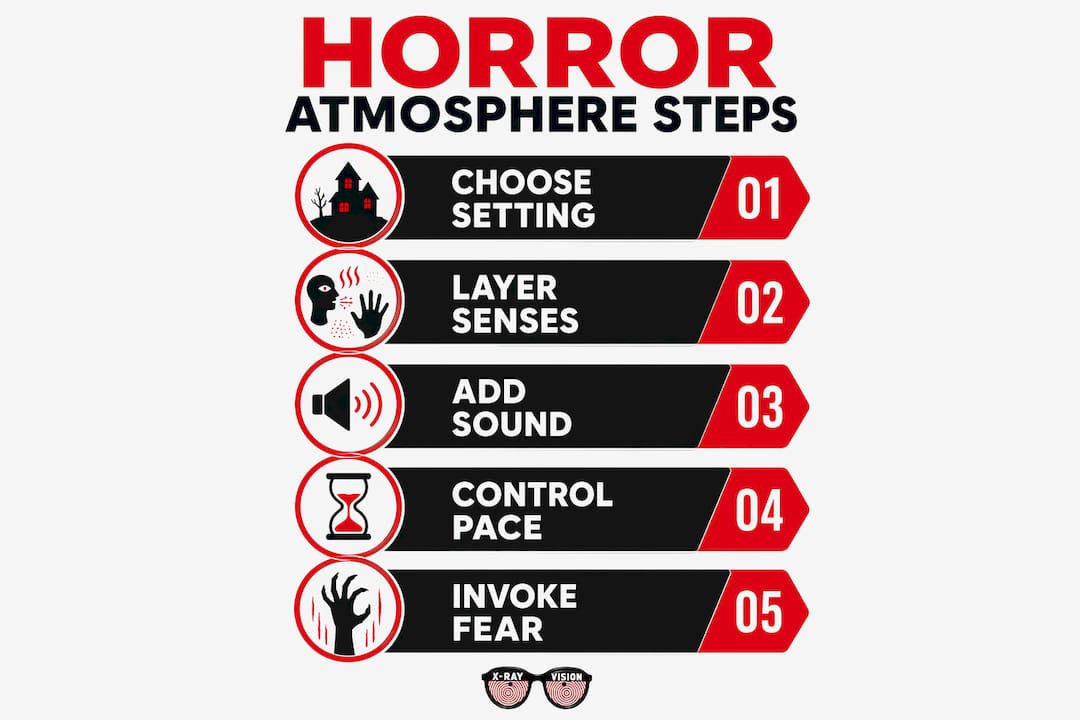
Building atmosphere in horror is the craft of layering sensory details, pacing, and psychological triggers to produce a pervasive sense of dread before any monster appears. The industry term for this is atmospheric tension, and it separates horror that lingers for weeks from horror that fades the moment the credits roll. Skilled writers and filmmakers know that atmosphere shapes fear more reliably than any single scare. The techniques covered here apply equally to prose, film, and audio production.
How does setting influence atmosphere in horror stories and films?
Setting is the first and most powerful tool for creating horror ambiance. A horror environment is not a backdrop. It is an active force that pushes against the characters and the audience.
The most effective approach starts with the familiar. Pervasive wrongness works by placing readers inside a recognizable world and then destabilizing it through small, precise sensory changes. Light falls at the wrong angle. A room smells faintly of something that should not be there. The temperature drops two degrees for no reason. These details register as wrong before the conscious mind can name why.
Horror settings that work share several specific qualities:
- Sensory inconsistency. Something the character sees, hears, or feels does not match what the environment should produce.
- Historical weight. A location with a dark or ambiguous past carries implied threat. The audience fills the silence with their own fears.
- Spatial distortion. Rooms that feel too large, corridors that seem longer than they should be, or ceilings that press too low all create physical unease.
- Isolation cues. Distance from help, blocked exits, and unreliable communication all signal danger without stating it.
The setting shapes mood at a subconscious level. Readers and viewers absorb environmental details faster than dialogue or plot. That is why a single wrong detail in an otherwise normal scene can produce more dread than an explicit threat.
Pro Tip: Write your setting description twice. First, describe it as a neutral observer. Second, describe it through the emotional state of your protagonist. The gap between those two versions is where your atmosphere lives.
Which sensory details are most effective for creating horror atmosphere?
Sensory layering is the engine of horror mood building. The mistake most creators make is reaching for sight first and stopping there. Sight is the sense audiences most expect to be manipulated. The senses that produce deeper unease are the ones that feel involuntary.
Sound, smell, and touch bypass rational processing faster than visual information. A character who hears a sound they cannot identify feels genuine alarm. A character who smells something wrong in a familiar place feels their body react before their mind catches up. These responses are primal, which is exactly why targeting specific primal fears guides atmospheric choices more effectively than generic spookiness.
The most productive sensory details for horror include:
- Ambient sound between noises. Silence after a sound is louder than the sound itself. Let the quiet stretch.
- Temperature shifts. Cold that arrives without a draft, or warmth in a place that should be cold, signals wrongness instantly.
- Smell as memory trigger. Rot, copper, old paper, and burnt hair each carry emotional associations that readers cannot easily dismiss.
- Tactile wrongness. A surface that feels wet when it should be dry, or a texture that shifts under pressure, creates visceral discomfort.
Focus on two or three senses per scene rather than all five. Overloading the senses produces confusion, not dread. Restraint forces the audience to complete the picture with their own imagination, and personal fear is always more intense than described fear.
Pro Tip: Before writing a horror scene, list every sensory detail in the physical space. Then remove all the ones that feel normal. What remains is your atmosphere.
What role does sound design and music play in building horror atmosphere?
Sound is the single most underestimated element in horror storytelling, even in prose. Writers who control the rhythm of silence and noise on the page produce the same psychological effect that film composers achieve with instrumentation.
Horror music prioritizes atmosphere over melody. A single piano line with strategic silences builds psychological unease more effectively than a full orchestral score. The silence between notes carries as much weight as the notes themselves. Transitions that increase intensity work because the audience anticipates the next sound before it arrives.
Professional horror sound designers use a layered approach that writers can adapt conceptually:
- Establish a base texture. A low, barely audible hum or ambient drone creates a floor of unease. The audience may not consciously notice it, but removing it would feel like relief.
- Add harmonic pads. These are sustained tones that sit just below the threshold of melody. They create the sense that the environment itself is strangely alive.
- Layer event sounds. Specific, identifiable sounds (a creak, a breath, a distant knock) interrupt the texture and force attention.
- Automate the contrast. Layered ambiences with reverb automation maintain dynamic contrast. Loud moments hit harder when the baseline is quiet and eerie.
For film and audio creators, narrow-band resonant filters with high Q-values emulate real room modes, producing an eerie spatial effect. Comb filter glides add ghostly harmonics that suggest a haunted physical space. These techniques go beyond standard digital effects and produce wrongness that audiences feel physically.
| Technique | Effect | Best used for |
|---|---|---|
| Minimal instrumentation | Psychological unease | Slow burn tension |
| Reverb automation | Dynamic contrast | Scene transitions |
| Resonant filter glides | Ghostly harmonics | Haunted environments |
| Silence between events | Anticipation | Reveal moments |
Sidechaining reverb tails with transient detection ducking preserves mix clarity during intense moments, preventing the audio from washing out when tension peaks. For writers, the equivalent is controlling sentence rhythm. Short sentences hit hard. Long sentences let dread accumulate slowly.
How does pacing and narrative control enhance suspenseful atmosphere?
Pacing is the architecture of dread. The timing of reveals, the length of quiet passages, and the rhythm of threat escalation all determine whether an audience feels genuine fear or just mild discomfort.
The rule of threes for building dread is one of the most reliable pacing tools in horror. The structure works as follows:
- First awareness. The character notices something wrong. The detail is small enough to dismiss. The audience registers it but does not yet feel threatened.
- Paranoia. The detail appears again in a different context. The character cannot ignore it. The audience begins filling gaps with their own fears.
- Materialization. The threat becomes undeniable. Crucially, it remains ambiguous enough that the audience's imagination still does the heaviest work.
By the third mention, the horror should be clear enough to feel real but unclear enough to feel personal. That ambiguity is what makes the rule of threes so effective. Each reader or viewer fills the gap with their own specific fear.
Withholding visual or explanatory detail produces greater dread than full description. A fully described monster becomes a tactical problem. The audience starts calculating how to defeat it rather than fearing it. An incompletely described threat stays emotional. The imagination cannot solve what it cannot fully see.
Psychological isolation amplifies every pacing technique. A character cut off from help, from reliable information, or from their own sense of reality responds to threats with heightened fear. That fear transfers directly to the audience. Targeting isolation as a primal fear and building pacing around it produces sustained dread rather than a series of disconnected scares.
Key Takeaways
Atmospheric tension in horror is built through layered sensory detail, deliberate pacing, and psychological restraint rather than explicit description or jump scares.
| Point | Details |
|---|---|
| Start with the familiar | Begin in a recognizable setting and introduce wrongness through small sensory inconsistencies. |
| Focus on two or three senses | Restraint in sensory detail forces the audience to complete the picture with personal fear. |
| Use the rule of threes | Build dread through first awareness, paranoia, and materialization while maintaining ambiguity. |
| Withhold the full reveal | Incomplete description keeps the threat emotional rather than tactical. |
| Sound creates the floor | A base layer of ambient unease makes silence and sudden sounds hit harder. |
What I've learned about atmosphere that most guides get wrong
Most writing guides treat atmosphere as decoration. They tell you to add fog, dim the lights, and describe the shadows. That advice produces set dressing, not dread.
The real work of atmospheric tension happens at the psychological level. You need to know which specific fear you are targeting before you write a single sensory detail. Isolation feels different from bodily violation. Loss of control feels different from the unknown. Each fear requires a different sensory vocabulary and a different pacing rhythm. Writing generic spookiness and hoping it lands is the most common mistake I see from new horror creators.
The second mistake is explaining too much. Every time you fully describe the threat, you hand the audience a solution. Their brain shifts from emotional response to problem-solving mode. The fear evaporates. Trust the reader's imagination. It is darker than anything you can write explicitly.
Restraint is the hardest skill to develop in horror. The instinct is always to add more, describe more, explain more. The craft is knowing what to leave out. The most unsettling horror I have read and written lives in the gap between what is stated and what is implied. That gap is where the audience's personal fear takes over, and personal fear is always the most powerful kind.
If you want to write horror that builds real dread, practice writing scenes where nothing explicitly frightening happens. If the reader still feels uneasy by the end, you have found your atmosphere.
— Mark
Atmospheric horror worth reading before you write

The fastest way to internalize atmospheric tension is to read horror that does it exceptionally well. Markwatsonbooks curates collections built around exactly that standard. The horror collection at Markwatsonbooks features titles that prioritize psychological dread and sensory immersion over cheap scares. Each book is a working example of the techniques covered here.
For writers and filmmakers drawn to internet horror, the Creepypasta books collection showcases a format that has mastered atmosphere at short form. Creepypasta stories build dread fast, often in under 1,000 words, using sensory wrongness and withheld reveals. Reading them analytically teaches pacing and restraint better than most craft guides. Browse the full range and find the titles that unsettle you most. Those are the ones worth studying.
FAQ
What is atmospheric tension in horror?
Atmospheric tension is the sustained sense of dread created through layered sensory details, pacing, and psychological triggers rather than explicit scares. It operates below the level of conscious awareness and produces fear that persists after the story ends.
How do you evoke fear without showing the monster?
Withholding visual detail forces the audience's imagination to fill the gap with personal fear, which is always more intense than a described threat. Use sensory inconsistencies and the rule of threes to build dread without a full reveal.
Which elements of horror setting create the most dread?
Sensory inconsistency, historical weight, spatial distortion, and isolation cues are the four setting elements that produce the strongest atmospheric dread. They work because they signal danger before the conscious mind can rationalize it away.
How does sound design build horror atmosphere?
Effective horror sound design establishes a strangely alive background floor using layered textures and minimal instrumentation, then uses silence and sudden events to spike tension. The contrast between the ambient base and the event sound is what produces fear.
What is the rule of threes in horror pacing?
The rule of threes structures dread through first awareness, paranoia, and materialization, with each stage maintaining enough ambiguity that the audience fills gaps with their own fears. By the third mention, the threat feels real and personal without being fully explained.