

TL;DR:
- Effective haunted house stories feature a setting with rich history that acts as a character. Protagonists must carry unresolved emotional wounds to make haunting scenes believable and intense. Sensory details like smells, sounds, and textures create immersive atmospheres that heighten psychological dread.
Haunted house story elements are the foundational building blocks that make these narratives compelling, immersive, and psychologically resonant. A great haunted house story is not just about ghosts. It is about a living setting that mirrors human fear, guilt, and unresolved trauma. Whether you are writing a novel, scripting a film, or crafting a Creepypasta, mastering these elements separates forgettable scares from stories that stay with readers long after the last page. This guide breaks down every core component you need, with concrete techniques drawn from 2026 literary research and professional horror writing.
What are the essential haunted house story elements?
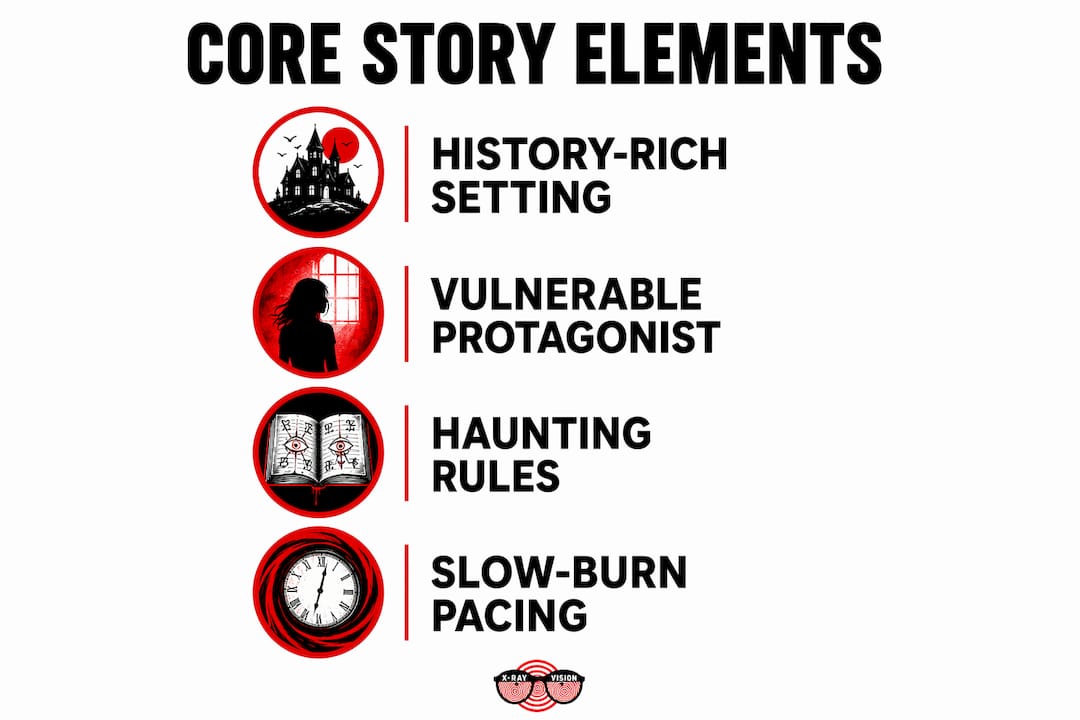
A compelling haunted house story requires four foundational elements: a history-rich setting that acts as a character, a vulnerable protagonist with secrets, consistent haunting rules, and slow-burn pacing focused on sensory detail. These are not suggestions. They are the structural bones every effective story in this genre shares, from Shirley Jackson's The Haunting of Hill House to Mike Flanagan's Netflix adaptation.
The house as an active character
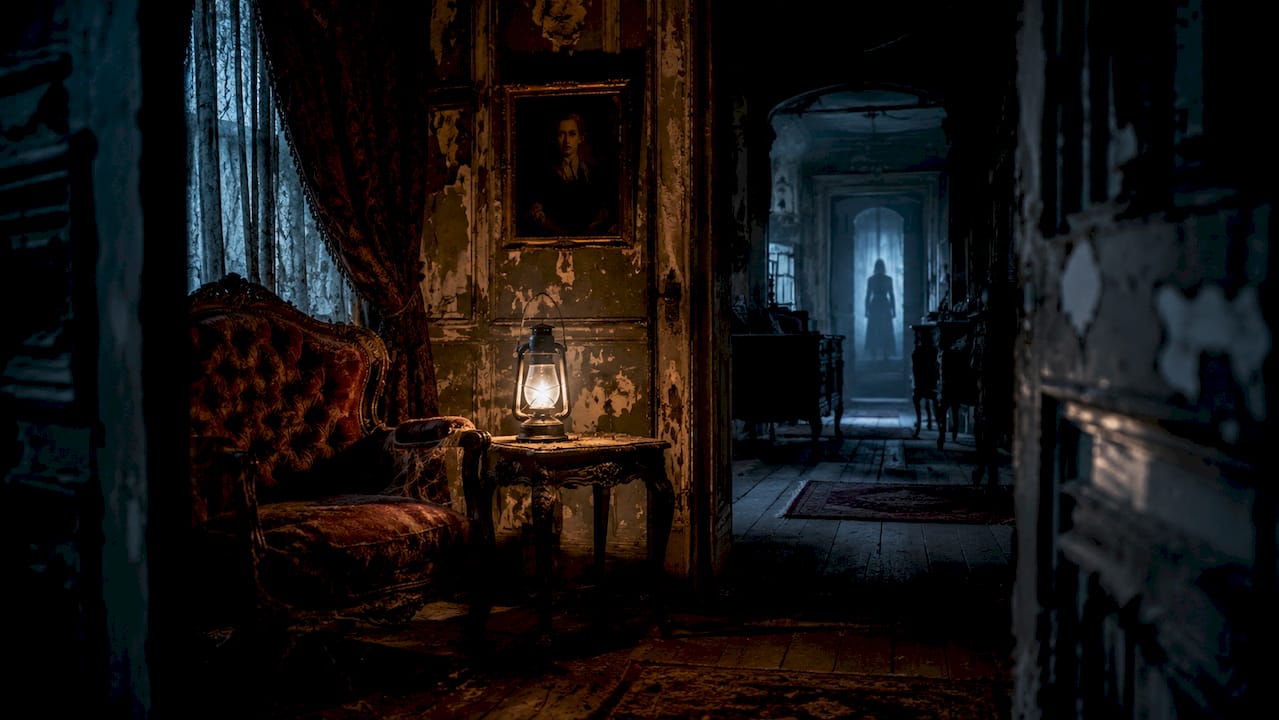
The haunted house must do more than provide a backdrop. It must know the characters better than they know themselves, externalizing their psychological decay through its physical state. Peeling wallpaper, stained floorboards, and locked doors are not decorative details. They are the house's memory made visible. History embedded in physical details anchors dread in a way that no jump scare can replicate.
The emotionally vulnerable protagonist
Your protagonist needs a wound. That wound is what the house will find and press on. A character who arrives emotionally intact gives the haunting nothing to work with. The most effective character types in ghost stories carry grief, guilt, or a secret they have not faced. Their internal conflict becomes the story's engine.
Consistent haunting rules
Every haunted house needs internal logic. Can the ghost move through walls? Does it only appear at night? Does it speak? Breaking your own rules destroys reader trust and kills tension. Establish the haunting's behavior early, then escalate within those boundaries. Readers feel cheated when the rules shift without cause.
Slow-burn pacing
Pacing should follow a 70/30 split between atmosphere-building and active conflict. That ratio feels counterintuitive to new writers, but it is exactly right. Dread needs room to breathe. Rushing to the scare collapses the tension you spent pages building.
Pro Tip: Before writing chapter one, write a one-page "house history" document. Include who lived there, what they did, and what they left behind. You will not use it all, but the house will feel real because you know it.
- History-rich setting that functions as a character
- Protagonist with emotional vulnerability and unresolved secrets
- Consistent internal logic governing the haunting
- Slow-burn pacing weighted toward atmosphere
- Sensory details that whisper the house's past
How does sensory immersion enhance haunted house storytelling?
Sensory immersion is the technique of using smell, sound, touch, sight, and texture to make a setting feel physically real. Using at least three sensory inputs per scene boosts reader engagement significantly. That means a single scene should not rely only on what a character sees. It should make the reader feel the cold draft on their neck and smell the damp wood beneath the floorboards.
Here are the five key sensory triggers that work hardest in haunted house fiction:
- Damp wood smell. Rot signals age and neglect. It tells readers the house has been left to its own devices, which implies it has developed its own agenda.
- Floorboard creaks. Sound preceding sight is 2–3 times more effective for building dread than visual scares alone. Auditory cues prime the brain to fill in fearful blanks, which makes the imagined threat worse than anything you could describe.
- Shifting shadows. Peripheral movement exploits the brain's threat-detection system. What you almost see is always more frightening than what you fully see.
- Cold drafts. Temperature drops signal presence without requiring a ghost to appear. The body reacts before the mind catches up.
- Sticky or wrong textures. A doorknob that feels slightly warm. Wallpaper that feels damp when it should be dry. Texture violations create instant unease because they signal that the physical world is not behaving correctly.
Pro Tip: Read your scene aloud and count how many senses you activate. If you hit only one or two, go back and layer in a smell or a texture. The atmosphere in haunted tales lives in those overlooked details.
The goal is not to overwhelm the reader with description. It is to make the house feel inhabited by something that notices your protagonist. Every sensory detail should feel like the house is paying attention.
What narrative and character dynamics drive haunted house stories?
Modern haunted house stories have moved well past the ghost-defeat ending. Inherited trauma, protagonist flaws, and acceptance or tragic transformation now drive the most resonant stories in the genre. The ghost is rarely the real antagonist. The protagonist's unresolved guilt is.
This shift matters for writers and filmmakers because it changes what you are actually writing. You are not writing a mystery about why the house is haunted. You are writing a character study about why this person cannot leave.
The most powerful spooky story themes in contemporary horror include:
- Inherited trauma. The protagonist did not cause the original wound, but they carry it. Stories like Hereditary and The Haunting of Hill House use generational guilt as the true haunting force.
- Want versus need conflict. The protagonist wants to solve the mystery or save the house. They need to confront what they have been avoiding. This conflict drives satisfying emotional resolution far more reliably than plot mechanics alone.
- Punishment for endurance. Most haunted house stories punish patience, not recklessness. Characters who try to stay, negotiate, and endure suffer the most. This inverts the survival-horror logic of running away and makes domestic horror deeply unsettling.
- Ambiguity about the haunting's cause. Avoid fully explaining why the house is haunted. Ambiguity lets readers project their own anxieties onto the story, which personalizes the horror in a way no explicit explanation can match.
Traditional horror beat sheets often fail for haunted house stories because they assume a clear external antagonist. The better frame is the protagonist's psychological decay, with the house as a mirror. The primary antagonist is unresolved guilt, not a ghost.
How does architecture mirror psychological themes in haunted stories?
The house layout is not just a physical space. It is a map of your protagonist's interior life. Haunted houses act as psychological metaphors, and the most effective writers plan the house room by room to reflect the protagonist's trauma and secrets. This technique transforms architecture into narrative structure.
Here is how specific rooms can carry symbolic weight:
| Room | Psychological function | Narrative purpose |
|---|---|---|
| Basement | Repressed memory, buried secrets | The place the protagonist avoids longest |
| Attic | Ancestral guilt, inherited history | Reveals the family's original wound |
| Master bedroom | Intimacy, loss, identity | Where the haunting becomes personal |
| Children's room | Innocence corrupted, grief | Triggers the protagonist's deepest fear |
| Kitchen | False normalcy, domestic horror | Where the ordinary becomes threatening |
Slow reveals of the house's history work best when tied to the protagonist's emotional progression. The basement door should not open until the protagonist is ready to face what is down there. The attic should not yield its secrets until the story has earned them. This is the core of plot pacing in horror: the house reveals itself at the speed of the protagonist's psychological unraveling.
Successful haunted house plot twists, like the revelation that the protagonist is a ghost, require narratives designed to hold up under rereading. Every supernatural event must function as a symptom of denial. When the twist lands, the reader should be able to look back and see it was always there. That kind of structural integrity is what separates a clever trick from a genuinely great story.
Key takeaways
A haunted house story works when the house itself becomes a psychological force that reflects and accelerates the protagonist's internal collapse.
| Point | Details |
|---|---|
| House as character | Design the setting with history, sensory detail, and internal logic so it feels alive and purposeful. |
| Vulnerable protagonist | Give your lead character an unresolved wound the house can exploit for maximum emotional tension. |
| Sensory immersion | Use at least three sensory triggers per scene, prioritizing sound before sight to build sustained dread. |
| Architecture as metaphor | Map rooms to psychological states so the physical layout mirrors the protagonist's internal journey. |
| Ambiguity over explanation | Resist explaining the haunting fully. Unresolved mystery lets readers project their own fears onto the story. |
Why I think the house should always be the smartest character in the room
Writers often spend enormous energy on their protagonist and almost none on the house itself. That is the wrong priority. The house is not a container for the story. It is the story's central intelligence.
Every time I work on a haunted house narrative, I ask one question before anything else: what does this house want? Not what happened here, not who died here, but what does it want from the person walking through its doors right now? That question forces you to treat the setting as an active force rather than a passive backdrop.
The biggest mistake I see in haunted house fiction is over-explanation. Writers feel compelled to give the ghost a backstory, a motive, a resolution. But the stories that genuinely unsettle readers are the ones that leave the wound open. The Haunting of Hill House does not explain Hill House. It simply shows you what the house does to people, and that is far more frightening than any origin story.
I also think writers underestimate how much scary characters benefit from being tied to a specific place. A ghost untethered from architecture is just a monster. A ghost that is the architecture, that lives in the cold draft and the wrong-feeling doorknob, is something that follows you home.
Embrace ambiguity. Let the house win sometimes. Let the ending be transformation rather than triumph. Those are the stories readers cannot shake.
— Mark
Explore horror fiction that shows these elements in action
If you want to see haunted house story elements executed at a high level, reading widely in the genre is the fastest way to sharpen your craft. Markwatsonbooks offers a curated collection of horror fiction and internet horror anthologies that put these techniques on full display.

From unsettling Creepypasta collections packed with psychological dread to horror thrillers that weaponize atmosphere and sensory detail, the horror collection at Markwatsonbooks gives you both inspiration and a masterclass in what makes dark fiction work. Whether you are a writer studying the craft or a horror fan hungry for your next obsession, these books deliver the real thing. Dive into the full range of titles and find your next favorite scare at Markwatsonbooks.
FAQ
What are the core haunted house story elements?
The four core elements are a history-rich setting that acts as a character, a vulnerable protagonist with secrets, consistent haunting rules, and slow-burn pacing weighted toward atmosphere. These elements work together to create psychological dread rather than simple shock.
How do you write a haunted house story that feels original?
Treat the house as a psychological mirror for your protagonist rather than just a scary location. Avoid fully explaining the haunting's origin, since ambiguity lets readers project their own fears and makes the horror feel personal.
What makes a haunted house plot twist work?
Effective haunted house plot twists, like the protagonist being a ghost, require the entire narrative to hold up under rereading. Every supernatural event must function as a denial symptom so the twist reframes the story rather than contradicting it.
What character types work best in ghost stories?
Protagonists who carry unresolved guilt, grief, or inherited trauma are the most effective character types in ghost stories. The haunting needs an emotional wound to exploit, and characters who try to endure rather than flee tend to suffer the most.
How important is sensory detail in haunted house fiction?
Sensory detail is critical. Using at least three sensory inputs per scene, especially sound before sight, builds sustained dread far more effectively than visual scares alone. The goal is to make the house feel physically present and aware.