

TL;DR:
- Effective pacing in children's horror manages emotional temperature by balancing tension and relief, not just speed. It matches developmental needs, using techniques like delayed reveals and cliffhangers to sustain engagement and foster resilience. Proper pacing ensures stories are both frightening and safe, promoting emotional safety and enjoyment for young readers.
Most people assume the role of plot pacing in children's horror is simply about speed. Move fast, keep kids' attention, don't slow down. That assumption misses something far more interesting. Pacing in children's scary stories is really about managing emotional temperature. It's about knowing when to tighten the screws and when to let a young reader breathe. Get it right, and you have a child gripping the covers, wide-eyed but safe. Get it wrong, and you have either a bored kid or a genuinely distressed one. This article breaks down exactly how pacing works, why it matters developmentally, and what parents, educators, and authors can do with that knowledge.
Table of Contents
- Key Takeaways
- The role of plot pacing in children's horror
- Techniques that build suspense in kids' scary stories
- How pacing supports emotional safety for young readers
- Common pacing pitfalls and how to fix them
- My take on pacing children's horror
- Explore carefully paced children's horror from Markwatsonbooks
- FAQ
Key Takeaways
| Point | Details |
|---|---|
| Pacing controls emotional temperature | Effective pacing manages tension and release cycles, not just the speed of plot events. |
| Age shapes pacing needs | Children aged 5-7 need concrete, quickly resolved fears, while older kids handle slower, abstract suspense. |
| Cliffhangers drive engagement | Serial narratives with strategic cliffhangers sustain motivation and excitement in readers aged 8-12. |
| Happy endings are non-negotiable | Quick, satisfying resolutions reassure children and build the resilience to seek out scary stories again. |
| Common pitfalls can be fixed | Dragging resolutions and over-complicated plots are the two most damaging pacing errors in children's horror. |
The role of plot pacing in children's horror
Pacing is not a single dial you turn up or down. It's a system of decisions that shapes how a story feels to move through, even when the events themselves stay the same.
In children's horror, that system has a specific architecture. Stories need a clear narrative arc built around four stages: setup, rising trouble, peak climax, and quick resolution. A clear story arc keeps young readers engaged and prevents the confusion that kills suspense dead. When a child can't track where a story is going, fear turns into anxiety rather than the thrilling kind of fright.
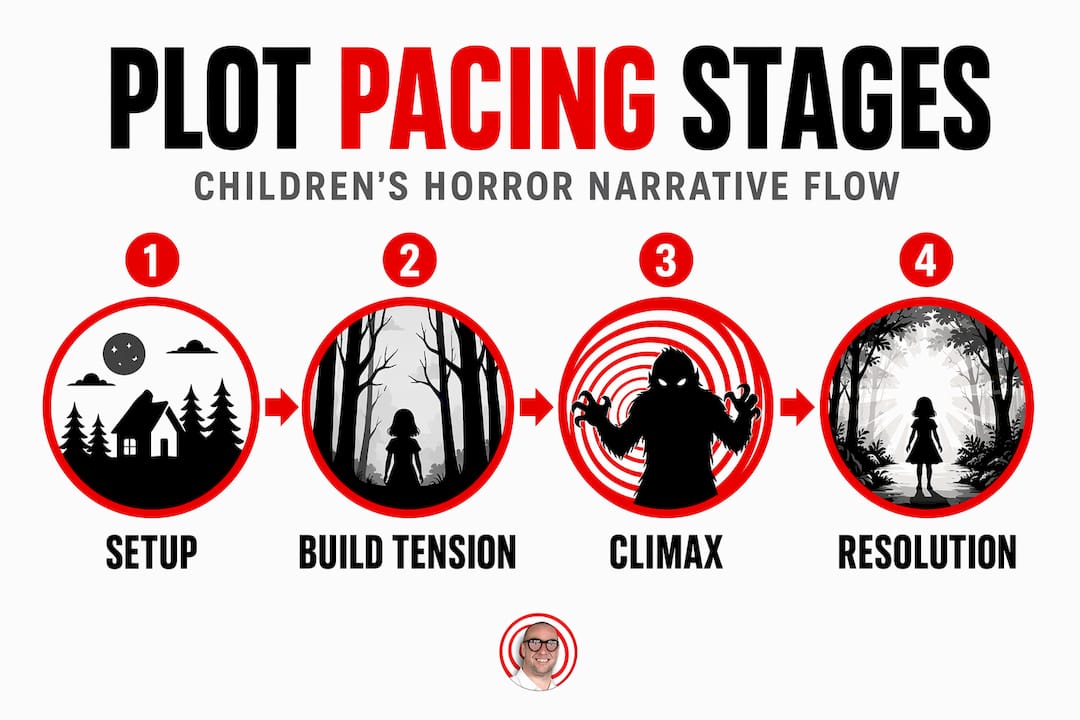
Here's what makes children's horror structurally different from adult horror. Adult readers can sustain dread across hundreds of pages. They can sit with ambiguity. Children, especially younger ones, need escalation to feel purposeful and resolution to feel close. The pull-and-release rhythm of tension, where you wind the reader tight and then give them a moment to exhale, is what prevents tension desensitization and keeps every scare feeling fresh.
Developmental stage matters enormously here. Research shows that children aged 5-7 respond best to concrete, visible fears like monsters and ghosts, while older children aged 8-10 can engage with more abstract, psychological suspense. That means pacing decisions need to match the reader's developmental readiness, not just their reading level.
A few foundational principles worth knowing:
- Setup must orient, not delay. Young readers need to feel grounded before tension builds. A slow setup that doesn't establish stakes reads as boring, not suspenseful.
- Rising action should escalate in clear steps. Each beat needs to feel like a logical, slightly scarier version of the last.
- Climax should arrive before readers tire. In picture books and early chapter books, this means 60-75% through the story.
- Resolution must come quickly. Over-extended wrap-ups cause disengagement just as real as a poor ending.
Pro Tip: When writing for children under 8, try mapping your story on a single page with four labeled sections before you draft it. If the resolution section is longer than your rising action, you already have a pacing problem.
Techniques that build suspense in kids' scary stories
The craft tools of pacing are specific, teachable, and often counterintuitive. One of the most powerful? Slowing down exactly when readers expect speed.
Long, winding sentences lull. Short sentences jolt. That physiological response to sentence length is real. Good horror authors use it deliberately. Think of a passage where a child creeps toward a closed door. Smooth, flowing sentences carry the approach. Then: The door opened. Cold air. Nothing there. The reader's chest tightens with those short beats. That's sentence pacing doing the work that plot events alone cannot.
Here are five concrete techniques specifically calibrated for children's horror:
- Delay the monster reveal. Expert authors withhold full monster descriptions to engage children's imaginations. A shape behind the curtain is scarier than a detailed creature, because every child imagines something different. The reveal, when it comes, should be earned.
- Use sentence length as a tension dial. Alternate between long, descriptive sentences that build atmosphere and short punchy sentences that spike fear. Vary this rhythm deliberately, not randomly.
- Place cliffhangers at chapter ends. Research on children aged 8-12 shows that serial narratives with cliffhangers increase sustained motivation and engagement far more than episodic stories with clean endings. The unresolved tension keeps kids coming back.
- Build in reflective pauses after scares. A quieter moment where the protagonist catches their breath mirrors what the reader needs emotionally. These pauses reset the fear baseline so the next scare lands harder.
- Match sensory detail to escalation. More sensory specificity signals higher stakes. The generic "dark hallway" becomes "a hallway that smelled like wet leaves and something older." Sensory language slows the pace at exactly the right moment.
Pro Tip: Read your scary scenes aloud. If you run out of breath, your sentences are too long for a panic moment. If you find yourself yawning, you've lost the rhythm. Your voice is one of the most reliable pacing editors you have.
Understanding why kids are drawn to spooky stories in the first place makes these techniques feel less like tricks and more like genuine craft.
How pacing supports emotional safety for young readers
This is where children's horror separates itself from every other genre. Pacing isn't just about entertainment here. It carries a psychological responsibility.
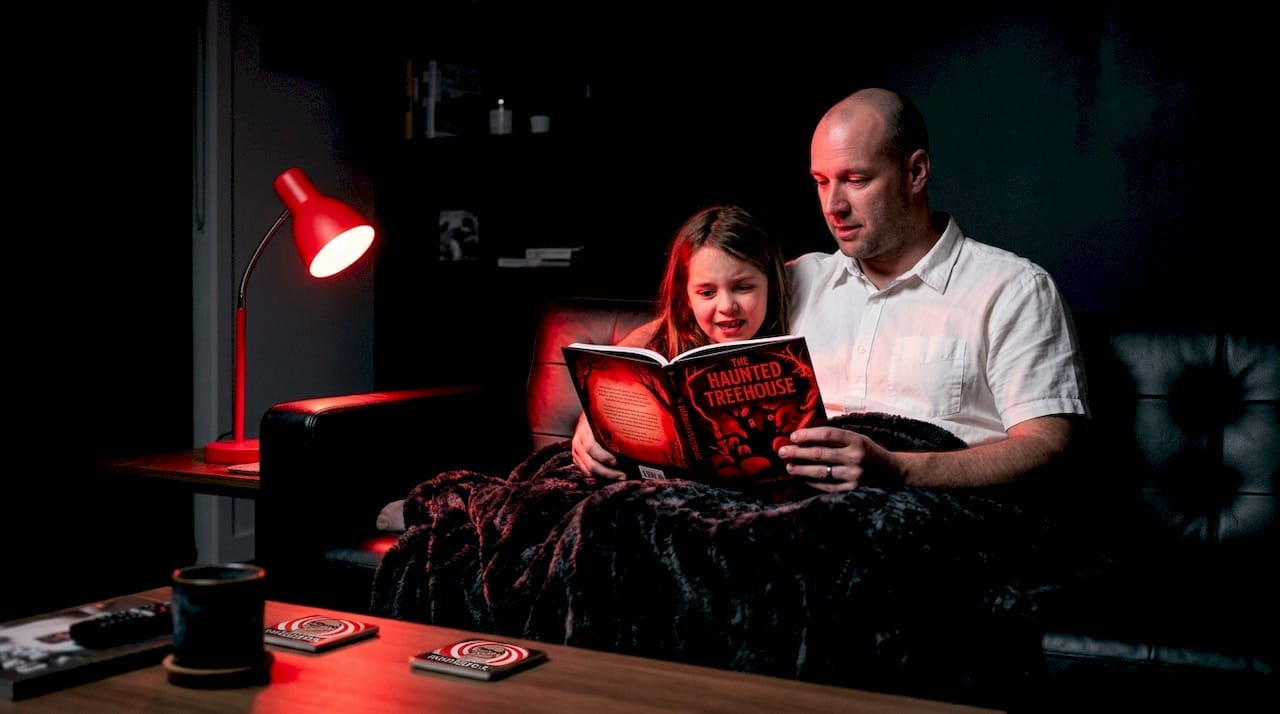
Children rely on happy endings to feel safe after experiencing fear through fiction. The story's resolution doesn't just wrap up the plot. It tells the child's nervous system that the world is manageable. Delay that resolution too long, or make it ambiguous, and you've replaced productive fear with unprocessed anxiety.
This is where the concept of affective scaffolding becomes relevant. When a parent or educator reads a scary story alongside a child, their calm presence helps regulate the child's emotional response. The child learns to feel fear in a controlled environment where a trusted adult signals that everything is okay. That caregiver presence aids nervous system regulation in measurable ways.
Pacing amplifies this dynamic. A well-paced story gives adults natural moments to pause, check in, and reassure. Rushed pacing that never breathes removes those moments. The result is a story that even a calm co-reading adult can't buffer emotionally for a young child.
There are specific ways pacing supports psychological outcomes in children:
- Narrative modeling builds coping skills. When a child watches a story protagonist face fear and survive, they internalize a template for their own courage. Pacing controls how long that protagonist struggles, which determines how credible the eventual victory feels.
- Repeated engagement builds resilience. Stories that balance thrills with reassurance build courage over time, functioning almost as developmental milestones.
- Pacing manages anxiety exposure. Think of it as controlled exposure therapy delivered through fiction. Too fast and children don't process the fear. Too slow and the fear accumulates without release.
- For educators in classroom settings, pacing choices in read-alouds signal a lot about what emotional response is expected. Slow, dramatic reading of tense sections teaches children that fear is something you move through, not away from.
Understanding why scary stories build courage gives parents and educators the confidence to bring horror into shared reading without guilt.
Common pacing pitfalls and how to fix them
Even experienced authors make predictable errors when pacing children's horror. Knowing what they are is half the battle.
| Pacing Mistake | Why It Hurts | How to Fix It |
|---|---|---|
| Dragging resolution | Over-extended endings lose children's attention after peak tension | Cut resolution to the minimum required for emotional closure |
| Revealing the monster too soon | Kills imaginative engagement and deflates suspense | Hold back full description until the climax or later |
| Overcomplicated subplots | Younger readers lose track of stakes and disengage | One central threat per story for ages 6-9; two maximum for ages 10 and up |
| Unrelenting tension | No emotional release points cause fatigue, not fear | Insert deliberate "breathing" scenes every 3-4 tense passages |
| Too-slow opening | Children need orientation, but patience runs short | Introduce a hint of unease within the first two pages |
The most common mistake is the first one. After a strong buildup and satisfying climax, authors often feel the need to explain everything. Resist that. Quick wrap-ups keep children engaged and leave them with the satisfying feeling of having survived the story alongside the protagonist.
Overcomplicated plots deserve a special mention. When a story asks a young reader to track too many threads while simultaneously managing fear, the cognitive load overwhelms the emotional experience. The fear stops being fun. It just becomes stressful. Simplify the plot structure, and the pacing almost fixes itself.
My take on pacing children's horror
I've spent a lot of time thinking about what makes a scary story work for kids, and the conventional wisdom often points in the wrong direction. The advice tends to be "keep it simple, keep it fast." I'd push back on that.
What I've observed is that children are extraordinarily sensitive to rhythm. They feel when a story is manipulating them, even if they can't name it. A story that sprints from scare to scare feels cheap to them. A story that breathes, that lets dread settle into a room before the monster arrives, feels genuinely frightening in the best possible way.
The most interesting feedback I've received from parents and educators is that children often ask to re-read the scary parts. That's the goal. You want a child to close the book and feel brave enough to open it again. That only happens when pacing has done the emotional safety work correctly. The fear was real, but the resolution was solid.
My genuine advice to authors: treat the quiet moments between scares as structural load-bearing elements, not filler. The silence before something happens is where children's imaginations do your best work for you. Protect that silence.
— Mark
Explore carefully paced children's horror from Markwatsonbooks
If this breakdown of pacing has you thinking about which children's horror stories actually get it right, Markwatsonbooks has a collection worth exploring.

Mark Watson's children's books collection is built around exactly these principles. Each title is designed to deliver genuine suspense while respecting the developmental needs of young readers. The pacing is deliberate. The resolutions are satisfying. The scares are age-appropriate and purposeful.
For readers ready to step into more intense territory, the horror collection offers a broader range of thrills for older kids and the adults who love scary stories alongside them. Whether you're an educator building a classroom library or a parent looking for the kind of spooky bedtime story that leaves kids feeling brave rather than sleepless, this is the right place to start.
FAQ
What is the role of plot pacing in children's horror?
Plot pacing in children's horror controls the emotional rhythm of a story, managing when tension builds, when it releases, and how quickly the story resolves. Effective pacing keeps young readers engaged while preventing fear from tipping into genuine distress.
How does pacing affect young readers differently than adults?
Children have shorter windows for sustained tension and rely more heavily on quick, satisfying resolutions to feel emotionally safe. Unlike adult readers who can sit with ambiguity, children need clear escalation and closure to enjoy horror without anxiety.
What pacing technique works best for building suspense in kids' stories?
Delaying the full reveal of a monster or threat is one of the most effective techniques. Research shows that imagination-driven suspense creates stronger engagement than explicit description, because every child imagines something uniquely frightening.
Should children's horror always have a happy ending?
Yes, especially for readers under 10. Happy endings are psychologically necessary in children's horror to signal that fear is temporary and manageable, which builds resilience rather than avoidance.
How can parents use pacing to support their child during scary stories?
Reading aloud with deliberate pacing gives parents natural pause points to check in emotionally. A caregiver's calm presence during tense moments helps regulate the child's nervous system, turning the scary story into a shared exercise in courage rather than a solo ordeal.