
TL;DR:
- Classic horror emphasizes atmospheric suspense, psychological depth, and Gothic roots over gore or shock tactics. Its enduring influence stems from themes like fear of the unknown, moral ambiguity, and supernatural metaphor, shaping modern horror and cinema. The genre creates prolonged dread by externalizing internal conflicts through haunting settings and psychological tension.
Classic horror is defined by atmospheric suspense, psychological depth, and Gothic literary roots rather than explicit gore or shock tactics. The genre traces its formal origins to 18th and 19th century Gothic fiction, with writers like Mary Shelley and Bram Stoker establishing the templates that still shape horror today. Defining classic horror means understanding a specific philosophy of fear: dread built slowly, monsters that carry moral weight, and settings that feel alive with menace. From the fog-drenched corridors of Dracula's castle to the oppressive silence of a Universal Monsters film, classic horror creates fear that lingers long after the story ends.
What are the defining characteristics of classic horror?
Classic horror prioritizes atmosphere and psychological suspense as its primary vehicles of fear. Where modern horror often reaches for the visceral, classic horror reaches for the unnerving. The difference is not just stylistic. It reflects a fundamentally different theory of what frightens people most.
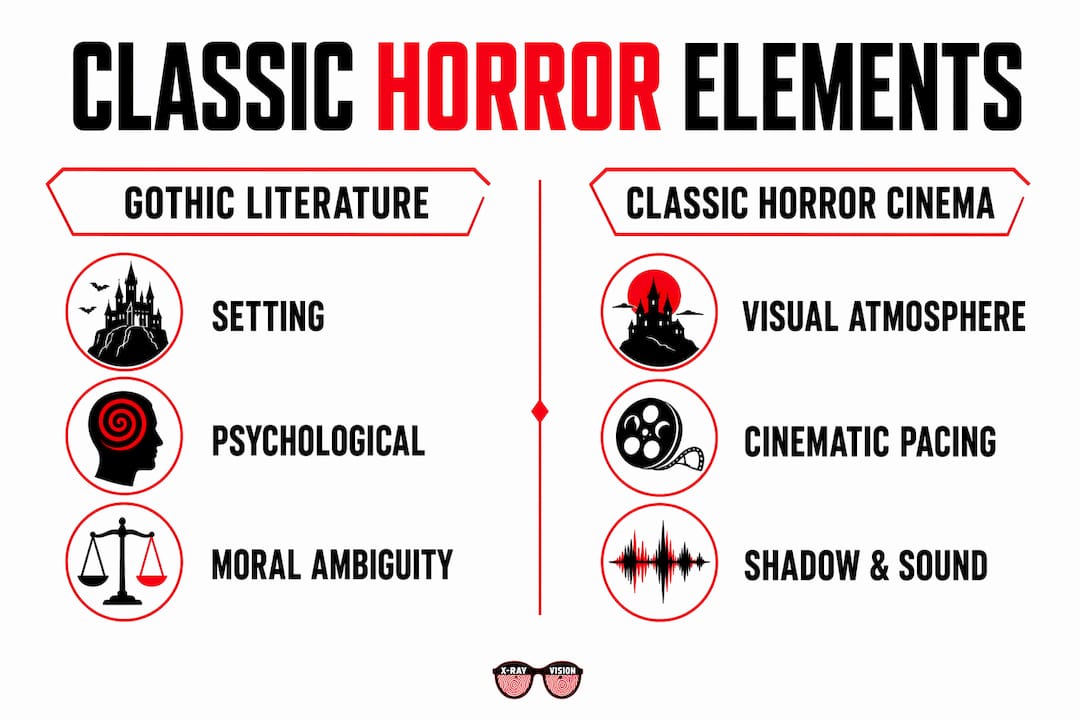
The core characteristics of classic horror include:
- Atmospheric suspense: Tension builds through pacing, shadow, and sound rather than graphic imagery. The threat is often implied rather than shown.
- Gothic settings: Castles, monasteries, decaying estates, and fog-covered moors serve as more than backdrops. Classic horror settings function as characters that mirror the psychological decay or moral corruption of their inhabitants.
- Psychological depth: Characters face internal conflicts that are as terrifying as any external monster. Guilt, repression, and obsession drive the horror forward.
- Supernatural as metaphor: The ghost, the vampire, and the creature rarely exist just to frighten. Gothic fiction uses supernatural events as metaphors for human social anxiety, repressed desires, and moral failings.
- Moral ambiguity: Classic horror rarely offers clean villains. Victor Frankenstein is as monstrous as his creation. Dracula is terrifying precisely because he is seductive.
- Sustained dread over shock: Classic horror builds slow-burning unease rather than delivering instant shock. The fear accumulates.
Pro Tip: When analyzing a horror work, ask whether the setting could be removed without losing the story's emotional core. In classic horror, the answer is almost always no. The setting IS the psychology.
These elements combine to create a reading or viewing experience that stays with you. You don't just feel scared. You feel unsettled in a way that provokes thought.
How did Gothic literature shape classic horror traditions?
Gothic fiction gave classic horror its DNA. The genre emerged in 18th century Britain and established every major trope that horror writers and filmmakers still use today. Understanding this lineage is the key to understanding what defines classic horror as a style rather than just a time period.
The foundational texts arrived in a clear sequence:
- The Castle of Otranto (1764) by Horace Walpole. This novel is widely credited as the first Gothic horror text. It introduced motifs like haunted castles, tyrannical lords, and supernatural events that became foundational to the entire genre.
- Frankenstein (1818) by Mary Shelley. Shelley transformed Gothic atmosphere into a vehicle for scientific and moral philosophy. The creature's tragedy is not that it exists, but that it was abandoned. Fear and empathy become inseparable.
- Dracula (1897) by Bram Stoker. Stoker synthesized Gothic setting, psychological menace, and social anxiety into one of the most influential horror narratives ever written. The vampire became a permanent symbol of repressed desire and foreign threat.
- The works of Edgar Allan Poe. Poe refined the psychological interior of Gothic horror. Stories like "The Tell-Tale Heart" and "The Fall of the House of Usher" made the protagonist's mind the most terrifying setting of all.
"The oldest and strongest emotion of mankind is fear, and the oldest and strongest kind of fear is fear of the unknown." — H.P. Lovecraft, Supernatural Horror in Literature (1936)
Lovecraft's observation cuts to the heart of Gothic horror's power. His 1936 essay described what he called the dæmoniac atmosphere as the fundamental connective tissue in classic horror, blending dread, isolation, and the uncanny into a sustained emotional experience. That framework did not invent Gothic horror, but it named what Gothic writers had been doing for 150 years.
The Gothic tradition also introduced the concept of the haunted space as a psychological mirror. The crumbling house in Poe, the castle in Walpole, the moors in Emily Brontë's Wuthering Heights: each location externalizes an internal state. This is not decoration. It is the history of horror literature doing its deepest work.
How does classic horror cinema translate Gothic literary elements?
Early horror cinema did not abandon Gothic literature. It adapted it into a new sensory language. Directors discovered that shadow, framing, and silence could do what prose atmosphere had always done, and sometimes do it more immediately.
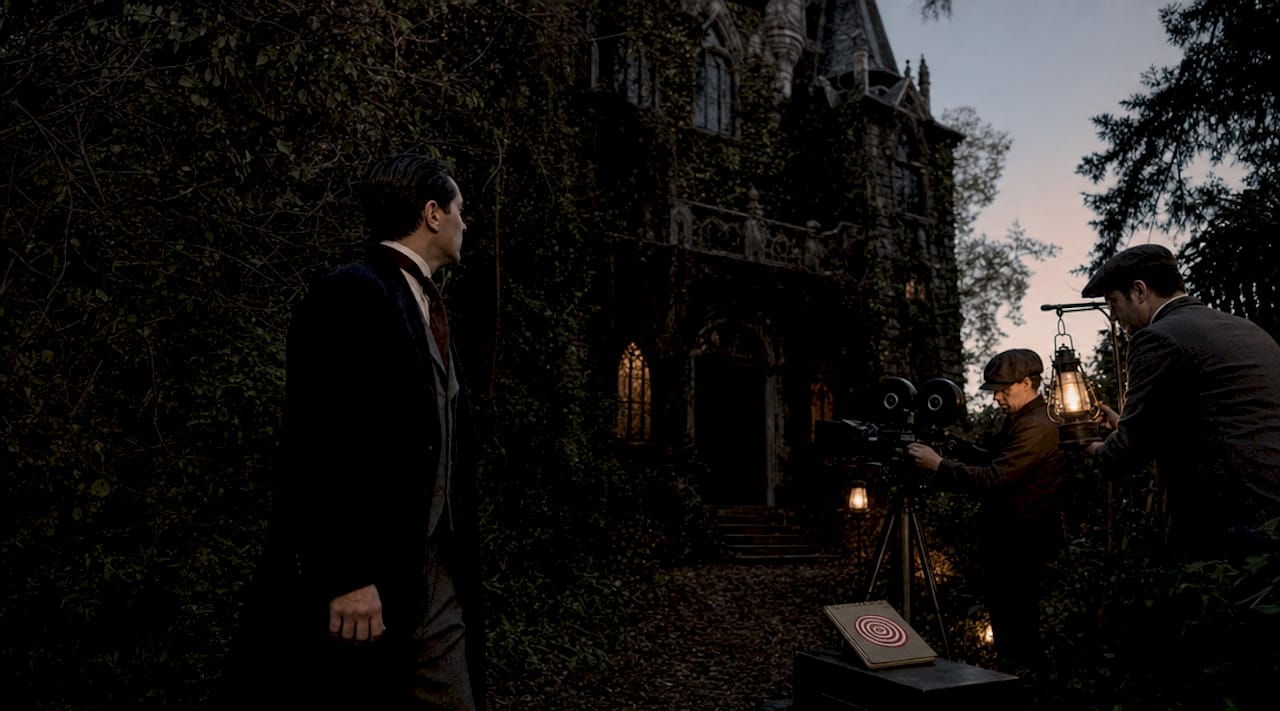
The translation from page to screen produced some of the most enduring images in film history. Compare how the two mediums handle the same core elements:
| Element | Gothic literature | Classic horror cinema |
|---|---|---|
| Setting | Described through layered prose and sensory detail | Constructed through set design, lighting, and camera angle |
| Psychological tension | Interior monologue and unreliable narrators | Close-ups, shadow play, and musical score |
| The monster | Revealed gradually through witness accounts | Withheld from full view to maximize dread |
| Atmosphere | Built through pacing and word choice | Built through sound design and visual composition |
Universal Studios in the 1930s produced the first wave of definitive classic horror films. Nosferatu (1922), Dracula (1931), Frankenstein (1931), and The Bride of Frankenstein (1935) each took Gothic source material and found cinematic equivalents for its psychological weight. Hammer Horror studios in Britain then extended this tradition through the 1950s and 1970s, adding color and heightened Gothic atmosphere to stories that had already proven their power in black and white.
Classic horror films often eschew explicit visual gore in favor of suspenseful pacing, employing framing, shadow, and sound to evoke fear. This is not a technical limitation of early cinema. It is a deliberate artistic choice that reflects the same philosophy as the Gothic novels that inspired these films.
Pro Tip: Watch the 1931 Universal Dracula with the sound off for five minutes. The visual composition alone creates unease. That is classic horror cinema working exactly as intended.
The visual and auditory crafting of atmosphere in cinema transformed static Gothic settings into dynamic psychological landscapes. A fog machine and a well-placed shadow could make a studio set feel like the edge of the world.
Which themes and motifs continue to define classic horror today?
Classic horror's themes are not historical artifacts. They are alive in contemporary fiction, film, and even internet horror like Creepypasta. The reason is simple: the fears classic horror addresses are permanent features of human psychology.
The enduring themes include:
- Fear of the unknown. Classic horror rarely explains its monsters fully. The blend of fear of the unknown with moral questions around humanity and scientific overreach remains as resonant in 2026 as it was in 1818. What you cannot see or understand is always more frightening than what you can.
- Scientific hubris. Frankenstein established this theme and it never left. Every story about technology, genetic engineering, or artificial intelligence that goes wrong is working in Shelley's shadow.
- The monstrous other. Classic horror consistently uses its monsters to examine what society fears, excludes, or refuses to understand. Dracula is the dangerous foreigner. The creature in Frankenstein is the abandoned outsider. These are social anxieties wearing a horror costume.
- The haunted space as metaphor. A decaying house, a cursed room, a forbidden corridor: classic horror uses physical spaces to represent psychological states. Repression, grief, and guilt all find architectural form.
- Psychological introspection. The most frightening revelation in classic horror is often that the protagonist is the source of the horror. Poe understood this. So did Shirley Jackson in The Haunting of Hill House (1959), which brought Gothic psychological horror fully into the 20th century.
These themes echo clearly in modern horror. Films like Hereditary (2018) and The Witch (2015) are built on classic horror's architecture. They use isolation, slow dread, and moral collapse in ways that Walpole and Shelley would recognize immediately. The literary devices that create sustained fear in classic horror are the same ones powering the best contemporary work.
Key takeaways
Classic horror is defined by its commitment to psychological dread, Gothic atmosphere, and moral complexity rather than graphic violence or cheap shock.
| Point | Details |
|---|---|
| Core definition | Classic horror builds sustained dread through atmosphere, psychology, and Gothic tradition rather than gore. |
| Literary origins | Works by Walpole, Shelley, Stoker, and Poe established the tropes and themes that define the genre. |
| Cinematic translation | Universal and Hammer Horror studios adapted Gothic literary elements into visual and auditory suspense. |
| Supernatural as metaphor | Monsters and haunted spaces represent social anxieties, repressed desires, and moral questions. |
| Enduring relevance | Classic horror's themes of the unknown, scientific hubris, and psychological decay remain central to modern horror. |
Why classic horror still gets under my skin
I have read a lot of horror. Gothic novels, pulp paperbacks, Creepypasta at 2 a.m. when I probably should have known better. And the works that stay with me are almost never the ones that tried hardest to shock me. They are the ones that built a world so thick with dread that I felt it before anything had even happened yet.
That is what classic horror does that nothing else quite replicates. It creates a sustained emotional state rather than a series of reactions. When you read Dracula or watch the 1931 Universal version, the fear is not in any single moment. It is in the accumulation of atmosphere, the sense that something is deeply, fundamentally wrong with the world of the story.
I think modern horror sometimes forgets this. The jump scare is a reflex, not an emotion. Classic horror's power lies in eliciting sustained dread that provokes moral and existential reflection beyond fear itself. That is a much harder thing to achieve, and it is why the foundational texts and films still feel fresh.
If you have not read Frankenstein as an adult, read it now. Not as a monster story. As a moral argument. You will find it more unsettling than almost anything published this year.
— Mark
Explore horror that gets under your skin
If this breakdown of classic horror has you ready to read something that actually unsettles you, Markwatsonbooks has exactly what you need.

Mark Watson's horror collection spans Gothic-influenced thrillers and modern horror that carries the same atmospheric weight as the classics. For readers drawn to the internet horror tradition, the Creepypasta books bring that same slow-burn dread into contemporary storytelling. These are not quick shock reads. They are the kind of stories that sit with you. Browse the full book catalog and find your next unsettling read.
FAQ
What is the simplest definition of classic horror?
Classic horror is a genre defined by atmospheric suspense, psychological depth, and Gothic literary roots rather than explicit gore. The goal is sustained dread, not instant shock.
What are the main elements of classic horror?
The core elements include Gothic settings, supernatural metaphor, psychological tension, moral ambiguity, and slow-building atmosphere. These features distinguish classic horror from gore-centric or slasher subgenres.
Which authors are most influential in classic horror?
Mary Shelley, Bram Stoker, Edgar Allan Poe, and H.P. Lovecraft are the most cited foundational figures. Horace Walpole's The Castle of Otranto (1764) is credited as the genre's first major text.
How does classic horror differ from modern horror?
Classic horror builds slow-burning psychological unease, while modern horror often prioritizes instant shock or graphic imagery. The distinction is philosophical as much as stylistic.
Are classic horror themes still relevant today?
Absolutely. Themes like fear of the unknown, scientific hubris, and the monstrous other appear in contemporary films like Hereditary and The Witch, both of which draw directly from the Gothic horror tradition.