
TL;DR:
- Gothic fiction for children uses mystery and atmosphere to help young readers explore fear safely and build resilience. It emphasizes suspense, supernatural elements, and internal struggles, often with hopeful resolutions fitting each age group. Such stories foster empathy, self-awareness, and courage, offering developmental benefits beyond entertainment.
Most parents hear "gothic fiction for children" and picture something dark, disturbing, and way too intense for young readers. That instinct is understandable, but it misses the bigger picture. What is gothic fiction for children, really? It's a genre that uses mystery, atmosphere, and just enough shadow to help kids explore fear safely, build emotional resilience, and discover the satisfying thrill of a world where strange things happen. This guide breaks down what the genre actually contains, which themes suit which ages, and how to find the best gothic books for kids without the guesswork.
Table of Contents
- Key takeaways
- What is gothic fiction for children?
- Gothic fiction by age group
- The real benefits of gothic fiction for kids
- Best gothic books for kids by age and theme
- My take on gothic fiction and children
- Explore gothic fiction with Markwatsonbooks
- FAQ
Key takeaways
| Point | Details |
|---|---|
| Gothic fiction is age-appropriate | Children's gothic uses mystery and atmosphere, not graphic horror, to engage young imaginations safely. |
| Fear has developmental value | Gothic stories act as a controlled simulator for anxiety, building resilience over time. |
| Age matters for book selection | Picture books, middle-grade, and teen gothic fiction each offer themes calibrated to emotional maturity. |
| Benefits go beyond entertainment | Gothic reading supports empathy, self-awareness, and confidence in confronting real-world anxieties. |
| Curated picks exist for every stage | Classic and contemporary titles make it easy to match the right book to the right child. |
What is gothic fiction for children
Gothic fiction has roots stretching back to 18th-century novels like Horace Walpole's The Castle of Otranto, where crumbling castles, secret passages, and supernatural dread set the tone for an entirely new genre. What is gothic literature at its core? It's storytelling that leans into darkness, mystery, and the unknown to provoke an emotional response. For adults, that can mean full-blown horror. For children, it's something quite different and genuinely wonderful.
Children's gothic fiction keeps the atmosphere, the suspense, and the sense that something is just slightly wrong, but it filters out the graphic content. Gothic themes in children's books typically include isolation, mystery, supernatural events, and the exploration of human nature's darker side, all wrapped in enough imagination and warmth to keep young readers turning pages rather than closing them in panic.
Here's what separates gothic fiction for kids from its adult counterpart:
- Settings: Crumbling mansions, foggy graveyards, and shadowy forests create atmosphere without explicit threat.
- Supernatural elements: Ghosts, mysterious figures, and unexplained events drive plot without graphic violence.
- Mystery over menace: The emphasis stays on discovery and suspense rather than shock or gore.
- Emotional metaphor: Darkness in the setting often mirrors internal struggles, like fear, loneliness, or the pressure to fit in.
- Resolution: Children's gothic almost always provides a resolution or a sense of safety restored, a feature far less common in adult gothic fiction.
The Gothic Child trope in literature places young protagonists at the center of uncanny experiences that challenge domestic norms and authority, allowing them to face internal fears and societal pressures through gothic encounters. This is coming-of-age storytelling with shadows attached, and it's far more purposeful than it looks.
Pro Tip: When evaluating a gothic book for your child, look for how the story ends. A resolution that restores order or offers hope is a strong sign the book is calibrated for younger audiences.
Gothic fiction by age group
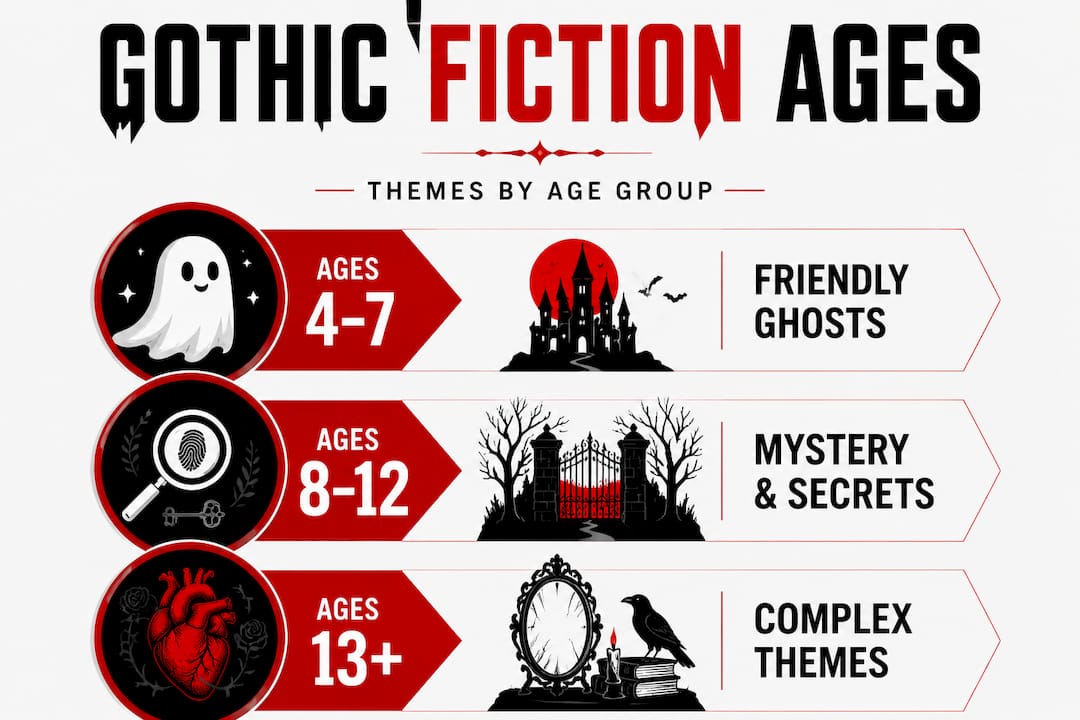
Not all gothic storytelling for young readers is built the same. The themes, vocabulary, and emotional weight shift significantly between a picture book for a five-year-old and a gothic novel for a thirteen-year-old. Here's a quick comparison to help you find the right fit.
| Age group | Suitable gothic themes | What to expect |
|---|---|---|
| Ages 4 to 7 (picture books) | Friendly ghosts, spooky-but-safe settings, mild mystery | Short text, vivid illustrations, humorous tone |
| Ages 7 to 9 (early readers) | Haunted houses, magical creatures, light supernatural | Simple chapters, some suspense, warm resolution |
| Ages 8 to 12 (middle grade) | Mortality, isolation, uncanny characters, mystery | Complex plots, emotional depth, relatable protagonists |
| Ages 13+ (teen gothic) | Grief, identity, moral ambiguity, darker supernatural | Mature themes, layered storytelling, less clear resolution |
Picture books like Aggie and the Ghost are recommended for ages 4+, demonstrating that gothic storytelling can start much younger than most parents realize. At this stage, the genre is mostly about cozy spookiness rather than genuine dread.
Middle-grade gothic is where the genre really gains power. Gothic literature resonates with adolescence because the unsettling, strange feelings of early adolescence actually match the genre's emotional frequency. A twelve-year-old navigating social anxiety and fear of failure finds real comfort in a protagonist who defeats a ghost or survives a haunted house. The metaphor lands.
For teens, the genre can carry more weight. Themes of grief, identity, and moral complexity become fair game, though even teen gothic fiction typically stops short of the relentless bleakness found in adult horror.
Pro Tip: When introducing gothic fiction to a child for the first time, start one age bracket lower than you think necessary. A ten-year-old who hasn't read much in the genre often connects more deeply with a book pitched at ages 8 to 10 than one targeted at their exact age.
The real benefits of gothic fiction for kids
Here's the part that surprises most parents. Gothic fiction isn't just acceptable reading for children. It's actively beneficial, and research backs that up.
"Gothic stories offer children a comfort blanket as they explore universal fears. They can always close the book." — BookTrust experts on why dark stories build resilience in young readers
That idea of closing the book is more significant than it sounds. Gothic stories act as a controlled simulator for fear, letting children confront anxiety in a space they control entirely. Real fear doesn't come with a pause button. Gothic fiction does. That's a psychologically powerful difference.
The benefits show up across several areas of development:
- Emotional resilience: Repeated, safe exposure to fear through storytelling trains the brain to manage anxiety more effectively. Most parents recognize gothic fiction's role in building emotional resilience, even if they initially worry about its impact.
- Empathy: Gothic protagonists are often outsiders, scared, misunderstood, or isolated. Readers who identify with them build genuine compassion for people experiencing those feelings in real life.
- Self-awareness: Contemporary gothic fiction uses uncanny characters to subvert simple moral categories, which pushes young readers to think critically about good, evil, and the complicated middle ground.
- Courage-building: There's measurable confidence that comes from finishing a scary book. You can read more about this on the Markwatsonbooks blog's piece on courage in children.
One important nuance: some children may experience short-term negative feelings after reading gothic fiction, particularly if the content is above their emotional readiness. That's a real response worth monitoring. The solution is matched reading, not avoidance.
Best gothic books for kids by age and theme
Here's a curated starting list for parents and educators ready to explore gothic storytelling for young readers. These titles balance atmosphere with age-appropriateness.
- Aggie and the Ghost (ages 4+): A gentle introduction to friendly supernatural characters, ideal for the very youngest readers encountering gothic themes for the first time.
- Goth Girl and the Ghost of a Mouse by Chris Riddell (ages 7+): A perfect example of how effective children's gothic balances brooding atmosphere with warmth and humor, using aptronyms and atmospheric settings as storytelling tools.
- Coraline by Neil Gaiman (ages 9+): The gold standard of middle-grade gothic. A crumbling domestic world, a sinister alternate reality, and a protagonist who has to find courage from within. It's genuinely unsettling and genuinely brilliant.
- The Graveyard Book by Neil Gaiman (ages 10+): A boy raised by ghosts in a cemetery sounds dark, and it is, but the story is ultimately about belonging and courage. Middle-grade gothic helps young readers process mortality and fear through supernatural elements, and this title does it masterfully.
- A Series of Unfortunate Events by Lemony Snicket (ages 9+): Gothic atmosphere mixed with dark humor. The settings are oppressive, the villain is genuinely menacing, but the wit keeps readers in control of their fear response throughout.
- The Skull and Stitch (ages 8+): Contemporary titles that include warmth alongside gothic tropes, making them ideal introductory reads for middle-grade readers not yet confident in the genre.
- Jane Eyre adapted editions (ages 13+): For older teens ready for the original gothic tradition, adapted versions of classic texts provide authentic gothic themes at a more accessible reading level.
For a deeper look at spooky classics alongside these contemporary picks, the Markwatsonbooks blog covers classic horror for children in detail, with parent-focused guidance on what to expect from each era of children's gothic fiction.
My take on gothic fiction and children
I've spent years writing in the darker corners of fiction, from horror thrillers to gothic-leaning children's stories, and the question I hear most from parents is whether this genre does more harm than good. My honest answer? The parents who worry most are usually the ones most likely to make the best choices for their kids, because they're paying attention.
What I've learned is that gothic fiction teaches something no other genre does quite as well: that darkness can be survived. Not avoided. Not pretended away. Actually survived. A child who reads Coraline and gets through the Other Mother understands something real about facing fear and coming out the other side. That's not a trivial lesson.
I've also seen firsthand that kids who engage with gothic stories tend to show remarkable emotional vocabulary. They talk about being scared in a story and not being scared in real life. That distinction, between story-fear and real-fear, is a sophisticated emotional skill. It doesn't arrive automatically. Gothic fiction builds it.
The balance I always look for in a gothic story for children is this: the darkness has to be real enough to matter, but hope has to be present somewhere, even if it's at the very end of the story. Without the dark, there's no tension. Without hope, there's only damage. The best gothic storytelling for young readers holds both at once.
If you're a parent or educator on the fence, my encouragement is this. Pick one well-matched title. Read it alongside the child if you like. Then watch what they do with the feelings it stirs up. You might be surprised how resourceful they already are.
— Mark
Explore gothic fiction with Markwatsonbooks
Ready to find the right gothic read for the young reader in your life? Markwatsonbooks has built a carefully selected range of books for children, teens, and adults who love stories with a darker edge.

Browse the full children's book collection for age-appropriate gothic and spooky titles calibrated for young readers. For older teens who are ready to step into darker territory, the creepypasta collections offer gothic horror with genuine atmosphere and edge. Every title on the Markwatsonbooks books page is part of a curated literary catalog built for readers who want stories that actually stay with them. Don't wait. The perfect gothic read for your child is already there.
FAQ
What is gothic fiction for children?
Gothic fiction for children is a genre that uses dark settings, mystery, and supernatural elements to create suspense and emotional depth, without graphic violence or adult horror content. It's designed to help children safely explore fear and build emotional resilience through imaginative storytelling.
Is gothic fiction appropriate for young children?
Yes, when matched to the right age. Picture books with friendly ghosts or spooky-but-safe settings are suitable from age 4+, while more complex themes are reserved for middle-grade and teen readers.
What are the benefits of gothic literature for kids?
Gothic literature for kids builds emotional resilience, empathy, and self-awareness by letting children confront fear in a controlled, fictional setting. Research shows the genre supports long-term emotional strength, even if some children experience short-term nervousness.
What makes a gothic book right for a child's age?
Look for a resolution that restores safety or hope, humor or warmth woven into the atmosphere, and supernatural elements that serve the story rather than shock the reader. These are the markers that distinguish children's gothic from adult horror.
What are some of the best gothic books for kids?
Strong starting points include Coraline and The Graveyard Book by Neil Gaiman for ages 9 to 12, Goth Girl and the Ghost of a Mouse for ages 7 and up, and A Series of Unfortunate Events for ages 9 and up. Each balances genuine gothic atmosphere with age-appropriate emotional depth.