
The strongest picks for read-aloud spooky stories, sorted by age: Go Away, Big Green Monster! (preschool, 5 minutes, silly and safe), There Was an Old Lady Who Swallowed a Bat (K–1, sing-along fun), In a Dark, Dark Room (grades 1–3, 10 minutes, mild suspense), Wait Till Martin Comes (grades 4–7, 15 minutes, twist ending), and Poe's The Tell-Tale Heart and Mark Watson's Creepypasta Omnibus for teens and older readers (20–30 minutes, intense chills). Each pick below comes with a scare-level label, a read-time estimate, and at least one tip you can use tonight.
- Preschool/K: Go Away, Big Green Monster! — mild, 5 min, call-and-response pages keep tiny listeners in control
- Preschool/K: There Was an Old Lady Who Swallowed a Bat — mild, rhyming refrain invites sing-along
- Grades 1–3: In a Dark, Dark Room — mild, 10 min, short chapters and a classic jump-scare ending
- Grades 4–7: Wait Till Martin Comes — moderate, 15 min, great for prediction and discussion
- Grades 4–7: The Veldt by Ray Bradbury — moderate, 20 min, rich discussion prompts on CommonLit
- Teens/adults: The Tell-Tale Heart by Poe — intense, 20 min, dramatic and public-domain
- Teens/adults: Mark Watson's Creepypasta Omnibus — intense, 30+ min, 150 collected internet horror stories
Table of Contents
- 1. Best spooky read-alouds for preschool and kindergarten
- 2. Spooky read-alouds for early elementary (grades 1–3)
- 3. Suspenseful read-alouds for middle-grade listeners (grades 4–7)
- 4. Classic gothic and short horror stories for teens and older readers
- 5. Where to find read-aloud recordings and spooky audiobooks
- 6. How to choose the right spooky story for your group
- 7. Practical tips for reading spooky stories aloud
- Mark Watson's picks for every scare level
- Sources
1. Best spooky read-alouds for preschool and kindergarten
Young children thrive on predictability, and the best picture book scary stories for this age lean hard into repetition and humor rather than genuine dread. Humor and repetition manage the scare factor beautifully for under-6 listeners, making these titles perfect for bedtime or circle time in sessions of 5–10 minutes.
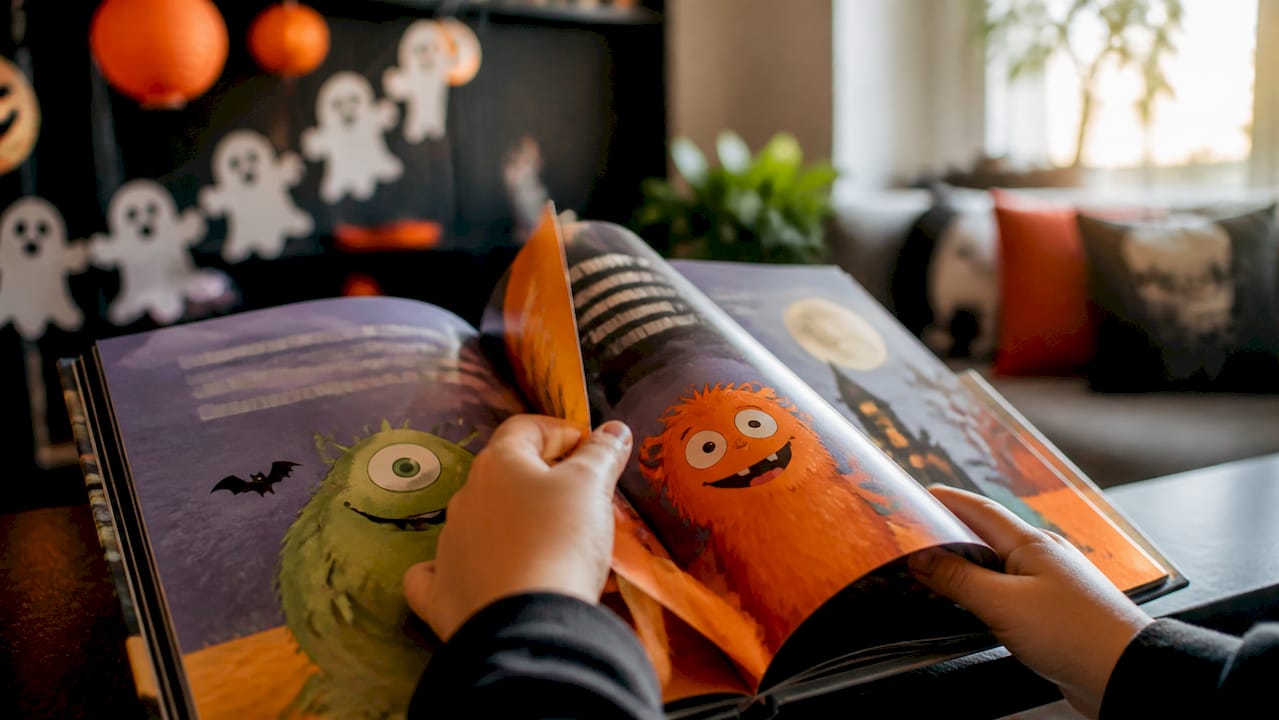
Go Away, Big Green Monster! by Ed Emberley Scare level: mild. Read time: 5 minutes. Each page reveals or erases a piece of the monster's face, so children literally control the creature. The call-and-response format ("Go away, scraggly purple hair!") keeps every listener shouting along. Activity: pause before each page turn and ask kids to predict the next body part.
There Was an Old Lady Who Swallowed a Bat! by Lucille Colandro Scare level: mild. Read time: 8 minutes. A Halloween spin on the classic cumulative rhyme, with bats, owls, and ghosts replacing the original animals. The NHPBS read-aloud recording is a free classroom-ready video, and the book's back matter includes bat facts that turn the session into a quick science moment. Activity: sing the refrain together each time it repeats.
The Night Before Halloween by Natasha Wing Scare level: mild. Read time: 8 minutes. A rhyming parody of the famous Christmas poem, packed with witches, goblins, and candy. The meter is so familiar that kids finish lines before you do. Activity: have listeners draw their favorite monster from the story after reading.
Room on the Broom by Julia Donaldson Scare level: mild. Read time: 10 minutes. A witch keeps rescuing animals and adding them to her broomstick until a dragon threatens the group. The dragon is silly, not scary, and the rhyme scheme is irresistible. Activity: act out each animal joining the broom with simple sound effects.
Skeleton Hiccups by Margery Cuyler Scare level: mild. Read time: 6 minutes. A skeleton can't stop hiccuping, and the humor lands every time. Short sentences make it easy to read with exaggerated pauses. Activity: have kids hiccup on cue each time the skeleton does.
Big Pumpkin by Erica Silverman Scare level: mild. Read time: 8 minutes. A witch can't pull her pumpkin free until a tiny bat solves the problem. The cumulative structure mirrors The Enormous Turnip, so it works perfectly for prediction. Activity: assign each child a character and have them join the "pull" with a tug-of-war motion.
Age-safety note: Even mild Halloween stories can unsettle a sensitive 3- or 4-year-old. Watch for stiffening, clinging, or sudden silence. If a child looks distressed, close the book, turn on a light, and pivot to a familiar, comforting story. Short sessions of 5–8 minutes are plenty for this age.
2. Spooky read-alouds for early elementary (grades 1–3)
-
In a Dark, Dark Room (Schwartz, I Can Read series) — Scare level: mild. Read time: 10 min. Six short chapters build to a classic jump-scare ending that delights rather than traumatizes. Works brilliantly for repeated readings because kids beg to hear the ending again. Activity: have listeners draw what they think is in the dark, dark box before the reveal.
-
Creepy Carrots! by Aaron Reynolds — Scare level: mild. Read time: 8 min. A rabbit convinces himself the carrots are following him. The paranoia is played for laughs, and the twist is genuinely clever. Activity: ask kids to predict whether the carrots are really alive before the last page.
-
Scary Stories for Young Foxes by Christian McKay Heidicker — Scare level: mild–moderate. Read time: 20–25 min (chapter book; read one chapter per session). Atmospheric woodland horror that feels like a campfire tale. Works well for repeated sessions across a week. Activity: prediction journal — kids write one sentence about what they think happens next.
-
The Haunted Library series by Dori Hillestad Butler — Scare level: mild. Read time: 15 min per book. A ghost named Kaz teams up with a human girl to solve mysteries. Chapters are short and punchy. Activity: draw-the-scene after each chapter.
-
Eerie Elementary series by Jack Chabert — Scare level: mild–moderate. Read time: 15–20 min per book. The school building is alive and hungry. Gross-out humor keeps the scare level manageable. Works especially well for reluctant readers who need a hook. Activity: costume prompt — what would you wear to survive Eerie Elementary?
-
The Monstore by Tara Lazar — Scare level: mild. Read time: 8 min. A boy buys monsters to scare his sister, but the plan backfires. The humor is sharp and the ending is sweet. Activity: have kids design their own monster with a name and one special power.
-
Nightbooks by J.A. White — Scare level: moderate. Read time: 20–25 min (excerpt). A boy trapped by a witch must tell scary stories to survive. Best for the upper end of this range (grade 3). Discussion prompt: Why does telling stories help the main character feel brave?
Elementary librarian roundups consistently highlight interactive Halloween read-alouds that use sing-alongs and call-and-response to spike participation. For grades 1–3, that means choosing titles with predictable refrains or chapter-ending cliffhangers that make kids lean forward.
3. Suspenseful read-alouds for middle-grade listeners (grades 4–7)
Middle-grade listeners are ready for genuine suspense, moral ambiguity, and stories that don't wrap up neatly. These picks reward discussion and work well in small groups or whole-class read-alouds. CommonLit pairs grade-level recommendations and teacher resources with many of these texts, making it easy to pull discussion questions and guided reading notes.
Wait Till Martin Comes (traditional folktale) Scare level: moderate. Read time: 15 minutes. A man shelters in a haunted house as increasingly large cats arrive, each saying they'll wait for Martin. The ending is a perfect twist. Discussion prompt: What do you think Martin is? What clues did the story give you? Widely available in short-story anthologies and free online.
The Veldt by Ray Bradbury Scare level: moderate. Read time: 20 minutes. A smart home's nursery becomes dangerously real. Bradbury's prose is vivid enough to read aloud with real dramatic effect, and the ethical questions (technology, parenting, consequence) generate rich classroom discussion. CommonLit hosts the text with teacher resources. Discussion prompt: Who is really responsible for what happens at the end?
Click Clack the Rattle-Bag by Neil Gaiman Scare level: moderate–intense. Read time: 15 minutes. A babysitter tells a child a story about creatures that drink people's bones dry. The horror is in what you don't see. Gaiman's pacing is a masterclass in building dread with almost no explicit violence. Discussion prompt: How does Gaiman make you feel scared without describing anything graphic? Available in his short-story collection Trigger Warning.
Coraline by Neil Gaiman (excerpts) Scare level: moderate. Read time: 20–25 minutes per excerpt. The button-eyes scene and the Other Mother's reveal are both perfect standalone read-aloud moments. Popular middle-grade horror sorted by scare level offers additional picks at this intensity. Discussion prompt: What makes the Other World feel wrong before anything bad happens?
The House With a Clock in Its Walls by John Bellairs Scare level: moderate. Read time: 20 min (chapter excerpt). Gothic atmosphere, a ticking mystery, and a genuinely menacing villain. Works well for a single-chapter read-aloud followed by prediction. Available in most school libraries.
Hilo Book 3: The Great Big Boom by Judd Winick Scare level: mild–moderate. Read time: 15 min. A graphic novel option for visual learners. The spooky elements are balanced with humor, and the format invites kids to analyze how art and text work together to create tension.
A teacher resource note: When working from adapted or excerpted versions of longer texts, educators can control lexical complexity and fit a single session without losing the story's emotional punch. CommonLit's platform makes this especially easy for The Veldt and similar short fiction.
4. Classic gothic and short horror stories for teens and older readers
These are the stories that stick. Short, punchy, and built for dramatic performance, classic gothic tales reward a skilled reader who commits to the voice. Content warnings are noted where relevant.
The Tell-Tale Heart by Edgar Allan Poe Scare level: intense. Read time: 20 minutes. Content note: murder, psychological horror. The first-person narrator insists he is sane while describing exactly why he isn't. Read it fast, then slow, then fast again — the rhythm mirrors the narrator's unraveling mind. LibriVox hosts free audio recordings of Poe's tales, including this one, suitable for classroom playback before or after a live reading.

The Legend of Sleepy Hollow by Washington Irving Scare level: moderate–intense. Read time: 45–60 minutes (full text) or 20 minutes (excerpt). Content note: mild violence. The Headless Horseman chase is the obvious excerpt choice, but the comic portrait of Ichabod Crane in the first half makes the terror land harder. Public domain; free at Project Gutenberg and archive.org. For gothic fiction background that helps frame the story for younger teens, that guide is worth a quick read first.
The Lottery by Shirley Jackson Scare level: intense. Read time: 20 minutes. Content note: violence, disturbing social themes. Best for grades 9 and up. The story's power comes from its mundane opening — read it straight, without telegraphing the ending, and the final pages hit like a wall. CommonLit carries the text with discussion prompts. Discussion prompt: Why does the village keep doing this? What real-world traditions does this remind you of?
The Veldt by Ray Bradbury (also listed in middle-grade for excerpts) For older readers, read the full text and push the discussion into technology ethics and parental responsibility. The language holds up beautifully when read aloud.
The Canterville Ghost by Oscar Wilde Scare level: mild–moderate. Read time: 45 minutes (full text) or 20 minutes (excerpt). Content note: none significant. A ghost tries to terrify an American family that refuses to be scared. Wilde's wit makes this a genuinely funny read-aloud, and the emotional ending surprises every audience. Public domain; free online.
Click Clack the Rattle-Bag by Neil Gaiman (also listed in middle-grade) For older teens, pair it with a discussion of unreliable narrators and the horror of implication.
Mark Watson — Creepypasta Omnibus Scare level: intense. Read time: varies by story (most entries run 5–15 minutes). Content note: adult horror themes; recommended for ages 16 and up. The Creepypasta Omnibus collects 150 internet horror stories featuring Slenderman, Jeff the Killer, Eyeless Jack, and others. For a late-night read-aloud with older teens or adults, picking one or two short entries from the anthology creates an immediate campfire-story atmosphere. The format is perfectly suited to read-aloud: each story is self-contained, punchy, and built to unsettle.
A note on public-domain access: Poe, Irving, Jackson, and Wilde are all free at archive.org and Project Gutenberg. LibriVox volunteer recordings cover most of them, so you can play a professional audio version before reading live to model pacing and tone.
5. Where to find read-aloud recordings and spooky audiobooks
You don't have to perform every story yourself. Professional narrations and teacher recordings are widely available, and pairing a live read with a polished audio version helps listeners analyze how pacing and tone shape suspense.
- LibriVox / archive.org — Free, public-domain volunteer recordings. The 12 Creepy Tales by Edgar Allan Poe collection is a strong starting point for older-reader sessions. No account required.
- CommonLit — Free for teachers. Many texts include "Related Media" tabs with author readings or film clips that pair with the written story. Excellent for multimodal classroom work.
- Libby / OverDrive — Free with a library card. Thousands of children's and YA audiobooks, including most major Halloween picture books and middle-grade horror titles.
- NHPBS and public television read-aloud channels — NHPBS posts teacher read-alouds of picture books like There Was an Old Lady Who Swallowed a Bat, free and ready to stream in a classroom or living room.
- YouTube teacher playlists — Search for "[title] read aloud" on YouTube. Channels run by elementary teachers and school librarians cover most popular Halloween picture books with clear, expressive narration.
- Podcasts — Wow in the World, Circle Round, and Story Pirates all run Halloween-themed episodes suitable for younger listeners. Lore covers folklore and gothic history for older teens and adults.
When to choose audio over live reading: Play a professional recording first when you want to model dramatic pacing before reading live yourself, or when a classic text's vocabulary needs an expressive anchor. For picture books, live reading almost always wins because you can control the pace and watch the room.
Pro Tip: Play the first two minutes of a LibriVox Poe recording before you read the same passage aloud. Ask listeners what the narrator did with their voice that you can try. This turns a passive listening moment into an active analysis of suspense technique.
6. How to choose the right spooky story for your group
The International Literacy Association calls it the "Goldilocks" rule: choose a story that is just-scary-enough to engage without tipping into distress. For K–2 listeners, that means predictable structures and repetition. For grades 3 and up, plot-driven suspense with ambiguous endings promotes discussion rather than nightmares. Understanding why kids love spooky tales in the first place helps you calibrate that intensity with confidence.
Quick selection checklist:
- Age/grade fit: Use the groupings in this article. When in doubt, go one level milder.
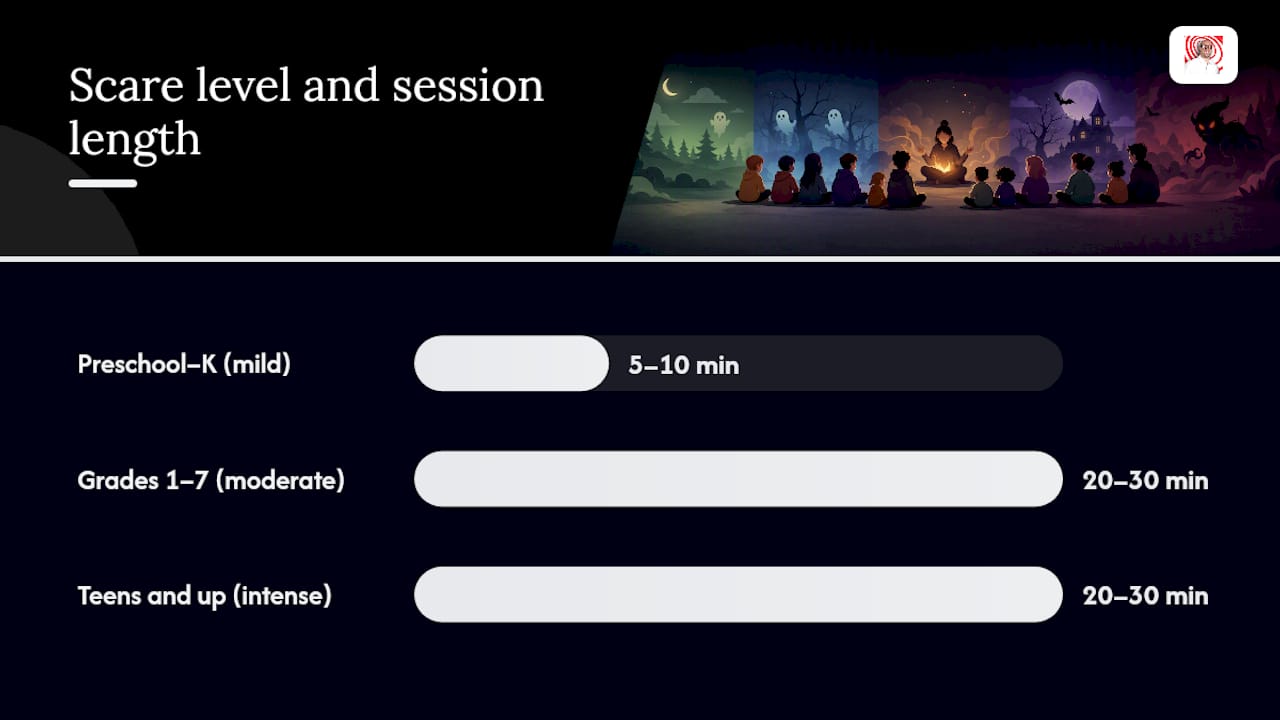
- Session length: 5–10 minutes for preschool/K, 10–20 minutes for grades 1–3, 20–30 minutes for grades 4 and up. Stopping before the end of a chapter is fine — cliffhangers are your friend.
- Scare indicators to watch: A child who goes very quiet, covers their eyes, or asks to stop is telling you the story is too intense. Honor that signal immediately.
- Content scan: Read the last page before reading aloud. Surprise endings that involve death or real-world violence need a content note for older groups and should be skipped entirely for younger ones.
| Story type | Best for | Scare level | Approx. read time | Availability |
|---|---|---|---|---|
| Repetitive picture book | Preschool/K | Mild | 5–10 min | Print, library, YouTube |
| Early chapter book | Grades 1–3 | Mild–moderate | 10–20 min | Print, Libby |
| Short story (classic) | Grades 4–7 | Moderate | 15–25 min | CommonLit, free online |
| Gothic short story | Grades 8+ / teens | Intense | 20–30 min | LibriVox, archive.org |
| Creepypasta anthology | Ages 16+ / adults | Intense | 5–15 min per entry | Print, ebook |
Engagement spikes in October, and spooky read-alouds chosen at the right emotional intensity can improve comprehension and classroom participation. The key word is chosen — a story that overshoots the scare level shuts listeners down rather than opening them up.
7. Practical tips for reading spooky stories aloud
Good read-aloud technique turns a decent story into an unforgettable experience. These techniques work whether you're reading to one child at bedtime or thirty students in a classroom.
- Lower your voice, don't raise it. The instinct is to get louder for scary moments. The opposite works better. Drop to a near-whisper for the creepiest lines and watch the room go still.
- Use strategic pauses. A two-second pause before a reveal builds more tension than any adjective. Count silently: one, two, then speak.
- Vary your pace deliberately. Read mundane setup quickly. Slow down for danger. The contrast is what creates suspense.
- Use props sparingly. A flashlight under your chin, a single candle (battery-operated for classrooms), or a sound-effect app playing wind or creaking floorboards adds atmosphere without overwhelming the story.
- Invite participation without spoiling. Ask "What do you think is behind the door?" before turning the page. Never reveal your own guess first — let the listeners commit.
- For classrooms: Assign sound-effect roles to students (a creak, a howl, a heartbeat tap on the desk). It keeps everyone engaged and gives anxious listeners something active to focus on.
- Debrief after intense stories. For grades 4 and up, two or three discussion questions after reading help listeners process emotion through language rather than sitting with raw feeling. "What would you have done differently?" is a reliable opener.
- Plan a calming transition. End every spooky session with something warm and familiar: a short funny book, a snack, or a simple drawing activity. This is especially important for bedtime read-alouds.
Pro Tip: If a child becomes visibly frightened, stop reading, turn on a light, and say plainly: "This is just a story. The writer made it up to give us a little thrill." Then ask the child to name one thing they can see in the room that is completely normal. That grounding technique works faster than reassurance alone.
Children's storytelling tips that actually engage kids from educational storytelling practitioners reinforce several of these techniques, particularly the value of pacing variation and listener participation in keeping young audiences present rather than passive.
Why the "just scary enough" rule matters more than the title
Here's an opinion worth sitting with: the title of the story matters far less than the reader's delivery and the room's emotional temperature. A skilled reader can make Goodnight Moon feel eerie and can make The Tell-Tale Heart feel manageable. The reverse is also true. A nervous adult who rushes through a picture book to "get past the scary part" telegraphs anxiety to every child in the room.
The stories on this list are recommendations, not guarantees. What actually determines whether a read-aloud session is thrilling or traumatizing is the adult in the room: their pacing, their willingness to pause and check in, and their ability to read the audience as carefully as they read the page.
Classic horror, from Poe to Bradbury to Gaiman, earns its place in read-aloud sessions precisely because it was written to be heard. These authors understood rhythm, pause, and the power of the unsaid. When you read The Tell-Tale Heart aloud, you're not just sharing a story. You're performing a piece of literature that was designed for exactly that moment.
For older readers, the Creepypasta genre carries that same oral tradition into the internet age. These stories were written to be shared, screenshot, and read aloud in the dark. Mark Watson's anthologies collect the best of that tradition in a format built for exactly the kind of late-night read-aloud session that older teens remember for years.
Mark Watson's picks for every scare level
If you're building a Halloween reading list and want stories that deliver real atmosphere without the guesswork, Mark Watson's catalog covers both ends of the age spectrum with genuine craft.

For younger readers, the children's book collection offers illustrated titles designed with the same attention to pacing and atmosphere that makes a read-aloud session sing. For older readers and adults ready for something that genuinely unsettles, the Creepypasta Omnibus collects 150 internet horror stories in one volume — Slenderman, Jeff the Killer, Eyeless Jack, and dozens more. Each story runs 5–15 minutes, making them perfect for a single read-aloud entry at a Halloween party or a late-night session with teens. Digital and print editions are available through the site's linked retailers, so you can have a story ready tonight. Browse the full catalog at Markwatsonbooks and find the right level of dread for your group.
Key Takeaways
The single most important factor in a successful spooky read-aloud is matching scare intensity to the listener's age and emotional readiness, not the title itself.
| Point | Details |
|---|---|
| Match scare level to age | Use mild/repetitive stories for preschool–K, moderate suspense for grades 1–7, and intense classics for teens and up. |
| Keep sessions short | Aim for 5–10 minutes for young children, 20–30 minutes for older groups; cliffhangers work in your favor. |
| Use voice and pacing | A whisper and a two-second pause build more tension than any prop; slow down for danger, speed up for setup. |
| Plan a calming close | End every spooky session with something warm — a funny book, a drawing activity, or a snack. |
| Markwatsonbooks for all ages | The children's collection suits younger read-alouds; the Creepypasta Omnibus delivers 150 ready-to-read horror stories for older audiences. |
Sources
These resources back the recommendations and age labels throughout this article. Each one offers something specific you can use directly.
- HowStuffWorks — Ghost stories and Halloween traditions
- CommonLit blog — 9 spooky stories for the eeriest time of year
- Waterford
- LibriVox recording — 12 Creepy Tales by Edgar Allan Poe
- NHPBS — There Was An Old Lady Who Swallowed A Bat! (read-aloud episode)