

TL;DR:
- Connecting with horror fans requires participation in niche online communities and genuine engagement.
- Tailored social media strategies enhance visibility, especially during key horror calendar dates.
- Building trust through authenticity and shared passion fosters long-term loyalty among horror readers.
Horror authors pour their darkest fears onto the page, crafting stories that make readers sleep with the lights on. But writing the book is only half the battle. Finding the readers who will genuinely love and champion your work? That's where most horror authors hit a wall. The competition is fierce, the audience is scattered across dozens of platforms, and generic marketing advice just doesn't cut it for a genre this passionate and specific. This guide gives you concrete, proven steps to locate your ideal horror readers, build authentic connections, and grow a loyal community that keeps coming back for more.
Table of Contents
- Identify where horror readers gather online
- Leverage genre-specific social media strategies
- Engage with horror influencers and collaborative networks
- Run creative reader engagement campaigns
- What most guides miss about building a loyal horror fanbase
- Discover more ways to reach today's horror audience
- Frequently asked questions
Key Takeaways
| Point | Details |
|---|---|
| Find horror communities | Horror readers thrive in online communities like Reddit, Goodreads, and Discord. |
| Use genre-specific outreach | Tailoring your social media and networking to horror fans boosts visibility and engagement. |
| Partner with influencers | Collaborating with horror influencers and fan networks accelerates reader growth. |
| Run creative campaigns | Contests and live events turn casual readers into loyal fans. |
Identify where horror readers gather online
Once you recognize the importance of connecting with readers, the next step is knowing exactly where these horror fans spend their time. Horror has one of the most dedicated reader communities on the internet, but you have to know where to look.
Online horror communities are a primary source for reader discovery. The good news is that several vibrant digital spaces are specifically built for horror enthusiasts.
Here's a breakdown of the top platforms and what makes each one valuable:
| Platform | Community type | Key engagement feature |
|---|---|---|
| Reddit (r/horrorlit) | Discussion forums | Deep literary debates and AMA threads |
| Goodreads groups | Reading groups | Shared shelves, polls, and reviews |
| Facebook horror pages | Fan communities | Events, polls, and photo sharing |
| Discord servers | Real-time chat | Live discussions and author Q&A rooms |
Each platform has a distinct energy. Reddit's r/horrorlit draws serious literary horror fans who discuss themes, subgenres, and writing craft. Goodreads groups connect readers around specific authors and series. Facebook horror pages tend to attract casual fans who enjoy trailers, cover reveals, and community events. Discord servers offer the most real-time interaction, making them perfect for live chats and exclusive content drops.
Not all communities are worth your time, though. Watch for signs of life before investing energy: recent posts, active comment threads, and members responding to each other. A group with 10,000 members but posts from two years ago is a ghost town.
You can also explore horror genre communities to understand the different reader niches within the genre, from cosmic horror to psychological thrillers.
Connecting with a gothic community can also open doors to adjacent readers who share overlapping tastes in dark fiction.
Here are the most common mistakes to avoid when entering these spaces:
- Dropping links to your book without contributing to conversations first
- Posting the same promotional message across multiple groups
- Ignoring direct questions or comments from community members
- Treating the community as an audience rather than a group of peers
Pro Tip: Spend at least two to three weeks participating as a genuine fan before mentioning your own work. Comment on other authors' books, share your favorite horror recommendations, and ask questions. Trust is the currency of online communities.
Leverage genre-specific social media strategies
After joining the right online communities, amplify your visibility further by using tailored social media strategies. Not all platforms are built the same, and horror content thrives differently depending on where you post it.
Marketing horror books effectively means adapting your message to each platform's culture and audience expectations. Social media marketing is critical for authors in niche genres because it allows pinpoint targeting of passionate readers.
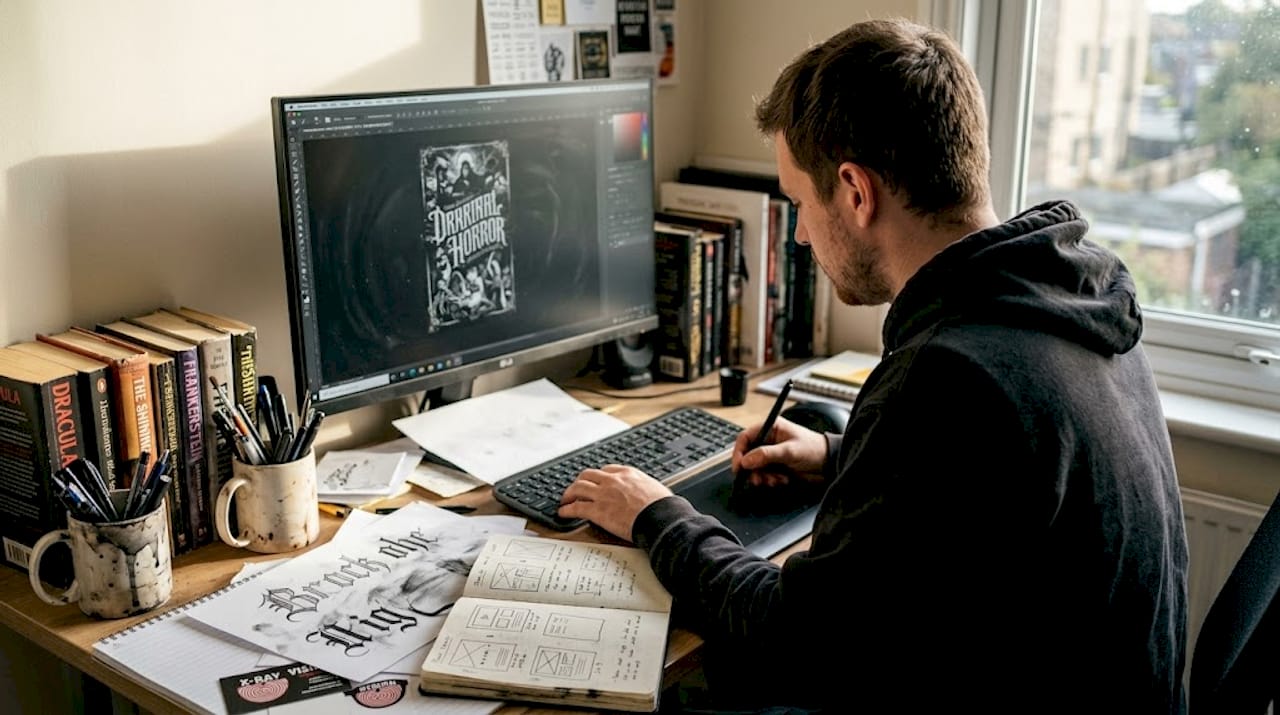
Accounts that post horror-themed visuals report 30% higher engagement than those using generic book promotion content. That number should change how you think about your visuals.
Here's how to approach each major platform:
- Twitter/X: Use horror-specific hashtags like #HorrorCommunity, #HorrorBooks, and #HorrorAuthor. Join weekly conversations like #HorrorBookClub. Keep posts punchy and atmospheric.
- Instagram: Lean into visual horror aesthetics. Think dark color palettes, moody cover reveals, atmospheric photography, and spooky reading setups. Stories and Reels perform especially well.
- TikTok/BookTok: Short, creepy videos generate massive reach. Reading dramatic excerpts, reacting to horror tropes, or sharing unsettling "did you know" facts about your book's themes all perform well.
- Facebook: Use it to manage events, share longer updates, and nurture existing fans through groups and pages.
- Pinterest: Surprisingly effective for horror mood boards, character aesthetics, and scene inspiration that readers love to share.
Consider gothic branding strategies to craft a visual identity that feels cohesive and authentically dark across every platform you use.
Pro Tip: Schedule posts around horror calendar moments: October and Halloween are obvious, but don't overlook Friday the 13th, the winter solstice, or even notable horror film anniversaries. Timing your content to align with the horror calendar makes your posts feel relevant and shareable.
Engage with horror influencers and collaborative networks
With a social presence growing, you can now quickly expand your reach by connecting and collaborating with established figures. Horror influencers already have the audience you want. The right collaboration can introduce your work to thousands of passionate readers overnight.
Collaboration is a proven method for audience growth in genre fiction. Horror bookstagrammers, BookTok creators, and horror bloggers each bring distinct strengths to a partnership.
Here's how organic fan recommendations compare to paid influencer promotions:
| Factor | Organic recommendations | Paid influencer promotions |
|---|---|---|
| Cost | Free | Variable, often $50 to $500+ |
| Reach | Smaller but highly targeted | Larger, broader audience |
| Engagement rate | High trust and conversion | Moderate, depends on fit |
| Longevity | Long-lasting word-of-mouth | Short-term visibility spike |
Organic recommendations from genuine fans carry deep trust, but paid collaborations can accelerate visibility significantly when the influencer is a strong match for your genre.
"What I look for in a new horror author is authenticity. Send me a book you believe in, not a pitch you think I want to hear. Readers can feel the difference." — A prominent BookTok horror creator
Tips for approaching influencers effectively:
- Research their content thoroughly before reaching out. Know their favorite subgenres and authors.
- Personalize every pitch. Reference a specific video or post they made that resonated with you.
- Offer something of genuine value: an advance copy, an exclusive excerpt, or a co-hosted live event.
- Be patient. Influencers receive many requests. Follow up once, professionally.
- Check out recommended horror books to understand what's already resonating with readers in your niche.
For gothic community insights, study how established voices in the space build trust and sustain long-term reader relationships. That knowledge will sharpen every pitch you send.
Generic outreach gets deleted. Specific, enthusiastic, and research-backed pitches get responses.
Run creative reader engagement campaigns
Beyond building connections, actively engaging your readers keeps them invested in your horror universe. Passive promotion fades. Interactive campaigns create memories.
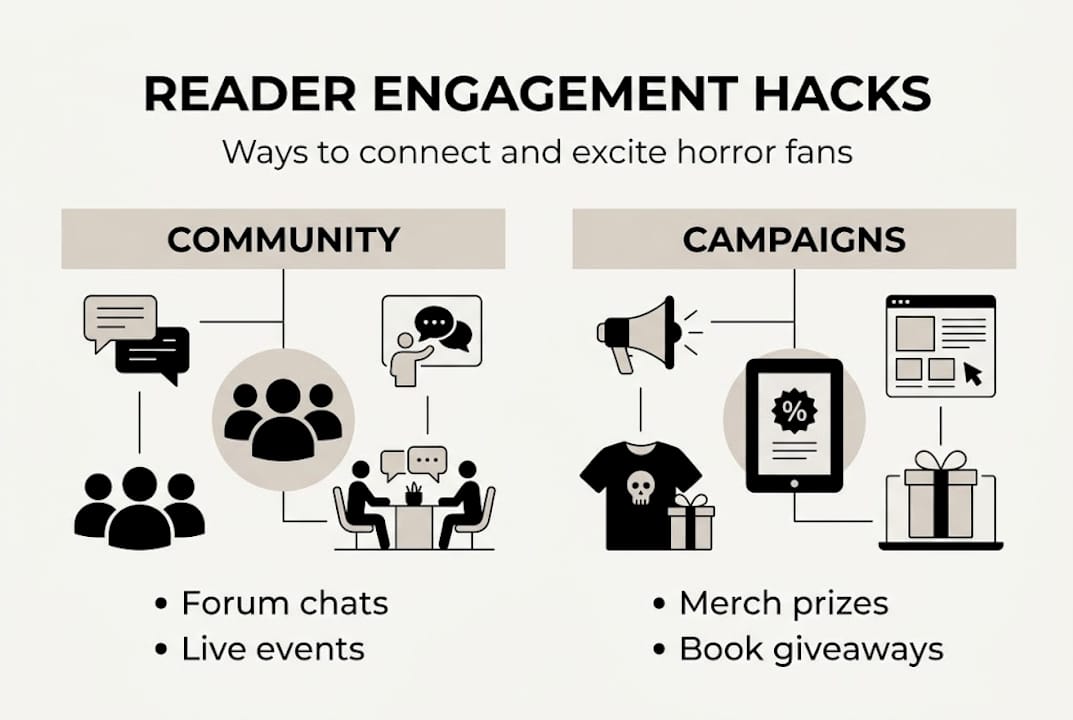
Interactive content and campaigns turn readers into invested fans who feel like they are part of something bigger than just buying a book.
Here are some campaign ideas that work especially well for horror:
- Online horror story contests where fans submit short fiction inspired by your world
- Live readings on Instagram or YouTube with real-time reactions and Q&A
- Exclusive digital horror content like printable maps, character backstories, or bonus scenes
- "Scare dare" challenges on TikTok tied to your book's themes
- Horror-themed trivia nights hosted on Discord
Here's a step-by-step guide to launching your first horror contest campaign:
- Define the theme: Base it around your book's world, a specific monster, or a universal horror scenario.
- Set clear rules: Word count limits, submission format, and entry deadlines posted publicly.
- Promote across all channels: Tease the contest on social media at least two weeks in advance.
- Engage with entries publicly: React to submissions, quote your favorites, and build anticipation.
- Announce winners with fanfare: A live reveal adds excitement and shareability.
- Share winning stories: Post them on your website or newsletter to give winners real visibility.
Pro Tip: Offer horror merchandise or signed books as prizes. Tangible prizes drive significantly more entries than digital-only rewards. Check out horror-themed merchandise for prize ideas that will genuinely excite your readers.
The impact of reader engagement goes far beyond the campaign itself. Readers who participate become your most vocal advocates.
What most guides miss about building a loyal horror fanbase
Most marketing guides for horror authors focus on tactics: post frequency, hashtag lists, influencer tiers. Those things matter, but they miss the deeper truth about horror readers specifically.
Horror fans are uniquely loyal when they feel respected. They don't just want a new book. They want to know you understand the psychology of horror readers, the emotional journeys they seek through fear, the catharsis, the thrill of confronting dark themes safely on the page.
"Readers return when authors respect and share their passion for the genre."
Building trust and authenticity is the cornerstone of long-term reader loyalty. The authors who sustain audiences over years aren't necessarily the best marketers. They're the ones who show up as genuine fans, sharing what scared them as kids, recommending other horror authors generously, and treating their community like collaborators rather than customers.
Share your personal fandom. Talk about the books that changed you. That vulnerability creates bonds no promotional campaign can manufacture.
Discover more ways to reach today's horror audience
With the right approach and trusted resources, you can transform your horror writing journey. Here's where to get started.

Mark Watson Books offers a growing library of dark fiction designed to thrill and unsettle. Whether you want to study what's resonating with today's horror readers or find your next obsession, explore our horror collection to see what's new. Looking for something that pushes deeper into internet horror culture? The creepypasta book selection delivers exactly that kind of unsettling, immersive experience. Ready to see everything? Browse all books and discover your next read today.
Frequently asked questions
What is the fastest way to find horror readers as a new author?
Joining established online horror communities and engaging genuinely is often the quickest path to connecting with passionate horror readers who are already searching for new voices.
Which social media platforms work best for horror genres?
Instagram, TikTok, and Reddit are highly effective for horror, each offering distinct advantages through visual storytelling, viral video content, and active reader groups built around the genre.
How can I work with horror influencers?
Research influencers' content carefully, personalize every pitch, and offer mutual value such as advance copies, exclusive interviews, or co-hosted events. Audience growth in fiction depends heavily on authentic collaboration rather than transactional requests.
What engagement campaign ideas attract horror readers?
Contests, live horror readings, and exclusive digital horror content are proven to spark engagement. Interactive campaigns transform casual readers into loyal advocates who actively promote your work within their own networks.