

Horror authors often struggle to cut through the noise and reach readers who crave the visceral thrills their books deliver. Unlike romance or thrillers that sell emotional connection or urgency, horror markets a unique physiological experience: the adrenaline rush of safe danger. This guide walks you through proven strategies to connect deeply with horror fans, from psychographic targeting and the Fear Funnel technique to community engagement and seasonal launch timing. You'll learn actionable steps to boost visibility, drive sales, and build a loyal readership within the horror community.
Table of Contents
- Key takeaways
- Understanding the horror market and audience
- Preparing to market: audience targeting and positioning
- Executing effective marketing campaigns for horror books
- Verifying success and refining your horror book marketing
- Explore top horror books and marketing resources
- Frequently asked questions
Key Takeaways
| Point | Details |
|---|---|
| Fear Funnel impact | The Fear Funnel technique boosts cover to sample engagement by guiding readers from first glance to trying a sample. |
| Psychographic targeting | Targeting readers by specific fears rather than broad demographics yields sharper campaigns and better resonance. |
| Authentic community engagement | Engaging in dedicated communities on Reddit and TikTok builds authentic connections rather than relying on generic ads. |
| Kindle Unlimited boost | Enrolling in Kindle Unlimited and using trigger warnings can boost visibility and reader discovery. |
Understanding the horror market and audience
The horror fiction market has experienced remarkable growth in recent years. Horror sales grew to 12.7% of adult fiction units in 2026, up from 9.4% in 2023, while UK horror sales doubled between 2018 and 2022, and US horror saw a 24.2% increase in 2023. This surge reflects rising reader appetite for stories that deliver fear, suspense, and the thrill of confronting darkness from a safe distance.
What makes horror unique is that it sells safe danger rather than connection, unlike romance or thrillers. Readers seek the physiological rush of dread and adrenaline without real-world consequences. This fundamental difference shapes every marketing decision you make. Your audience craves visceral reactions, atmospheric tension, and the satisfaction of surviving a terrifying journey. Understanding horror story themes and elements helps you speak directly to these desires in your marketing materials.
Psychographic factors matter far more than demographics when targeting horror readers. Instead of broad age or gender categories, focus on specific fears your book explores: claustrophobia, body horror, cosmic dread, or supernatural terror. A reader who loves haunted house stories may have zero interest in zombie apocalypses, even though both fall under horror. This specificity lets you craft laser-focused campaigns that resonate deeply with the right audience segments.
One critical consideration: women-written horror often gets miscategorized as thriller or romance, diluting its visibility within the horror market. If your book features strong horror elements, resist the urge to soften your positioning for broader appeal. Horror readers actively seek out authentic genre experiences, and mislabeling your work can alienate your core audience while failing to attract readers from other genres. Own your horror identity in every marketing touchpoint.
"Horror markets physiological reactions like dread and adrenaline, not emotional connection or urgency. This fundamental difference requires a distinct marketing approach."
The horror community values authenticity and shared passion for the genre. Readers congregate in specialized forums, follow niche influencers, and actively recommend books that deliver genuine scares. Tapping into these tight-knit communities through authentic engagement yields far better results than generic advertising. Your marketing should reflect the same care and specificity that horror fans bring to their reading choices.
Preparing to market: audience targeting and positioning
Effective horror marketing starts with precise audience segmentation based on psychographic profiles rather than surface-level demographics. Psychographic targeting by specific fears like isolation, body horror, or supernatural dread allows you to craft messages that speak directly to readers' deepest anxieties. A 45-year-old reader terrified of losing control has more in common with a 22-year-old who shares that fear than with another 45-year-old who craves cosmic horror. Build your targeting around these psychological connections.

Amazon visibility depends heavily on choosing the right BISAC categories and keywords. Avoid broad terms like "horror" that pit you against thousands of competitors. Instead, use long-tail keywords that reflect niche sub-genres: "folk horror Appalachia," "body horror medical thriller," or "cosmic horror isolation." These specific phrases attract readers actively seeking your exact flavor of terror while facing far less competition. Research which horror book collections align with your work to identify effective positioning strategies.
Pro Tip: Create a spreadsheet of 20-30 long-tail keywords by combining your book's specific fears, settings, and horror sub-genres. Test these in Amazon's search bar to gauge competition levels and reader interest.
Your positioning strategy should emphasize what makes your horror unique:
- Identify your book's primary fear trigger and the specific sub-genre it occupies
- Research successful comparable titles in that niche and analyze their category placements
- Select 2-3 BISAC categories that balance specificity with discoverability
- Craft a positioning statement that captures your book's unique atmospheric promise
- Test your positioning with beta readers from your target psychographic segment
Reviewer outreach becomes dramatically more effective when customized by sub-genre. A reviewer who specializes in gothic horror may pass on your slasher novel, wasting both your time and theirs. Build separate reviewer lists for each sub-genre your book touches, then personalize pitches to demonstrate you understand their specific tastes. Mention titles they've reviewed that share thematic or atmospheric elements with your work. This targeted approach dramatically increases acceptance rates and generates more enthusiastic reviews.
Understanding horror audience insights helps you refine your positioning over time. Pay attention to which fear triggers generate the strongest response in your test marketing. If readers consistently mention one specific element, that becomes your lead positioning point. Let your audience guide you toward the most compelling angle for your marketing materials.
Avoid these common positioning mistakes:
- Trying to appeal to all horror readers instead of owning your niche
- Using generic descriptor words like "terrifying" or "spine-chilling" without specificity
- Positioning your book as multiple genres to cast a wider net
- Ignoring the importance of atmospheric consistency across all marketing touchpoints
Executing effective marketing campaigns for horror books
The Fear Funnel marketing method structures your reader journey from first impression to purchase. Your cover must evoke an immediate threat or unsettling atmosphere that stops scrollers mid-browse. The blurb then sets concrete stakes, making readers understand what the protagonist risks losing. Finally, your sample pages convey tone and atmosphere, proving you can deliver the dread your marketing promises. Each stage intensifies engagement, funneling curious browsers toward committed readers.
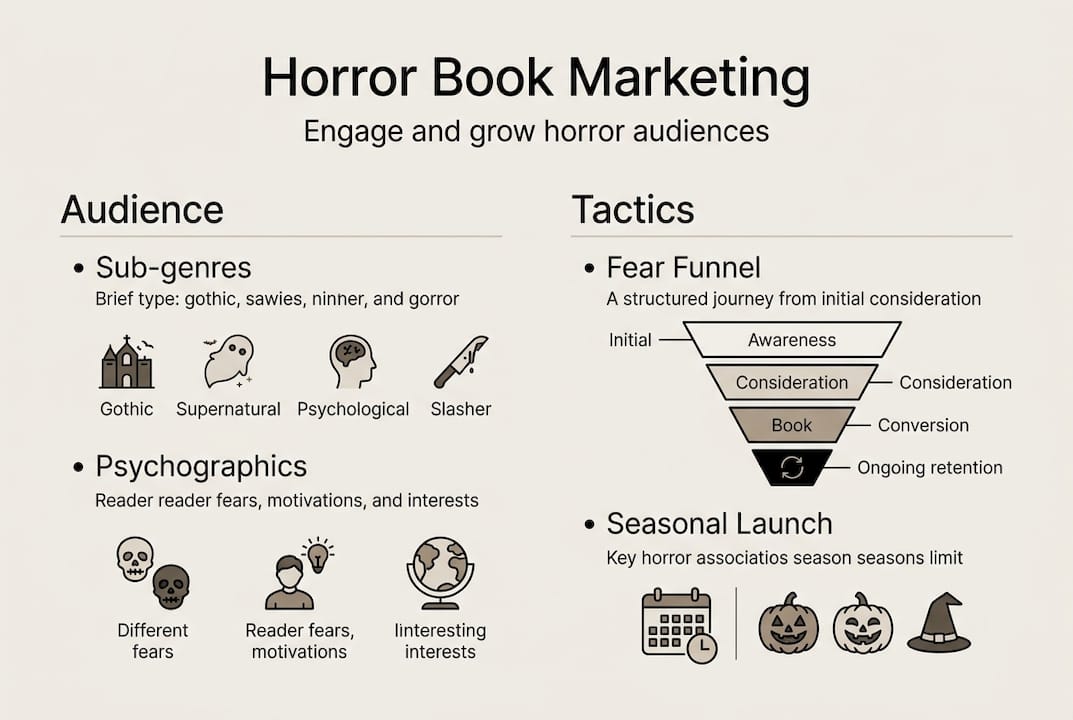
This approach sells physiological reactions like dread rather than plot details. Instead of summarizing your story, your marketing materials should make potential readers feel the core emotion your book delivers. A haunted house novel's cover might feature a single lit window in an otherwise dark facade. The blurb focuses on the protagonist's isolation and the house's malevolent presence. The sample opens with atmospheric tension that makes readers' skin crawl. Every element works together to trigger the fear response your target audience craves.
Pro Tip: Test your Fear Funnel by showing your cover, blurb, and first page to 5-10 beta readers. Ask them to describe the emotion each element evokes. If they mention plot points instead of feelings, revise until the emotional impact becomes primary.
Community engagement drives sustainable horror marketing success. Horror communities on Reddit and TikTok offer direct access to passionate readers who actively seek new recommendations. Participate authentically in r/horror discussions, sharing genuine insights about horror marketing tactics and craft rather than dropping promotional links. On TikTok, create atmospheric video content using #HorrorTok and #BookTok hashtags, leveraging audio and visual elements to convey your book's mood. Authenticity matters more than polish in these spaces.
Seasonal timing dramatically impacts horror book performance. Launch in August or September to capture Halloween momentum while avoiding the October algorithm flood when thousands of horror titles compete simultaneously. Early launches give you 6-8 weeks to build reviews, visibility, and word-of-mouth before peak buying season. This strategic timing positions your book as an established option rather than one of hundreds of new October releases fighting for attention.
| Launch Timing | Advantages | Disadvantages |
|---|---|---|
| August-September | Builds momentum before Halloween, avoids October saturation, longer visibility window | Requires earlier marketing preparation |
| October | Peak horror buying season, maximum reader interest | Extreme competition, algorithm challenges, shorter visibility window |
| Off-season | Less competition, year-round horror readers | Lower overall traffic, requires stronger evergreen positioning |
Kindle Unlimited attracts high-volume readers who consume multiple horror books monthly. These "whales" drive page reads and boost your Amazon ranking, creating a visibility flywheel that attracts additional readers. For new authors without established audiences, KU provides essential discoverability that paid advertising alone cannot match. The program's all-you-can-read model removes purchase friction, encouraging readers to take chances on unknown authors.
Trigger warnings serve dual purposes in horror marketing. They protect readers with genuine trauma triggers while simultaneously functioning as marketing hooks for extreme horror niches. A detailed content warning listing specific graphic elements attracts readers seeking intense experiences while filtering out those who prefer psychological horror. Frame warnings as promises of what your book delivers rather than apologetic disclaimers. Readers seeking creepypasta horror marketing examples often use trigger warnings as discovery tools to find their preferred intensity level.
Implement these execution steps systematically:
- Audit your Fear Funnel elements for emotional consistency and impact
- Join 3-5 active horror communities and contribute value before promoting
- Create a content calendar with atmospheric TikTok videos releasing bi-weekly
- Schedule your launch for late August or early September
- Enroll in Kindle Unlimited if you lack an established readership
- Craft specific trigger warnings that double as marketing hooks
- Monitor early response and adjust messaging based on reader feedback
Verifying success and refining your horror book marketing
Tracking the right metrics reveals what's working and what needs adjustment in your campaigns. Ad campaigns achieving 0.14% CTR and 0.64% IAR demonstrate effective targeting when marketing niche horror to specific audiences. Click-through rate shows whether your ad creative resonates with the audience you're reaching, while impression-to-action rate indicates how well your book page converts interested browsers into buyers. Both metrics provide actionable feedback for refining your approach.
Your Amazon dashboard offers critical performance indicators beyond simple sales numbers. Monitor your category rankings daily during launch week, tracking movement in both broad and niche categories. Page reads from Kindle Unlimited subscribers reveal whether readers finish your book, a strong signal of quality that influences Amazon's recommendation algorithm. Review velocity and star ratings show whether your book delivers on its marketing promises. Library holds through services like Overdrive indicate institutional interest and long-term discoverability potential.
Refine audience segments based on performance data rather than assumptions. If your Facebook ads targeting "horror fans aged 25-45" underperform while "psychological thriller + true crime" segments convert well, shift budget accordingly. Create lookalike audiences from your best customers, letting platform algorithms find similar readers. Test different psychographic angles in small batches before scaling winners. Evaluating horror marketing results requires patience, as horror readers often discover books through recommendations rather than immediate impulse purchases.
Common pitfalls to avoid:
- Miscategorizing your sub-genre to chase broader audiences
- Using generic marketing language that could apply to any horror book
- Ignoring negative reviews instead of mining them for positioning insights
- Prioritizing hype over authentic community engagement
- Abandoning campaigns before they have time to build momentum
- Competing on price rather than unique atmospheric value
Authentic community interaction builds sustainable success more reliably than aggressive promotion. When you contribute genuine value to horror communities, sharing craft insights or thoughtful book recommendations, members remember you positively. This goodwill translates into organic recommendations when your book launches. Contrast this with authors who only appear to promote, quickly earning community distrust. The horror genre's tight-knit nature means reputation matters immensely.
Benchmark your results against realistic market standards:
- New authors should expect 20-50 sales in the first month without paid advertising
- Effective Amazon ads typically achieve 0.10-0.30% CTR for horror titles
- Strong Fear Funnel execution converts 1-3% of sample readers to purchasers
- Successful community engagement generates 10-20% of early sales through direct recommendations
- Halloween season launches see 2-3x normal horror sales velocity
Continuous optimization separates sustainable careers from one-book wonders. Review your horror marketing campaign analysis quarterly, identifying which tactics drove the best return on time and money invested. Double down on what works while ruthlessly cutting underperforming activities. Horror marketing success compounds over time as you build audience relationships, refine your positioning, and develop instincts for what resonates with your specific reader community.
Explore top horror books and marketing resources
Ready to deepen your horror marketing knowledge and discover titles that exemplify effective positioning? Mark Watson Books offers extensive collections showcasing successful horror across multiple sub-genres. Browse the horror book collection to analyze how established authors position their work, craft compelling covers, and write blurbs that trigger the Fear Funnel response. Study what works in your specific niche, then adapt those insights to your unique voice and story.

The creepypasta book collection demonstrates how internet horror translates to traditional publishing, offering valuable lessons in community-driven marketing and audience engagement. These titles often succeed through authentic connection with online horror communities before achieving mainstream recognition. Their marketing trajectory provides a blueprint for building grassroots support that scales into commercial success.
Visit Mark Watson Books to access additional resources, explore trending horror releases, and connect with a community of authors and readers passionate about the genre. Whether you're launching your first horror novel or refining your approach for your tenth, studying successful examples accelerates your learning curve and sparks fresh marketing ideas.
Frequently asked questions
How do I identify the best niche within the horror genre?
Research the specific fears and themes your book explores most deeply, then find existing reader communities discussing those elements. Use Amazon's "Customers who bought this also bought" feature on comparable titles to map your niche. Your horror sub-genre collections research should reveal where passionate micro-communities congregate and what language they use to describe their preferences.
What are effective ways to engage horror communities online?
Participate authentically in forums like r/horror by contributing thoughtful comments and recommendations before mentioning your work. Create atmospheric TikTok content using #HorrorTok that showcases your book's mood through audio and visual elements rather than direct promotion. Share genuine insights about craft and engaging horror communities to build trust before asking for support.
When is the best time to launch a horror book for maximum impact?
Plan your launch for late August or early September to build momentum heading into Halloween while avoiding October's saturated release calendar. This timing gives you 6-8 weeks to accumulate reviews and visibility before peak buying season. Early positioning helps your book surface in recommendation algorithms when horror interest peaks in October.
Should I use Kindle Unlimited for my horror book?
Kindle Unlimited works exceptionally well for horror because genre readers consume multiple books monthly and actively browse for new titles. The program's page-read metrics boost your Amazon ranking while removing purchase friction for readers trying unknown authors. Unless you have an established audience buying direct, KU provides crucial discoverability for new horror authors.
How specific should my trigger warnings be?
Craft detailed warnings that protect sensitive readers while attracting those seeking intense experiences. List specific content like graphic violence, body horror, or psychological abuse rather than vague warnings. Frame warnings as promises of what your book delivers, turning them into marketing hooks that help readers find their preferred intensity level within the horror genre.