

Tone in horror writing is the emotional and narrative voice that shapes every reader's experience before a single monster appears. It is the unseen hand that tightens the chest, slows the breath, and makes the ordinary feel deeply wrong. As Michael Adams describes it, tone functions as the heartbeat of a story, determining whether readers feel empathy, dread, or detachment. Without a deliberate tonal foundation, even the most terrifying plot falls flat.
The importance of tone in horror goes beyond atmosphere. Tone activates deep-seated psychological fears: loss of identity, bodily violation, the creeping unknown. It does this before setting is fully established, before the threat is named, before the plot accelerates. Tone is the first thing a reader feels, and in horror, that first feeling is everything.
Here is how tone shapes the horror experience at its core:
- It primes the reader's nervous system for threat, triggering a physiological fight-or-flight response through word choice and pacing alone.
- It establishes mood faster than setting or character description.
- It controls how much the reader trusts the narrator, which directly affects how vulnerable they feel.
- It signals the subgenre, setting expectations that a skilled writer can then subvert.
Table of Contents
- What are the most common tones used in horror writing?
- How does tone shape fear and reader engagement in horror?
- Practical examples of scary tones and how to apply them
- Key Takeaways
What are the most common tones used in horror writing?
Horror is not one emotional color. It is a spectrum, and the tone you choose determines which psychological nerve you press. Each of the following tones produces a distinct flavor of fear.
1. Detached Cold, clinical, observational. The narrator reports horror the way a scientist records data, which makes the content feel even more disturbing. Think of a voice that describes violence without flinching. The absence of emotional reaction forces the reader to supply their own horror, and that internal generation of fear is often more potent than anything the writer could state outright.

2. Cheerful or whimsical This is the tonal bait-and-switch at its most unsettling. A bright, almost playful narrative voice describing something genuinely horrifying creates a dissonance that readers cannot shake. Children's rhyme cadences wrapped around dark content, or a tour-guide cheerfulness describing a haunted location, exploit the gap between expected tone and actual content.
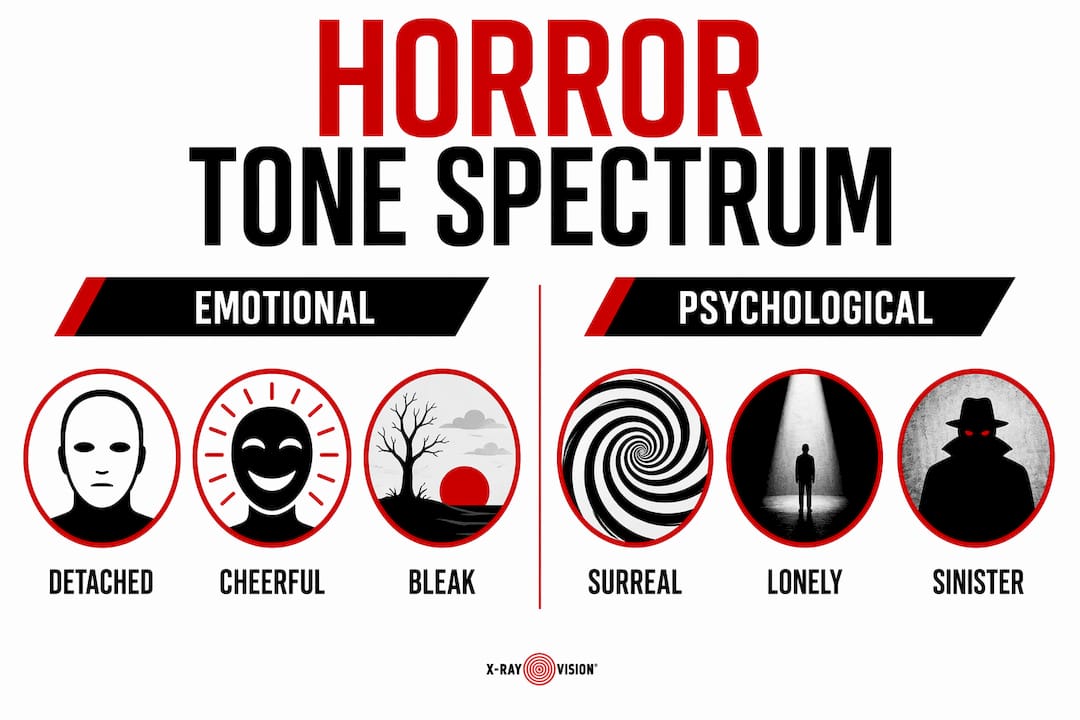
3. Bleak Hopelessness as a sustained emotional state. Bleak tone strips away any possibility of rescue or redemption, leaving the reader in a world where suffering is the only constant. This tone suits cosmic horror and nihilistic narratives where the threat is not a monster but the indifferent universe itself.
4. Surreal Reality bends, logic dissolves, and the rules of cause and effect stop applying. Surreal tone disorients readers by manipulating cognitive imagery, using complex syntactic structures to disrupt their mental model of the world. The horror here is existential: if reality cannot be trusted, nothing is safe.
5. Lonely or isolated Silence as a weapon. This tone emphasizes physical and emotional distance, the absence of help, the void where connection should be. It suits survival horror and psychological narratives where the protagonist's greatest enemy is their own spiraling mind.
Each of these tones corresponds to a different psychological trigger. Detached tone exploits the fear of indifference. Cheerful tone weaponizes cognitive dissonance. Bleak tone confronts mortality. Surreal tone attacks the reader's grip on reality. Lonely tone amplifies vulnerability. Knowing which trigger you want to pull is the first step toward choosing the right tonal register for your story.
How does tone shape fear and reader engagement in horror?
The psychological and physiological effects of tone in horror are well-documented and genuinely striking. Research analyzing tens of thousands of scary stories found that fear-inducing language fluctuates in strategic high points throughout a narrative, maintaining reader engagement rather than exhausting them with constant peak intensity. That rhythm is not accidental. It is tonal architecture.
Short, staccato sentences produce a sense of urgency and are associated with physiological reactions to fear, including elevated heart rate. Longer, winding sentences that delay resolution create a different kind of dread: the slow tightening of a trap. The best horror writers alternate between these structures deliberately, using sentence rhythm as a tonal instrument.
Mary Robinette Kowal advises writers to consciously design tone through precise word choice and sentence crafting, treating horror as a managed emotional experience rather than a collection of scary plot points. That framing is useful. Tone is not what happens in your story. It is how the story feels while it is happening.
Pro Tip: Try the tonal bait-and-switch: open your story in a genre-typical register, something warm, familiar, even slightly dull, then shift the tone unexpectedly. That contrast dramatically increases reader vulnerability because you have already lowered their defenses.
Tone also interacts with protagonist vulnerability. When the narrative voice reflects a character's fragile psychological state, readers experience emotional contagion, contracting the character's fear through empathetic identification. The more the tone mirrors the protagonist's deteriorating grip on safety, the more the reader feels that deterioration personally.
Layering tone adds emotional complexity. A story that sustains one flat register from page one to the end becomes predictable. Strategic tonal shifts, a moment of dark humor inside a bleak narrative, a sudden clinical detachment during a visceral scene, create the kind of emotional surprise that keeps readers off-balance and deeply engaged. For practical guidance on sustaining suspense through tone, the interplay between pacing and tonal variation is where most of the craft lives.
Practical examples of scary tones and how to apply them
Knowing the theory is one thing. Applying it is where horror writing actually gets made. Here are the tones that consistently produce fear, along with concrete techniques for putting them to work.
Eerie Something is wrong, but you cannot name it yet. Eerie tone relies on accumulated wrongness: small details that are slightly off, objects in unexpected places, sounds that do not quite fit. Effective horror tone builds through subtle details rather than overt declarations. A door that is ajar when it should be closed. A smell that does not belong. These micro-signals accumulate into dread without the writer ever announcing that something terrible is coming.
Creepy Creepy tone often involves the violation of social norms or the uncanny valley effect: something that looks almost human but is not quite right. It works by exploiting the reader's pattern-recognition instincts. The horror genre uses elements of absence to unsettle readers, and creepy tone specializes in the absence of normalcy.
Sinister Menace with intelligence behind it. Sinister tone implies that the threat is aware, purposeful, and patient. It suits antagonists who are planning rather than reacting. The key technique here is restraint: let the reader sense the intelligence without fully revealing it.
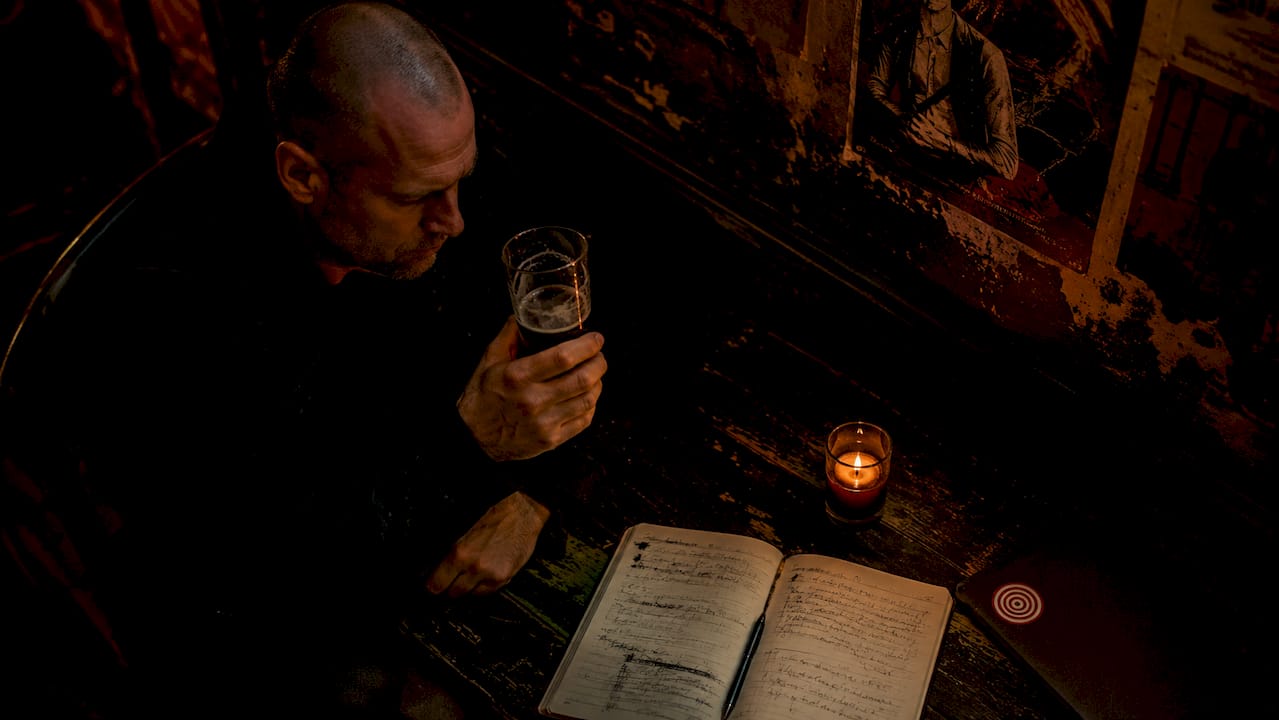
Haunting Grief and loss as horror. Haunting tone lingers after the story ends because it taps into the reader's own experiences of absence. It is the tone of ghost stories at their most literary, where the horror is not the ghost but what the ghost represents.
Terrifying Direct, overwhelming, visceral. This is the tone of the climax, not the setup. Used too early, it burns out the reader. Used at the right moment, after eerie and creepy have done their groundwork, it lands with full force.
Common mistakes to avoid:
- Inconsistent tone: Shifting registers without intention breaks the reader's immersion. A bleak narrative that suddenly becomes comedic without purpose destroys the accumulated dread.
- Announcing the tone: Writing "the atmosphere was terrifying" instead of building that terror through sensory detail is the single most common tonal failure in horror writing.
- Ignoring subgenre expectations: Psychological horror demands a different tonal register than gore or supernatural horror. Readers arrive with expectations. You can subvert them, but you need to know what they are first.
Pro Tip: Align your tone with your character's specific vulnerability. A protagonist who fears abandonment needs a lonely, isolated tone. One who fears losing their mind needs a surreal, fragmenting tone. When tone and character fear match, the horror feels personal rather than generic.
Tone also needs to work with setting and plot, not just character. A haunted house story told in a clinical, detached tone produces a very different effect than the same story told in a warm, nostalgic voice that slowly curdles. The setting stays the same. The tone changes everything about how the reader experiences it. For writers building atmosphere from the ground up, controlling tone consciously across all three elements, setting, character, and plot, is what separates effective horror from merely competent storytelling.
Key Takeaways
Tone is the single most powerful tool horror writers have for generating fear, and it must be designed deliberately from the first sentence.
| Point | Details |
|---|---|
| Tone activates fear first | Tone triggers physiological and psychological fear responses before plot or setting fully establish themselves. |
| Strategic tonal rhythm matters | Fear-inducing language works best when it fluctuates at strategic high points rather than sustaining constant peak intensity. |
| Tonal bait-and-switch increases vulnerability | Opening in a familiar register then shifting unexpectedly lowers reader defenses and amplifies emotional impact. |
| Accumulated wrongness beats overt declaration | Subtle, off-kilter details build more effective dread than announcing that something is terrifying. |
| Tone must align with character fear | Matching tonal register to a protagonist's specific psychological vulnerability makes horror feel personal and unavoidable. |
Ready to see tone in action across every horror subgenre? Markwatsonbooks has a full horror collection that demonstrates these tonal techniques across psychological thrillers, supernatural tales, and internet horror anthologies. If Creepypasta is your flavor, the stories collected there are a masterclass in eerie, detached, and surreal tone working at full intensity.
