

TL;DR:
- Publishing a book in 2026 is most successful when you own your rights and manage every stage yourself.
- Thorough editing, early audience building, and ongoing marketing are essential for long-term success.
Publishing a book in 2026 is more accessible than ever. It's also easier than ever to do badly. The good news? Follow the right sequence and you'll hold a professional, reader-ready book with your name on the cover and your rights intact. Here's the complete process at a glance:
- Finalize and professionally edit your manuscript through developmental, copy, and proofreading stages
- Choose your publishing path based on ownership goals, timeline, and what the book is designed to unlock
- Secure your ISBN and copyright registration to protect your rights from day one
- Design your cover and format separate print and ebook files to professional standards
- Build your audience and distribute ARCs to early reviewers at least 4–6 weeks before launch
- Execute a coordinated launch with pricing, metadata, and marketing working together
- Keep marketing after launch because the book is a long-term asset, not a one-time event
Table of Contents
- How to publish a book in 2026: choosing your path and protecting your rights
- How do you prepare your manuscript and create early buzz?
- Why building your audience before launch changes everything
- What does a strong book launch strategy look like in 2026?
- Key Takeaways
How to publish a book in 2026: choosing your path and protecting your rights
The single most consequential decision you'll make is who owns the rights. Get this wrong and you lose control over pricing, editions, translations, and every downstream opportunity the book creates.
The four main models each carry different trade-offs:
- Traditional publishing: A publisher funds production and controls distribution, but typically owns or controls your rights for the life of the contract. Royalties run 8–15%, and timelines stretch 18–24 months.
- Self-publishing: You retain full ownership and publish directly through platforms like Amazon KDP or IngramSpark. Ebook royalties reach 70% on qualifying titles priced between $2.99 and $9.99. Timeline: 3–6 months.
- Hybrid publishing: A middle path with shared costs and partial creative control. Rights terms vary widely, so read every clause carefully.
- Author-owned publishing: You retain 100% of intellectual property while professional partners handle execution. This model prioritizes ownership to unlock long-term content control, speaking opportunities, and business leverage well beyond book sales.
Pro Tip: Treat your publishing model as a business decision first. Ask three questions before signing anything: Who owns the rights? Who controls pricing and distribution? What is this book designed to unlock beyond sales?
The author-owned and self-publishing routes dominate 2026 for one clear reason: ownership compounds. When you control print editions, ebook editions, audiobook rights, translations, and bulk sales, every new opportunity multiplies the book's value rather than funneling it to a third party.
How do you prepare your manuscript and create early buzz?
Rushing the editing phase is the costliest mistake an author can make. A weak edit shows up in reviews, and bad reviews follow a book for its entire life.
The editing sequence has three distinct stages:
- Developmental editing: Shapes structure, argument, plot, and pacing at the big-picture level
- Copy editing: Fixes grammar, clarity, consistency, and sentence-level issues
- Proofreading: Catches final typos and formatting errors after layout is complete
Cover design runs parallel to editing, not after. Your cover is your book's primary marketing tool, and it needs to be genre-appropriate and legible at thumbnail size. Once the interior is locked, format separate files for print (PDF) and ebook (EPUB). A common and damaging mistake is treating these as the same file. Print production requires its own tested PDF with correct margins, bleed, and spine width. Order a physical proof copy and inspect every page before you approve the final version.
For metadata, your ISBN, keywords, and book description are marketing tools, not administrative boxes to check. Researching keywords using Amazon's auto-suggest feature reveals real search phrases readers are already typing. Use those phrases in your seven KDP keyword slots and your book description.

Advanced reader copies (ARCs) are where early momentum gets built. Sending ARCs 4–6 weeks before release to influencers and reviewers generates the initial reviews that move the needle. A book that launches with 10–20 genuine reviews performs dramatically better than one that launches cold. Reviews function as a ranking signal, a social proof signal, and a trust signal all at once.
Why building your audience before launch changes everything
A book is a long-term asset, not a one-time sales event. Marketing begins before launch and continues long after, and no publisher handles this for you regardless of which model you choose.
The most effective pre-launch audience tactics:
- Build an email list early. An email list is your highest-converting channel at launch and your most durable asset afterward. Offer a free chapter or bonus content in exchange for signups.
- Deploy ARCs strategically. Send copies to trusted reviewers in your genre's communities, not just friends. Genre-specific groups and ARC services connect you with readers who will actually post reviews.
- Use early reviewers as social proof. Their reactions, quotes, and star ratings become promotional material across every channel.
Post-launch, the work continues. Newsletters, social media content, live readings, and podcast appearances all sustain visibility. Authors who treat their books as platforms requiring continuous engagement build reader communities that carry them from one release to the next. That community is what turns a single book into a career.
For authors writing across genres like horror, children's literature, or internet horror anthologies, understanding how to market horror books to passionate readers makes the difference between a quiet launch and a buzzing one.
What does a strong book launch strategy look like in 2026?
The launch is mile one of a marathon, not the finish line. Plan it like a campaign, not an announcement.
Key launch elements to coordinate:
- Pricing strategy: For ebooks, $4.99–$5.99 signals professionalism for new authors while staying in the 70% royalty tier. Price too low and readers question quality. Price too high and you lose the click.
- Metadata and categories: Choose specific subcategories rather than broad genre labels. A book buried in "Fiction" competes with millions of titles. A book in a tight niche can rank on page one.
- Launch week events: Email your list on launch day. Post across social media. Ask beta readers and ARC reviewers to post their reviews simultaneously.
- Paid advertising: Amazon Sponsored Product ads with a daily budget of $3–$10 let you test which keywords convert before scaling spend. Start with automatic targeting for the first two weeks, then shift to manual based on what's working.
- Print-on-demand distribution: Platforms like IngramSpark open bookstore and library channels without requiring inventory. Add this after mastering your primary platform.
Post-launch, revisit your keywords and categories quarterly. Amazon's algorithm responds to well-chosen metadata, and what ranks in March may need refreshing by September. The step-by-step book launch guide at Markwatsonbooks walks through the full launch sequence in detail.
If you want to see what a fully realized publishing strategy looks like across multiple genres, explore Mark Watson's published works spanning horror thrillers, children's books, and Creepypasta anthologies. Each title reflects the kind of ownership-first, audience-driven approach this guide describes.

Key Takeaways
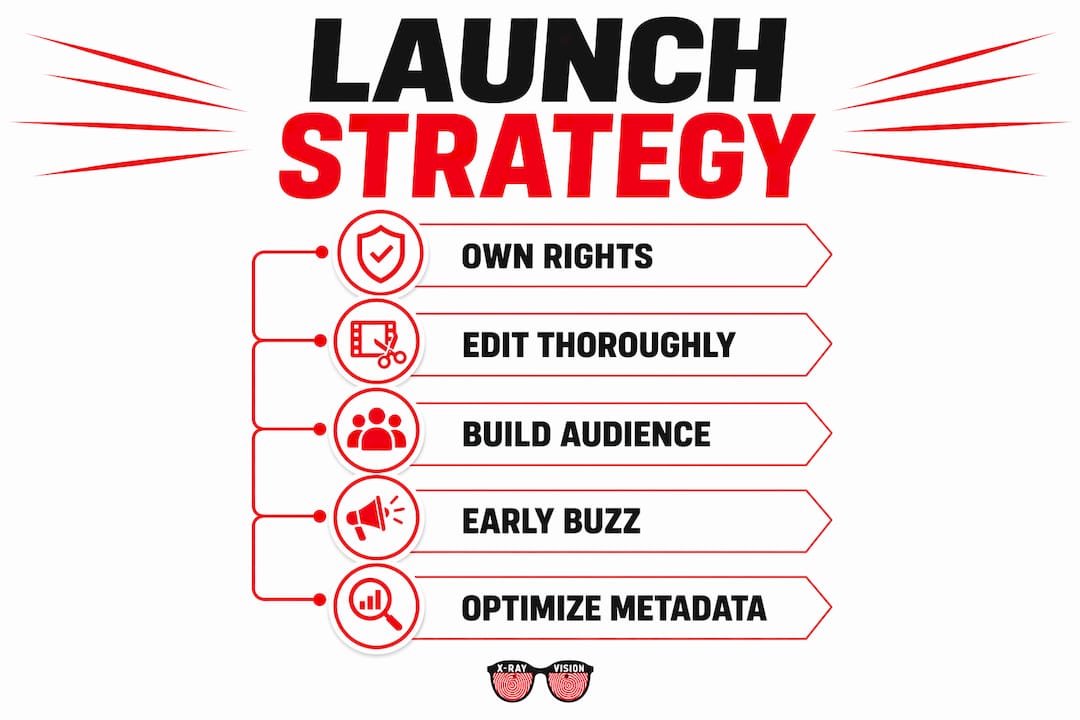
Publishing a book in 2026 requires owning your rights, editing thoroughly, building your audience before launch, and treating marketing as an ongoing commitment rather than a one-time push.
| Point | Details |
|---|---|
| Own your rights | Choose a model where you control pricing, editions, and distribution from day one. |
| Edit in three stages | Developmental, copy, and proofreading edits each catch different problems; skipping any one damages reviews. |
| Send ARCs 4–6 weeks early | Books launching with 10–20 genuine reviews convert dramatically better than cold launches. |
| Metadata is marketing | Research keywords using Amazon auto-suggest and write your description like sales copy, not a synopsis. |
| Launch starts the marathon | Post-launch ads, newsletters, and community engagement sustain sales long after release day. |