
TL;DR:
- Horror archetypes are recurring character types and motifs that structure horror stories and evoke emotional responses. Understanding these archetypes enhances the experience of horror by revealing their cultural and psychological significance. Modern horror continues to evolve these archetypes, reflecting society's changing fears and anxieties.
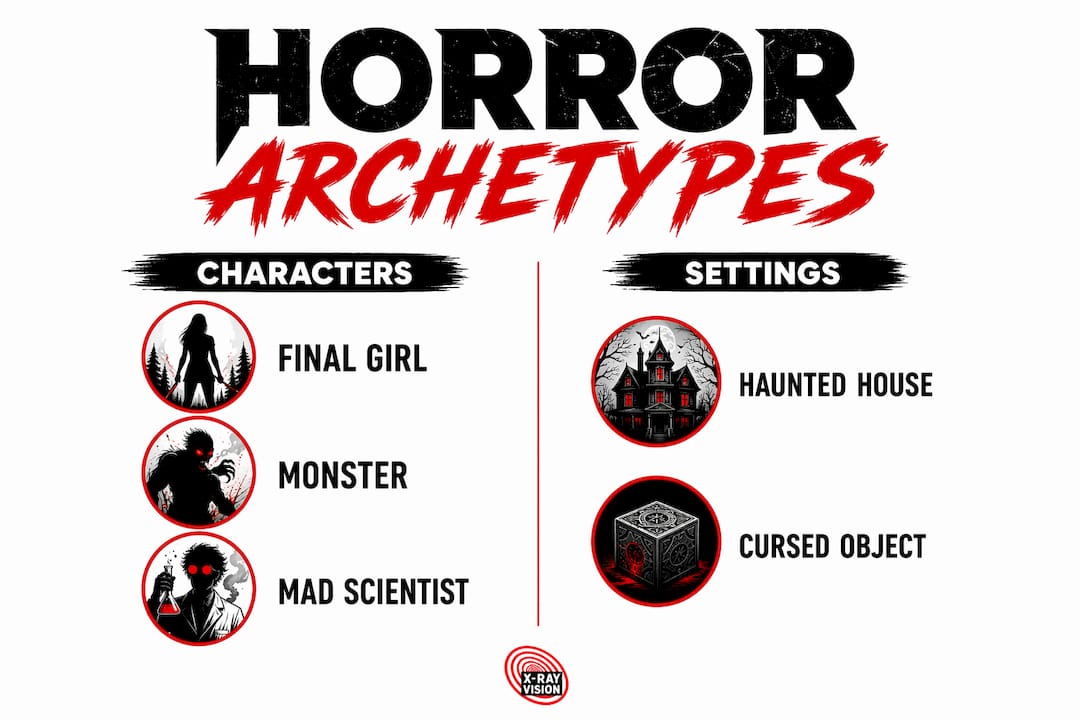
Horror archetypes are defined as the recurring character types, settings, and motifs that structure horror storytelling across literature and cinema. These patterns, formally studied under the umbrella of Jungian narrative theory and genre analysis, give horror its recognizable emotional grammar. The Final Girl, the Monster, the Haunted House — each one carries a specific psychological charge that shapes audience expectations and emotional responses. Understanding these archetypes does not spoil the fear. It deepens it. Once you know what each figure represents, every horror story you read or watch hits harder.
What are the classic horror archetypes explained?
Core horror archetypes include the Final Girl, the Haunted House, the Mad Scientist, the Cursed Object, and the Unreliable Narrator. These staples form the backbone of emotional and narrative structure in horror stories. Each one taps into a primal fear and gives the audience a familiar framework to hang their dread on.
The Final Girl
The Final Girl is the last survivor in a slasher narrative. She is typically resourceful, morally coded as "pure," and forced to confront the killer directly. Laurie Strode in Halloween and Sidney Prescott in Scream are the defining examples. What makes this archetype compelling is not her survival. It is the cost of it.
The Monster
The Monster is the most ancient archetype in horror. It represents the unknown, the uncontrollable, and the threat that cannot be reasoned with. Frankenstein's creature, Dracula, and the xenomorph in Alien all occupy this role. The Monster forces characters and readers to confront what lies beyond human understanding.
The Mad Scientist
The Mad Scientist archetype carries a specific cultural weight. Mad scientists evolved during the Great Depression and World War II to reflect societal anxieties about unchecked ambition and technological hubris. Dr. Frankenstein and Dr. Jekyll are the literary originals. Their stories warn that the real horror is not the monster. It is the creator.
The Haunted House and the Cursed Object
The Haunted House externalizes internal trauma. The house in Shirley Jackson's The Haunting of Hill House does not just scare its inhabitants. It mirrors their psychological fractures. The Cursed Object, seen in films like The Ring and Hereditary, transfers dread through ownership. You cannot escape what you already hold.
| Archetype | Core Trait | Classic Example |
|---|---|---|
| Final Girl | Resourceful survivor | Laurie Strode, Halloween |
| The Monster | Unknowable threat | Dracula, Nosferatu |
| Mad Scientist | Unchecked ambition | Dr. Frankenstein |
| Haunted House | Externalized trauma | Hill House, The Haunting |
| Cursed Object | Inescapable dread | The videotape, The Ring |
| Unreliable Narrator | Distorted reality | Jack Torrance, The Shining |
How are horror villains categorized by complexity and motivation?
Horror villains occupy four complexity levels, ranging from one-dimensional monsters to morally ambiguous moral mirrors. Each level changes how the audience experiences fear. A flat monster scares you. A moral mirror unsettles you for days.
- Level 1: The Monster. Pure threat with no motivation beyond destruction. Think the shark in Jaws or the creature in It Follows. Fear comes from the relentless, unexplained nature of the threat.
- Level 2: The Justifier. This villain has a reason, but it is twisted. Norman Bates justifies his violence through a fractured psychology. The audience understands the logic without accepting it.
- Level 3: The Tragic Villain. Backstory creates sympathy. Carrie White is bullied into becoming a killer. The audience grieves for who she could have been. That grief is the horror.
- Level 4: The Moral Mirror. The most disturbing category. This villain reflects the audience's own fears, desires, or failures back at them. Patrick Bateman in American Psycho works because he is not entirely alien.
The shift from Level 1 to Level 4 changes the entire emotional register of a story. Villains with complex motivations create morally challenging narratives that engage audiences more deeply. A monster you can run from. A moral mirror you cannot.
Effective horror villains have relatable, sympathetic motivations grounded in trauma or distorted morality. That psychological realism makes their actions more disturbing than generic evil ever could. The social meaning behind villain archetypes also connects to broader cultural fears, which is why the most iconic horror villains feel like products of their era.
| Villain Level | Defining Trait | Example |
|---|---|---|
| The Monster | No motivation, pure threat | The shark, Jaws |
| The Justifier | Twisted internal logic | Norman Bates, Psycho |
| The Tragic Villain | Sympathetic backstory | Carrie White, Carrie |
| The Moral Mirror | Reflects audience's own darkness | Patrick Bateman, American Psycho |
Pro Tip: When analyzing a horror villain, ask what fear they represent culturally, not just what they do physically. The answer reveals the archetype's real power.
What modern trends are reshaping horror archetypes?
Horror archetypes are not static. Modern horror is shifting archetypes like the "evil mother" into more complex roles with predatory but nuanced motivations. The result is a genre that feels both familiar and genuinely surprising.
Several key shifts define contemporary horror character roles:
- The evil mother reimagined. Films like Hereditary and Midsommar replace the cartoonish wicked stepmother with a grieving, desperate, or manipulated woman. The horror comes from recognizing the love underneath the violence.
- The haunted setting expanded. Effective trope subversion involves reversing rather than eliminating conventions. Setting a haunting in a bright, modern apartment instead of a crumbling Victorian mansion maintains familiarity but renews tension. Paranormal Activity proved that a suburban bedroom is just as terrifying as any gothic estate.
- The Final Girl deconstructed. Recent horror gives survivors agency and complexity that the original archetype denied them. Ready or Not and You're Next feature women who do not just survive. They fight back with intelligence and fury.
- The internet horror figure. Creepypasta characters like Slenderman and Jeff the Killer represent a new archetype born entirely from digital folklore. They carry the same mythic weight as Dracula but spread through shared screens instead of printed pages.
These shifts reflect broader societal changes. Horror has always been a cultural barometer, and the archetypes that dominate any given decade tell you what that society fears most.
Pro Tip: Pay attention to which archetypes get subverted in any given year. The reversals reveal the cultural anxieties the genre is processing in real time.
Why do horror archetypes matter for storytelling and audience experience?
Horror archetypes create recognizable frameworks that help audiences navigate narratives and heighten suspense. Fans engage more deeply when archetypes meet or subvert their expectations. That tension between the familiar and the unexpected is the engine of great horror.
The survivor's arc in horror is fundamentally different from the hero's journey in other genres. Horror protagonists usually fight a losing battle, with survival rather than growth as the narrative arc. Successful horror stories often leave survivors physically or mentally shattered. That is not a failure of storytelling. It is the point. The audience does not leave feeling triumphant. They leave feeling the weight of what survival costs.
Archetypes also function as symbolic and thematic tools. The slasher killer embodies cultural fears and psychological trauma, functioning as a mythic figure who represents community secrets and societal guilt. Michael Myers is not just a man in a mask. He is the violence that small-town America pretends does not exist.
"Horror archetypes tap into primal fears and emotional responses because they symbolize larger psychological and cultural themes. The Haunted House is never just a house. The Final Girl is never just a girl. Every archetype carries the weight of what a society cannot bring itself to say out loud."
The history of horror literature shows that archetypes have always adapted to reflect the fears of their time. That adaptability is why they endure. A new generation of readers and viewers will always find something recognizable and terrifying in the Monster, the Haunted House, and the survivor who barely makes it out.
Key Takeaways
Horror archetypes are the structural and symbolic foundation of the genre, and understanding them transforms how you experience every horror story you encounter.
| Point | Details |
|---|---|
| Archetypes define horror structure | The Final Girl, Monster, and Haunted House form the emotional backbone of horror narratives. |
| Villain complexity drives engagement | Villains at Level 3 and Level 4 create moral discomfort that outlasts the story itself. |
| Subversion requires reversal, not removal | The most effective modern horror keeps archetypes intact but flips their context or setting. |
| Survivor arcs differ from hero arcs | Horror protagonists aim for survival, not growth, and often emerge broken rather than triumphant. |
| Archetypes mirror cultural anxiety | The dominant archetypes of any era reveal what that society fears but cannot directly confront. |
Why I think horror archetypes are more alive now than ever
I have spent years reading and writing horror across multiple formats, from gothic thrillers to internet horror anthologies. The question I hear most from fans is whether archetypes make horror predictable. My answer is always the same: no. Predictability comes from lazy execution, not from the archetype itself.
The most exciting horror being written right now uses archetypes as a starting point, then pulls the rug out. The Haunted House that turns out to be the protagonist's own mind. The Final Girl who does not survive. The Monster who turns out to be the most sympathetic character in the story. These moves only work because the audience knows the archetype. Without that shared knowledge, the subversion lands flat.
What I find genuinely thrilling is how internet horror has created entirely new archetypes in under two decades. Slenderman carries the same mythic weight as any Victorian ghost. That tells me the human need for these figures is not going away. The formats change. The archetypes stay.
The challenge for horror writers going forward is not to invent new archetypes from scratch. It is to find the cultural anxiety that the existing ones have not yet addressed, and then build something that makes readers feel it in their chest.
— Mark
Horror fiction that brings these archetypes to life
If reading about horror archetypes has sharpened your appetite for the real thing, Markwatsonbooks has a collection built for exactly that.

The horror collection at Markwatsonbooks spans classic villain archetypes, psychological horror, and internet folklore. For readers drawn to the newer digital archetypes, the Creepypasta anthologies collect over a hundred stories featuring Slenderman, Jeff the Killer, The Rake, and other figures who have already become modern myths. These are not just stories. They are the archetypes in motion, doing exactly what they were built to do.
FAQ
What are horror archetypes?
Horror archetypes are recurring character types, settings, and motifs that structure horror storytelling. Examples include the Final Girl, the Monster, the Haunted House, and the Cursed Object.
What are the main types of horror villains?
Horror villains fall into four levels of complexity: the Monster, the Justifier, the Tragic Villain, and the Moral Mirror. Each level produces a different kind of fear and audience engagement.
Why does the Final Girl archetype resonate so strongly?
The Final Girl resonates because her survival comes at enormous psychological and physical cost, which reflects the horror genre's core truth that confronting evil leaves permanent damage.
How do horror archetypes reflect cultural fears?
Archetypes like the Mad Scientist and the slasher killer evolve alongside societal anxieties, functioning as cultural barometers that reveal what a given era fears but cannot directly address.
What makes a horror villain truly scary?
The most effective horror villains have motivations grounded in trauma or distorted morality rather than generic evil. That psychological realism makes their actions feel plausible, which is far more disturbing than pure monstrousness.