
For ages 5 to 7, gentle-spooky early readers with plenty of illustrations work best. For 8 to 10, moderate-spooky series with recurring characters build reading confidence. For 11 to 14, atmospheric middle-grade mysteries deliver real chills without crossing into horror. Mark Watson's own children's titles, alongside staples like Mercy Watson and Eerie Elementary, anchor the picks below by scare level.
TL;DR:
- Books for children aged 5 to 7 should focus on illustrations and mystery elements, avoiding actual scares or graphic content.
- For ages 8 to 10, series with recurring characters and predictable chapters help build confidence without crossing into horror.
- Middle-grade titles from ages 11 to 14 can include atmospheric themes and moral ambiguity, suitable for solo or group reading at night.
- Selecting a book requires matching scare level to the child's comfort, checking for illustrations, chapter length, and avoiding unresolved trauma or violence.
- Testing the first chapters yourself helps prevent books that could trigger nightmares or discomfort in sensitive children.
Table of Contents
- Best Halloween Chapter Books for Emerging Readers (Ages 5 to 7)
- Best Halloween Chapter Books for Independent Readers (Ages 8 to 10)
- Best Halloween Chapter Books for Older Kids (Ages 11 to 14)
- How to Choose a Halloween Chapter Book: A Quick Checklist
- Ways to Turn Halloween Reading Into Classroom or Family Activities
- Why These Picks Reflect an Author's Editorial Perspective
- A Teacher-Friendly Take on Sorting Scares by Age
- A Recommended Halloween Reading Collection From Markwatsonbooks
- Sources
Best Halloween Chapter Books for Emerging Readers (Ages 5 to 7)
This is the age where a book either builds a lifelong reader or scares one off entirely. The safest bet: pick titles with heavy illustration support and a plot that leans more "mystery" than "monster."
- Mercy Watson series — a pig, a toast obsession, and zero actual scares. Perfect for a read-aloud with a nervous five-year-old.
- Eerie Elementary — a haunted school premise played for laughs, with short chapters and a fast-moving plot.
- Bunnicula — a "vampire" rabbit that only bites vegetables. Funny, not frightening.
- Scholastic's Branches series titles — built specifically for newly independent readers, with full-color art on nearly every page.
- Magic Tree House Halloween-adjacent entries — reliable structure, familiar characters, low scare intensity.
- A Mark Watson early illustrated title from the children's books collection, chosen for its picture-forward pacing.
Scholastic's teacher-facing guidance points to series like Branches and Acorn specifically because they pair supportive artwork with vocabulary kids already know, which matters more at this age than plot complexity. Read these aloud first, watch your child's face during the "spooky" parts, and switch to solo reading only once they're asking for the next chapter themselves.
Best Halloween Chapter Books for Independent Readers (Ages 8 to 10)
By second and third grade, most kids can handle a real plot, a recurring villain, and chapters that end on a cliffhanger. This is the sweet spot for spooky chapter books, where the scares get more textured but rarely graphic.
The Goosebumps series remains the gold standard for a reason: predictable chapter lengths, a new mystery every book, and just enough dread to feel thrilling without becoming upsetting. The Graveyard Book by Neil Gaiman sits a notch higher in literary ambition. A boy raised by ghosts in a cemetery sounds grim on paper, but Gaiman's prose is warm, and the book won the Newbery Medal for balancing atmosphere with genuine heart.
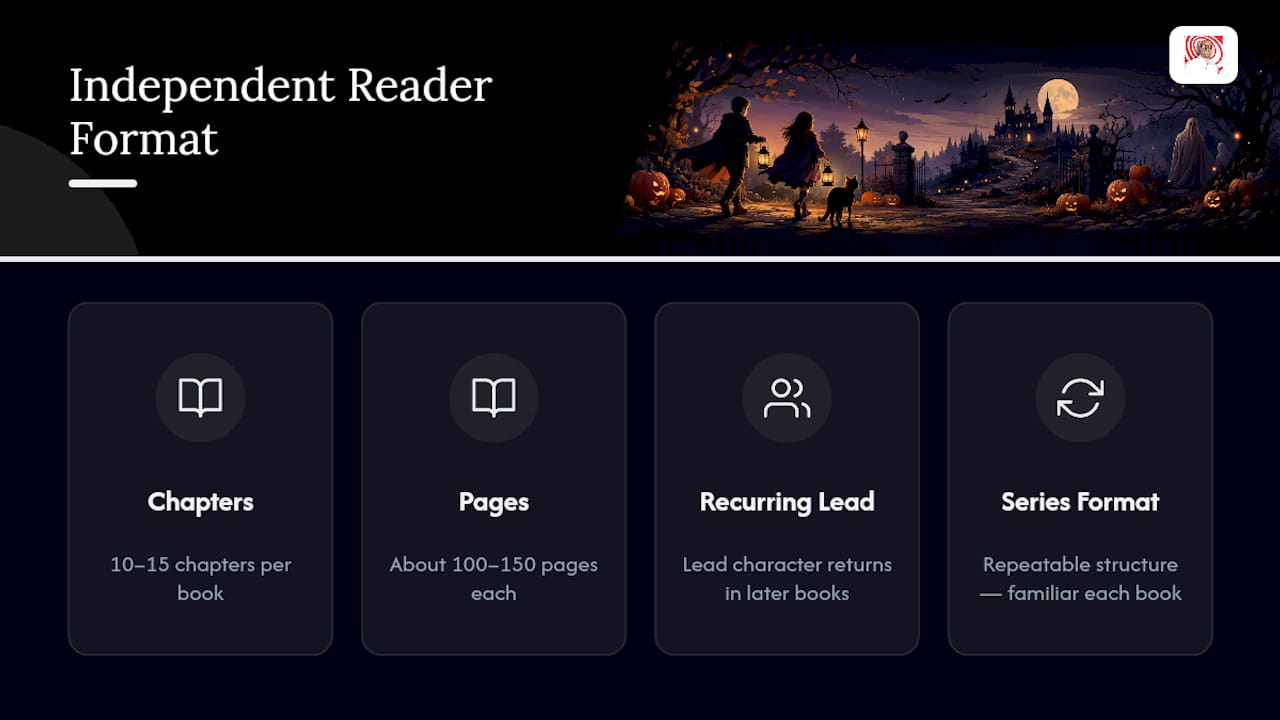
Series matter enormously at this stage. A to Z Mysteries: Haunted Halloween and similar entries work because the format never changes. Kids know what they're getting, which frees up mental energy for actually enjoying the spooky parts instead of decoding a new structure every chapter. Look for books with 10 to 15 chapters, roughly 100 to 150 pages, and a lead character who returns book after book.
Classroom-suitable picks should skip graphic injury or death and stick to ghost stories, haunted houses, or trickster monsters. That's also the line BookTrust draws for younger primary readers: mystery and humor over intense horror. A Mark Watson title pitched at this reading level follows the same logic, keeping tension high and gore nonexistent.
Best Halloween Chapter Books for Older Kids (Ages 11 to 14)
This age group can handle atmosphere, moral ambiguity, and a slower building of dread. Some of these titles work better read solo, at night, under a blanket. Others spark better discussion in a classroom or book club setting.
- Coraline by Neil Gaiman — psychologically unsettling rather than gory; strong for solo reading or paired discussion on identity and courage.
- The Graveyard Book (revisited at this level) — richer thematic layers around death and belonging become apparent on a second read.
- Small Spaces by Katherine Arden — scarecrows, a school bus, genuine tension; flag for sensitive readers around themes of grief.
- Popular middle-grade horror titles sorted by intensity in our own scare-level breakdown give parents a shortcut past the guesswork.
- Gothic classics adapted for middle grade, including abridged Poe collections, work well for group discussion on tone and setting.
- A Mark Watson creepypasta-adjacent title, appropriately toned down from the adult anthologies, for kids ready to graduate past ghost stories into internet-horror territory.
Group discussion works best for books with ambiguous endings; solo reading suits anything with a strong emotional core, like Coraline.
How to Choose a Halloween Chapter Book: A Quick Checklist
Scare level isn't one thing. Mild means humor and mystery with no real threat (Mercy Watson). Spooky means ghosts, haunted settings, and tension that resolves happily (Goosebumps, Graveyard Book). Creepy means genuine dread, psychological unease, or morally complex villains (Coraline, Small Spaces). Match the tier to your child, not their age alone.
Before handing a book over, run it against this list:
- Reading level matches or slightly stretches your child's current comfort zone.
- Illustrations appear at least every few pages for readers under 8.
- Chapters run short enough to finish in one sitting, ideally under 10 pages.
- No graphic violence, death of a parent or pet, or unresolved trauma without warning.
- Series titles beat standalones for reluctant readers who want familiar footing.
Pro Tip: Always test-read the first two chapters yourself before bedtime, especially with a book pitched as "spooky." What reads as thrilling to one eight-year-old can trigger real nightmares in another, and BookTrust's own guidance backs that caution up directly.
Ways to Turn Halloween Reading Into Classroom or Family Activities
Reading the book is only half the fun. A few quick add-ons stretch the seasonal reading list into something closer to a unit of study.
- Dramatized read-aloud — assign character voices and act out a chapter instead of just reading it.
- Vocabulary hunts — have kids circle "spooky words" (eerie, lurking, shadowy) and swap in their own synonyms.
- Spooky writing prompts — "continue the story" exercises work especially well after a cliffhanger chapter.
- Art tie-ins — draw the monster, the haunted house, or the book's cover from memory.
- October reading challenges — one chapter book per week, with a shared class or family tally on the wall.
Mixed-ability groups do best when the read-aloud carries the weaker readers while stronger ones tackle a companion book solo, an approach our read-aloud spooky stories guide breaks down further by age.
Why These Picks Reflect an Author's Editorial Perspective
Mark Watson writes across horror thrillers, children's books, and Creepypasta anthologies, which means the scare-level sorting here isn't guesswork. It's the same filter applied when curating the children's books collection. For a deeper look at how spooky content teaches without traumatizing, read Monster Horror in Kids' Books or the age-appropriate horror breakdown.
A Teacher-Friendly Take on Sorting Scares by Age
Most Halloween reading lists get one thing backwards: they sort by publication date or popularity instead of scare level. That's how a genuinely creepy book like Small Spaces ends up recommended in the same breath as Mercy Watson, which helps no one.
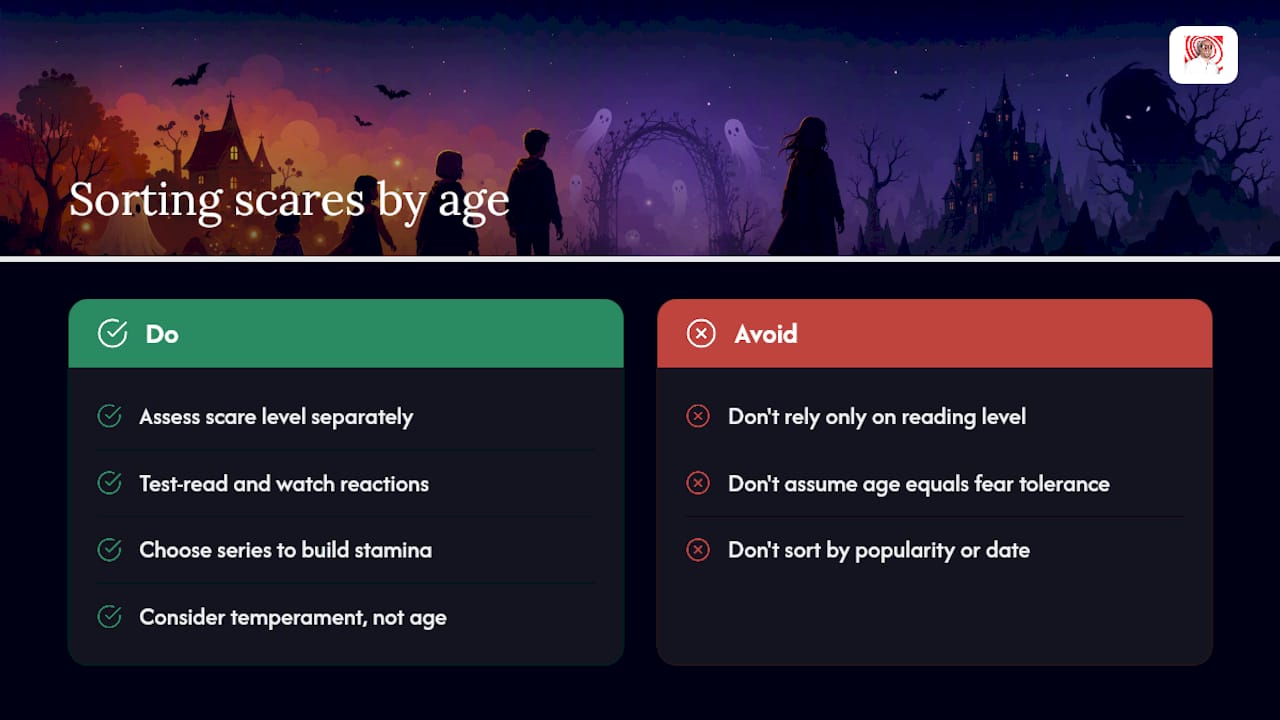
The conventional advice, "just check the reading level," misses the point entirely. A confident nine-year-old reader might have a low tolerance for fear, and a cautious twelve-year-old might crave real dread. Reading level tells you if a child can decode the words. It tells you nothing about whether they'll sleep that night.
What actually works is treating scare level as its own axis, separate from vocabulary and page count. Test-read first. Watch the reaction, not just the reading speed. Prioritize series over standalone titles for anyone still building stamina, since predictable structure does more to keep a reluctant reader turning pages than a clever plot ever will.
— Mark
A Recommended Halloween Reading Collection From Markwatsonbooks
Markwatsonbooks curates its children's range specifically around the mild-to-spooky tiers parents actually need this time of year, so you're not gambling on an unknown title's intensity.

The collection includes illustrated early-reader titles built for ages 5 to 8 with gentle mystery and zero graphic content, alongside slightly more atmospheric middle-grade options for ages 9 to 12 that introduce real tension without crossing into horror. Each title is written by an author who also writes adult horror and Creepypasta anthologies, which means the "spooky" tone is deliberate craft, not a watered-down guess. Browse the full children's books collection and pick a title matched to your child's scare tolerance before the last week of October runs out.
Sources
- Halloween books for primary school children | BookTrust
- Teachers recommend these early chapter books for Halloween | Scholastic