
Ebooks win when you need control: study, searchability, rereading tricky passages. Audiobooks win when you need your hands and eyes free: commuting, exercising, or letting a story's atmosphere land through performance. Neither format is objectively superior. The research says comprehension is close to equal for straightforward material, and most serious readers end up using both formats, depending on the book and the moment.
TL;DR:
- Audiobooks are ideal for multitasking activities like commuting or exercising, while ebooks excel at searchability, note-taking, and rereading complex passages.
- Comprehension is roughly equal between reading and listening, but reading supports deeper inference-making due to additional visual decoding activated by print.
- Listening to audiobooks while multitasking reduces information retention by about 25 to 30 percent compared to focused listening or reading.
- Cost efficiency varies: single audiobook credits suit light readers, while unlimited ebook subscriptions benefit those who read multiple titles each month.
- Combining both formats by reading along with audio enhances vocabulary, pronunciation, and comprehension, especially for language learners and struggling readers.
Table of Contents
- Ebook vs Audiobook: Pros and Cons Side by Side
- What Does the Research Say About Comprehension and Retention?
- Which Format Fits Your Life? A Practical Decision Map
- Can Audiobooks Help With Dyslexia or Reading Differences?
- How Much Do Ebooks and Audiobooks Actually Cost?
- How Do You Combine Ebooks and Audiobooks Effectively?
- What I've Learned Watching Readers Choose Formats
- Where to Buy Mark Watson Books in Your Preferred Format
- Sources
Ebook vs Audiobook: Pros and Cons Side by Side
Every format trade-off comes down to what you're optimizing for: speed, focus, or freedom.
Ebooks put you in the driver's seat. You control pace, you can jump back three paragraphs when a plot detail slips, and you can search a term instantly instead of scrubbing through hours of narration. Audiobooks trade that control for something else entirely: a voice actor's timing, tension, and inflection can make a scene land harder than silent text ever could, especially in horror or thriller fiction where dread builds through pacing.
- Portability: Audiobooks need only earbuds and a charged phone; ebooks need a lit screen or e-reader, which struggles outdoors in bright sun unless it's e-ink.
- Pacing and navigation: Ebooks let you skim, reread, and jump to chapters instantly; audiobooks force linear listening unless you know the exact timestamp.
- Annotation and search: Ebooks support highlighting, note-taking, and keyword search; most audiobook apps offer only bookmarks.
- Narration: A skilled narrator adds atmosphere and character voice that flat text cannot replicate.
- Multitasking: Audiobooks free your hands for chores or driving, but that same freedom invites distraction that silent reading doesn't.
The multitasking point matters more than people assume, and it's worth understanding before you build your listening habits around it.
What Does the Research Say About Comprehension and Retention?
The comprehension gap between reading and listening is smaller than most people expect, but it isn't zero.
A 2022 meta-analysis of 46 studies found literal comprehension is roughly equal between reading and listening. Readers held a modest edge for inference-making, the kind of deeper reasoning where you connect clues across chapters, likely because print lets you control pace and reread confusing sections on demand.
Reading and listening draw on overlapping language networks in the brain, but print reading activates additional visual and decoding areas that audio simply doesn't engage. That extra cognitive work is part of why complex or technical material tends to stick better when read rather than heard.
That distinction comes from neuroscience research covered by the Harvard Gazette, and it lines up with something audiobook fans often discover the hard way.
Multitasking is the real variable, not the format itself. Research from the University of Delaware found people who listened to audiobooks while multitasking retained roughly 25 to 30 percent less information than focused listeners, and students who read material outperformed those who only listened on follow-up quizzes.
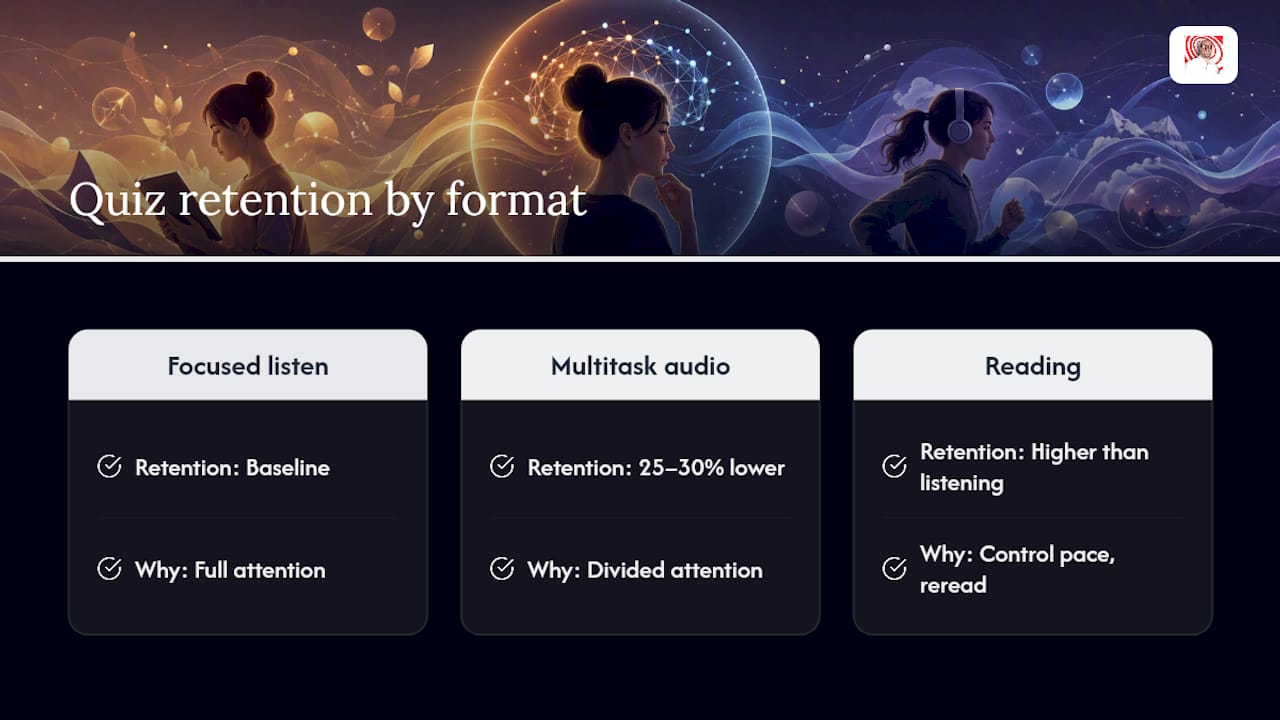
The takeaway for you: audiobooks are fine for cognitively light multitasking, folding laundry, walking the dog, but if you're studying dense material or need to remember specifics, sit down and give it your full attention, in either format.
Which Format Fits Your Life? A Practical Decision Map
Match the format to the activity, not the other way around.
- Commuting or exercising: Audiobooks win outright. Your hands and eyes are busy; a narrator's voice fills the gap without competing for attention.
- Studying or reference reading: Choose ebooks. You need to search, highlight, and reread passages, none of which audio handles well.
- Fiction with strong narration: Audiobooks often outperform text here. A great voice actor turns dialogue-heavy thrillers or atmospheric horror into something closer to a performance than a book.
- High-volume readers: Run the subscription math before committing to one service (more on that below), since cost per book shifts dramatically depending on how many titles you consume monthly.
- Parents reading with kids: Mix formats deliberately. Play the audio while your child follows the printed page, which reinforces word recognition far better than either format alone.
Pro Tip: If you're torn between formats for a specific book, check whether it has a strong first-person or dialogue-heavy narrative voice. Those tend to shine in audio; dense nonfiction with charts, footnotes, or timelines almost always reads better than it listens.
Can Audiobooks Help With Dyslexia or Reading Differences?
Audiobooks are a legitimate reading format, not a shortcut, for people who struggle with decoding text.
Experts interviewed by TODAY point out that audiobooks reduce the decoding burden that makes reading exhausting for people with dyslexia, while also modeling fluent pacing, tone, and pronunciation that struggling readers can absorb by ear. The best practice isn't audio instead of text. It's audio alongside text.
- Listen while following the printed or on-screen words to connect sound with spelling in real time.
- Use playback speed controls to slow down dense passages without losing the thread.
- Rely on bookmarking and position syncing so you never lose your place switching between devices.
- Pair chapter books with read-aloud sessions if you're building this habit in a child, a strategy covered in more depth in our guide for young readers.
This combination approach shows up again and again in accessibility research, and it's worth building into your routine even if you don't think of yourself as a struggling reader.
How Much Do Ebooks and Audiobooks Actually Cost?
Format choice is often a budget decision disguised as a preference question.
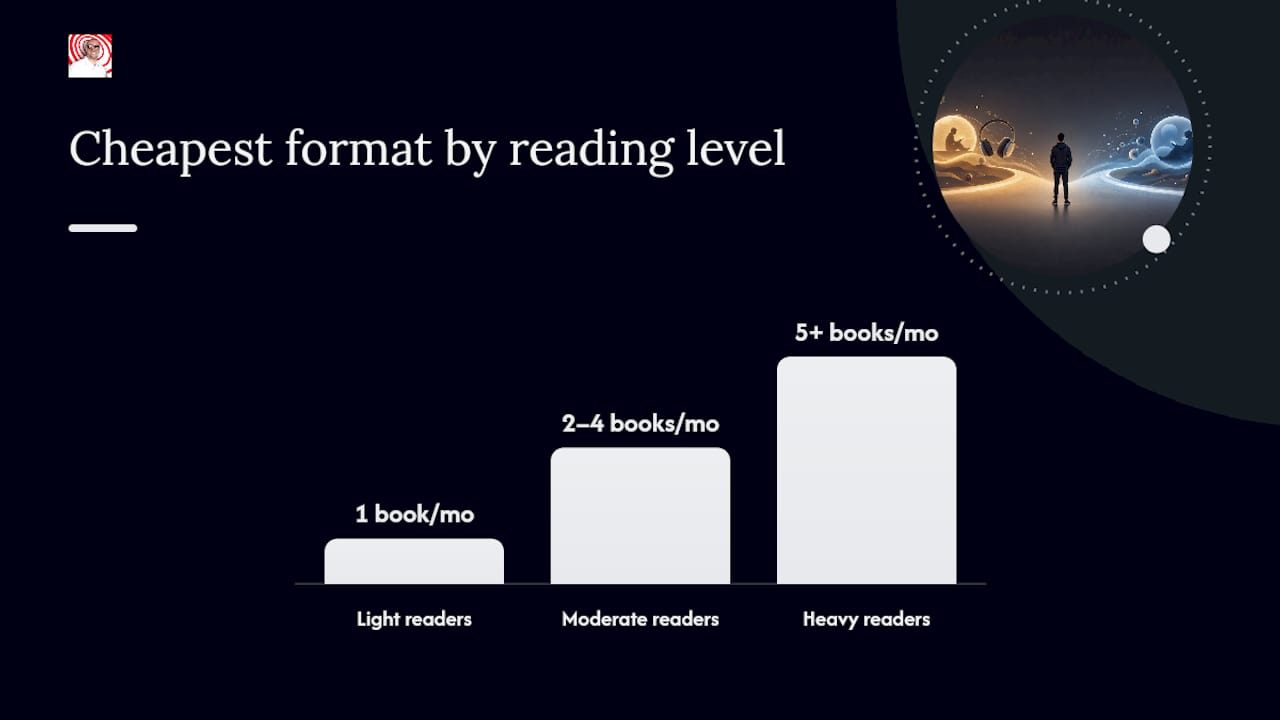
Subscription math changes completely depending on how much you read. Audiobook credit services work out cheapest if you consume around one book a month, since a single credit typically undercuts buying that book outright. Flat-rate ebook subscriptions become the better deal once you're reading several titles monthly, because the cost-per-book math flips in favor of unlimited access rather than paying per credit.
- Light readers (1 book/month): A single audiobook credit or one ebook purchase; compare prices directly.
- Moderate readers (2 to 4 books/month): Flat-rate ebook subscriptions usually win on cost per title.
- Heavy readers (5+ books/month): Library apps and unlimited ebook plans dominate; audiobook credits rarely keep pace.
Free options exist in both directions: library lending apps, free trial periods, and built-in text-to-speech on many e-readers, which turns any ebook into a passable audiobook at no extra cost. Availability and pricing vary by market and title, so always check before assuming one format is cheaper across the board. For legal free ebook sources, see our roundup of legitimate free ebook sites.
How Do You Combine Ebooks and Audiobooks Effectively?
You don't have to pick one format for life. The strongest reading habit usually blends both.
- Buy the ebook, add narration where available. Some platforms let you layer professional narration onto an ebook you already own, giving you the best of both without buying twice.
- Read along while listening for language learning or literacy support. Matching spoken words to printed text builds vocabulary and pronunciation faster than either format alone, a pattern well documented in literacy research.
- Use device features deliberately. Sync your position across devices, adjust playback speed for dense sections, and take notes in the ebook version even when you're primarily listening.
This hybrid approach solves the biggest weakness of each format: the ebook's lack of performance, and the audiobook's lack of searchability.
What I've Learned Watching Readers Choose Formats
The debate over "is audiobook better than reading" misses the actual question people should be asking, which is what they're trying to get out of the book. I've watched readers agonize over which format is "real" reading, and that argument is beside the point. A horror anthology built on atmosphere and voice, something like a Creepypasta collection full of internet legends, often works better read aloud than read silently, because the dread builds through pacing and tone the way a campfire story does.
My children's titles, on the other hand, are built for the read-along experience: a parent's voice or a narrator's performance paired with the printed page, so a child connects the sound of a word to its shape on the paper. Detailed thrillers with layered plots tend to reward the control an ebook gives you, letting you flip back when a clue you missed suddenly matters. Check each title's format listing before buying, since not every book offers both, and match the format to what the story is actually doing rather than what feels more legitimate.
— Mark
Where to Buy Mark Watson Books in Your Preferred Format
Once you know whether you're a page-turner or an ear-listener, the next step is simple: pick the collection that matches your format and read on.

If you want control, searchability, and the ability to flag a favorite line for later, start with the ebook edition. If you collect physical copies or want something to hand a friend, go print. Browse the full catalog on the books page, where fiction fans can dig into the horror collection for atmosphere-driven thrillers built for either format, or grab the Creepypasta Omnibus One if you want a hundred and fifty stories perfect for late-night reading in short bursts. Parents building a read-along habit should head straight to the children's books collection, where pairing text with a read-aloud voice does double duty for literacy and bedtime routine. Pick your format, pick your title, and start reading tonight.
Sources
- Is Listening to an Audiobook as Good as Reading? | Psychology Today
- Reading versus listening (University of Delaware CEHD)
- Audiobooks don't really count as reading? Think again. — Harvard Gazette
- Do Audiobooks Count As Reading? Experts Explain the Differences (TODAY)