

TL;DR:
- Children's writing involves five stages: prewriting, drafting, revising, editing, and publishing. These stages support developmental progress and foster confidence, creativity, and purpose in young writers.
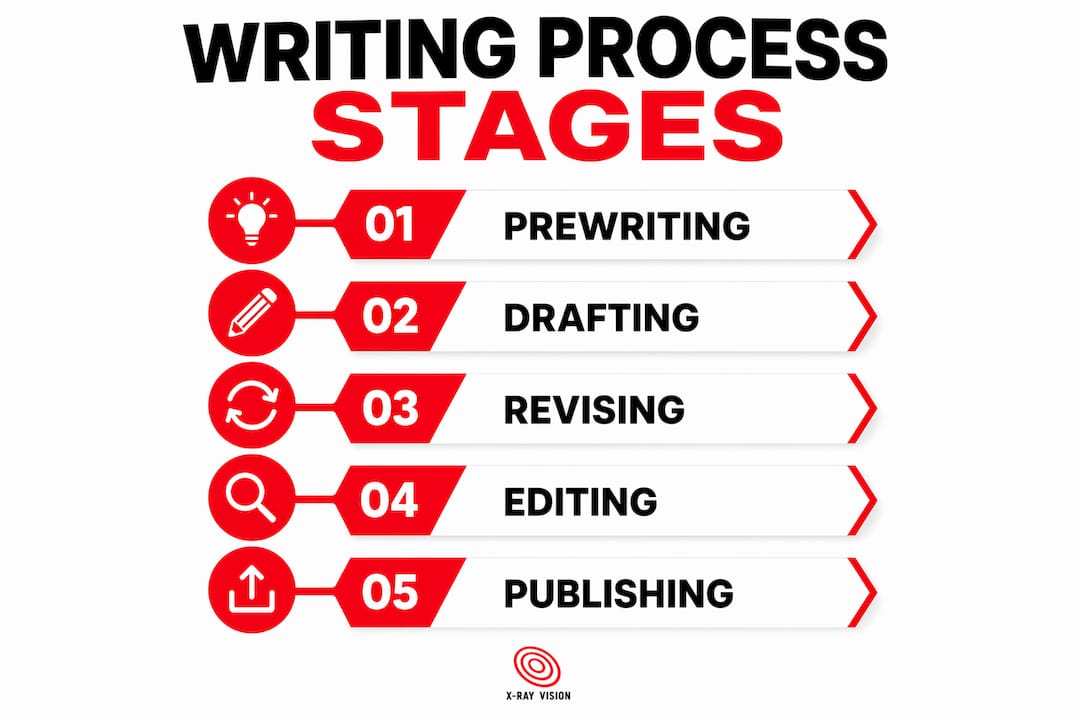
The children's writing process is a structured set of stages from planning to publishing that builds skills, confidence, and a genuine love of storytelling in young writers. Educators and literacy specialists recognize five core process steps: prewriting, drafting, revising, editing, and publishing. These stages align with four developmental writing stages that span from age 4 through age 8 and beyond. Understanding how these stages connect gives parents, teachers, and aspiring children's authors a clear map for guiding kids at every level.
What are the main stages of the children's writing process?
The five-step writing process gives young writers a repeatable structure they can rely on. Each stage has a distinct purpose, and skipping one creates gaps that show up later in the work.
Prewriting: generating ideas before the pen touches paper
Prewriting is where the real thinking happens. Children brainstorm topics, draw pictures, talk through ideas, or create simple mind maps. This stage removes the pressure of producing perfect sentences right away. For a seven-year-old writing about their dog, prewriting might look like a quick sketch and three spoken sentences before anything gets written down.
Drafting: getting ideas onto the page
Drafting is the messy, creative phase. Children write freely without worrying about spelling or grammar. Inventive spelling at this stage reflects genuine cognitive progress in understanding sound-symbol relationships. Correcting every phonetic misspelling during drafting kills momentum and confidence. Let the ideas flow first.
Revising: improving what was written
Revising focuses on meaning, not mechanics. Children ask whether their writing makes sense, whether they said what they meant, and whether anything is missing. A child might add a sentence explaining why their dog is funny or cut a sentence that goes off topic. This stage builds critical thinking alongside writing skill.
Editing: polishing for the reader
Editing is where spelling, punctuation, and grammar get attention. The key is to focus on one element at a time. Correcting everything at once overwhelms young writers and teaches avoidance rather than skill. Editing works best as a conversation, not a red-pen correction session.
Publishing: sharing the work with an audience
Publishing gives writing a purpose beyond the classroom. A child who writes a letter to a grandparent, posts a story on the family fridge, or reads their work aloud to a sibling experiences writing as real communication. That sense of audience is one of the most powerful motivators in the entire process.
| Stage | Goal | Typical activities |
|---|---|---|
| Prewriting | Generate and organize ideas | Drawing, talking, mind mapping |
| Drafting | Capture ideas freely | Writing without stopping to correct |
| Revising | Improve meaning and clarity | Adding, removing, or rearranging content |
| Editing | Fix mechanics | Checking spelling, punctuation, grammar |
| Publishing | Share with an audience | Letters, read-alouds, class books |
How do children's writing development stages influence their writing process?
Age and developmental readiness shape how children engage with each writing process step. A four-year-old and an eight-year-old are not just at different skill levels. They are operating with fundamentally different cognitive and motor capacities.
Pre-writing stage (ages 4–5)
Children at this stage communicate through drawing, scribbling, and symbolic marks. Fine motor skills and finger strength are still developing, which means formal writing instruction is premature. Outdoor play and physical activities build the muscle control children need for handwriting. The right activity here is drawing stories and narrating them aloud.
Emergent stage (ages 5–6)
Children begin connecting letters to sounds and writing recognizable words. Their writing often mixes real letters with invented symbols. This is a sign of progress, not confusion. Activities like labeling drawings, writing their name, and copying simple words build the bridge between spoken and written language.
Transitional stage (ages 6–8)
Children write simple sentences and short paragraphs. Spelling becomes more consistent, and basic punctuation appears. Storytelling techniques like beginning-middle-end structures become accessible at this stage. Writing journals, short stories, and simple reports all fit well here.
Fluent stage (ages 8 and up)
Fluent writers produce multi-paragraph pieces with developing voice and structure. They can engage with all five writing process steps independently. The focus shifts from mechanics to craft, including word choice, sentence variety, and narrative development.
| Stage | Age range | Core skill focus |
|---|---|---|
| Pre-writing | 4–5 | Motor skills, drawing, oral language |
| Emergent | 5–6 | Letter-sound connections, simple words |
| Transitional | 6–8 | Sentences, basic punctuation, short stories |
| Fluent | 8+ | Multi-paragraph writing, voice, narrative structure |
What practical strategies help parents and teachers support each stage?
Supporting young writers means meeting them where they are, not where you want them to be. The most effective strategies reduce anxiety, increase choice, and make writing feel purposeful.
Modeling writing out loud is one of the most underused tools available. Modeling the writing process in front of children, while explaining your thinking, teaches them that writing is communication, not just a school task. Sit down, write a grocery list or a short note, and narrate every decision you make.
Here are strategies that work across developmental stages:
- Use interest-based topics. Choice-based writing tasks tied to a child's passion, whether sports, animals, or video games, increase engagement and reduce resistance significantly.
- Offer varied materials. Colored pens, stickers, special notebooks, and fun paper make writing feel like an activity rather than an assignment.
- Keep sessions short. Ten focused minutes beats thirty frustrated ones. Short tasks build stamina gradually without burning out young writers.
- Create a low-pressure writing space. A relaxed writing environment with fun tools increases children's willingness to write and builds positive associations with literacy.
- Separate thinking from writing. Ask a child to tell you their story first, then write it. This splits the cognitive load and helps ideas flow more freely.
- Focus revisions on one thing at a time. Pick one element per draft, such as adding more detail or checking end punctuation. Gradual, focused feedback builds skill without discouragement.
Pro Tip: Let children publish their writing in real ways. A handwritten letter to a cousin, a book review for a friend, or a recipe card for the kitchen fridge all give writing a genuine audience and a real reason to exist.
How to engage reluctant or struggling young writers
Reluctant writers are not lazy. They are usually children for whom the physical or cognitive demands of writing outpace their current skills. Recognizing that distinction changes everything about how you respond.
Signs of writing avoidance include frequent complaints of hand pain, very short responses, long pauses before starting, and emotional reactions to writing tasks. These are signals, not character flaws.
- Use dictation and oral storytelling. Oral storytelling techniques separate narrative composition from the physical act of writing. A child who struggles with handwriting can still develop rich storytelling skills by speaking their ideas while an adult writes them down.
- Write for real audiences. Writing with authentic purpose, such as a letter to a family member or a review of a favorite game, makes the effort feel worthwhile. Purpose drives motivation more reliably than any prompt.
- Keep it playful. Writing prompts with silly scenarios, comic-style panels, or choose-your-own-adventure formats lower the stakes and raise the fun.
- Avoid overcorrecting. Correcting every error in one sitting increases avoidance. Focus on one aspect per piece and celebrate what the child did well.
- Celebrate small wins loudly. A completed sentence, a new word attempted, or a story with a beginning and an end all deserve genuine recognition.
Pro Tip: Try a "story jar." Write fun, weird, or exciting prompts on slips of paper and let the child pull one at random. The element of surprise removes the blank-page paralysis that stops many young writers cold.
The children's storytelling workflow used by educators shows that narrative play, including acting out stories and using puppets, builds the same mental muscles as formal writing. Physical storytelling is not a detour from writing development. It is part of it.
What common mistakes to avoid when teaching the writing process
Even well-meaning adults make moves that slow writing development. Knowing what not to do is just as useful as knowing what to do.
- Correcting spelling and grammar simultaneously. Fixing everything at once teaches children that writing is about avoiding mistakes, not expressing ideas. Correct one aspect per draft to build skills gradually and protect confidence.
- Assigning long, uninspired tasks. A two-page essay on "what I did this summer" with no audience and no purpose produces resentment, not writing skill. Prioritize short, meaningful tasks over long, generic ones.
- Ignoring developmental limits on handwriting stamina. Young children tire physically from writing far sooner than adults expect. Pushing past that limit creates negative associations with the entire activity.
- Making writing a stressful event. Writing integrated into daily life, such as grocery lists, birthday cards, and short notes, feels natural. Writing presented as a high-stakes test feels threatening.
- Skipping the prewriting stage. Children who jump straight to drafting without planning produce disorganized work and then struggle to revise it. Even two minutes of talking through ideas before writing makes a measurable difference.
- Waiting for perfection before publishing. Children need to experience the satisfaction of sharing their work. A piece does not need to be polished to be published. Done and shared beats perfect and hidden every time.
Key takeaways
The most effective approach to the children's writing process combines developmental awareness, low-pressure environments, and consistent encouragement over correction.
| Point | Details |
|---|---|
| Five-stage writing process | Prewriting, drafting, revising, editing, and publishing each serve a distinct purpose in building writing skill. |
| Developmental stages matter | Children move through pre-writing, emergent, transitional, and fluent stages, each requiring different support. |
| Model writing out loud | Explaining your own writing decisions teaches children that writing communicates ideas, not just completes tasks. |
| Correct one thing at a time | Focusing feedback on a single element per draft builds skill gradually and keeps confidence intact. |
| Real audiences motivate | Writing for a grandparent, a friend, or a class audience gives children a genuine reason to care about their work. |
What I've learned from watching young writers find their voice
I have spent years watching how children respond to stories, and one pattern stands out clearly. The kids who become confident writers are almost never the ones who were drilled on grammar first. They are the ones who were given permission to tell wild, messy, imperfect stories and were met with enthusiasm rather than a red pen.
The balance between skill-building and creative freedom is real, and it tips easily in the wrong direction. When adults prioritize correctness over expression, children learn to write small. They choose safe words, short sentences, and predictable plots because those are easier to defend. That is a loss worth preventing.
Modeling matters more than most people realize. When a child sees you write, struggle to find the right word, cross something out, and try again, they learn that writing is a process, not a performance. That lesson is worth more than any grammar worksheet.
Purpose-driven writing is the other piece I keep coming back to. A child who writes a letter that actually gets mailed, or a story that gets read aloud at dinner, understands something fundamental: words do things in the world. That understanding is what keeps writers writing as they grow. For anyone looking to deepen their craft in this area, the practical steps for authors at Markwatsonbooks offer a grounded starting point.
Encouragement is not the same as empty praise. Specific, honest feedback, such as "I love how you described the dragon's eyes," teaches children what good writing feels like. That is the kind of feedback that sticks.
— Mark
Children's books that spark a love of writing
Reading great children's books is one of the fastest ways to inspire young writers. When kids encounter vivid characters, surprising plots, and language that crackles with energy, they want to create those experiences themselves.

Markwatsonbooks offers a curated children's book collection built to engage young readers and light up their imaginations. Each title is chosen to entertain and to model the kind of storytelling that makes children reach for a pencil. Whether you are a parent building a home library, a teacher stocking a classroom shelf, or an author researching what resonates with young readers, the collection gives you vivid, memorable stories that do the work. Great books and great writing go hand in hand.
FAQ
What are the five steps of the writing process for kids?
The five steps are prewriting, drafting, revising, editing, and publishing. Each stage serves a specific purpose, from generating ideas to sharing finished work with an audience.
At what age do children start the formal writing process?
Most children begin engaging with formal writing process steps between ages 5 and 6, during the emergent stage, when letter-sound connections become established. Pre-writing activities like drawing and oral storytelling begin as early as age 4.
How do I help a child who refuses to write?
Use dictation and oral storytelling to separate idea generation from the physical act of writing, and offer interest-based writing topics tied to what the child already loves. Keep sessions short, playful, and low-stakes.
Should I correct my child's spelling during the writing process?
Inventive spelling during drafting reflects genuine progress and should be encouraged rather than corrected immediately. Save spelling corrections for the editing stage, and focus on one type of error per piece to avoid discouraging the child.
What is the difference between revising and editing in children's writing?
Revising focuses on meaning, such as whether the writing makes sense and says what the child intended. Editing focuses on mechanics, including spelling, punctuation, and grammar. Teaching children to treat these as separate steps prevents confusion and builds stronger skills in both areas.