
TL;DR:
- Horror antiheroes are morally ambiguous characters who commit dark acts but retain enough moral sense to evoke audience sympathy.
- Their evolution shows a trend from charismatic, supernatural figures in the 1990s to complex, psychologically driven protagonists in recent decades.
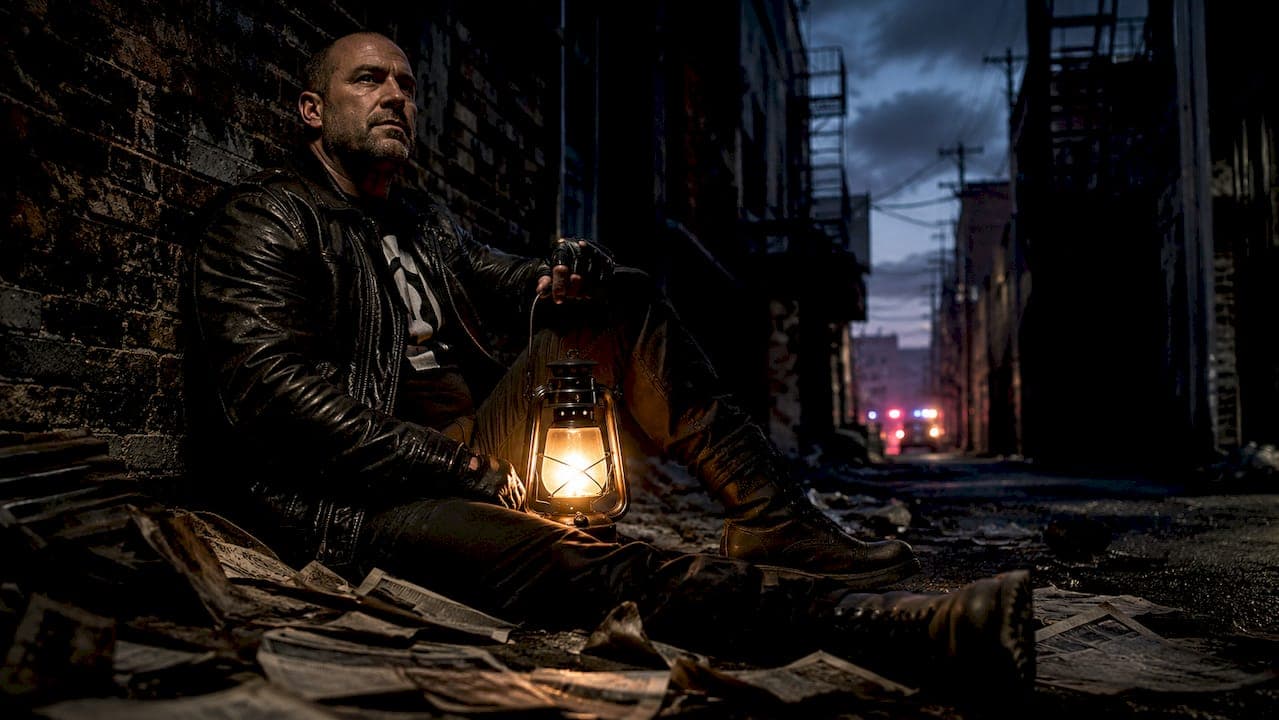
Antiheroes in horror are defined as morally ambiguous protagonists who commit dark or violent acts yet retain enough of a recognizable moral compass to hold audience sympathy. They are not pure villains. They are not traditional heroes. They occupy the unsettling space between both, and that tension is exactly what makes them so gripping. Characters like Joe Goldberg from You and Dr. Herbert West from Re-Animator show how a flawed lead can drive a story forward while keeping readers genuinely unsure whether to root for them or fear them. The role of protagonists in horror has never been more complex, and the antihero sits at the center of that complexity.
How have antiheroes in horror evolved over time?
The horror antihero is not a recent invention. Sheriff Lucas Buck from the 1995 TV series American Gothic stands as one of the earliest examples of a charismatic, morally ambiguous horror lead on American television. The show ran 22 episodes and gave audiences a small-town sheriff who used supernatural power to manipulate and destroy, yet never felt like a simple monster. That ambiguity was the point.
The shift from clear-cut villains to layered antiheroes accelerated through the prestige TV era. Shows built around psychological horror gave writers room to develop characters over multiple seasons, letting moral decay happen gradually. Audiences learned to sit with discomfort. They stopped needing a character to be good before caring about what happened to them.
Recent trends push this even further. The 2026 comic series The Accessories, scheduled for release on August 5, 2026, focuses on overlooked horror sidekicks reframed as antiheroes. That concept reflects a broader creative appetite for stories that reclaim secondary figures and give them moral weight. The antihero is no longer just the lead. The antihero can be anyone the story decides to take seriously.
Key shifts in the evolution of horror antiheroes include:
- 1990s TV: Characters like Sheriff Lucas Buck introduced charisma paired with genuine menace, blurring hero and villain roles on mainstream television.
- 2000s film: Slasher revivals began giving killers backstories that invited uncomfortable empathy rather than pure fear.
- 2010s prestige TV: Long-form storytelling allowed psychological deterioration to unfold slowly, making antiheroes feel earned rather than imposed.
- 2020s literature and comics: Works like Maeve Fly and The Accessories show that the antihero formula now extends across formats and subgenres.
What distinguishes horror antiheroes from traditional villains and heroes?
Antiheroes differ from villain protagonists primarily in motivation and moral complexity. A villain operates from self-interest or a drive toward destruction. An antihero retains a recognizable, if badly damaged, sense of right and wrong. That distinction changes everything about how a story feels.
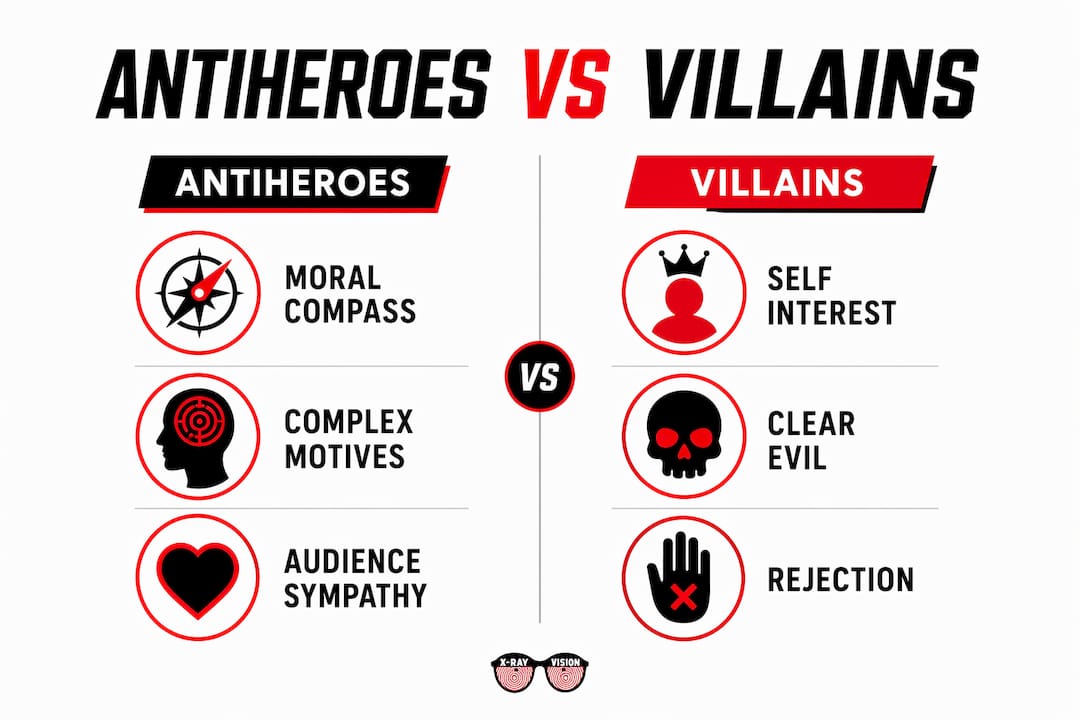
Traditional heroes react to threats. They protect others, sacrifice themselves, and restore order. Antiheroes do the opposite. They initiate conflict. They make choices that create the horror rather than resolve it. Dr. Herbert West in Re-Animator does not stumble into danger. He manufactures it through obsession and arrogance. His gradual character evolution works because the story introduces comparative villains who make West look almost reasonable by contrast, shifting audience sympathy without ever making him fully likable.
Joe Goldberg from You is the clearest modern example of this balance. Showrunner Sera Gamble describes Goldberg as combining romantic charm with monstrous acts to keep viewers engaged despite his darkness. He narrates his own story with warmth and self-justification. Readers understand his logic even while recognizing it as deeply wrong. That cognitive dissonance is the engine of the show's tension.
| Character type | Moral compass | Plot role | Audience response |
|---|---|---|---|
| Traditional hero | Strong and consistent | Reactive, restores order | Admiration and safety |
| Antihero | Flawed but present | Active, initiates conflict | Empathy mixed with unease |
| Villain protagonist | Absent or inverted | Destructive, self-serving | Fear or detachment |
Pro Tip: When analyzing a horror character, ask one question: does this person believe they are doing the right thing? If yes, you are likely dealing with an antihero, not a villain.
How do psychological horror and moral ambiguity enhance the appeal of antiheroes?
Psychological horror aligns naturally with antihero characters because both depend on internal instability. The scariest thing in psychological horror is not the monster outside. It is the unreliable mind inside. An antihero who is driven by obsession, guilt, or trauma gives that internal chaos a face and a voice.
The social meaning of morally complex figures in horror reflects something real about audiences. People are drawn to characters who act on impulses they themselves suppress. An antihero externalizes the parts of human psychology that most people keep buried. That recognition creates a pull that a straightforward villain never achieves.
Maeve Fly, selected for the 2026 Summer Scares Adult Reading List, uses a ruthless antiheroine modeled on Patrick Bateman to explore nihilism and urban isolation. The character's detachment from consequence mirrors the reader's own desire to understand a mind that operates without the usual guardrails. That is not comfortable reading. It is compelling reading.
Psychological horror antiheroes work because they hit several emotional triggers at once:
- Obsession: The antihero pursues a goal past the point of reason, making every scene feel like a countdown.
- Guilt: Even when an antihero commits terrible acts, residual guilt signals that a moral core still exists, keeping empathy alive.
- Trauma: A backstory rooted in genuine pain explains dark behavior without excusing it, which is a crucial distinction.
- Unpredictability: Because the antihero's choices are driven by a damaged worldview, readers cannot predict what comes next.
Antihero characters create suspense by blurring the line between victim and aggressor. That blur is the source of the genre's most lasting unease.
What narrative techniques effectively develop horror antiheroes?
The most common mistake writers make with horror antiheroes is trying too hard to make them likable. Editor Richelle Braswell argues that antihero success depends on a strong and consistent worldview driving the narrative, not on tragic backstories designed to generate sympathy. Readers sense the difference between a character who earns empathy and one who is engineered to receive it.
The second major mistake is forcing the antihero into a traditional hero's journey. Writers must avoid the reactive structure of conventional storytelling and instead make the antihero the active cause of the plot's events. Every major development should trace back to a choice the antihero made. That structure keeps moral weight on the character rather than on external circumstances.
Effective technique follows a clear pattern:
- Establish a worldview, not just a wound. Give the antihero a coherent philosophy, however distorted. Readers need to understand how this person thinks, not just why they suffered.
- Use a detailed backstory to explain, not excuse. Show the events that shaped the character's darkness without framing those events as a full justification for harm.
- Introduce a comparative villain. A character who is clearly worse than the antihero shifts audience alignment without requiring the antihero to become heroic.
- Balance empathy and repulsion in every scene. Each chapter should give readers one reason to understand the antihero and one reason to be disturbed by them.
- Let the antihero drive the plot. Passive antiheroes feel like victims. Active antiheroes feel like forces of nature.
Pro Tip: Read your antihero's scenes aloud. If you find yourself defending the character rather than simply presenting them, you have tipped too far toward likability. Pull back.
For writers looking to build this kind of tension, horror writing tips for 2026 offer practical guidance on creating dread through character rather than plot mechanics.
Key Takeaways
Horror antiheroes work because they combine a recognizable moral compass with genuinely dark behavior, creating tension that neither traditional heroes nor pure villains can generate.
| Point | Details |
|---|---|
| Definition matters | Antiheroes retain a flawed moral compass; villains do not. That difference shapes audience empathy. |
| Evolution is ongoing | From American Gothic in 1995 to The Accessories in 2026, the antihero has grown more complex with each decade. |
| Psychology drives appeal | Obsession, guilt, and trauma make psychological horror antiheroes feel real and unsettling in equal measure. |
| Technique over sympathy | A strong worldview builds a better antihero than a tragic backstory designed to manufacture likability. |
| Active plotting is non-negotiable | Antiheroes must initiate the horror, not react to it. Passive antiheroes lose their narrative power. |
Why horror antiheroes are the genre's most honest characters
I have spent years reading and writing horror, and the antihero keeps pulling me back for one reason: they tell the truth. Traditional horror monsters externalize fear. Antiheroes internalize it. They show you what a person looks like when the social contract breaks down from the inside, not from a supernatural force outside.
What strikes me most about the current wave of horror antihero stories is how psychological they have become. The genre is less interested in what the antihero does and more interested in why. That shift demands more from readers. You cannot coast through a story about Joe Goldberg or Maeve Fly. You have to sit with the discomfort of understanding someone you should not understand.
My honest recommendation: if you want to write a horror antihero that lasts, forget about making them sympathetic. Make them coherent. A character whose logic holds together, even when that logic is terrifying, will haunt readers far longer than one who simply suffers and snaps. The craft of creating scary characters is really the craft of creating characters who feel inevitable.
— Mark
Horror antihero reads waiting for you at Markwatsonbooks
If this deep dive into morally complex characters has you hungry for more, Markwatsonbooks has exactly what you need.

The horror collection at Markwatsonbooks brings together titles built around the kind of dark, psychologically rich storytelling this article covers. For readers drawn to internet horror and its cast of iconic, morally twisted figures, the Creepypasta books collection features characters like Slenderman, Jeff the Killer, and Eyeless Jack. These are antiheroes and villain protagonists pulled straight from the most unsettling corners of online horror culture. Browse the full range, find your next obsession, and see why horror fans keep coming back to Markwatsonbooks for stories that refuse to play it safe.
FAQ
What is an antihero in horror?
An antihero in horror is a morally ambiguous protagonist who drives the story through flawed or dark choices while retaining enough of a recognizable moral compass to hold audience empathy. They differ from villains by possessing internal conflict rather than pure self-interest.
Why are antiheroes so popular in horror?
Antiheroes create suspense by blurring the line between victim and aggressor, forcing audiences to engage with psychological complexity rather than simple fear. That moral discomfort is more unsettling than a traditional monster.
How do horror antiheroes differ from villain protagonists?
Antiheroes maintain a damaged but present moral compass, while villain protagonists operate from self-interest or destruction with no meaningful internal conflict. That distinction changes how audiences align with the character throughout the story.
What makes a well-written horror antihero?
A strong and consistent worldview drives a compelling antihero, not a tragic backstory engineered for sympathy. The antihero must also actively initiate the plot's events rather than react to them.
What are some iconic horror antiheroes in literature and film?
Joe Goldberg from You, Dr. Herbert West from Re-Animator, and the antiheroine of Maeve Fly are widely cited examples. Sheriff Lucas Buck from American Gothic remains one of the earliest and most influential models in American television horror.