
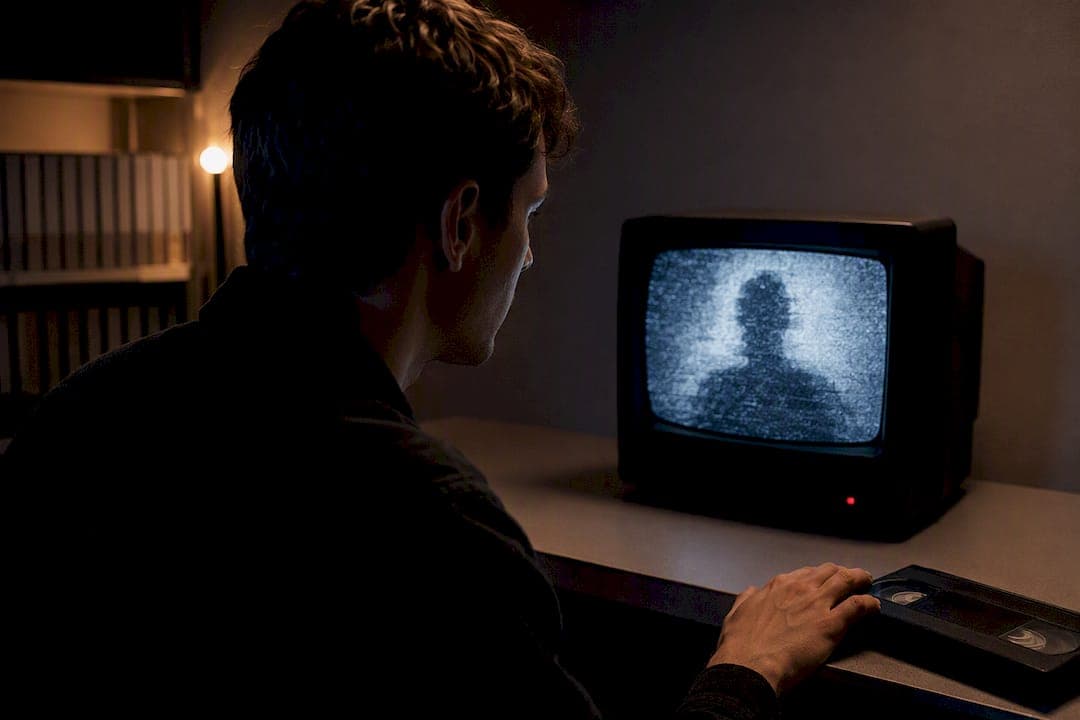
Analog horror is a deliberately archival-looking subgenre of internet horror that makes fictional threats feel real by using degraded institutional formats and missing explanations. Think corrupted public-access tapes, cryptic emergency broadcasts, and station IDs that shouldn't exist. Its fiction dressed as evidence, and that disguise is exactly what gets under your skin.
TL;DR:
- Degraded video and audio effects serve as narrative tools that obscure details, making viewers imagine threats rather than see them directly.
- The genre's threatening authority figures, like PSAs and broadcasts, are hijacked to evoke a cold, pervasive dread rooted in institutional failure.
- Many series, such as Local58 and The Mandela Catalogue, build complex mythologies over time, emphasizing atmosphere and slow escalation instead of jump scares.
- Analog horror draws on visual cues from the 1960s to early 2000s, reflecting societal anxieties about trust and control amidst misinformation and instability.
- Creators often use tools like VHS filters, distorted audio, and bureaucratic language to create authentic-looking footage that conceals the true nature of the threat.
Table of Contents
- What Is Analog Horror, Really?
- How Analog Horror Creates Fear: The Psychology Behind the Static
- Six Series That Defined the Genre
- Where Analog Horror Came From
- The Toolkit: How Creators Fake Authenticity
- Why Analog Horror Is Everywhere Right Now
- How to Actually Watch and Decode an Analog Horror Series
- An Author's Take on Why This Genre Hooks Us
- Where to Read More: Mark Watson Books' Horror and Creepypasta Collections
- Sources
- FAQ
What Is Analog Horror, Really?
Analog horror borrows the look and feel of old broadcast media: VHS scan lines, chroma smear, buzzing audio, timestamps that don't add up. According to Wikipedia's definition, the subgenre uses intentionally realistic, low-fidelity presentation and ambiguous threats to make viewers question whether the footage is archival at all. That's the trick. It never announces itself as fiction.
Here's what sets the format apart:
- Institutional voice. The footage speaks like a government agency, a school system, or a local TV station, never like a person holding a camera.
- Degraded texture. Static, tape hiss, dropped frames, and color bleed aren't decoration. They're doing narrative work.
- Escalating dread over jump scares. Episodes build slowly, often across a series, rather than delivering one shock and ending.
- A vague historical window. Most series borrow visual cues from the 1960s through the early 2000s, an era associated with cable access, chain letters, and analog recording.
Found footage and analog horror get lumped together constantly, but they work differently. Found footage puts a camera in a character's hands: you're watching someone's personal recording, shaky and subjective. Analog horror flips that. There's no protagonist filming a bad night. There's a broadcast system, a PSA, a tape found in an archive, something official and impersonal that has gone wrong. Our breakdown of internet horror formats covers this contrast in more depth if you want to see how the two lineages diverged.
How Analog Horror Creates Fear: The Psychology Behind the Static
The scares in analog horror rarely come from something jumping out. They come from watching a system you're wired to trust quietly fail.
Public-service announcements, school videos, and emergency broadcasts carry built-in authority. You don't question a station ID or a civil-defense message, you just absorb it. Analog horror hijacks that reflex. StudioBinder's analysis notes that the genre mimics the visual grammar of official systems and then corrupts it, and that corruption produces a distinctly cold kind of dread, colder than a monster leaping from a closet.
Degradation itself becomes a storytelling tool rather than a cosmetic filter. ScreenRant's explainer points out that the genre relies on technological degradation, glitches, static, low-fidelity audio, as a narrative device: obscuring details forces viewers to imagine what they can't see, and that imagined threat is scarier than anything fully rendered on screen.
The genre's effectiveness comes less from jump-scare shocks and more from a slow erosion of form and coherence that forces imaginative completion. The viewer becomes complicit in building the horror.
That's how Dread Central frames the appeal, and it explains why a single flickering timestamp can haunt a viewer longer than a full-color monster reveal.
A humanities paper from York St John University situates analog horror within contemporary technophobia and "capitalist realism." The paper argues that the genre's analog-digital hybrid look expresses anxiety about polycrisis and the limits of personal agency, a way of feeling out of control dressed up as an old tape nobody should have found.

Six Series That Defined the Genre
Different creators lean on different fears, and comparing them shows the range the format can cover.
- Local58 turns the hijacked-broadcast idea into an ongoing mythology. Kris Straub's series presents itself as a public-access channel overtaken by escalating, cryptic PSAs, and Wikipedia credits it with popularizing the term "analog horror" and shaping the genre's broadcast aesthetic going forward.
- The Mandela Catalogue builds an alternate-history mythos around entities that mimic loved ones, layering religious and memetic imagery over its analog visual style. It's less about a single scare and more about an accumulating cosmology viewers piece together across dozens of videos.
- No Through Road, an early UK-origin project from 2009, predates the term entirely. It uses liminal space and looping time to unsettle rather than any broadcast conceit, and it's frequently cited as part of the genre's ancestry rather than a member of its current wave.
- The Walten Files borrows the aesthetic of cheerful children's entertainment, mascot costumes, jingles, animatronic mascots, and curdles it into character-driven lore. The contrast between kid-friendly packaging and what's actually happening inside the story is the engine of its dread.
- Backrooms expanded a single creepypasta image into a sprawling liminal-space mythos: empty office corridors, fluorescent hum, and the sense of having slipped somewhere you were never meant to be. It's one of the clearest examples of the genre spilling into mainstream awareness.
- Kraina Grzybów TV, a non-English entry, adopts the format of an actual television program rather than a PSA or found tape, showing that the "broadcast gone wrong" premise translates well outside English-language internet culture.
Media coverage from outlets like Dread Central regularly cites this same set of series as the genre's canonical or most influential texts, each demonstrating a distinct approach to atmosphere and pacing.
Where Analog Horror Came From
The subgenre didn't appear fully formed. It grew out of earlier internet horror traditions that already understood how ambiguity and format could unsettle a reader or viewer.
- Creepypasta precedents like Candle Cove and Ben Drowned established the idea that a corrupted, half-remembered piece of media could carry real dread, years before analog horror had a name.
- No Through Road, released in 2009, is often flagged as an early precursor for its low-budget liminal aesthetic, well before the genre coalesced into a recognizable format.
- Local58's 2015 debut is the point most people point to when the subgenre found its shape and its label, cementing the PSA-hijack structure that countless later series would adapt.
- YouTube's structure rewarded serialized mystery: viewers decoded timestamps, argued in comment sections, and treated each new upload as a puzzle piece, which accelerated the genre's spread far faster than a single film could.
The Toolkit: How Creators Fake Authenticity
Modern software renders most analog horror. The trick is making that software disappear.
- Visual filters recreate VHS scan lines, chroma shift, and tape warp, often layered in After Effects over animation built in Blender.
- Audio design leans on tape hiss, pitch-shifted voices, and band-limited frequencies to mimic the narrow range of old recording equipment.
- Institutional dressing, timestamps, station IDs, PSA language, and bureaucratic phrasing, sells the idea that this footage belongs in an archive rather than a horror short.
Wikipedia notes that creators often build modern tools underneath these analog filters, and that the sense of authenticity comes from limiting clarity rather than adding polish. Errors become narrative beats instead of accidents.
Pro Tip: Hold back the full shape of your threat for as long as you can. A half-glimpsed shape in static does more work than a fully rendered monster, and over-explaining a lore point usually drains the dread it took an entire episode to build.

Why Analog Horror Is Everywhere Right Now
Part of the boom is structural. YouTube's recommendation system and comment culture reward exactly the kind of serialized mystery analog horror thrives on, and Forbes has traced how the platform became a proving ground for this style of horror discovery and community decoding.
Part of it is emotional timing. The genre's obsession with corrupted institutions and broadcasts you can't trust lands hard in an era saturated with misinformation and skepticism toward official channels. The York St John paper frames analog horror as expressive of exactly this kind of technophobia and social anxiety, which helps explain why it resonates with audiences far beyond horror diehards.
- Backrooms-style liminal spaces have crossed into mainstream film development and broader pop culture references.
- Mandela Catalogue-style lore has spread into fan wikis, theory videos, and adjacent creative works well outside the original series.
- Coverage of these shifts, including how internet-born horror keeps reshaping the wider genre, is worth a look in our rundown of modern horror trends.
How to Actually Watch and Decode an Analog Horror Series
Going in with a method makes the experience richer instead of just confusing.
- Track timestamps and station IDs. They often map onto a hidden internal chronology the creator is using to sequence the story.
- Log recurring imagery and phrases. Symbols and lines that repeat across episodes usually point to the series' underlying motifs.
- Treat cryptic PSAs as worldbuilding, not loose ends. A message that doesn't fully make sense is rarely a mistake, it's a clue you don't have context for yet.
- Pace yourself with content warnings in mind. Several series lean on themes of institutional harm, isolation, or child-directed menace, and it's fine to skip installments that hit too close.
An Author's Take on Why This Genre Hooks Us
The nostalgia in analog horror isn't really about old TVs. It's about a moment when institutions still commanded automatic trust, right before that trust started cracking. Watching it corrode on tape is oddly comforting and deeply unsettling at once. For a deeper look at how dread differs from shock, our post on terror versus horror is worth a read.
— Mark
Where to Read More: Mark Watson Books' Horror and Creepypasta Collections
If analog horror's slow-burn dread has you craving more of that same unsettling patience, Mark Watson Books' Horror collection is built on exactly that kind of atmosphere. The Creepypasta series draws from the same internet-horror roots that shaped analog horror, with anthologies like Creepypasta: Origins collecting the short, cryptic stories that started this whole tradition. 
Sign up for the mailing list to catch free offers on new releases, and browse the full Books catalog when you're ready for your next unsettling read.
Sources
- Analog horror — Wikipedia
- LOCAL58 and the birth of analog horror — Dread Central
- What is analog horror? — StudioBinder
- Capitalist Realism and the Death Drive in Analog Horror — York St John University (Humanities paper)
- What Is Analog Horror? — ScreenRant
FAQ
How Do I Explain Analog Horror to Someone New?
Call it fiction that dresses up as old, official recordings, things like PSAs, emergency broadcasts, or public-access tapes, gone wrong. The scares come from institutional authority breaking down on camera rather than from jump scares, and Wikipedia's entry is a solid starting reference for the format's core traits.
Why Is Analog Horror So Unsettling?
It exploits your instinct to trust official communication, then corrupts that trust on screen, which StudioBinder notes creates a colder dread than typical horror scares. Add in degraded audio and video that hide key details, and your imagination fills the gaps, usually with something worse than what the creator could show directly.
Is Analog Horror Based on Real Events?
No. Analog horror is fictional, built to look archival through intentional low-fidelity presentation and ambiguous threats, according to Wikipedia's definition of the subgenre. The realism is a deliberate visual and narrative technique, not a claim that the events actually happened.
What Is Considered the Creepiest Analog Horror Series?
There's no single agreed-upon "creepiest" entry, since fear responses vary by viewer and by which motif hits hardest. Series like Local58, The Mandela Catalogue, and The Walten Files are consistently cited among the most influential and unsettling by outlets like Dread Central, each for a different reason: broadcast hijacks, memetic mythos, or corrupted children's-media aesthetics.
How Does Analog Horror Differ From Found Footage?
Found footage centers on a character holding a camera, so the perspective feels personal and shaky. Analog horror instead mimics impersonal institutional formats like PSAs or station broadcasts, and our comparison of internet horror formats breaks down how that distinction shapes the fear each style produces.