
This is a curated list of underrated horror novels for readers who have burned through the mainstream bestseller shelf and want something that actually surprises them. You'll get roughly twenty picks, pulled from small-press catalogs, community lists, and cult reader recommendations, plus the exact tactics for finding your own hidden gems once you finish this batch.
TL;DR:
- Most underrated horror novels come from small presses or independent publishers, often with limited reprints and strong critical praise despite low sales.
- Reader data shows that titles with high ratings and relatively few reviews are typically hidden gems that deserve more recognition.
- To discover hidden horror books, explore niche review sites, community threads, author backlists, and follow small presses' release calendars.
- Classic genres like cosmic horror, folk horror, and body horror are fertile ground for underrated works that influence mainstream horror but remain obscure.
- True hidden gems usually balance quality with low visibility, often found through dedicated community recommendations rather than bestseller charts.
Table of Contents
- Underrated Horror Novels Worth Hunting Down Right Now
- What Actually Makes a Horror Novel Underrated
- How to Find Your Own Hidden Gem Horror Books
- Why This Curation Comes From a Working Horror Author
- Why Underrated Horror Hits Differently
- Start Exploring the Horror Collection
- Where These Recommendations Came From
- Sources
- FAQ
Underrated Horror Novels Worth Hunting Down Right Now
Every reader has a moment where the "best horror novels of all time" lists stop delivering surprises. You already know the big names. What you want now is the book your horror-obsessed friend mentions once, gets a weird look in their eyes about, and never quite explains properly. That's what this list is for.
These titles range from Edwardian-era supernatural fiction to novels published within the last few years, and they span folk horror, body horror, epistolary dread, and the kind of literary uncanny that gets under your skin without a single jump scare. Some are genuinely obscure horror novels with tiny print runs. Others are simply unrecognized horror authors doing better work than their sales numbers suggest.
1. The Willows by Algernon Blackwood
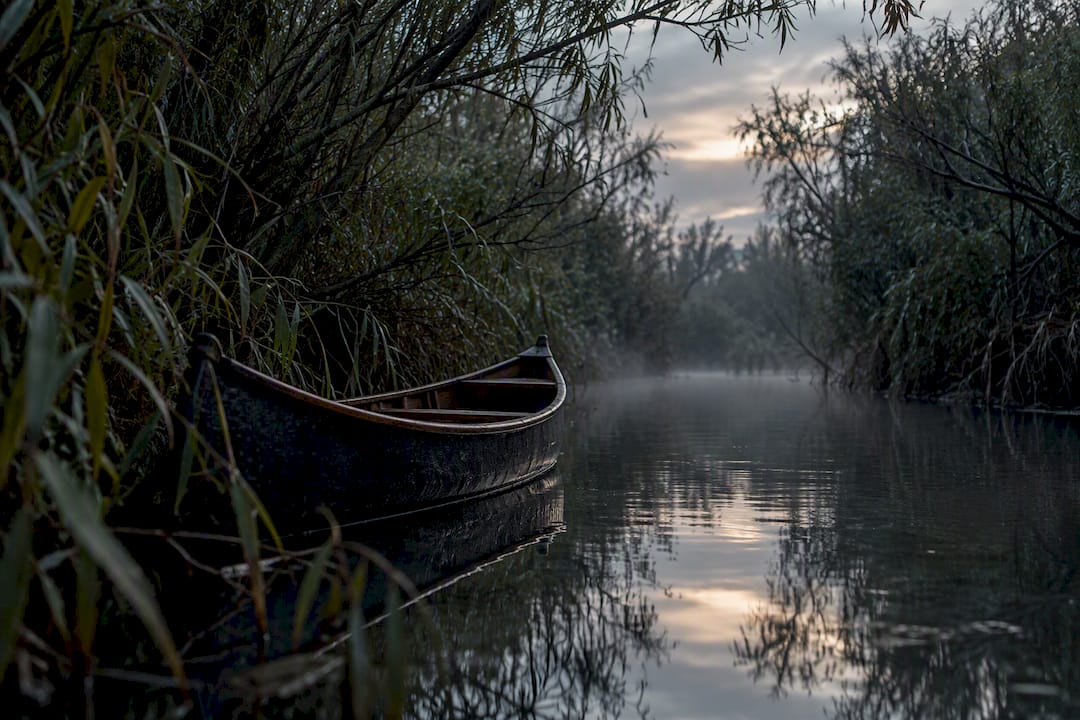
Two men paddle a canoe into a flooded stretch of the Danube and discover the willow thickets are, in some way neither can name, watching them. Blackwood published this in 1907, and H.P. Lovecraft himself called it one of the finest weird tales ever written, yet it still gets buried under Poe and Shelley on most "classic horror" roundups. There's no monster here, no explanation, just an escalating wrongness in the landscape itself. Best for readers who love atmosphere over plot and want to understand where cosmic horror actually started.
2. ITCH! by Gemma Amor
Amor's novel follows a woman whose skin becomes the site of something ancient and hungry, blending body horror with folk horror roots in a way few contemporary writers attempt. The Hachette UK publisher page for ITCH! highlights the novel's UK availability and the critical attention it has picked up despite sitting well outside the mainstream bestseller conversation. Best for readers who want visceral, skin-crawling horror grounded in a very human sense of shame and transformation.
3. We Are Always Tender with Our Dead by Eric LaRocca
LaRocca built a reputation on unsettling, transgressive short fiction, and this novel extends that same atmospheric dread into longer form. The Penguin Random House page for the book frames it as a significant entry in modern horror, the kind of book that earns serious critical praise while still flying under most readers' radar. Best for fans of quiet, psychologically corrosive horror rather than gore for its own sake.
4. Benighted by J.B. Priestley
Long before The Old Dark House became a film, Priestley wrote this 1927 novel about travelers stranded at a sinister mansion during a storm. The Times review of Benighted notes how directly it shaped the haunted-house formula that later writers borrowed without ever crediting the source. Best for readers who want to trace the DNA of modern haunted-house fiction back to its actual origin.
5. The Great God Pan by Arthur Machen
Machen's novella about a scientific experiment that tears a hole in the boundary between the ordinary world and something far older reads like a direct ancestor to cosmic horror. It's short, dense, and genuinely disturbing in a way that has aged better than most Victorian horror. Best for readers who like their dread philosophical rather than physical.
6. Come Closer by Sara Gran
A woman's marriage and sanity unravel after she starts hearing a strange tapping sound, and Gran never gives you the comfort of a clean explanation. This is possession horror stripped of exorcism-movie theatrics, replaced with something closer to a slow-motion character study. Best for readers who want literary uncanny fiction that trusts them to sit in ambiguity.
7. The Little Stranger by Sarah Waters
Waters is better known for historical fiction, which is exactly why this haunted-house novel about a crumbling English estate gets overlooked on horror-specific lists. It's a slow burn built on class anxiety and repression as much as anything supernatural. Best for readers who like their ghosts psychological and their houses falling apart in more ways than one.
8. The Fisherman by John Langan
Two grieving widowers go fishing at a mysterious creek and stumble into a folk tale that spans generations and continents. Langan won a Bram Stoker Award for this, yet it remains one of the most consistently recommended cult classic horror books that mainstream readers have never heard of. Best for fans of cosmic horror who also want genuine emotional weight behind the dread.
9. Experimental Film by Gemma Files
A struggling film scholar discovers footage from a forgotten early Canadian filmmaker that seems to be summoning something. Files won the Shirley Jackson Award for this one, and it deserves far more attention than it gets outside dedicated horror circles. Best for readers who love horror tangled up with obsession, academia, and old media.
10. The Troop by Nick Cutter
A boy scout camping trip goes catastrophically wrong when a starving stranger stumbles into camp carrying something inside him. Cutter writes body horror with a clinical precision that made Stephen King himself praise the book publicly, yet it still sits well behind Cutter's more famous peers on genre lists. Best for readers who want visceral horror with no interest in subtlety.
11. The Ceremonies by T.E.D. Klein
A sprawling, slow-building novel about a folklore scholar drawn into a rural cult's rituals. Klein wrote sparingly, which may explain why this 1984 novel never built the audience its craftsmanship deserves. Best for patient readers who want dread accumulated page by page rather than delivered in one shock.
12. Hex by Thomas Olde Heuvelt
A small Hudson Valley town lives under the curse of a witch whose eyes and mouth are sewn shut, and the town's increasingly extreme efforts to hide her existence from outsiders become the real horror. Translated from Dutch, this novel has a cult following but almost no mainstream American recognition. Best for readers who want folk horror with a modern, almost satirical edge about small-town denial.
13. Mongrels by Stephen Graham Jones
A coming-of-age story about a boy raised by a family of werewolves living in poverty across the rural South. Jones has since become far better known, but this earlier novel remains criminally underread relative to his current profile. Best for readers who want werewolf fiction rooted in class and family rather than monster-movie mechanics.
14. The Rust Maidens by Gwendolyn Kiste
Teenage girls in a decaying 1980s Rust Belt town begin transforming into something inhuman, and Kiste ties the body horror directly to industrial collapse and abandonment. Kiste has won a Bram Stoker Award, yet this particular novel from a small press remains one of the more obscure horror novels worth chasing down. Best for readers drawn to body horror with real social teeth.
15. Tender Is the Flesh by Agustina Bazterrica
Translated from Spanish, this novel imagines a world where a virus makes animal meat unsafe to eat and society legalizes farming humans instead. It won multiple international prizes yet still isn't widely known among English-language horror readers who stick to Anglo-American authors. Best for readers who want horror as unflinching social commentary.
16. The Loney by Andrew Michael Hurton
A family's pilgrimage to a bleak stretch of English coastline in hopes of curing a mute boy turns into something far darker involving the locals and the landscape itself. Hurton won the Costa First Novel Award for this, and it remains a defining modern folk horror text that somehow still gets described as a "hidden gem" a decade later. Best for readers who loved The Willows and want a contemporary descendant.
17. White Is for Witching by Helen Oyeyemi
A haunted house in Dover, an eating disorder, and a family history that folds in on itself across generations. Oyeyemi's prose is dense and literary, which likely explains why horror readers looking for straightforward scares pass this one by without realizing what they're missing. Best for readers who want gothic horror that rewards rereading.
18. Bunny by Mona Awad
A darkly funny, deeply unsettling novel about an MFA student drawn into a clique of wealthy classmates who perform disturbing rituals. It sits at the boundary between horror and literary satire, which means it rarely gets shelved where horror readers would actually find it. Best for readers who want their horror soaked in social anxiety and pitch-black comedy.
19. The Cipher by Kathe Koja
Two artists discover a hole in an apartment building floor that seems to consume and transform anything dropped into it. Koja won the Bram Stoker Award for this 1991 debut, and it's considered a foundational text of splatterpunk despite most casual horror readers never hearing the title. Best for readers who want body horror filtered through grunge-era art scene grime.
20. Boy Parts by Eliza Clark
A photographer in Newcastle takes increasingly disturbing pictures of men she finds online, and the novel slowly reveals just how unreliable her account of her own actions really is. It's psychological horror with a genuinely nasty edge, and it built its early audience almost entirely through word of mouth rather than marketing. Best for readers who want unreliable-narrator horror that never lets you get comfortable.
If any of these overlap with tastes you developed in other genres, that's not an accident. Crossover reading is one of the fastest ways into must-read horror fiction that mainstream lists miss entirely.
What Actually Makes a Horror Novel Underrated
"Underrated" isn't just a vibe. It's a pattern you can spot with a few concrete signals, and once you know them, you'll start finding hidden gem horror books on your own instead of waiting for someone else's list.
The clearest signal comes straight from reader data. Goodreads Listopia surfaces exactly this kind of book: titles with a relatively small total ratings count but a strong average score. A novel sitting at 4.1 stars with 3,000 ratings has convinced almost everyone who found it, but almost nobody has found it yet. Compare that to a bestseller with 400,000 ratings averaging 3.9, and the math tells a real story about visibility versus quality.
Here are the signals worth watching for when you're evaluating whether a book qualifies as genuinely underappreciated horror literature rather than just obscure for obscurity's sake:
- Low total ratings, high average score. A wide gap between how many people have read a book and how much those readers loved it is the single strongest indicator.
- Small-press or independent imprint origin. Books from presses like Tor Nightfire, Tenebrous Press, Word Horde, and Bad Hand Books rarely get the marketing budget of major imprints, regardless of quality.
- Limited or no reprint history. A book that's gone out of print despite strong reviews almost always signals a publisher misjudgment, not a quality problem.
- Strong critical praise without award-season buzz. Reviews that use words like "underrated" or "should be better known" are practically a genre unto themselves.
- Cross-genre labeling that confuses shelving. Books that blend horror with literary fiction, satire, or historical fiction often get miscategorized right out of the horror conversation.
The Willows checks the classic-work box. Priestley's Benighted checks the reprint-gap box, since it took decades before wider audiences connected it to The Old Dark House. LaRocca's novel checks the critical-praise-without-mainstream-saturation box almost perfectly.
Statistic Callout: Community-curated lists like Goodreads Listopia weight votes and average scores together, which means a book needs sustained reader enthusiasm, not just a marketing push, to climb the rankings. That's precisely why small, devoted fan bases can push genuinely obscure titles onto these lists years or even decades after publication.
That gap between quality and recognition is the entire reason lists like this one exist. It's also why chasing recent releases only tells half the story. Contemporary primers on modern horror consistently point past the pre-1950 classics toward the small-press renaissance happening right now.
How to Find Your Own Hidden Gem Horror Books
Once you've worked through this list, you're going to want more. Here's exactly how to keep finding low-key horror novels without waiting for another article to hand them to you.
- Mine Goodreads Listopia beyond the obvious lists. Search tags like "underrated horror" or "forgotten horror" and sort by score rather than popularity, since popularity actively works against the books you're trying to find.
- Follow small presses directly, not just their authors. Imprints publishing consistently strong horror rarely get algorithmic promotion, so following their release calendars directly catches books before they build buzz.
- Read author backlists, not just their breakout book. Writers like Gemma Files and Stephen Graham Jones built strong earlier work before their most famous titles arrived, and those earlier books often stayed underappreciated even after the author's profile grew.
- Check niche horror review sites and long-running horror blogs. These outlets often review small-press titles months before larger review outlets even hear about them.
- Monitor community threads like r/horrorlit. Reader-sourced recommendation threads surface books that never show up in algorithmic "customers also bought" suggestions, because the recommendations come from taste, not sales data.
- Cross-reference your existing genre loves. If you already love unreliable narrators in literary fiction or slow-burn dread in thrillers, look for horror novels using those same mechanics. Crossover matching consistently surfaces books traditional horror-only searches miss.
Once you have a shortlist, triage it fast: a low rating count paired with a high average score and detailed, thoughtful reviews is your green light. A low rating count paired with a low average and vague reviews usually means the book earned its obscurity honestly.
Pro Tip: Watch for reprint and reissue announcements from boutique presses. A book coming back into print after years out of circulation almost always means a small publisher believes in it enough to gamble on a second run, and those editions often include restored text or new author notes you won't find in the original printing.
Why This Curation Comes From a Working Horror Author
This list isn't assembled by someone skimming bestseller charts, but from the perspective of an experienced horror author familiar with cross-genre fiction and anthologies. It comes from someone who reads and writes across the exact genre boundaries where underrated books tend to hide.
The books that stick with readers longest are rarely the ones dominating the front tables at big retailers. They're the ones a small press believed in enough to publish without a marketing budget, or the ones a reader found through a Goodreads thread and couldn't stop talking about. Curation should chase that kind of conviction, not chart position.
The selection process behind this list weighs cross-genre resonance, small-press discoveries, and the same community-recommendation signals covered above, rather than repeating whatever's already trending. For readers who want to keep the discovery going, the site's horror anthology roundups and broader horror reading checklists go considerably deeper than any single list can.
Why Underrated Horror Hits Differently
There's a specific thrill in reading a book nobody warned you about. No trailer, no algorithm, no five-star consensus setting your expectations. You just fall into the story cold, and when it works, it works harder than anything hyped ever could.
Right now, horror is genuinely alive at the small-press level. Writers are blending folk horror with body horror, literary fiction with splatterpunk, and nobody's asking permission from the mainstream to do it. That experimentation is exactly where the next generation of overlooked classics is being written today.
Found something better than what's on this list? That's the whole point of underrated fiction. Pass it along. The next great hidden gem probably started as somebody's stubborn recommendation, too.
— Mark
Start Exploring the Horror Collection
Twenty books is a strong start, but if you'd rather browse a collection that's already been shaped by one author's specific taste for cross-genre dread, the Horror collection at Markwatsonbooks is built exactly for that. Unlike hunting through scattered forum threads or algorithm-driven retail pages, everything here has already passed through a single curatorial eye focused on unique horror story recommendations rather than chart performance.

You'll find anthologies, internet-horror volumes, and themed collections that sit comfortably beside the small-press titles on this list, including the Creepypasta series for readers who want short-form dread instead of a full novel commitment. If you're the kind of reader who just finished this list wanting more books nobody else recommended to you, that collection is the natural next stop. Browse the Horror collection now and see what catches your eye first.
Where These Recommendations Came From
This list draws on a mix of reader-driven data and publisher sourcing rather than one person's memory of favorite books.
- Goodreads Listopia's "Forgotten Frights" list aggregates reader-nominated titles with the low-visibility, high-approval pattern described above.
- The Line-Up's underrated horror roundups track cult and small-press favorites that rarely surface on mainstream bestseller coverage.
- LitHub's horror primer frames the current small-press renaissance and points readers past pre-1950 classics toward active contemporary authors.
- Publisher pages from Hachette UK and Penguin Random House confirm UK and US availability for ITCH! and We Are Always Tender with Our Dead.
- The Times' review of Benighted provides historical context on Priestley's influence on the haunted-house genre.
Sources
- Forgotten Frights: Overlooked and Underappreciated Horror — Goodreads
- 8 of the Most Underrated Horror Books of All Time — The Line-Up
- We Are Always Tender with Our Dead — Penguin Random House
FAQ
What is the scariest horror novel ever?
There's no single consensus answer, since fear is subjective, but The Willows by Algernon Blackwood is frequently cited by writers and critics as one of the most effective weird-fiction novels ever written for pure atmospheric dread. Novels like The Troop by Nick Cutter earn their scares through visceral body horror instead, so the "scariest" answer really depends on whether you find psychological unease or physical revulsion more unsettling.
What is considered the best horror novel?
There's no single crowned "best" in the genre, since horror splits across so many subgenres that comparing a cosmic horror novel to a slasher-style body horror book is close to comparing different genres entirely. Among underrated horror novels specifically, The Fisherman by John Langan and The Willows by Algernon Blackwood consistently earn the strongest combination of critical respect and devoted reader loyalty.
What are the top 10 horror story books?
Mainstream "top 10" lists tend to repeat the same handful of bestsellers, but a stronger reading list mixes recognized classics with underrated horror novels like The Willows, ITCH!, and We Are Always Tender with Our Dead. Pulling from small-press catalogs and community-curated lists like Goodreads Listopia consistently produces a more interesting top ten than any algorithm-driven bestseller chart.
What is the most underrated book?
Among horror specifically, The Willows by Algernon Blackwood is one of the most frequently cited underrated classics, given its outsized influence on cosmic horror despite limited general-reader recognition. In contemporary horror, ITCH! by Gemma Amor and We Are Always Tender with Our Dead by Eric LaRocca both show the pattern of strong critical reception paired with limited mainstream visibility that defines the category.
Does Markwatsonbooks sell any of these specific titles?
Markwatsonbooks focuses on Mark Watson's own catalog rather than reselling other authors' novels, so titles like ITCH! or The Willows aren't available through the site directly. What you will find is a curated Horror collection of anthologies and Creepypasta volumes built in the same discovery-first spirit as this list.