
TL;DR:
- Myths help children develop emotional regulation, cultural identity, and critical thinking through storytelling. Active oral narration enhances their social and language skills more effectively than passive media. Incorporating myths into education fosters empathy, self-understanding, and moral development across diverse communities.
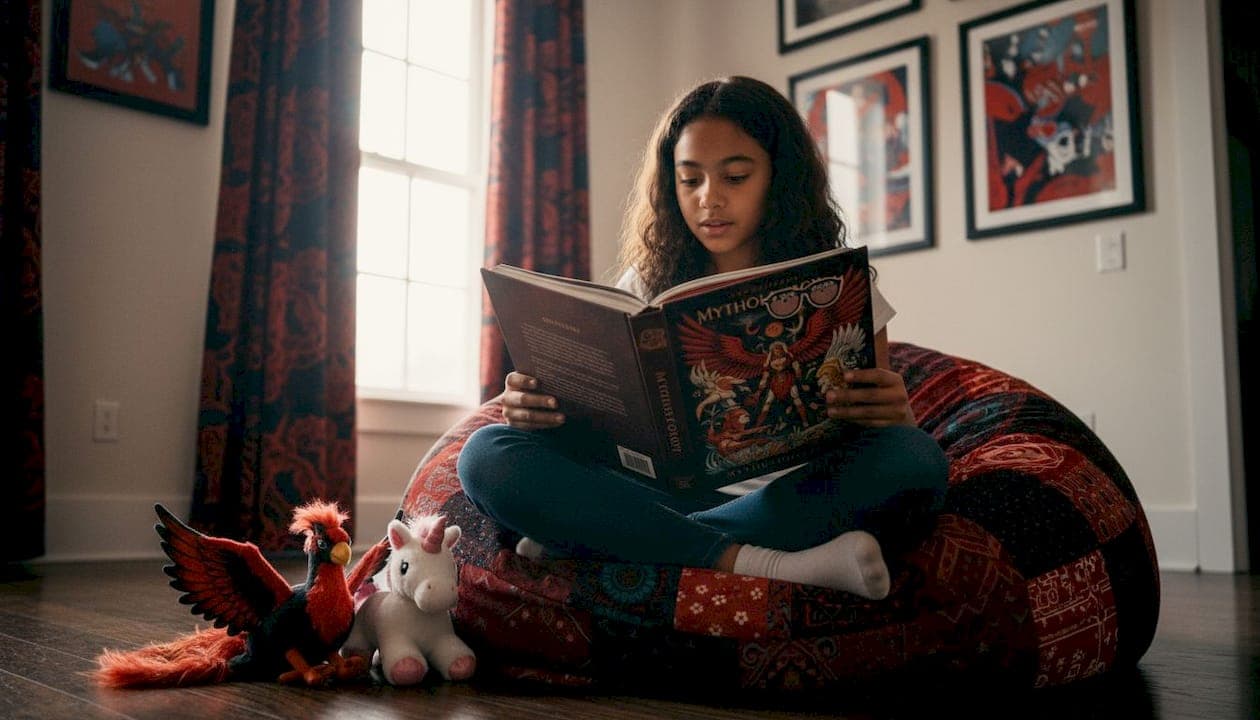
Myth is defined as a symbolic narrative that transmits cultural values, emotional truths, and moral frameworks across generations. The role of myth in children's literature goes far beyond entertainment. Myths give children a safe space to face fear, practice empathy, and build a sense of who they are. Recent research confirms that folklore and mythological storytelling produce measurable gains in emotional regulation, conflict resolution, and cultural identity formation. For parents and educators, understanding how myths work in children's books is one of the most practical tools available for raising emotionally literate, socially aware kids.
How myths create imaginative worlds and heroic narratives for children
Myths pull children into worlds where the stakes feel real and the heroes feel human. A child reading about Hercules wrestling a monster or Anansi outsmarting a king is not just entertained. They are rehearsing courage, wit, and perseverance in a setting where failure has no real consequence. That psychological safety is exactly what makes mythic storytelling so powerful for young readers.
The building blocks of myth are instantly recognizable to children, even if they cannot name them. Scholars call these recurring patterns "archetypes," a term from Jungian psychology that describes universal character types and story structures. The hero who must leave home, the trickster who breaks the rules, the monster that guards the treasure: these figures appear in Greek mythology, West African folklore, Norse sagas, and modern children's picture books alike. Children respond to archetypes instinctively because the patterns mirror real emotional experiences.
Mythic elements that appear most often in children's literature include:
- The hero's journey: A young protagonist leaves safety, faces trials, and returns transformed. Think of Percy Jackson or even Moana.
- Symbolic monsters: Creatures that represent real fears, like abandonment, failure, or the unknown.
- Magical helpers: Wise figures who appear at the right moment, modeling mentorship and trust.
- The moral test: A moment where the hero must choose between self-interest and responsibility.
These elements work together to create stories that feel urgent and meaningful. Children do not just read them. They live inside them.
Pro Tip: When reading a myth aloud with a child, pause at the hero's moment of choice and ask, "What would you do?" That single question turns passive listening into active moral reasoning.
What developmental benefits do myths offer children?
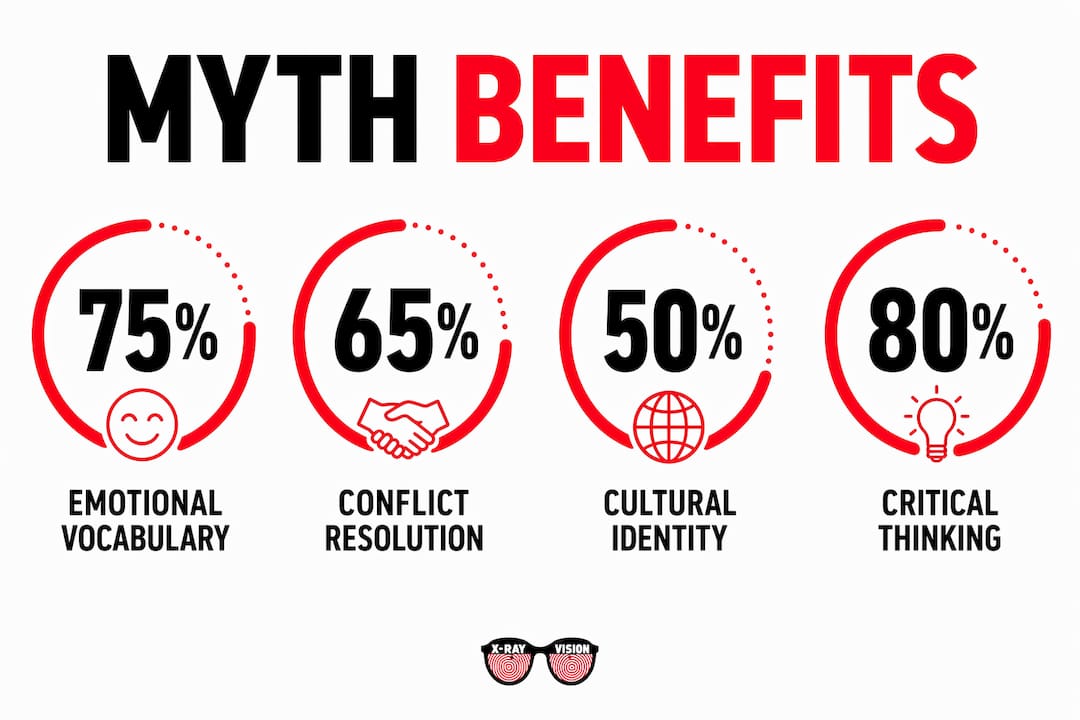
The impact of folklore on kids is not theoretical. A 2026 study found that systematic use of folk tales and games in preschoolers boosted their ability to verbalize emotions from 35% to 75% in just three months. That is a dramatic shift. It means children who struggled to say "I feel scared" or "I feel left out" found words for those feelings through story.
The same research showed that conflict resolution without teacher intervention rose from 20% to 65% over the same period. Children who regularly engaged with folklore were solving their own social problems at three times the rate of those who did not. Avoidance of group games dropped from 57% to 18%. These numbers point to one conclusion: myths and folklore build social confidence.
Myths also function as an emotional vocabulary builder. Research confirms that myth narratives serve as bridges for emotional regulation, helping children safely verbalize complex feelings like fear, pride, grief, and jealousy that they cannot easily express in everyday language. A child who cannot say "I feel powerless" can recognize that feeling in Cinderella's story and begin to process it.
The social benefits extend beyond the individual child. A 12-week program using folklore-based storytelling produced statistically significant increases in empathy, cooperation, and social responsibility among school-age children. Myths develop empathy by portraying diverse characters and challenging singular narratives, which fosters inclusivity in young readers.
Key developmental benefits of myths in children's literature include:
- Emotional regulation: Children learn to name and manage complex feelings through story.
- Empathy: Diverse mythic characters help children understand perspectives different from their own.
- Conflict resolution: Mythic plots model negotiation, sacrifice, and compromise.
- Social responsibility: Heroes who serve their communities teach children that strength has a purpose beyond personal gain.
The role of storytelling in education is most powerful when it is interactive. Folklore's greatest impact on early childhood emotional regulation comes from its rhythmic, participatory nature, not just its narrative content.
How do myths shape cultural identity and ethical understanding?
Myths are the memory of a culture. They carry the values, fears, and aspirations of entire peoples across centuries. When children encounter these stories, they absorb more than plot. They absorb a worldview.
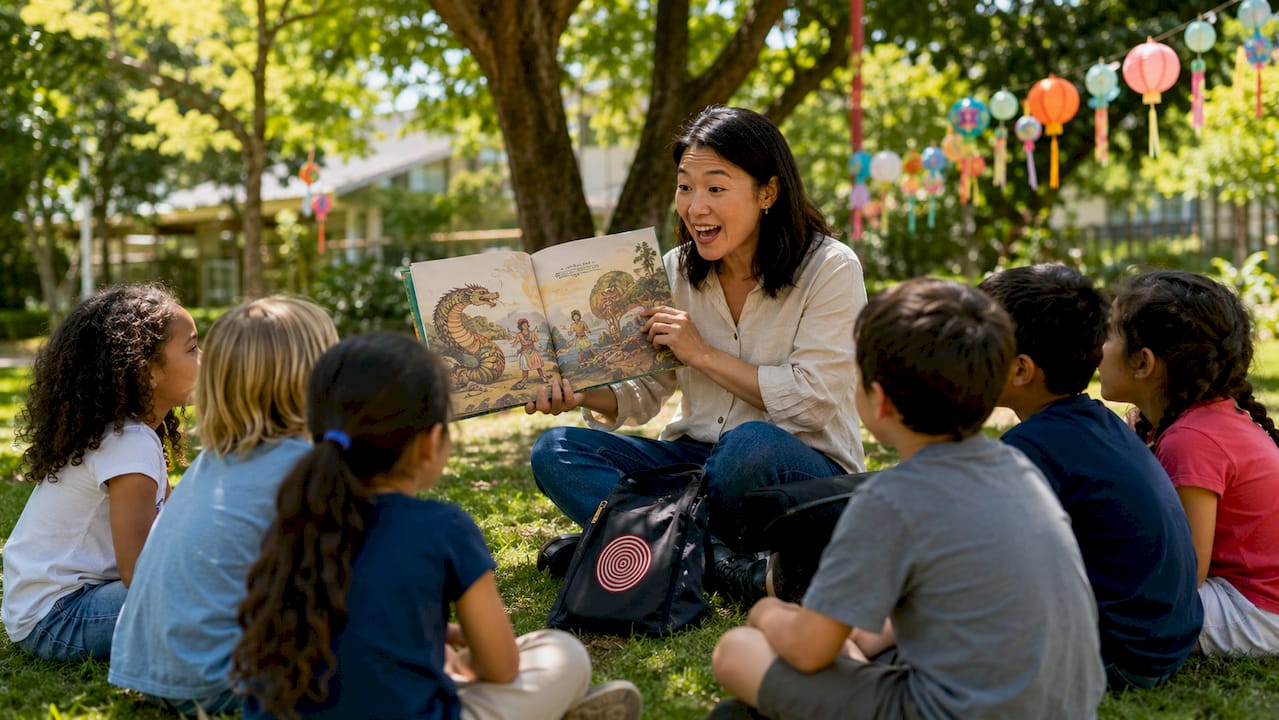
Research confirms that myth and folklore transmit collective identity and symbolic behavior models, including heroism, freedom, and responsibility. These are not abstract concepts. They arrive wrapped in vivid characters and dramatic events that children remember long after the book is closed. A child who grows up with Anansi stories carries a different understanding of cleverness and community than one raised on Arthurian legend. Both are richer for knowing both.
Mythological archetypes in education contribute to forming stable national identity in children through cultural self-identification and the activation of historical memory. This matters especially for children from minority or immigrant communities, whose cultural myths are often absent from mainstream curricula. Seeing your own people's heroes in print is a form of recognition that shapes self-worth.
The table below shows how different cultural traditions use mythic themes to teach core values:
| Cultural Tradition | Core Mythic Theme | Value Transmitted |
|---|---|---|
| Greek mythology | Hero's quest and hubris | Courage balanced with humility |
| West African folklore | Trickster tales (Anansi) | Wit, community, and resilience |
| Norse mythology | Sacrifice and fate | Duty, loyalty, and acceptance |
| Indigenous American stories | Harmony with nature | Respect, stewardship, and balance |
| East Asian folklore | Filial piety and transformation | Family honor and personal growth |
Folklore also develops language, memory, and creativity while building moral values. Genres like fairy tales, proverbs, and origin myths each carry ethical weight. A proverb teaches a rule. A fairy tale shows what happens when the rule is broken. Together, they create a moral education that feels earned rather than imposed.
What do modern approaches to myth in children's books look like?
The old model of myth education was simple: read the story, absorb the moral. Modern educators and authors reject that approach. Contemporary myth retellings emphasize interpretive openness, encouraging children to think critically rather than accept a single fixed lesson. That shift is significant. It treats children as thinkers, not just receivers.
Experts now stress that myths work best as dynamic narratives promoting intellectual agency. A child who asks "Was the hero actually right?" or "Why did the monster act that way?" is developing critical thinking skills that transfer directly to real-world reasoning. The goal is not to produce children who know the "correct" interpretation of a myth. The goal is to produce children who know how to interpret.
Oral storytelling plays a central role in this modern approach. Interactive oral storytelling is more effective for language development and socio-emotional skills than digital media storytelling. Active narration beats passive consumption every time. A parent who tells a story with voice, gesture, and pauses creates a richer experience than any screen can replicate.
Practical strategies for modern myth education include:
- Ask open questions: "Why do you think the hero made that choice?" invites reasoning, not recall.
- Retell from different perspectives: Ask children to tell the story from the villain's point of view.
- Connect myths to current events: A story about a community facing drought can open a conversation about climate and responsibility.
- Encourage children to challenge the storyteller: Effective myth education pushes children to question storyteller perspectives, building intellectual confidence.
Pro Tip: Try reading the same myth from two different cultural traditions and ask the child what is similar. That comparison builds both critical thinking and cultural respect simultaneously.
The decline of oral storytelling traditions weakens myths' developmental effects. Parents and teachers who actively narrate stories rather than simply handing children a book or a screen are preserving something irreplaceable. Myths live in the voice, not just on the page. Stories also find new life in digital spaces, as explored in discussions about how stories evolve online, which shows that the mythic impulse adapts to every medium children encounter.
Key Takeaways
Myths are the most effective tool available for building emotional literacy, cultural identity, and critical thinking in children through story.
| Point | Details |
|---|---|
| Emotional vocabulary | Myths help children name complex feelings like fear and grief they cannot easily express otherwise. |
| Social development | Folklore-based storytelling raises conflict resolution rates and empathy in measurable, research-backed ways. |
| Cultural identity | Mythic archetypes transmit national and community values that shape children's self-understanding. |
| Critical thinking | Modern myth education encourages children to question, reinterpret, and challenge narratives actively. |
| Oral storytelling matters | Active narration by parents and educators produces stronger developmental outcomes than passive media. |
Why myths still matter more than most adults realize
I have spent years writing for children and thinking about what makes a story stick. The answer, almost every time, is myth. Not because myths are old or prestigious, but because they are honest. They do not pretend that the world is simple. They show children that fear is real, that choices are hard, and that courage is not the absence of doubt. That is a more truthful education than most curricula offer.
What surprises me most is how often adults underestimate the child's capacity for mythic complexity. Parents sometimes want to simplify the story, to sand down the dark edges. I understand the instinct. But the darkness in myths is not gratuitous. It is the point. A hero who faces no real danger teaches nothing. The child who sits with a genuinely frightening story and comes out the other side has practiced something real.
My practical advice is this: do not just read myths to children. Tell them. Put the book down sometimes and use your own voice. Change the names. Set the story in your neighborhood. Ask the child what happens next. The storytelling tips that produce the deepest engagement are always the ones that make the child a participant, not an audience. Myths were never meant to be consumed quietly. They were meant to be lived out loud.
— Mark
Children's books rooted in myth, curated for curious readers
Markwatsonbooks brings together children's stories that carry the weight and wonder of mythic tradition. These are books that do more than entertain. They give young readers heroes to believe in, fears to face, and values to carry forward.

Parents and educators looking for meaningful, myth-rich reading will find a carefully selected range of titles in the children's books collection at Markwatsonbooks. Each title is chosen for its ability to spark imagination, build emotional depth, and connect children to something larger than themselves. If you want stories that stay with a child long after the last page, this is where to start.
FAQ
What is the role of myth in children's literature?
Myth provides children with symbolic narratives that teach emotional regulation, moral values, and cultural identity. These stories give children a safe framework for processing complex feelings and understanding the world around them.
How does folklore affect children's emotional development?
Systematic use of folk tales in preschool settings raised children's ability to verbalize emotions from 35% to 75% in three months, with conflict resolution rates rising sharply as well. Folklore builds emotional vocabulary that children carry into real social situations.
Why is oral storytelling better than screen-based myth consumption?
Interactive oral storytelling produces stronger language development and socio-emotional outcomes than digital media. Active narration requires children to participate, which deepens both comprehension and emotional impact.
How do myths support cultural identity in children?
Mythological archetypes activate historical memory and cultural self-identification, helping children form a stable sense of who they are and where they come from. This effect is especially significant for children whose cultural traditions are underrepresented in mainstream literature.
Should children be encouraged to question myths rather than just accept them?
Modern myth education strongly favors interpretive openness over fixed moral lessons. Children who question, reinterpret, and debate mythic narratives develop critical thinking skills that extend well beyond the story itself.