
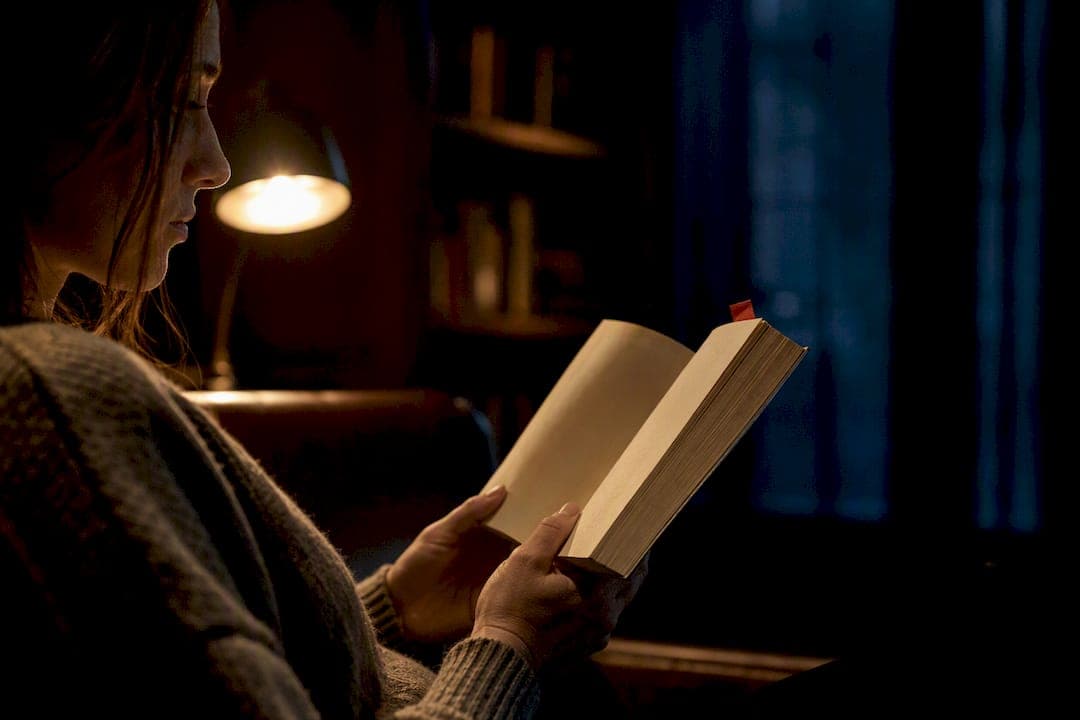
The fastest way to start reading horror is to pick a low-intensity entry route: gentle classics, a short story collection, or a horror book that overlaps with a genre you already love. Writers like Mary Shelley, Edgar Allan Poe, and Shirley Jackson built the foundation the entire genre still stands on, and modern voices like Mark Watson carry that same atmosphere-first approach into today's horror shelf. Grab one short, readable pick, and build from there.
TL;DR:
- Most beginner horror readers should start with gentle classics like Frankenstein or Poe's stories, which focus on atmosphere over shock.
- Short story collections or anthologies allow sampling different fears without long-term commitment, making them ideal for cautious newcomers.
- Genre crossovers, such as Gothic horror or cosmic themes, align with existing tastes like fantasy or science fiction, easing the entry into horror.
- Starting with small, manageable books builds pattern recognition and confidence, encouraging deeper engagement with the genre over time.
Table of Contents
- Three Easy Ways to Ease Into Horror Reading
- Matching Horror to the Genres You Already Love
- Gentle Starter Picks You Can Grab Tonight
- Practical Tips for Reading Horror if You're Nervous
- How to Pick Your Next Horror Book
- Mark Watson's Approach to Recommending Horror
- A Brief History of Horror Literature
- Key Themes and Motifs Worth Recognizing
- Authors and Books That Shaped the Genre
- Reading Horror More Closely for Deeper Meaning
- Finding Your Horror Reading Community
- Why Starting Small Actually Works
- Continue Your Horror Reading With Mark Watson's Collection
- Sources
- FAQ
Three Easy Ways to Ease Into Horror Reading
You don't need to leap straight into cosmic dread or body horror to call yourself a horror reader. Three entry routes work well for almost anyone testing the water, and each one lets you control exactly how frightened you get.
Gentle classics. These are the foundational texts, often more atmospheric and literary than gory. Frankenstein by Mary Shelley (novel, scare level: gentle) explores guilt and isolation more than jump scares. The Fall of the House of Usher by Poe (short story, gentle to mid) trades in dread rather than shock. Starting with recognized classics is one of the most effective low-intensity strategies for nervous readers according to Book Riot, largely because the pacing is slower and the prose signals its intentions early.
Short reads and anthologies. We Have Always Lived in the Castle by Shirley Jackson (short novel, gentle to mid) unsettles through character rather than violence. Short story collections let you sample a dozen different fears in one sitting and bail out whenever you like.
- Gentle classics for readers who want atmosphere over shock
- Short story collections for low-commitment sampling
- Genre crossovers for readers who want horror wrapped in a familiar shape
Genre crossovers. Horror that borrows the shape of a genre you already trust, like a mystery or a coming-of-age story, feels far less intimidating. Ray Bradbury's The October Country (short stories, gentle to mid) reads almost like fantasy with a chill running under it.
Matching Horror to the Genres You Already Love
Horror rarely exists in isolation. It borrows structure from fantasy, crime, romance, and literary fiction, which means your existing taste is a better guide than any generic "best horror" list. Curator-led recommendations that prioritize a reader's existing interests, rather than the curator's own favorites, consistently help new readers stick with the genre.
Here's how the pairing works in practice:
- Fantasy readers often click with Gothic horror, since both lean on atmosphere, folklore, and slow-building dread. Try Mary Shelley's Frankenstein for a gentle bridge.
- Crime and thriller readers tend to enjoy psychological horror, where the fear comes from an unreliable narrator or a slow-dawning realization rather than a monster. Shirley Jackson's The Haunting of Hill House fits this mold.
- Romance readers frequently take well to Gothic romance horror, where a brooding setting and a slow-burn relationship carry the same emotional beats they already enjoy.
- Science fiction readers usually gravitate toward cosmic horror or body horror, since both genres ask "what if the universe doesn't care about us at all."
- Literary fiction readers often prefer quiet, character-driven horror, where dread creeps in through prose style rather than plot twists.
Organizing horror by subgenre this way, from Gothic to psychological to creature features, helps beginners find a comfortable niche instead of wading through the entire genre at once. Within any of these pairings, you can still dial intensity up or down. A crime reader nervous about gore can start with a slow psychological novel and work toward something more visceral once their tolerance builds.
Gentle Starter Picks You Can Grab Tonight
If you want a shortlist rather than a framework, here are twelve accessible entry points. Each one is tagged by format and scare level so you know exactly what you're walking into.
- Frankenstein by Mary Shelley (novel, gentle) — tragedy and moral horror more than fear.
- The Tell-Tale Heart by Edgar Allan Poe (short story, gentle) — a five-minute read that defined psychological horror.
- We Have Always Lived in the Castle by Shirley Jackson (novel, gentle to mid) — quiet menace, brilliant narrator voice.
- The October Country by Ray Bradbury (short story collection, gentle) — nostalgic dread rather than terror.
- Coraline by Neil Gaiman (novel, gentle) — genuinely unsettling but written for younger readers, and psychological, atmospheric horror like this is a smart pick if you want to avoid graphic content entirely.
- The Haunting of Hill House by Shirley Jackson (novel, mid) — the gold standard haunted house novel.
- Something Wicked This Way Comes by Ray Bradbury (novel, gentle to mid) — carnival horror with a poetic edge.
- The Legend of Sleepy Hollow by Washington Irving (short story, gentle) — folk horror in miniature.
- A graphic novel horror anthology (format: graphic novel, gentle to mid) — visual pacing makes tension easier to control.
- Rebecca by Daphne du Maurier (novel, gentle) — Gothic suspense with almost no explicit horror content.
- A middle-grade horror anthology (format: short stories, gentle) — a smart entry point for younger or cautious readers, and Markwatsonbooks covers popular middle grade horror books sorted by scare level if that’s your lane.
- The Yellow Wallpaper by Charlotte Perkins Gilman (short story, gentle to mid) — psychological horror in under thirty pages.
Most of these sit comfortably in gentle territory, with a few nudging into mid-intensity so you can feel the genre stretch a little.
Practical Tips for Reading Horror if You're Nervous
The physical setup around your reading matters almost as much as the book itself. Experienced horror readers build what's often called a reading "nest," using good lighting, a warm drink, and a blanket, a widely practiced strategy for managing anxiety while reading unsettling material.
- Read during daylight hours if nighttime reading spikes your anxiety.
- Keep sessions short, twenty to thirty minutes, rather than marathon chapters.
- Check a spoiler-free review or the first few sample pages before committing.
- Look for stated content warnings if a book covers themes you'd rather avoid.
- Give yourself permission to put a book down and pick a different one.
Pro Tip: If a book isn't clicking after fifty pages, that's not failure. Putting a book down and returning to it later, or simply moving on, is a completely normal part of discovering what actually scares you in a good way.
How to Pick Your Next Horror Book
Once you've read a few starter picks, browsing for your next one gets easier if you run through a quick mental checklist before buying.
- Intensity: does the blurb or cover copy suggest gentle dread or graphic violence?
- Format: novel, novella, short story collection, or graphic novel, pick whatever matches your attention span that week.
- Pacing: slow-burn atmosphere or fast-moving plot, both are valid, but they feel very different.
- Voice: sample the first page. If the narrator's voice grates on you, the fear won't land either.
- Reviews: scan for repeated mentions of specific triggers rather than vague star ratings.
Watch for red flags too. Gratuitous sexualized violence used purely for shock, or horror leaning on tired, discriminatory tropes about specific groups of people, are both signs to skip a title and choose something else. There are longer walkthroughs available on how to choose a horror book that actually scares you if you want more detail on this process.
Mark Watson's Approach to Recommending Horror
An author writes across horror thrillers, children's fiction, and Creepypasta-style internet horror anthologies, and that range shapes how recommendations for new readers are approached. Rather than pushing his own favorite extreme titles first, his curation leans on three simple rules.
- Match by genre first. What do you already read? Start there.
- Short before long. A short story or novella tells you more about your tolerance than a five-hundred-page saga.
- Tiered intensity. Move from gentle to mid to visceral only once you know you enjoy the ride.
Readers can browse the full horror collection at Markwatsonbooks or start with the site's own breakdown of classic horror books every fan should read for a grounded starting point.
A Brief History of Horror Literature
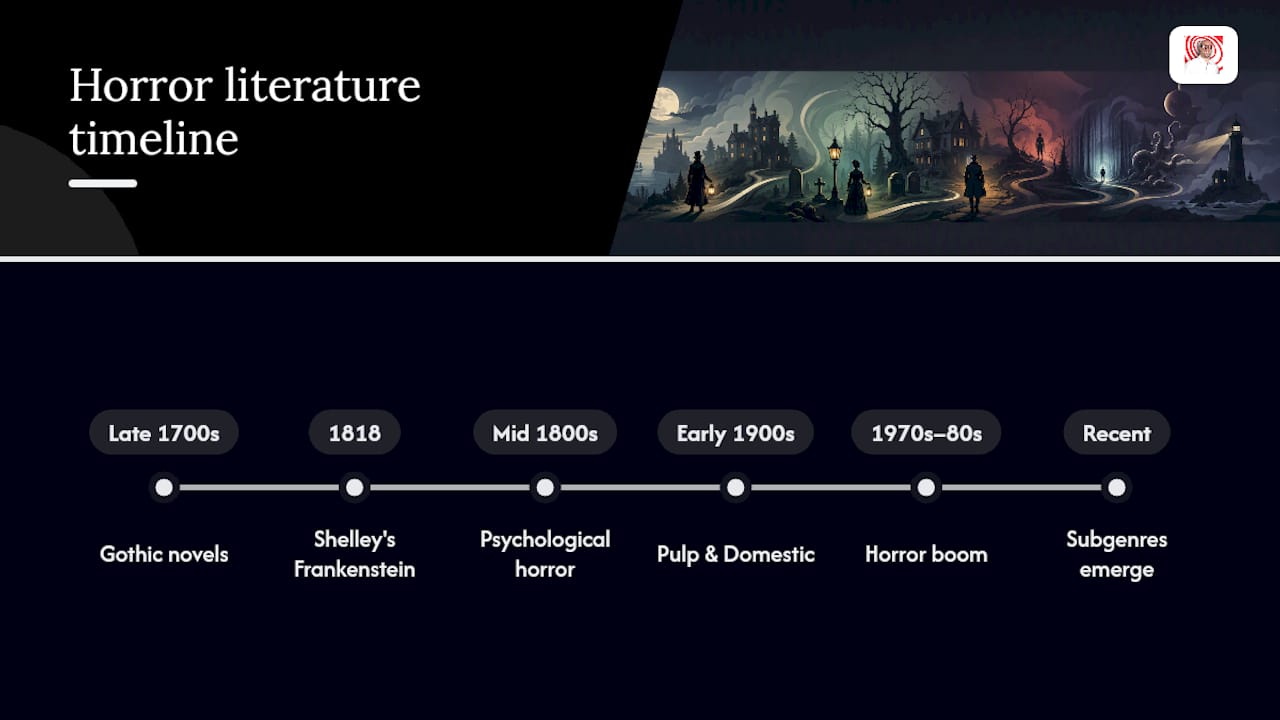
Horror as a literary genre traces back to the Gothic novels of the late eighteenth century, works soaked in crumbling castles, family curses, and forbidden knowledge. Mary Shelley's Frankenstein in 1818 pushed that Gothic tradition into something closer to modern horror, fusing scientific anxiety with genuine emotional tragedy.
Edgar Allan Poe spent the mid-1800s refining psychological horror into something tighter and more claustrophobic, often confined to a single narrator's unraveling mind. By the early twentieth century, writers were splitting the genre into distinct branches: pulp horror magazines fed readers monster stories and creature features, while writers like Shirley Jackson in the mid-1900s pulled horror back toward quiet, domestic dread.
The late twentieth century brought the horror boom of the 1970s and 1980s, mass-market paperbacks that put horror on supermarket shelves everywhere. Ray Bradbury straddled the line between horror, fantasy, and science fiction during this stretch, proving the genre didn't need rigid borders. More recently, horror has splintered further into recognized subgenres, from folk horror to splatterpunk (a subgenre defined by extreme, graphic violence used deliberately rather than gratuitously) to quiet, literary horror that barely announces itself as horror at all.
Key Themes and Motifs Worth Recognizing
Good horror rarely scares you with a single image. It works by returning to a handful of themes again and again, and once you notice them, you start reading horror more like a critic than a passive scrolling audience.
The haunted house represents more than a scary building. It's usually a stand-in for family trauma, guilt, or a past that refuses to stay buried, which is exactly what makes The Haunting of Hill House endure.
The unreliable narrator puts you inside a mind you can't fully trust, forcing you to question what's actually happening versus what the character believes is happening.
Isolation shows up constantly, whether it's physical (a remote cabin) or social (a character nobody believes). Isolation strips away rescue, which is why horror leans on it so heavily.
Body horror uses physical transformation to explore anxieties about identity, illness, or loss of control. Cosmic horror takes the opposite angle, making the fear about scale: the universe is vast, indifferent, and doesn't notice you at all. Several of these motifs are mapped in more depth in a guide to horror themes.
Authors and Books That Shaped the Genre
A handful of names built the vocabulary every horror writer still uses today, and reading them gives you the reference points to understand everything that followed.
Mary Shelley essentially created science fiction and horror's shared ancestor with Frankenstein, asking what happens when human ambition outruns human responsibility. Edgar Allan Poe compressed dread into short, obsessive narrators, and stories like The Tell-Tale Heart still teach writers how to build psychological pressure in a few thousand words.
Shirley Jackson proved horror didn't need monsters at all. The Lottery and The Haunting of Hill House find dread in ordinary communities and ordinary houses, which is arguably scarier than any creature. Ray Bradbury blurred horror into fantasy and nostalgia, showing that dread and wonder can share the same page.
The Horror Writers Association's reading list recommends reading widely, including Bram Stoker Award nominees, as a way to sample the genre's full range beyond these foundational names, from quiet literary horror through to full splatterpunk intensity.
Reading Horror More Closely for Deeper Meaning
Once you've read a handful of titles, you'll start noticing that the scariest horror is usually doing something underneath the surface story. Ask yourself what the monster or haunting actually represents. A haunted house is rarely just a haunted house, it's often grief, addiction, or an unresolved family wound wearing a scarier costume.
Pay attention to point of view. A story told by an unreliable or unstable narrator changes what "true" even means inside the text, and noticing that shift is where horror analysis actually starts. Notice pacing too. Slow-burn horror builds dread through what it withholds, while fast horror relies on immediate, visceral reaction. Neither approach is better, but recognizing which one a book is attempting tells you a lot about what kind of fear the author wants you to feel.
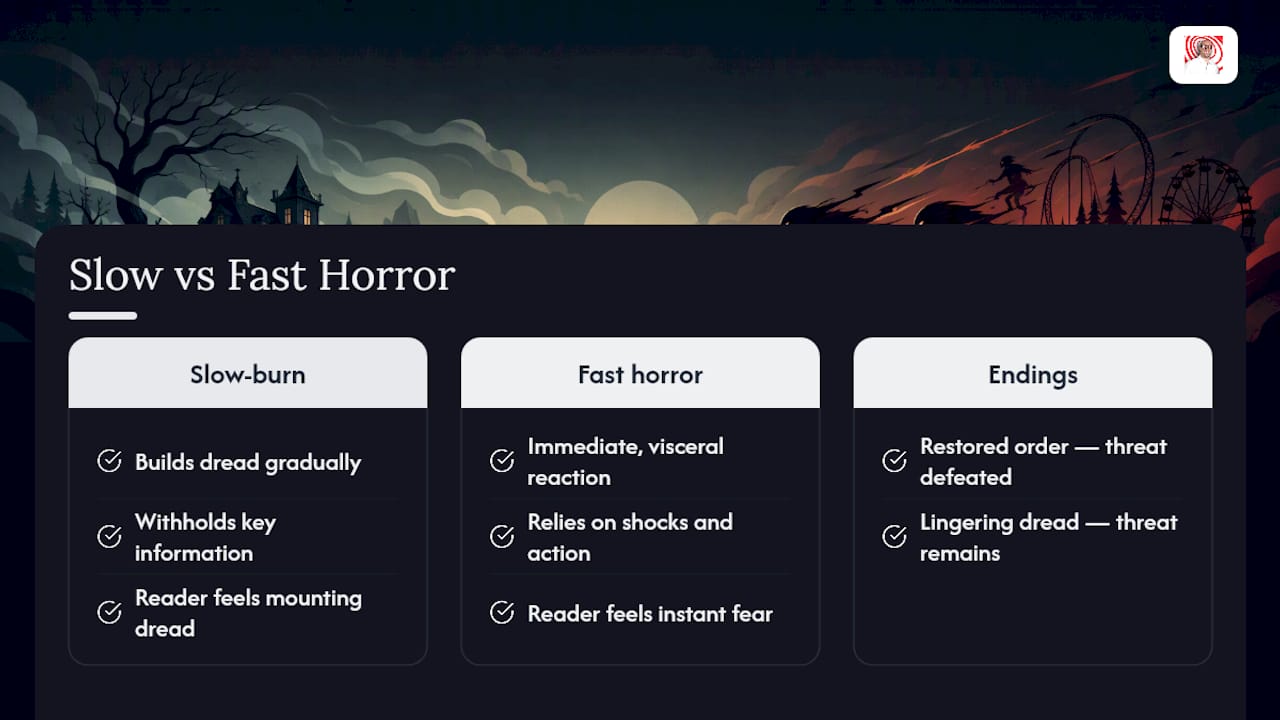
Finally, look at the ending. Horror endings tend to fall into two camps: restored order (the threat is defeated) or lingering dread (the threat remains, changed but not gone). Which ending a book chooses usually tells you what the author actually believes about the fear they've spent 300 pages building.
Finding Your Horror Reading Community
Horror readers talk to each other constantly, and joining that conversation makes the genre far less intimidating. Online forums, dedicated horror subreddits, and BookTok/Bookstagram horror corners all run active discussions on new releases and classic recommendations, often tagged by intensity so you can filter for your comfort level before you even open the book.
Treating horror as a year-round pursuit rather than a once-a-year October activity, a practice Literary Hub actively encourages, makes these communities far more useful, since the conversation and recommendations stay active all twelve months. Local library reading groups increasingly run horror-specific book clubs too, which give you a low-pressure way to talk through a book with people who won't judge you for needing a night light. Whatever platform you land on, look for readers who tag content warnings and scare levels. That's usually the sign of a community that takes new readers seriously.
Why Starting Small Actually Works
Horror rewards patience more than most genres. Readers who begin with one short, manageable book almost always end up reading more of the genre than those who dive straight into the most extreme title on a "best of" list. Part of that is emotional: horror, done well, offers a strange kind of catharsis, letting you feel real fear from the safety of your own reading nest, then close the book and feel oddly relieved to be fine.
A small start also builds pattern recognition. The more formats and intensities you sample, short stories, gentle classics, a graphic novel here and there, the faster you learn your own taste. That's not a compromise. That's just how good reading habits get built, one manageable book at a time.
— Mark
Continue Your Horror Reading With Mark Watson's Collection
If you've made it this far, you already have more than enough starter picks to get going tonight. Markwatsonbooks is one route among many into this genre, not the only one, but it's built specifically around the taste-matching, tiered-intensity approach this whole guide has walked through. Some horror thrillers and Creepypasta-style anthologies sit comfortably across the gentle-to-mid range this article recommends for new readers, which makes them natural next stops once you've found your footing.

Browse the full horror collection to see titles organized by tone and format, or check out shorter, bite-sized Creepypasta anthologies if you'd rather test the waters with something quick. Either page is a good place to pick your next read right now.
Sources
- Tips for reading horror (Book Riot)
- Horror for beginners: a guide based on your go-to genre (Goodreads)
- So, you want to read some horror? (Literary Hub)
- HWA reading list
FAQ
What Are the Best Horror Books for Beginners?
Frankenstein by Mary Shelley, The Tell-Tale Heart by Edgar Allan Poe, and We Have Always Lived in the Castle by Shirley Jackson are widely considered gentle, accessible entry points into the genre.
What Is Splatterpunk?
Splatterpunk is a horror subgenre defined by extreme, graphic violence deployed deliberately for visceral impact, sitting at the most intense end of the horror spectrum rather than its gentle or mid tiers.
What Are Some Scary Books for Beginning Readers?
For a genuinely unsettling but manageable read, try Neil Gaiman's Coraline or Shirley Jackson's The Haunting of Hill House, both of which build dread through atmosphere rather than graphic content.
What Is a Good Start for a Horror Story?
A strong horror opening usually establishes an unsettling tone within the first page, often through an unreliable narrator, an isolated setting, or a small detail that feels slightly wrong before the reader even knows why.
How Do I Know Which Horror Subgenre Fits Me?
Match the subgenre to your existing favorite genre: fantasy readers often like Gothic horror, crime readers like psychological horror, and sci-fi readers tend to enjoy cosmic or body horror.