
TL;DR:
- Young adult horror offers a wide range of styles, from slasher thrillers to atmospheric ghost stories.
- Effective titles balance believable stakes, authentic teen voices, and genre metaphors for adolescent struggles.
If you want the short answer: start with There's Someone Inside Your House by Stephanie Perkins for pure slasher thrills, Small Spaces by Katherine Arden for atmospheric ghost-story chills, Horrid by Katrina Leno for psychological depth, The Honeys by Ryan La Sala for emotionally layered supernatural horror, and Mark Watson's Creepypasta: Omnibus One for anthology-style internet horror that teens already know and love.
These five titles represent the full range of what great YA horror delivers: fast-paced slasher mechanics, slow-burn atmosphere, coming-of-age stakes, and the kind of emotional gut-punch that stays with you long after the last page.
Table of Contents
- What are the best horror books for young adults right now?
- Curated picks by mood and reading maturity
- What makes a great YA horror book worth reading?
- How do you match a horror book to a teen's age and maturity?
- How do you pick the right scary book for a specific teen?
- Where can you get these books in the United States?
- Which Mark Watson titles work best for YA horror readers?
- How do you make reading YA horror a richer experience?
- Key Takeaways
- Why anthologies matter more than most YA horror lists admit
- Mark Watson's horror collections are ready for U.S. readers
- Useful sources
What are the best horror books for young adults right now?
- There's Someone Inside Your House by Stephanie Perkins — Scariness: Intense. A New York Times bestseller and Paste Magazine "Best Horror Novels of the 2010s" pick. Classic slasher energy with real romantic tension and grounded teen characters. Perfect for fans of Scream-era horror.
- Small Spaces by Katherine Arden — Scariness: Moderate. Kirkus starred review, ALA notable, multiple state awards. Grief and ghost-story atmosphere woven together for readers 11 and up.
- Horrid by Katrina Leno — Scariness: Moderate. On YALSA's 2021 Best Fiction for Young Adults list. Gothic atmosphere, mental-health themes, and a Stephen King–style creepiness that builds slowly.
- The Honeys by Ryan La Sala — Scariness: Intense. Merciless slasher elements paired with emotional depth, making it a standout for readers who want scares and substance together.
- Creepypasta: Omnibus One by Mark Watson — Scariness: Moderate–Intense. 150 collected internet-horror stories featuring Slenderman, Jeff the Killer, and more. Anthology format means readers can dip in and out, making it ideal for reluctant readers or horror newcomers.
Curated picks by mood and reading maturity
Modern Slasher / Fast-Pace Thrills
- There's Someone Inside Your House (Perkins) — Students at Osborne High are dying one by one in increasingly gruesome ways. Fits fans who want social-media-era slasher pacing and a killer who feels uncomfortably real. Intense.
- Kill Creatures by Rory Power — YALSA-recognized, age 14+, positioned at the thriller-horror crossover. High-stakes creature horror with propulsive pacing. Intense.
Psychological / Gothic
- Horrid (Leno) — Jane moves into a crumbling family home and discovers something deeply wrong beneath its walls. Evokes Christie and King simultaneously. Moderate.
- The Dark Descent of Elizabeth Frankenstein by Kiersten White — A gothic reimagining that flips the Frankenstein narrative to center Elizabeth's perspective. Rich atmosphere and moral dread. Moderate.
Supernatural / Ghost Stories
- Small Spaces (Arden) — A haunted farm, a mysterious book, and a girl outrunning grief and something far worse. Ideal for readers 11–13 who want genuine chills without graphic content. Moderate.
- Anna Dressed in Blood by Kendare Blake — A ghost-hunter teen faces a spirit more dangerous than anything he's encountered. Series starter with strong voice and gothic energy. Intense.
Witch / Occult
- The Honeys (La Sala) — A summer camp, a secret society of girls, and a horror that cuts to the bone. Blends gothic fiction's atmospheric influence with sharp social commentary. Intense.
Anthology / Internet Horror
- Creepypasta: Omnibus One and Home-made Creepypasta: The First One Hundred Stories (Watson) — Collected internet-horror tales that mirror the way teens already consume scary content online. Accessible entry points for new horror readers. Moderate.
What makes a great YA horror book worth reading?
The best scary books for teens combine believable stakes, a distinctive voice, and emotional consequences that outlast the final scare. Jump-scares fade. What lingers is the moment a character's fear mirrors something real in the reader's own life.
Three elements separate memorable YA horror from forgettable genre filler. First, coming-of-age stakes: the horror must threaten something the teen protagonist genuinely values, whether that's identity, belonging, or survival. Small Spaces uses grief as the emotional engine; the ghost story only works because Lily's loss is so vividly rendered. Second, a credible teen voice: readers will abandon a book the moment the protagonist sounds like an adult's idea of a teenager. Perkins nails this in There's Someone Inside Your House with dialogue that feels pulled from an actual high school hallway. Third, structural pacing: the best YA horror uses genre elements as metaphors for adolescent struggles, so the slasher or the ghost is never just a monster but a stand-in for grief, rage, or social pressure.
"The author crafts spooky set pieces and an intriguing cast of supporting characters... serving up an explosive finale. A deliberately paced thriller with a frightful twist." — on Horrid by Katrina Leno
Horror also builds what researchers call "bravery muscles" — fictional exposure to fear helps readers practice managing anxiety in a safe space. That's not a side benefit. It's the whole point.
Pro Tip: When evaluating a YA horror title for emotional depth, read the first chapter and ask: does the protagonist want something beyond survival? If the answer is yes, the book has stakes worth caring about.
Understanding horror motifs and how they function narratively also helps readers and librarians spot which books use genre conventions purposefully versus decoratively.
How do you match a horror book to a teen's age and maturity?
Match intensity to reading maturity, not strictly to age. A confident 12-year-old reader may handle Small Spaces easily, while a sensitive 15-year-old might prefer to start there too.
| Maturity Band | Typical Content | Recommended Intensity |
|---|---|---|
| 11–13 (middle-grade transition) | Mild supernatural, ghost stories, light creature horror, no graphic violence | Mild to Moderate |
| 14–15 (early YA) | Psychological tension, moderate violence, social horror, some dark themes | Moderate |
| — | Graphic slasher, sexual content, severe psychological horror, trauma themes | Moderate to Intense |
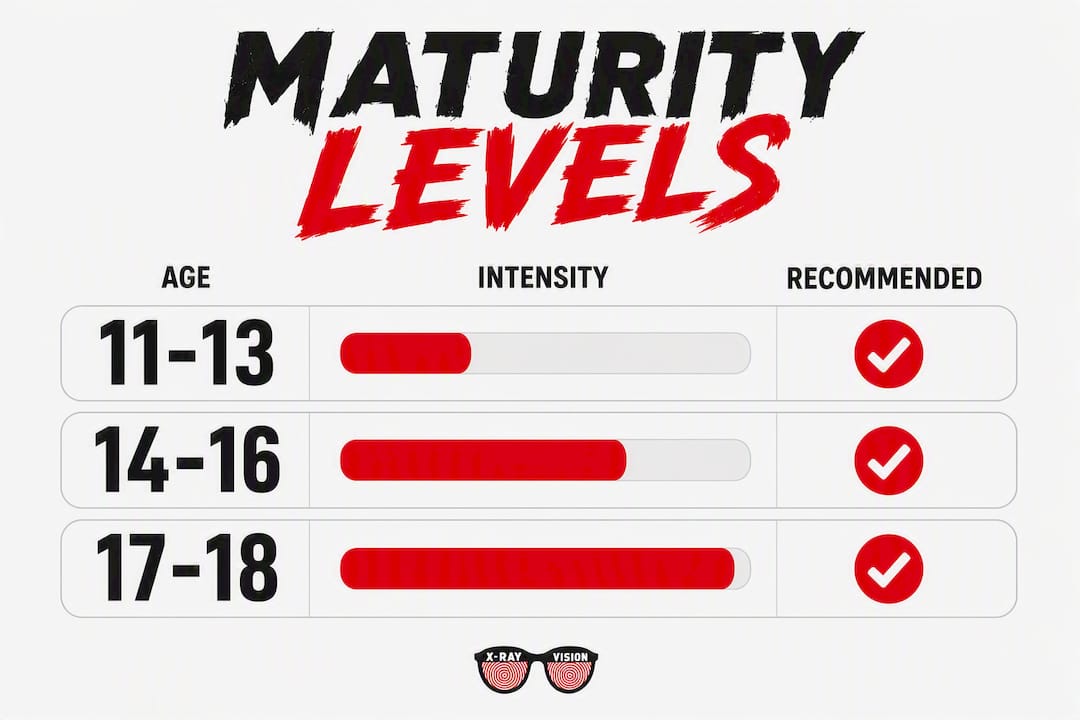
Children typically shift from gentle supernatural tales to more psychologically grounded thrills around age 11–12, which is why that transition band deserves its own category rather than being lumped into either middle-grade or full YA.
Trigger checklist for parents and educators to scan before gifting:
- Self-harm or suicidality (check publisher content notes or Common Sense Media)
- Graphic violence or gore beyond typical slasher conventions
- Sexual assault or coercion
- Severe bullying or social cruelty depicted approvingly
- Intense psychological horror that may affect sleep or anxiety
Pro Tip: Librarian Jim McLeod notes that reading challenges increase engagement with horror among 11–12 year olds, especially when students choose their own titles. Use a classroom reading challenge to gauge group tolerance before assigning a shared text.
How do you pick the right scary book for a specific teen?
Use this five-question checklist before choosing from any list of recommended horror reads for teens.
- What's their reading level? If they read above grade level, they can handle more complex psychological horror. If they're a reluctant reader, choose anthology formats or fast-paced slashers with short chapters.
- How much gore can they handle? Low tolerance points toward Small Spaces or Horrid. High tolerance opens up There's Someone Inside Your House or Kill Creatures.
- Supernatural or realistic horror? Ghosts and witches (Small Spaces, The Honeys) versus a very human killer (There's Someone Inside Your House). Both are valid; the preference is personal.
- Series or standalone? Series readers get more time with characters they love. Standalone books deliver a complete story with no waiting. Anna Dressed in Blood starts a series; Horrid is standalone.
- Is this for a book club or solo reading? Club reads benefit from books with strong thematic content (identity, grief, belonging). Solo reads can go darker and faster.
Example scenario: A 15-year-old wants jump-scare slasher energy and is open to a series. Go straight to There's Someone Inside Your House for the standalone thrill, then move to Anna Dressed in Blood for the series commitment.
Where can you get these books in the United States?
Ebooks and audiobooks suit commuting readers or teens who prefer screens; paperbacks and library copies work best for younger teens, school lists, and collectors who want something physical on a shelf.
Format quick guide:
- Ebook: Instant delivery, lower price point, searchable. Best for impatient readers who want to start tonight.
- Audiobook: Excellent for reluctant readers; a skilled narrator can make a horror story genuinely terrifying. Available via Audible or library apps like Libby.
- Paperback: Collectible, shareable, and easier on the eyes for long sessions. Typical paperback YA pricing runs $10–$18 at major U.S. retailers.
- Hardcover: Higher price ($20–$28 typical) but worth it for gift buyers and collectors.
For Mark Watson's anthologies, buying direct from Markwatsonbooks gives collectors access to the full range of titles and formats in one place.
Which Mark Watson titles work best for YA horror readers?
Mark Watson's anthology work sits squarely in the internet-horror tradition that teens already consume on Reddit, YouTube, and TikTok. These aren't imitations of online horror — they're the real thing, collected and curated.
- Creepypasta: Omnibus One — 150 stories featuring Slenderman, Jeff the Killer, Eyeless Jack, BEN Drowned, and more. The sheer volume makes this the definitive starting point. Readers who've spent time on horror forums will recognize the legends; newcomers get a crash course in internet-horror mythology. Scariness: Moderate–Intense. Anthology format; no single narrative commitment required.
- Creepypasta: Volume 3 — Fifty additional stories for readers who finished Omnibus One and want more. Best for repeat buyers and collectors building a complete Watson shelf. Scariness: Moderate–Intense.
- Home-made Creepypasta: The First One Hundred Stories — One hundred original tales in the creepypasta tradition. Ideal for readers who want fresh material beyond the classic legends, and for anyone curious about how the genre evolves when writers work within its conventions deliberately.
Watson's anthologies connect directly to the YA horror tradition of using genre conventions to explore real anxieties. Internet horror, specifically, taps into the fears teens already carry about online spaces, anonymity, and the unknown.
Pro Tip: Gift the Omnibus One to a teen who's new to horror anthologies. Its variety means they'll find at least a dozen stories that genuinely unsettle them, which is the fastest way to turn a casual reader into a committed horror fan.
How do you make reading YA horror a richer experience?
Use short discussion prompts that link the scares to real teen concerns. The horror is the entry point; the conversation is where the real value lives.
Discussion prompts for book clubs and classrooms:
- Which moment scared you most, and what does that fear say about something real in your life?
- How does the protagonist's biggest personal struggle connect to the supernatural threat?
- If the monster or killer represents a social pressure, what would that pressure be?
- Which character would you trust in a crisis, and why?
- How does the setting create dread before anything frightening actually happens?
- What would you change about the ending, and what does your answer reveal about what you value?
Creative activities: Try a soundscape exercise — have readers describe what the scariest scene sounds like in five words, then compare. Or rewrite a pivotal scene with one different choice by the protagonist and discuss how the story changes.
"Giving students autonomy to choose their own horror titles leads them toward scarier books and generates significantly more engagement than assigned reading." — School librarian Jim McLeod, via Guts of Horror
Pro Tip: Horror builds emotional resilience when paired with reflection. Even five minutes of post-reading discussion transforms a scary story into a genuine learning experience.
Key Takeaways
The best YA horror balances genuine scares with emotional depth, coming-of-age stakes, and a credible teen voice that makes the fear feel personal and real.
| Point | Details |
|---|---|
| Top picks to start | There's Someone Inside Your House, Small Spaces, Horrid, The Honeys, and Creepypasta: Omnibus One cover the full range of YA horror subgenres. |
| Match intensity to maturity | Use the 11–13 and 14–15 maturity bands as a guide; reading confidence matters more than age alone. |
| Use the five-question checklist | Reading level, gore tolerance, supernatural vs. realistic, series vs. standalone, and discussion intent narrow any list to the right title fast. |
| Buy or borrow smart | Ebooks for instant access, audiobooks for reluctant readers, paperbacks for collectors; most titles available at U.S. libraries via Libby or interlibrary loan. |
| Markwatsonbooks anthologies | Creepypasta: Omnibus One, Volume 3, and Home-made Creepypasta are the go-to picks for fans of internet horror and anthology-format scares. |
Why anthologies matter more than most YA horror lists admit
Most YA horror roundups focus exclusively on novels, which creates a blind spot. Novels demand a sustained commitment — 300 pages with a single protagonist, a single threat, a single resolution. That's a significant ask for a reluctant reader or a teen who's still figuring out whether they actually like horror.
Anthologies solve that problem directly. A reader who bounces off the first story in Creepypasta: Omnibus One can try the next one immediately, without abandoning the book. The format mirrors how teens already consume horror online: in short, intense bursts. That's not a lesser reading experience. It's a different one, and for many readers it's the gateway that leads them to novels eventually.
The other underrated quality of anthology horror is tonal variety. A single novel commits to one atmosphere. A well-curated anthology moves from dread to shock to psychological unease within the same volume, which means it serves a wider range of moods and maturity levels simultaneously. That's why Watson's collections belong on any serious list of horror books worth reading alongside the acclaimed novels.
Mark Watson's horror collections are ready for U.S. readers
If you're looking for the kind of internet horror that actually delivers, Markwatsonbooks has three anthologies that belong on every horror fan's shelf.

The Creepypasta collection includes Omnibus One (150 stories), Volume 3 (50 more), and Home-made Creepypasta: The First One Hundred Stories — all available in paperback and ebook formats for U.S. buyers. The Omnibus makes a standout gift for collectors; the individual volumes are perfect for readers who want to build their library title by title. Browse the full horror collection at Markwatsonbooks to find the right starting point, or visit the complete books catalog to see everything Watson has published across horror, children's, and anthology formats.
Useful sources
The recommendations and guidance in this article draw from the following review pages, librarian resources, and author pages:
- There's Someone Inside Your House — Stephanie Perkins (official site)
- Horrid by Katrina Leno — Hachette Book Group
- Small Spaces — Wild Rumpus Books
- The Honeys — Scholastic catalog entry
- Kill Creatures by Rory Power — Penguin Random House
- Terrifying YA Horror and Slasher Books — Penguin Random House
- The Kids Are Alright: Horror Books for 11–12 Year Olds, Part 2 — Guts of Horror
- Best Middle-Grade Horror Books — The Line-Up
- Surefire YA Scares: 18 of the Best Teen Horror Books — Brightly
- Mark Watson Books — official author site