
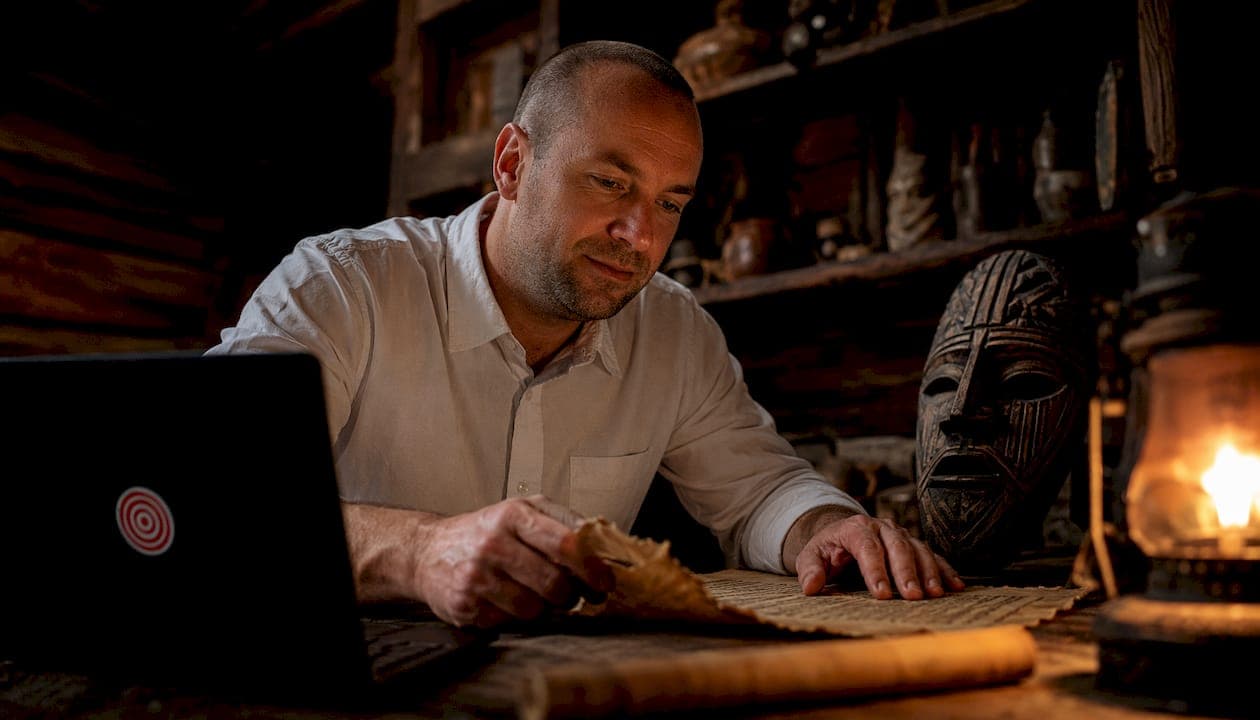
Myths are the skeleton of horror. Strip away the jump scares, the gore, and the atmosphere, and what remains is almost always a story borrowed from something ancient. The role of myths in horror goes far deeper than aesthetic flavor. Myths supply horror with its rules, its moral weight, and its sense of inevitability. They carry cultural memory across generations, embedding fear in shared taboos rather than random violence. Think of the Wendigo from Algonquian tradition, a spirit that punishes greed and isolation. Think of Medusa, the Gorgon whose gaze turns flesh to stone, embodying the horror of the monstrous feminine. The Independent Horror Society puts it plainly: horror is the oldest form of dramatic storytelling, and myths are its original engine.
Key functions myths serve in horror:
- Narrative rules: Myths create firm, often nonsensical rules ("don't look back," "don't speak its name") that give horror a borrowed legitimacy.
- Moral framework: The cause-and-effect logic of myth ("if you do X, then Y will happen") transforms horror into a warning system.
- Cultural memory: Myths carry the texture of communal belief, making fear feel inherited rather than invented.
- Archetypal monsters: Figures like the Wendigo, Medusa, and the Hmong dab tsog arrive pre-loaded with cultural dread.
- Psychological depth: Myth-based threats feel personal because they attack what a community already holds sacred.
How myths in horror trace back to the oldest human fears
Horror's mythological roots run all the way to the campfire. Before philosophy, before art, before written language, early civilizations used cautionary stories to teach survival. Fire burns. Water drowns. Wolves eat. The Independent Horror Society describes this as the "If you do X then Y will happen" formula, the beating heart of mythic storytelling that still pulses inside modern horror.
From Aesop's fables through the Brothers Grimm to contemporary film, that formula has never left. The original fairy tales were far grimmer than their sanitized Victorian versions. In early tellings of "Little Red Riding Hood," the girl is simply devoured. No rescue. No moral ambiguity. Just consequence.
Greek mythology gave horror some of its most durable archetypes. Medusa and the Gorgon myth exemplify fears of death, hubris, and the monstrous feminine that contemporary authors still draw on. The Gorgons, particularly Medusa, symbolize the dangers of the "other," vengeance, and transformation, themes that run through horror literature and film to this day.
| Myth Origin | Core Horror Theme | Modern Adaptation Example |
|---|---|---|
| Greek (Medusa/Gorgon) | Monstrous feminine, hubris, transformation | Countless literary and cinematic retellings |
| Algonquian (Wendigo) | Greed, isolation, violation of natural order | Antlers |
| Hmong (dab tsog) | Sleep paralysis, displacement, ancestral disconnection | A Nightmare on Elm Street |
| Dinka (apeth) | Guilt, trauma, disrupted domestic harmony | His House |
| Javanese mythology | Spiritual punishment, sacred ritual, cultural identity | KKN di Desa Penari |
Major cultural myths adapted into horror and why they resonate:
- Wendigo: Punishes greed and unchecked consumption, making it a natural vehicle for stories about addiction and environmental exploitation.
- Medusa/Gorgon: Channels fears of female power, transformation, and the grotesque, giving horror a figure that is simultaneously victim and monster.
- Dab tsog: Embodies sleep paralysis and the terror of dying without explanation, rooted in real community trauma.
- Apeth: Feeds on guilt, making it a perfect mirror for refugee displacement and survivor's shame.
- Phi krasue (Thai): Requires cultural insider knowledge to fully decode, demonstrating how myth-driven horror rewards "knowing spectators."
Why contemporary horror uses myths to reflect what society fears most
Modern horror does not just borrow myths for atmosphere. It weaponizes them. Horror films adapt cultural myths like the Hmong dab tsog, the Wendigo, and the Dinka apeth as allegories for crises including trauma, xenophobia, and greed. The monster is never just a monster. It is a community's worst fear given teeth.
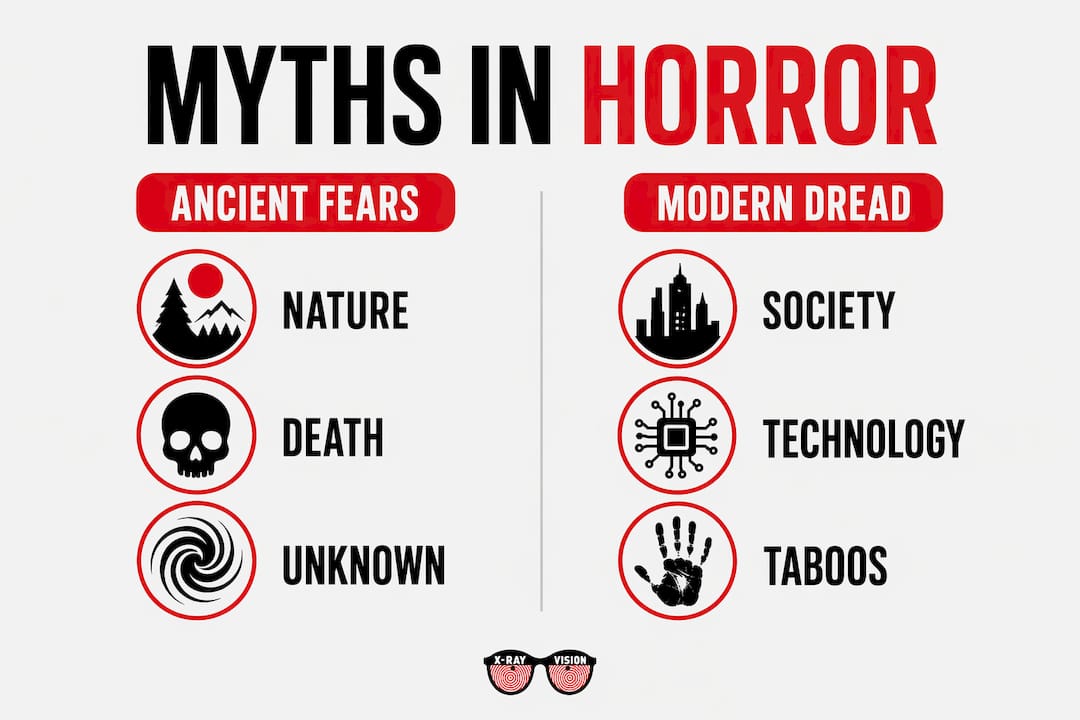
The Wendigo in Antlers is the clearest recent example. In Algonquian tradition, the Wendigo is a moral warning against unchecked consumption and the violation of social order. Director Scott Cooper translated that directly into a story about poverty, addiction, and environmental exploitation in rural America. The myth did not need updating. It just needed a new address.
Javanese myths in Indonesian horror films work differently but serve the same dual purpose: creating fear while preserving cultural values and identity for younger generations. Films like KKN di Desa Penari use sacred rituals and spiritual entities not merely as props but as living symbols of Javanese belief, even as they risk commodifying those same traditions.
Contemporary anxieties reflected through mythological horror themes:
- Trauma and displacement: The apeth in His House mirrors refugee guilt and cultural rupture.
- Xenophobia and otherness: Myths tied to immigrant communities expose how host societies treat the unfamiliar.
- Greed and ecological collapse: The Wendigo speaks directly to overconsumption and the destruction of natural systems.
- Identity crisis: The Pishacha in It Lives Inside embodies the psychological tension of growing up between two cultures.
- Surveillance and social distrust: Village legends remixed as viral videos or chain letters update ancient taboos for digital anxiety.
Mythology acts as a moral warning system, mirroring social memories, so myth-based horror conveys communal crises intimately rather than abstractly. The threat does not feel random. It feels earned, which is precisely what makes it linger long after the credits roll.
Pro Tip: When analyzing a myth-based horror story, ask what social taboo the monster punishes. The answer almost always reveals the community's deepest anxiety, not just a plot device.
Mark Watson on why myths give horror its real power
Mark Watson, horror author and curator of myth-inspired anthologies at Markwatsonbooks, has spent years studying what separates horror that haunts you from horror that simply startles you. His conclusion is consistent: myths do the heavy lifting.
Watson emphasizes that respectful cultural research is not optional when adapting myths from living traditions. Accuracy in small details, the language around a ritual, the geography, the seasonal timing, is what separates a story that resonates from one that reduces a culture to a prop. His anthologies, including his Creepypasta collections, reflect this philosophy: even internet-born horror myths follow the same structural logic as ancient ones, complete with rules, taboos, and consequences.
For readers who want to trace these mythological influences in horror through literary history, Watson's blog offers a detailed map from folklore to fiction. His famous horror characters analysis also shows how the genre's most iconic figures, from Candyman to Pennywise, carry mythic DNA whether their creators intended it or not.
Why myths will always be horror's most powerful tool
Myths endure in horror because they do something shock tactics cannot: they make the audience complicit. You already know the rule. You already know what happens when someone breaks it. The dread arrives before the monster does.
Filmmakers and novelists use folklore not only for aesthetic appeal but to actively reflect and shape cultural identity, turning past fears into living, terrifying presences. That is why region-specific horror performs globally. A myth tied to a particular coastline or mountain range carries sensory credibility that a generic "anywhere" monster never can.
Across literature, film, and games, the core function of mythological storytelling stays constant even as the format shifts. A village curse becomes a chain letter. A forbidden forest becomes a locked server. The rules change shape but never disappear. And as long as communities pass down warnings and sacred boundaries, myth-based horror will keep finding new doors to enter.
Key reasons myths remain horror's most lasting force:
- They supply narrative rules that create inevitability, not just surprise.
- They preserve cultural identity across generations, especially in non-Western horror traditions.
- They embed fear in social taboos, making the threat feel personal and communally earned.
- They give monsters moral weight, transforming them from obstacles into warnings.
- They travel across media without losing their power, from oral tradition to streaming horror.
Key Takeaways
Myths are not decoration in horror. They are the structural foundation that gives the genre its psychological staying power and cultural resonance.
| Point | Details |
|---|---|
| Myths supply horror's rules | Cause-and-effect moral logic ("break a taboo, face a consequence") creates dread that feels inevitable. |
| Cultural identity is preserved | Javanese, Dinka, and Algonquian myths in horror films introduce traditional values to new generations. |
| Societal anxieties drive adaptation | Myths like the Wendigo and apeth are reshaped to address greed, trauma, and displacement. |
| Knowing spectators deepen the fear | Audiences with cultural insider knowledge experience layered meaning that casual viewers miss. |
| Myths evolve across every medium | From oral tradition to literature, film, and games, mythic horror retains its core warning structure. |