
TL;DR:
- Friendship in horror enhances fear by creating emotional bonds that strengthen characters' survival instincts. Post-terrifying conversations and physical touch solidify these bonds, making friendship a key structural and psychological element. Shared fears and broken loyalties deepen emotional stakes, transforming relationships into powerful tools for storytelling.
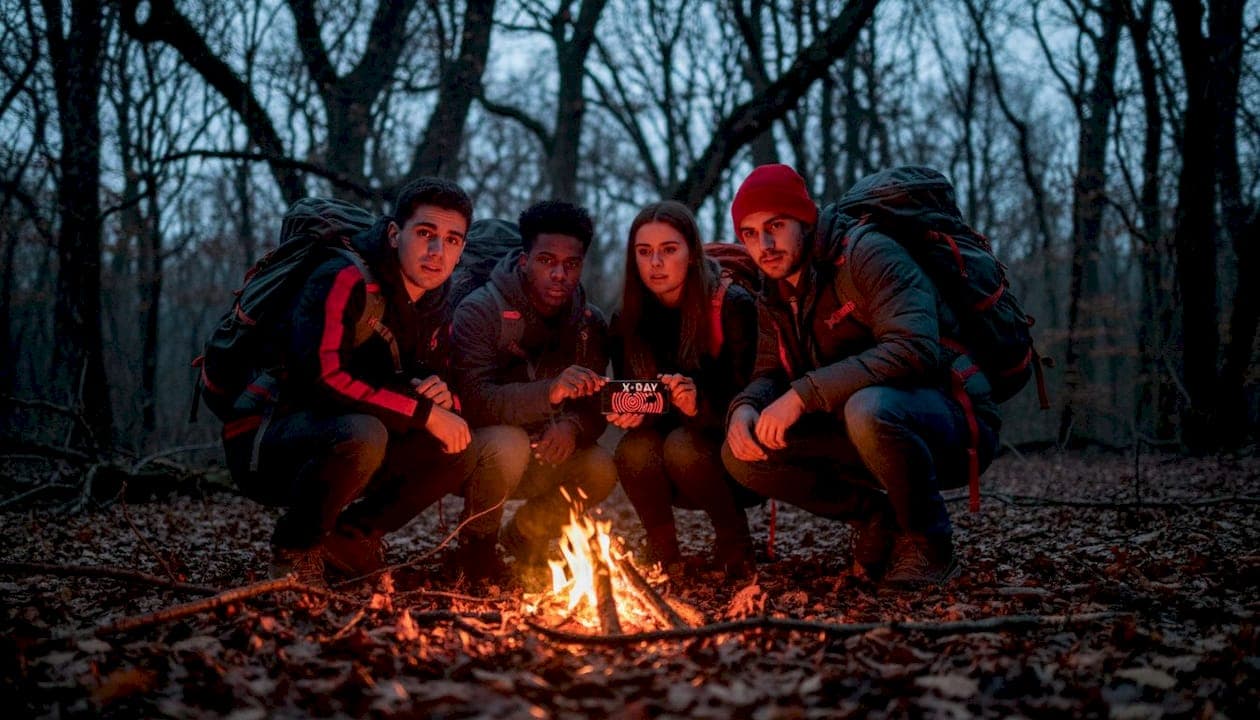
Friendship in scary tales is defined as the emotional and social force that simultaneously amplifies fear and provides the psychological safety characters need to survive it. Horror literature has long understood what psychology is now confirming: shared terror binds people together in ways ordinary experience cannot. University of Florida psychologist Jane K. Wiley surveyed 986 haunted house visitors and found that higher fear and physical contact predicted greater closeness between participants. Guillermo del Toro's Scary Stories to Tell in the Dark dramatizes exactly this dynamic, framing friendship as the collective survival bond that holds terrified teens together against supernatural threats. The role of friendship in scary tales is not decorative. It is structural, psychological, and deeply human.
How does shared fear during scary events strengthen friendships?
Shared fear is one of the fastest social accelerants known to psychology. When people experience fright together, their nervous systems synchronize, their defenses drop, and the need for connection spikes. Wiley's research confirms that fear and touching predicted greater closeness among haunted house visitors, but the mechanism is more nuanced than simply being scared side by side.
The critical insight from Wiley's qualitative interviews is that bonding after scary experiences occurs chiefly during post-event communication, not during the scare itself. Talking, laughing, and replaying what just happened is what transforms a fleeting adrenaline spike into a lasting social bond. Without that post-crisis conversation, the closeness remains superficial. This finding has direct implications for how friendship in horror stories should be written and read.
Horror writers who understand this dynamic build in the quiet scenes after the monster retreats. Those campfire conversations, those whispered confessions in the dark, those moments of shared nervous laughter are not filler. They are the architecture of friendship. The importance of camaraderie in tales comes alive precisely in those post-terror exchanges, not just in the screaming.
Here is what the research reveals about the specific mechanisms at work:
- Physical contact during fear (grabbing an arm, clutching a hand) signals mutual vulnerability and trust, creating an immediate sense of alliance.
- Post-fear communication (talking through what happened, laughing at shared panic) consolidates the bond into memory and identity.
- Mutual endurance of a frightening experience creates a shared narrative that groups can reference and retell, deepening group identity over time.
- Emotional disclosure triggered by fear lowers social defenses faster than most other social situations, accelerating intimacy.
Pro Tip: If you are reading a horror novel and want to track friendship themes in horror, pay attention to what characters say to each other after the threat passes. Those scenes reveal who the real friends are.
What role does physical touch and proximity play in fear regulation?
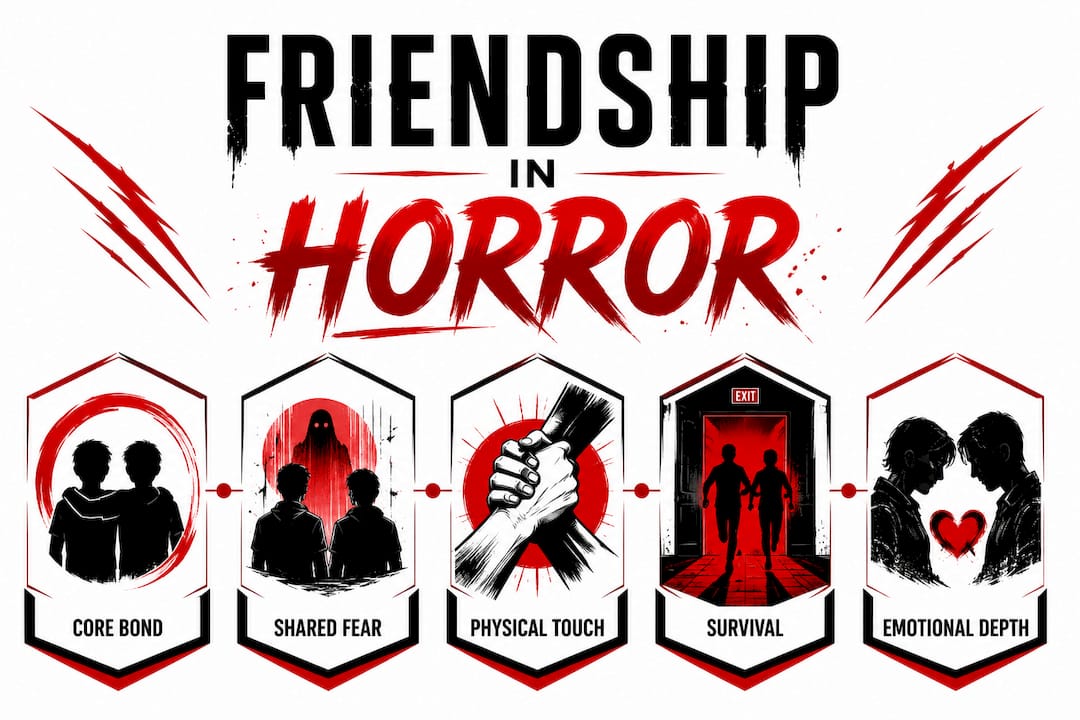
Physical closeness between friends during a scary experience is not just comfort. It is a measurable neurological event. The University of Twente's 2026 "Hold Tight" study recorded physiological responses during horror films and found that social touch reduces perceived stress during fear experiences, whether the touch comes from a familiar companion or a stranger. The implication is striking: the body responds to human contact as a signal that the threat is survivable.

A 2007 fMRI study pushed this further. Married women holding their spouse's hand showed reduced brain threat activation compared to holding a stranger's hand. The quality of the relationship directly modulated how much protection the touch provided. Trusted friendship, in other words, rewires the brain's threat response in real time. This is why the hand-holding scene in a horror story carries so much emotional weight. It is not sentimentality. It is biology.
| Touch condition | Effect on fear response |
|---|---|
| Trusted partner's hand | Strongest reduction in neural threat activation |
| Stranger's hand | Moderate reduction in perceived stress |
| No physical contact | Full threat response remains active |
| Robotic touch (Hold Tight study) | Some stress buffering, less than human contact |
For horror writers, this science points to a specific craft opportunity. Depicting a character reaching for a friend's hand in a moment of terror is not a soft gesture. It is a survival act with neurological grounding. The embodied closeness in fiction increases narrative tension and comfort simultaneously, which is the exact emotional contradiction that makes horror so addictive to read.
Pro Tip: When writing or analyzing scary stories about friendship, notice how authors use physical gestures between characters. A hand on a shoulder, a steadying grip, a shared blanket: these details signal relationship depth without a single word of dialogue.
How is friendship framed as a survival mechanism in horror stories?
Horror fiction has always understood that friendship as collective survival is one of its most reliable structural engines. Del Toro's Scary Stories to Tell in the Dark is a textbook example. The film binds its anthology structure together through a group of teens whose loyalty to each other becomes the only weapon they have against escalating supernatural horror. The friendship is not background texture. It is the plot's load-bearing wall.
The role of alliances in scary tales operates on a specific narrative logic. Friendship functions as a "safety signal channel," pacing fear escalation by giving characters (and readers) periodic relief from dread. Every moment of warmth between friends makes the next scare hit harder by contrast. The emotional stakes of the horror rise in direct proportion to how much the audience cares about the friendships being threatened.
But the genre also knows how to weaponize friendship against itself. Consider these narrative patterns:
- Loyalty fractures under pressure: When a character betrays a friend to survive, the horror doubles. The monster outside becomes less frightening than the monster the friend has become.
- Conditional friendship: Alliances formed purely out of fear rather than genuine affection collapse at the worst possible moment, often serving as the story's darkest turning point.
- The "friendship-as-weapon" trope: A 2026 craft analysis identifies broken loyalty spiking distress in horror narratives as one of the genre's most unsettling moves. When trust fractures, the fear becomes personal and inescapable.
- Ensemble dynamics and sacrifice: The group that enters the haunted house together rarely exits intact. Who survives, and who gets left behind, tells the reader everything about which friendships were real.
For readers of horror and fantasy, recognizing these patterns transforms the experience of reading. You stop asking only "will they survive the monster?" and start asking "will they survive each other?" That second question is almost always the more terrifying one. Exploring how friendship affects fear in this layered way is what separates memorable horror from forgettable scares.
How does friendship deepen emotional resonance in horror for readers?
Friendship themes in horror do something that pure terror cannot achieve alone: they make fear socially shareable. Zefyr Lisowski's Uncanny Valley Girls captures this precisely. A 2026 essay on the collection describes horror as a social crucible where fear is endured "beside another," transforming a private experience of dread into a shared act of intimacy. That framing redefines what horror fiction is actually doing when it places friends at the center of its stories.
Here is how friendship amplifies emotional resonance across the reading experience:
- Identification through relationship: Readers connect to characters through their bonds with others, not just their individual traits. A protagonist who loves their friends is a protagonist worth fearing for.
- Empathy as a fear multiplier: When you care about a character's friendships, every threat to those relationships registers as a personal loss. The horror becomes emotionally specific rather than abstractly frightening.
- Contrast and relief: Moments of warmth between friends create emotional breathing room that makes the horror sequences more impactful. The light makes the dark darker.
- Vulnerability as connection: Horror strips characters down to their most exposed selves. Friendships formed or tested in that state carry a rawness that readers recognize as authentic. This is why horror affects readers so deeply at an emotional level.
- Social sharing of the reading experience: Scary stories about friendship give readers something to discuss, debate, and feel together. The book becomes a shared object of emotion, extending the social bonding effect beyond the page.
The isolation that defines classic horror (the lone figure in the dark house, the solitary survivor) becomes exponentially more devastating when it is contrasted against the warmth of friendship that preceded it. Horror writers who understand this use friendship not as a comfort but as a setup for the most precise emotional devastation the genre can deliver.
Key takeaways
Friendship in scary tales functions as both an emotional amplifier and a psychological buffer, making fear more intense and more survivable at the same time.
| Point | Details |
|---|---|
| Shared fear builds bonds | Post-crisis conversations, not the scare itself, consolidate friendship into lasting closeness. |
| Physical touch rewires threat response | Trusted partners' touch measurably reduces brain threat activation during frightening experiences. |
| Friendship paces fear escalation | Warmth between characters creates contrast that makes horror sequences hit harder and feel more personal. |
| Fractured friendship amplifies horror | Broken loyalty and conditional alliances generate a second layer of fear more unsettling than any monster. |
| Emotional resonance requires relational stakes | Readers fear for characters they love, making friendship the engine of genuine emotional investment in horror. |
Why friendship in horror is the genre's most underrated tool
I have written across horror, Creepypasta, and thriller territory for years, and the pattern I keep returning to is this: the scariest moments in any story are almost never about the monster. They are about what the monster forces the characters to do to each other.
The research from Wiley and the University of Twente confirms what I have felt instinctively as a writer. Fear is a social experience. When you put two friends in a terrifying situation, you are not just doubling the potential victims. You are creating a relational pressure cooker where every decision carries moral weight. Does she go back for him? Does he tell the truth about what he saw? Does the group hold together or splinter?
What I find most writers get wrong is skipping the aftermath. The scare happens, the characters survive, and the story moves on. But the bonding, the real emotional payoff, lives in those quiet scenes afterward. The nervous laughter. The admission of fear. The moment someone says "I thought I lost you." Those scenes are not soft. They are the hardest and most honest writing in the genre.
My advice to readers: when you finish a horror story, ask yourself which friendship changed the most. That answer will tell you more about the story's true subject than any analysis of its monsters ever could. And if you want to see how scary characters can haunt readers precisely because of their relationships, look for the stories where friendship is the thing that breaks.
— Mark
Explore friendship and fear in horror at Markwatsonbooks
If the psychology and craft of friendship in horror has you hungry for stories that actually deliver on that promise, Markwatsonbooks has exactly what you need.

Mark Watson's Creepypasta collections are packed with tales where alliances form under pressure, loyalties fracture in the dark, and the line between friend and threat gets terrifyingly blurry. From the Creepypasta Omnibus One with 150 collected stories to the full horror fiction range, there is a story waiting to make you grip your friend's hand a little tighter. These are not just scary stories. They are stories about what fear does to the people we trust most. EXPLORE THE COLLECTIONS NOW.
FAQ
What is the role of friendship in scary tales?
Friendship in scary tales serves as an emotional anchor that intensifies fear by raising relational stakes while also providing characters with psychological relief through companionship and physical closeness. Research confirms that shared fear and touch predict greater closeness between people who experience frightening events together.
Does sharing a scary experience actually make friends closer?
Yes, but the bonding depends heavily on what happens after the scare. Wiley's research found that post-event talking and laughing are the critical ingredients that turn shared fear into lasting closeness, not the frightening experience alone.
Why does friendship make horror stories more frightening?
Friendship raises the emotional stakes of every threat. When readers care about the bonds between characters, any danger to those relationships registers as a personal loss, making the horror feel specific and inescapable rather than abstract.
How does physical touch between friends affect fear in horror narratives?
Physical touch between trusted friends measurably reduces the brain's threat response. A 2007 fMRI study showed that holding a spouse's hand reduced neural threat activation more than holding a stranger's hand, which explains why hand-holding scenes in horror carry such emotional power.
Can friendship itself become a source of horror?
Absolutely. The "friendship-as-weapon" trope shows that broken loyalty spikes distress in horror narratives more sharply than external threats. When a trusted friend becomes a source of danger or betrayal, the horror becomes personal and inescapable.