
Candle Cove is revealed to have been created and weaponized by Eddie Painter, the vanished twin brother of protagonist Mike Painter, who channels childhood trauma into a reality bending psychic force. The season finale resolves the threat when Mike confronts Eddie inside a shared mindscape and Marla makes a final, costly choice that shuts the door between worlds, though Mike himself is left stranded in the gap between them. The sections below walk through how the show gets there and why it matters.
TL;DR:
- Eddie Painter's childhood trauma, rooted in a finger injury, directly caused the creation of Candle Cove and the Tooth Child as psychological manifestations.
- The finale confirms Eddie murdered children in 1988 and became a reality-warping entity attempting to use his twin brother Mike to re-enter the world.
- Mike's unreliable narration is crucial, as the show's early episodes plant inconsistencies that only make sense once his repressed memories surface.
- The final confrontation closes the portal with Marla’s sacrifice, but leaves Mike trapped between realities, presenting the ending as a costly containment rather than full victory.
- The story's origins as a creepypasta about shared fragmented memories shaped its adaptation into atmospheric horror that relies on ambiguity and psychological depth.
Table of Contents
- Episode-by-episode plot summary of Channel Zero: Candle Cove
- Ending explained: who created Candle Cove and what the finale accomplishes
- How Eddie created Candle Cove and the Tooth Child's function
- Characters and motifs: principal roles and recurring images
- Themes and interpretations: trauma, nostalgia, and twin dynamics
- Origins and adaptation: from Kris Straub's creepypasta to Channel Zero
- Why the other episodes matter beyond the finale
- Cultural impact and the legacy of Candle Cove
- A closer look at Candle Cove's craft
- If Candle Cove left you wanting more unsettling fiction
- FAQ
- Sources
Episode-by-episode plot summary of Channel Zero: Candle Cove
The season opens in Iron Hill, a town still scarred by the 1988 disappearance of several children, including Eddie Painter, the twin brother of child psychologist Mike Painter. Mike returns home convinced that a decades-old children's show called Candle Cove, something he remembers watching as a kid, holds the key to what happened.
- Welcome to Lazy Eye introduces Mike's return and the first flickers of Candle Cove reappearing on local screens.
- The middle episodes trace new children reporting the show, strange behavior spreading through Iron Hill, and Mike piecing together fragmented memories of 1988.
- A pivotal reveal scene shows that Mike, not an outside killer, has buried memories of his own role in that year's violence, destabilizing him as a narrator.
- The season builds toward the discovery that Eddie never died in 1988, he became something else entirely, tied to the television signal itself.
- The finale, Welcome Home, brings the mystery to its climax inside Eddie's mental construct of Candle Cove, as detailed in Syfy's official episode recap.
That structure, memory withheld until the final stretch, is what makes Mike an unreliable guide rather than a simple investigator.
Ending explained: who created Candle Cove and what the finale accomplishes
Eddie Painter is both the murderer behind the 1988 deaths and the creator of Candle Cove as a psychic phenomenon. According to Inverse's breakdown of the finale, Eddie murdered children in Iron Hill that year and persisted afterward as a reality warping entity trying to use his twin brother Mike as a way back into the world.
The finale resolves this across a few key beats:
- Mike enters a mental confrontation inside the Candle Cove construct, facing Eddie directly rather than a monster stand-in.
- Marla makes the decisive sacrifice that severs Eddie's hold and allows the missing children to be released or returned.
- The portal closes for Iron Hill, but Mike is left caught in the borderland between the two realities.
The finale is framed less as a victory than as a costly containment, a reading supported by Syfy's own recap of the episode, which treats the rescue of the children as the resolution rather than Eddie's full defeat. Ambiguous readings exist, some viewers see the ending as an eternal struggle, others as a closed loop, but the text most strongly supports the version where the town is saved and Mike pays the price.
How Eddie created Candle Cove and the Tooth Child's function
Eddie's power is rooted in a specific trauma, an incident involving a finger injury that the show ties to the moment his latent abilities first surface. That trauma becomes the seed of Candle Cove itself, a broadcast that only certain vulnerable children can see, drawing them toward him.
- The show functions as bait, appearing to kids already isolated or emotionally fragile, much like young Mike and Eddie were.
- The Tooth Child acts as both a lure and a physical manifestation of Eddie's hunger, pulling victims toward the world behind the screen.
- Its design leans into body horror imagery rather than a conventional creature, reinforcing that this is psychology made visible.
Showrunner Nick Antosca described the intent behind these choices directly. As he put it in comments about the finale:
That framing, discussed in Nick Antosca's finale interview, is why the Tooth Child reads as metaphor first and monster second.
Characters and motifs: principal roles and recurring images
Each major character carries a distinct function in the story's psychological architecture.
- Mike Painter serves as the unreliable narrator, a child psychologist whose own repressed memories distort what the audience is shown.
- Eddie Painter is the latent psychic twin whose childhood trauma curdles into Candle Cove and the Tooth Child.
- Marla and Mrs. Booth function as maternal figures whose choices, protective and sacrificial, anchor the finale's emotional stakes.
- Booth represents raw, human menace, a violent presence that mirrors the supernatural threat in a grounded register.
- Lily embodies hostage innocence, the stakes made literal through a child in immediate danger.
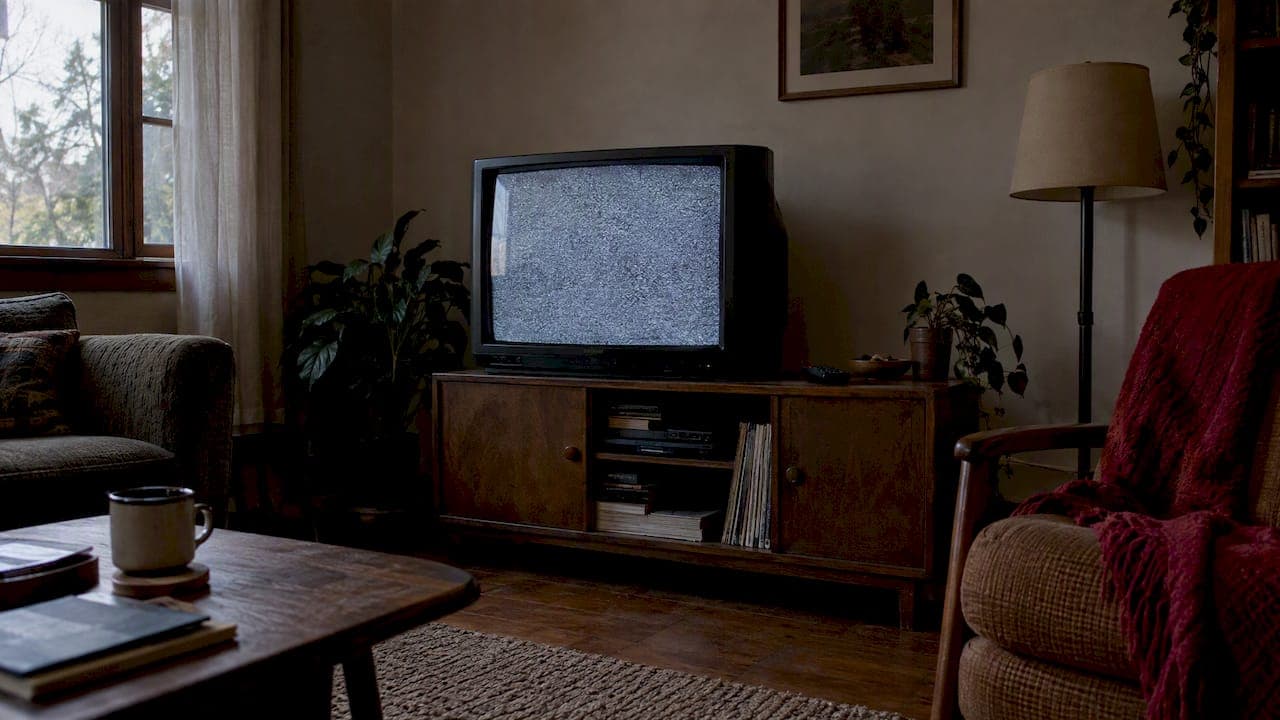
Recurring imagery reinforces these roles: puppet figures suggest control and manipulation, teeth and the Tooth Child point to consumption and loss of innocence, and television static marks the boundary between the real world and Eddie's constructed one.
Pro Tip: Watch for static and screen glitches whenever a character is near a memory they are suppressing, the show uses it as a visual cue for buried trauma.
Themes and interpretations: trauma, nostalgia, and twin dynamics
Candle Cove works because it treats nostalgia as something that can curdle rather than comfort. The show Mike half remembers from childhood becomes the exact mechanism of harm, suggesting that the past we long for is never as safe as memory makes it feel.
- The trauma reading frames Eddie's power as something unlocked by suffering, not an external evil that simply arrives.
- The twin dynamic echoes a sacrificial structure similar to Charles Dickens's A Tale of Two Cities, where one twin's fate absorbs the cost so the other, and the town, can continue.
- Critics covering the finale, including Nerdist's season recap, describe the ending as bittersweet rather than triumphant, which keeps the trauma theme intact instead of resolving it neatly.
That refusal to fully comfort the viewer is precisely why the show reads as psychological horror rather than a monster-of-the-week story.
Origins and adaptation: from Kris Straub's creepypasta to Channel Zero
Candle Cove began in 2009 as a short piece of fiction by Kris Straub, presented as a forum thread in which adults swap fragmented memories of a disturbing children's show none of them can fully verify existed. That format, strangers reconstructing a shared half-memory, is the entire horror engine of the original piece.
- The original story relies on suggestion and gaps, never showing Candle Cove directly, only describing it through secondhand recollection.
- Nick Antosca's adaptation for Syfy expanded that conceit into a full narrative, adding Mike, Eddie, Marla, and an explicit antagonist where the creepypasta had only implication.
- The television version layers in explicit psychological framing, turning an ambiguous memory into a traceable origin story.
The original thread spread widely across forums after publication, feeding fan videos and discussion threads that helped carry it toward a television deal.
Why the other episodes matter beyond the finale
The finale gets most of the attention, but the middle stretch of the season does the real work of destabilizing Mike as a narrator, and that groundwork is what makes the ending land. Early episodes plant small inconsistencies in Mike's account of 1988, inconsistencies that only make sense once his buried memories surface later.
The episodes following the pilot gradually widen the scope beyond Mike's personal mystery, showing other Iron Hill families affected by new sightings of Candle Cove. That choice matters: it establishes that Eddie's reach extends past his own family, which raises the stakes of the finale's containment rather than resolution. Without those middle episodes, Marla's sacrifice would read as closing a personal wound rather than a town-wide threat.
The season also uses its shorter episode order, six installments total, to keep exposition tight. Rather than padding with side plots, each episode advances either the town's present-day investigation or a fragment of the 1988 backstory, often both at once. That pacing choice is part of why the show holds together as a complete psychological case study rather than a sprawling mythology, and it is worth revisiting the earlier episodes once the finale's reveals are known, since small details, a glance, a hesitation from Mike, read very differently in hindsight.

Cultural impact and the legacy of Candle Cove
Candle Cove's influence traces back to its format as much as its content. Kris Straub's original creepypasta helped popularize the found-memory style of internet horror, where a story is told as if assembled from other people's recollections rather than a single authored narrative, a technique that KnowYourMeme's history of the piece credits with inspiring broad fan engagement and multiple adaptations.
The Syfy adaptation extended that reach into television, bringing analog horror aesthetics, grainy footage, static, a show that feels wrong in ways hard to name, into a mainstream anthology format. That aesthetic has continued to echo through other internet horror and analog horror projects that lean on the same unease around degraded media and half-remembered broadcasts.
Critics have pointed to the series as a case study in adapting internet folklore without losing what made the source material unsettling, keeping ambiguity intact even while adding plot and characters. That balance, explicit enough to satisfy a television audience, restrained enough to preserve dread, is part of why Candle Cove still gets discussed as one of the stronger entries in the anthology horror space years after its release.

A closer look at Candle Cove's craft
Candle Cove earns its reputation through restraint: it tells us almost nothing about its monster and everything about the people haunted by it. That choice, trusting implication over explanation, is the same instinct we look for in strong horror writing generally, and it's one we explore further in our breakdown of analog horror techniques and in our guide to building horror atmosphere.
— Mark
If Candle Cove left you wanting more unsettling fiction
If stories like Candle Cove, ones built on fragmented memory, strange broadcasts, and horror that lives in what's left unsaid, are the kind of fiction that stays with you, our Creepypasta collections cover similar ground.

- We offer collections of internet horror style stories in the tradition of works like Candle Cove.
- Each collection is built for readers who want short, unsettling fiction rather than a single long narrative arc.
- For a deeper look at the writing process behind horror fiction, this author interview covers the craft side of building tension on the page.
Browse the full Creepypasta series to find your next read.
FAQ
Who is the killer in Candle Cove?
Eddie Painter, Mike's twin brother, is revealed as the person behind the 1988 murders in Iron Hill, later persisting as a psychic entity tied to the Candle Cove broadcast. This identity is confirmed in Inverse's finale explainer.
Can you explain the ending of Candle Cove?
The finale resolves around Mike confronting Eddie inside a shared mental construct of Candle Cove while Marla makes a sacrifice that severs Eddie's connection to the real world. The children trapped by Eddie are freed, but Mike himself remains caught between the two realities, a bittersweet rather than clean resolution according to Syfy's episode recap.
Can you explain the story of Candle Cove in Creepypasta?
The original 2009 creepypasta by Kris Straub is written as a forum thread where adults compare fuzzy memories of a disturbing children's show, never confirming whether it truly existed. That ambiguous, memory-based structure, documented on Wikipedia, is the foundation that the Syfy series later expanded into a full narrative.
How did Eddie create Candle Cove and the Tooth Child?
Eddie's latent psychic ability is unlocked by childhood trauma, which becomes the source of the Candle Cove broadcast and the Tooth Child that lures vulnerable kids toward him. Showrunner Nick Antosca described this as intentionally human-rooted horror rather than a conventional monster story, as explained in his finale interview.
Sources
- Episode Recap: Welcome Home | Channel Zero: Candle Cove Blog
- The Channel Zero finale reveals the Candle Cove endgame
- Showrunner Nick Antosca discusses what's to come in the finale of Channel Zero: Candle Cove
- Candle Cove — Wikipedia