
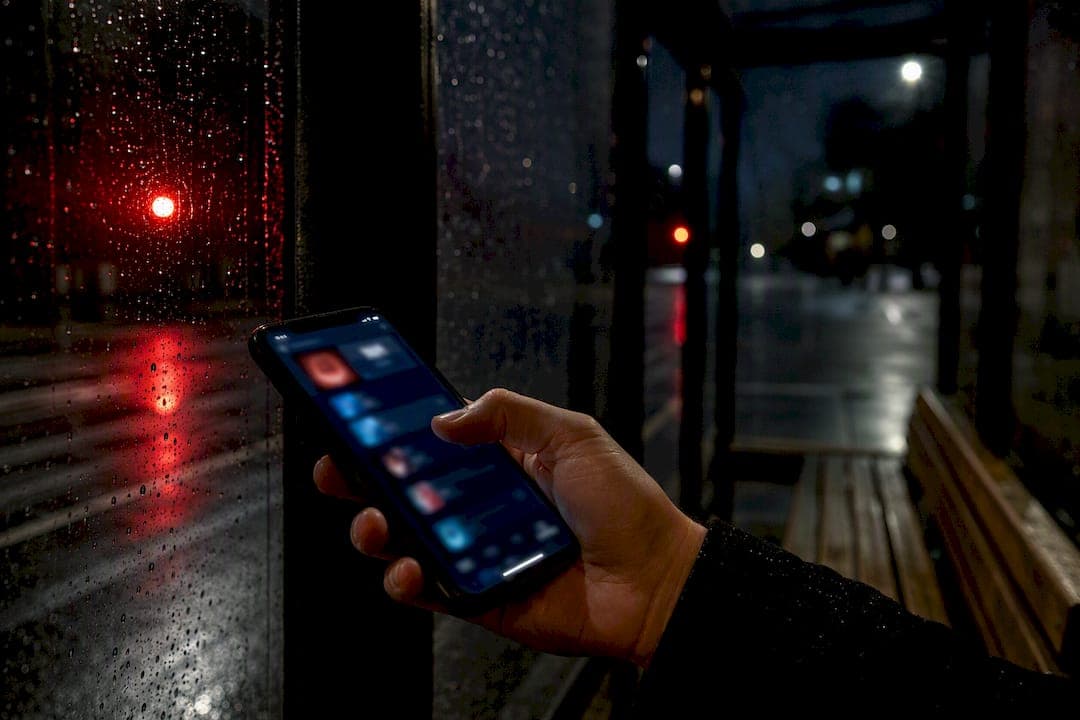
Social media horror is the subgenre that weaponizes the apps in your pocket, turning livestreams, group chats, and video calls into engines of dread. It works because the fear is not abstract. It's your notification tab, your webcam light, your friend request from someone who shouldn't exist. If you want one film that proves the formula, start with Host. If you want something colder and more clinical, start with Unfriended. Either way, you're in for a genuinely unsettling ride.
TL;DR:
- Most social media horror films explore the fear of losing control over digital identities, with themes like account hijacking, doppelgängers, and digital surveillance.
- The genre often relies on constrained formats such as screenlife or found footage, heightening claustrophobia and viewer immersion.
- Critical favorites like Host and Cam succeed because they tap into authentic digital anxieties rather than just showcasing gimmicky visuals.
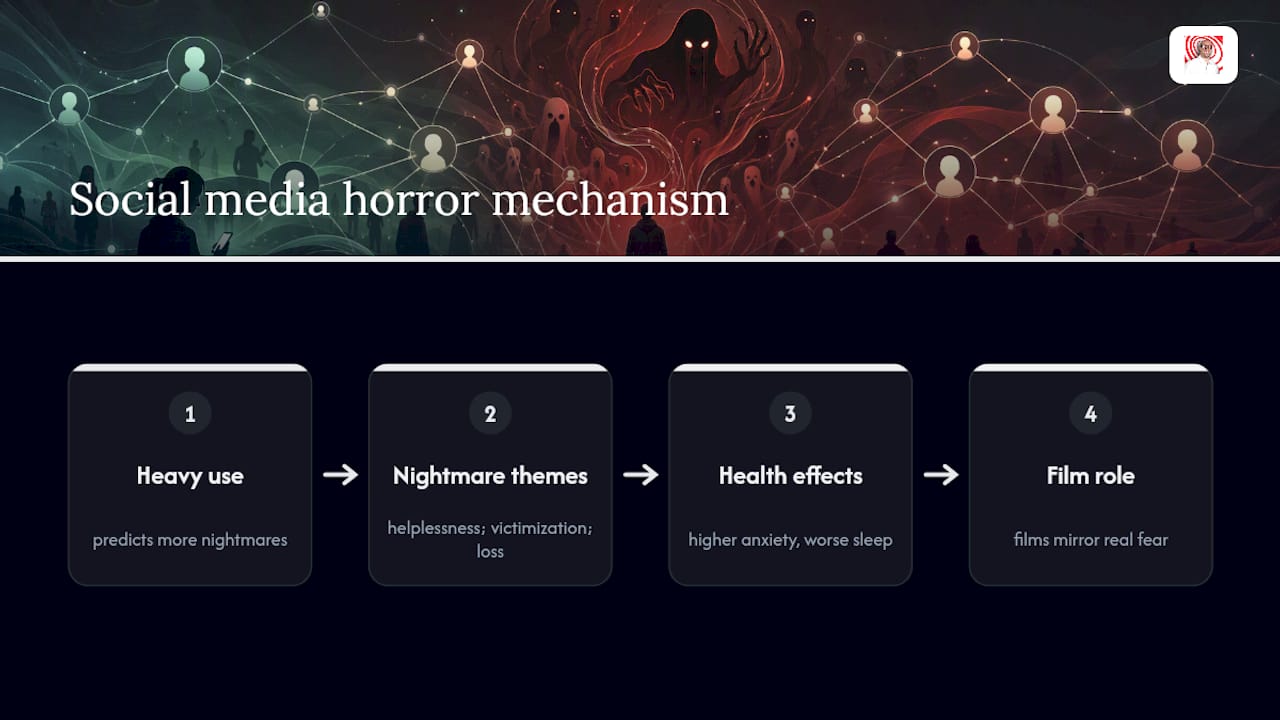
- Heavy online use and scrolling before bed can intensify nightmares related to themes of helplessness and exposure depicted in these films.
- Key storytelling devices include silence, dead air, and breaking rules about technology, which increase dread and lend authenticity to the horror.
Table of Contents
- What Is Social Media Horror, and Where Do You Start?
- Key Tropes and Devices Social Media Horror Relies On
- Why Social Media Horror Actually Gets Under Your Skin
- Your Watchlist by Mood
- Mark's Take on Why These Stories Stick
- The Verdict on Where This Genre Is Headed
- Browse a variety of Creepypasta and Horror Collections
- Sources
- FAQ
What Is Social Media Horror, and Where Do You Start?
Social media horror uses screens, apps, and digital platforms as the actual mechanism of terror rather than as set dressing. The phone doesn't just witness the scares; it delivers them. Critics and genre writers generally sort the subgenre into three lanes: mainstream screenlife thrillers built around a gimmick (a Zoom call, a search history), cautionary tales about stalking and cyberbullying, and scrappy, low-budget streaming horror that leans on gore and internet culture for cheap, effective scares, according to CineAction's genre analysis. That third category matters more than critics give it credit for. It's where the genre's weirdest, most inventive ideas usually surface first.
The list below mixes all three lanes deliberately. Some entries are studio-backed hits you've probably heard of. Others are the kind of scrappy indie gems that only surface if you go looking. A curated roundup of internet horror starter picks covers a few of the same titles if you want a shorter companion list before diving into the full spread here.
Starter picks (the best entry points if you're new to the subgenre):
- Host (2020) — Six friends hire a medium for a Zoom séance during lockdown, and something answers that shouldn't. Shot for almost nothing in real quarantine conditions, it's the film most credited with proving screenlife horror could be genuinely scary rather than gimmicky.
- Unfriended (2014) — A group video chat becomes a killing floor when a dead classmate's ghost starts exposing everyone's secrets. This is the film that put the "entire movie happens on one screen" format on the map.
- Searching (2018) — A father digs through his missing daughter's laptop, browser history, and social accounts to find her. Less a horror film than a nerve-shredding thriller, but it belongs on any list because it proved a screenlife film could win serious critical respect.
Genre-definers (the titles that shaped what social media horror looks like now):
- Cam (2018) — A cam girl finds her account hijacked by a doppelgänger who is somehow performing better than she is. It's identity theft rendered as existential horror, and it's one of the sharpest metaphors the genre has produced for losing control of your own image online.
- Pulse (2001, Kairo) — A Japanese ghost story where the dead cross over through internet connections and haunted webpages. It predates smartphones entirely, but it's the ancestor text for every film on this list that treats connectivity itself as contagion.
- KIMI (2022) — A smart-speaker analyst overhears a crime buried in audio data and can't get anyone to believe her. Soderbergh's entry swaps social platforms for surveillance tech, but the dread of digital evidence nobody will act on is pure genre DNA.
- Ingrid Goes West (2017) — Not horror in the jump-scare sense, but a portrait of parasocial obsession so unnerving it earns its place. Ingrid's stalking of an Instagram influencer is the genre's clearest bridge between comedy, tragedy, and menace.
Hidden gems (the ones worth hunting down):
- Deadstream (2022) — A disgraced YouTuber livestreams a night in a haunted house to win back his audience, and the demon he wakes up is more competent at content creation than he is. Critics single it out for turning livestream culture into both satire and legitimately effective scares, a point the Rotten Tomatoes critical consensus backs up directly.
- We're All Going to the World's Fair (2021) — A lonely teenager joins an online horror role-play game called the World's Fair Challenge, and the film never confirms whether anything supernatural is happening at all. It's the most purely psychological entry here, built entirely on isolation and internet ritual.
- Not Okay (2022) — A media assistant fakes a trip to Paris and later fabricates trauma for internet clout, and the fallout curdles into something closer to horror than satire. It's less about a monster than about what performing authenticity online does to a person.
- Spree (2020) — A rideshare driver livestreams his own murder spree for followers, chasing virality with a body count. It's blunt and satirical, but the film's thesis, that algorithmic attention will reward almost anything, lands harder than it should.
- Drop (2025) — A woman on a first date starts receiving anonymous, threatening texts mid-dinner, turning a dating app meetup into a real-time hostage situation. It's proof the genre keeps finding new apps to weaponize.
- Hard Candy (2005) — Predates the smartphone era but set the template every online-predator thriller since has borrowed from: a chat-room relationship curdling into a confined, brutal confrontation.
- Dear David — Originally a viral Twitter thread from 2017 about a haunting tied to a demonic child ghost, later adapted into a feature film exploring the ethical storytelling around such true crime narratives. It's the clearest case study in this list of internet folklore graduating into cinema, a pipeline the thread's own director discussed in detail.
A quick gut check on where these land critically: IndieWire's ranked survey of internet and social media horror puts Searching and Host near the top of the pack, which tracks with how consistently both titles get cited as the genre's most polished mainstream entries.
Key Tropes and Devices Social Media Horror Relies On
The subgenre repeats a small set of tricks, and once you know them, you'll spot them in every new entry.
- Screenlife and found-footage constraints. Confining the entire frame to a laptop screen, phone camera, or video call forces claustrophobia on the viewer. You see only what the character sees, which means you're just as blind to what's coming.
- Identity theft and the digital doppelgänger. A hacked account, a cloned profile, or a stolen livestream persona turns "someone is impersonating you" into a genuinely existential threat, as Cam demonstrates.
- Livestream escalation and the audience-as-mob. When a character is performing for real-time viewers, the chat itself becomes a pressure cooker, egging on decisions no one would make alone.
- Algorithmic horror and digital folklore. Viral threads and copypasta legends, like the Dear David saga, mutate through shares and comments until they calcify into shared cultural myth, then get adapted straight into film.
- Constraint as aesthetic. Low budgets force filmmakers to lean on sound design and screen glow instead of practical effects, and that limitation often produces more dread than a bigger budget would. Host is the textbook case, shot during real lockdown restrictions with barely any crew, a choice that critics point to as central to why the scares land as hard as they do.
Pro Tip: Watch for how these films use silence and dead air. A frozen loading icon or a stalled video call held two seconds too long usually signals more dread than any jump scare that follows it.
For a broader look at how these mechanics fit into horror's current moment, modern horror trends reshaping the genre traces a few adjacent shifts worth knowing.
Why Social Media Horror Actually Gets Under Your Skin
The fear these films generate isn't manufactured out of nothing. A 2024 study using the Social Media-Related Nightmare Scale surveyed 595 adults and found that heavier social media use predicts more frequent nightmares centered on helplessness, victimization, and loss of control, and those nightmares track with higher anxiety and worse sleep, according to the BMC Psychology study. That's not a coincidence with the plots described above. It's the same anxiety loop, just fictionalized.
The nightmare content the study documents, being locked out of your own account, watching a relationship implode inside an app, feeling exposed to strangers, maps almost beat for beat onto the plots of Cam, Unfriended, and Not Okay. Films didn't invent this fear. They found it already sitting in people's heads and gave it a screenplay.
Researchers behind the Flinders University analysis of the study argue that as dependence on digital platforms deepens, social media content is likely to keep surfacing in dreams, and that more mindful media habits may ease how often those nightmares occur.
Cultural critics have made a related point for years: social media horror functions as a kind of everyday black mirror, taking a vague, systemic unease about digital life and shrinking it down until it fits inside a single notification, according to CineAction's analysis of the genre. The fear stops being abstract the moment it's just your phone buzzing.
If you already spend heavy hours online, these films may sit with you longer than the average horror flick. Watching one right before bed, after a long scrolling session, is probably the worst possible timing if you're prone to intense dreams.
Your Watchlist by Mood
Not every night calls for the same flavor of dread. Here's how to pick based on what you're actually in the mood for.
Psychological (slow-burn dread, minimal gore): We're All Going to the World's Fair for pure isolation and ambiguity, Not Okay for the discomfort of watching someone perform a lie, and Ingrid Goes West if you want obsession played almost as tragedy.
Supernatural (something is actually haunting the wires): Pulse for the genre's foundational ghost-in-the-network premise, Host for a séance gone catastrophically wrong, and Dear David for a haunting born straight out of a viral thread.
Satire with teeth (horror that's also laughing at us): Spree for the bluntest takedown of clout-chasing violence, Deadstream for a livestreamer who deserves exactly what he gets, and Drop for weaponizing a dating app mid-date.
Found footage and livestream (immersive, screen-bound, claustrophobic): Unfriended for the format's breakout hit, Searching for the most technically ambitious execution, and Cam for identity horror shot almost entirely through a webcam's eye.
A quick warning worth flagging: several of these (Spree, Not Okay, Drop) deal directly with real-world violence and manipulation tactics, so they're not the easiest watch if you're sensitive to that content. Save the heavier titles for daylight viewing if nightmares are already a concern.
Mark's Take on Why These Stories Stick
What makes social media horror durable, rather than a passing gimmick, is that writers treat the technology as a character with its own logic and cruelty, not just a prop. The best entries make an app feel like it has intentions. That's a storytelling discipline, not an accident, and it's the same instinct behind internet folklore that mutates into shared myth the way the Dear David thread did before it became a film.

The craft tip worth stealing: give your technology rules, then break exactly one of them at the worst possible moment. That's where the dread lives. Readers curious about this mechanic in prose form might enjoy digging into Creepypasta storytelling techniques, where the same principle drives some of the internet's most enduring horror legends.
The Verdict on Where This Genre Is Headed
The research backs something the genre already understood instinctively: fear about losing control online isn't a niche neurosis, it's common enough to show up in a 595-person clinical sample. That tells me social media horror isn't a trend riding out the smartphone era. It's mapping a real, measurable anxiety, and it will keep finding new apps to colonize as long as we keep handing our identities over to platforms we don't fully control.
Where I think most casual coverage of this subgenre gets it wrong is treating the gimmick, the screenlife format, the found-footage conceit, as the whole point. The format is just delivery. The films that last (Host, Cam, Pulse) succeed because they understand why losing access to your digital self is terrifying, not just how to shoot a laptop screen convincingly. If you're picking your next watch, prioritize that emotional logic over the novelty of the format. A film that nails the psychology will scare you long after the gimmick has gone stale.
— Mark
Browse a variety of Creepypasta and Horror Collections
If the digital folklore angle got under your skin, that's the exact territory Mark Watson writes in. His Creepypasta collection takes the same instinct fueling Dear David and turns it into prose: internet legends, viral threads, and anonymous horror that feels like it was pulled straight from a forum thread at 2 a.m. For readers who want the format widened out, his broader horror catalog covers thrillers built on the same slow-burn dread that makes films like Host and Cam work. Browse the full book collection to see everything currently available, and sign up for the mailing list for free story offers and curated reading recommendations sent straight to your inbox. Start with the Creepypasta titles if viral internet horror is what pulled you into this list in the first place.
Sources
- Social media-related nightmare — BMC Psychology (2024)
- The 15 Scariest Movies About the Internet, from ‘Not Okay’ to ‘Searching’ — IndieWire
- Deadstream | Rotten Tomatoes
FAQ
What are some good social media horror movies?
Host, Unfriended, Cam, Searching, and Deadstream are widely cited as the genre's strongest entries, each using a different platform (video calls, chat rooms, webcam streaming, livestreaming) as its core threat.
Is "Don't Look Under the Bed" banned anywhere?
No credible source confirms an official ban; if you've heard this claim, it likely stems from viral internet rumor rather than any documented restriction, and it isn't part of the social media horror subgenre covered here.
Is Friend Request on Netflix?
Streaming availability shifts often and varies by region, so check Netflix's current library directly rather than relying on older listings.
What is a social horror?
"Social horror" is sometimes used interchangeably with social media horror, describing stories where digital platforms, apps, or online identity function as the source of dread rather than a supernatural monster or masked killer.