
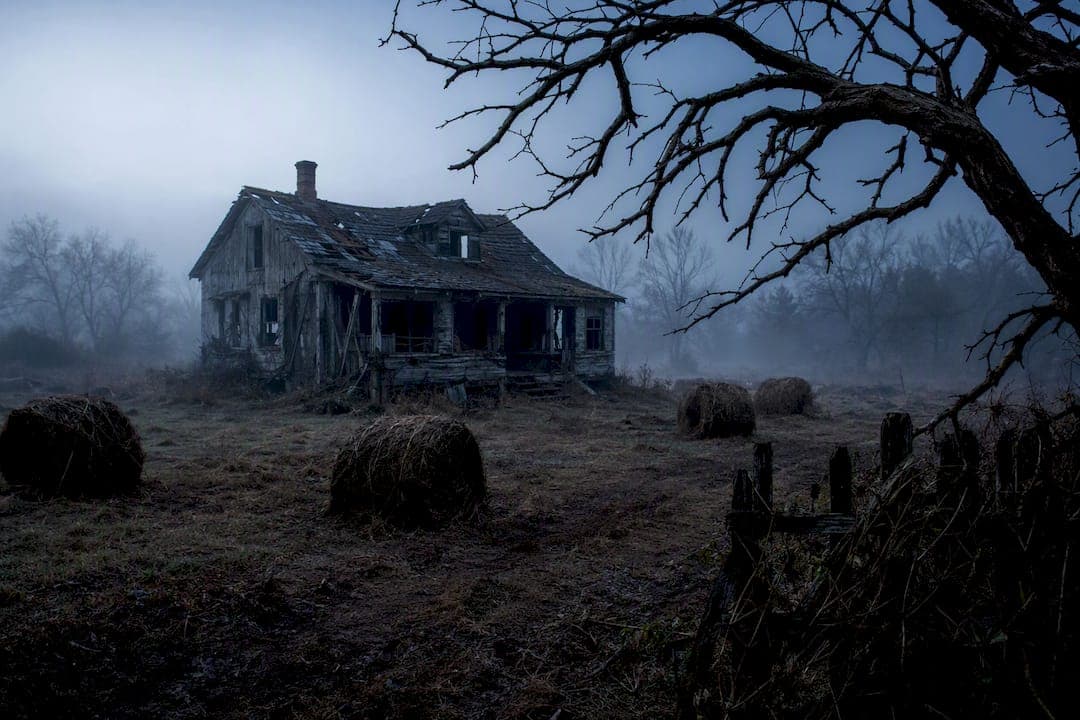
If you want the shortlist right now: Harvest Home for classic ritual dread, Ghost Wall for lean literary menace, The Ritual for wilderness terror, The Bog Wife for eco-horror family drama, Devil's Day for folklore soaked in Peak District mud, Starve Acre for domestic grief turned monstrous, and A Head Full of Ghosts if you want the isolation dial turned to psychological. Each one earns its spot for a different reason: ritual, prose, survival, ecology, folklore, grief, or belief.
- Harvest Home by Thomas Tryon — a family flees the city and lands inside an ancient harvest ceremony with teeth. Best for readers who want the genre's founding template.
- Ghost Wall by Sarah Moss — an Iron Age reenactment trip curdles into something feral. Best for readers who like short, sharp, literary dread.
- The Ritual by Adam Nevill — four friends, a Scandinavian forest, and something that outlasts civilization. Best for wilderness-horror fans.
- The Bog Wife by Kay Chronister — a family's bond with a Appalachian bog turns transactional and strange. Best for eco-horror readers.
- Devil's Day by Andrew Michael Hurley — a Lancashire farming family's folklore gets tested at lambing season. Best for slow-burn folk horror.
- Starve Acre by Andrew Michael Hurley — grief excavates something buried under a Yorkshire field. Best for readers who want horror rooted in loss.
- A Head Full of Ghosts by Paul Tremblay — isolation and possible possession collapse a rural family from the inside. Best for psychological-horror purists.
- Creepypasta: Omnibus One from Markwatsonbooks — for readers who want their countryside dread delivered in shorter, internet-horror bursts rather than a full novel.
Key Takeaways
Rural horror novels work because they place threat inside settings readers expect to be safe, turning harvest festivals, farmhouses, and bogs into the actual source of dread.
| Point | Details |
|---|---|
| Match sub-style to mood | Choose classic folk horror, eco-horror, psychological dread, or wilderness survival based on pacing preference. |
| Start with voice | Read the first chapter before committing; setting immersion signals whether the dread will land. |
| Classic entry point | Harvest Home by Thomas Tryon remains the genre's foundational ritual-horror text. |
| Setting is the mechanism | Sensory detail and real-feeling place names make the landscape function as an active threat. |
| Explore Markwatsonbooks | Its Creepypasta anthologies and horror collection offer isolate horror in both short and novel-length form. |
Table of Contents
- Why Rural Horror Novels Get Under Your Skin
- How to Pick Your Next Rural Horror Read
- Mark Watson's Reading Notes on Countryside Horror
- The Long Roots of Rural Horror Fiction
- How Rural Horror Differs From Other Horror Subgenres
- Writers Who Defined the Rural Horror Tradition
- Why Setting Decides the Story in Rural Horror
- Symbols and Motifs That Recur Across the Genre
- A Word From Mark Watson on Reading Rural Horror Well
- Read More Rural Horror From Markwatsonbooks
- Sources
Why Rural Horror Novels Get Under Your Skin
Rural and folk horror works by weaponizing the ordinary. The genre's defining structure, according to the standard folk horror framework, involves outsiders who move into an isolated rural setting and uncover an old or communal threat tied directly to the land and its traditions. That's the throughline connecting a Yorkshire farmhouse to a New England harvest festival to a Scandinavian forest.
Here's what shows up again and again once you start reading widely in the genre:
- The outsider protagonist who arrives skeptical and slowly loses that skepticism, one uncomfortable dinner party at a time.
- Generational rites — harvest ceremonies, ancient bargains, inherited debts to the land — that a community treats as normal and everyone else finds monstrous.
- Place-as-antagonist, where the moor, bog, or forest behaves less like scenery and more like a character with intentions.
- Ecological dread, the sense that nature is owed something and intends to collect.
Why does the countryside specifically work so well? Researchers at the University of Reading's Museum of English Rural Life point to a subversion effect: rural settings carry a cultural expectation of safety and idyll, and horror that violates that expectation lands harder than horror set somewhere already coded as dangerous. A haunted city alley confirms what you already suspected. A haunted harvest festival breaks something you trusted.
How to Pick Your Next Rural Horror Read
Not every rural horror novel wants the same thing from you, so match the book to your mood using a short checklist.
- Tone. Do you want slow dread (Devil's Day) or immediate menace (The Ritual)?
- Pace. Literary and restrained, or plot-driven and propulsive?
- Gore-to-supernatural ratio. Ghost Wall is nearly gore-free and all psychological pressure. The Ritual has both a monster and blood.
- Era and setting specificity. Contemporary farmhouse, historical village, or unnamed wilderness?
- Length. A 150-page gut-punch or a full 300-page slow burn?
Three reading paths, depending on your appetite:
- Starter path: Ghost Wall or Starve Acre, both short and built for one sitting.
- Deep-dive path: Harvest Home, the genre's foundational text, for readers who want the full ritual arc.
- Novella/short-read path: Markwatsonbooks's Creepypasta anthologies, which deliver isolate horror in shorter internet-horror bursts.
Pro Tip: Read the first two or three pages for voice and the entire first chapter for setting immersion. If the landscape doesn't feel specific by page ten, complete with real place names, weather, and texture, the dread won't land later either.
Mark Watson's Reading Notes on Countryside Horror
Mark Watson writes horror thrillers, Creepypasta anthologies, and children's fiction, and his interest in rural dread comes through in how he builds settings that feel lived-in before anything goes wrong. His three picks for readers new to the genre:
- Harvest Home — "the ceremony you'd actually attend before you realized what it costs."
- The Bog Wife — "proof that eco-horror doesn't need a monster, just a debt."
- Ghost Wall — "the shortest book on this list and the one that stays longest."
The best rural horror doesn't ask you to believe in monsters. It asks you to believe your neighbors might already know something you don't.
Readers who want more from Watson's own catalog can browse his full horror collection.
The Long Roots of Rural Horror Fiction
Rural horror didn't arrive with a single landmark title. It grew out of older folklore traditions, harvest myths, and regional ghost stories that predate the horror genre's formal boundaries by centuries. Thomas Tryon's Harvest Home in 1973 gave the modern form its clearest template, arriving alongside the broader 1970s folk horror wave in British film that shaped how readers and viewers came to expect ritual, community complicity, and land-based menace to work together.
The 1980s and 1990s saw the subgenre thin out somewhat, overshadowed by slasher fiction and urban horror, but it never disappeared. Small presses and British literary fiction kept the tradition alive through writers interested in landscape and folklore rather than jump scares.
The real resurgence started in the 2010s. Andrew Michael Hurley's The Loney in 2014 reignited literary interest in rural dread, and Sarah Moss's Ghost Wall in 2018 proved the subgenre could work at novella length with almost no supernatural machinery at all. By the 2020s, eco-horror had folded itself into the tradition, with books like The Bog Wife treating climate anxiety and land debt as natural extensions of the same fear that powered Harvest Home fifty years earlier. The throughline across five decades is remarkably stable: something ancient, tied to soil, waiting for someone to disturb it.
How Rural Horror Differs From Other Horror Subgenres
Rural horror shares DNA with several neighboring subgenres, but the differences matter for readers picking their next book.
Against gothic horror: Gothic fiction usually centers a decaying estate and a family curse, with dread flowing from inherited bloodlines and architecture. Rural horror instead centers a community, and the threat usually comes from shared tradition rather than one cursed bloodline.
Against cosmic horror: Cosmic horror, the Lovecraftian tradition, treats the universe as indifferent and humanity as insignificant. Rural horror keeps things intimate and local. The threat in Devil's Day cares specifically about this farm, this family, this harvest.
Against slasher and urban horror: Slasher fiction relies on a stalking human threat and escalating body count. Rural horror is patient by comparison. Menace in Starve Acre builds through implication and dread long before anything resembling violence occurs.
Against wilderness survival thrillers without the folk element: A straight survival thriller pits characters against nature as an obstacle. Rural horror, even in its wilderness form like The Ritual, treats nature or the land as something closer to willful, almost as if it's choosing its victims.
The common thread: rural horror trades scale and speed for intimacy and patience, betting that a reader will find a corrupted harvest festival scarier than a corrupted city.
Writers Who Defined the Rural Horror Tradition
Thomas Tryon remains the genre's foundational figure. Before Harvest Home, he was a working actor; after it, he became one of the most influential names in American rural horror, and the novel's ritual-reveal structure still shapes how newer authors pace their own books.
Andrew Michael Hurley is arguably the genre's most important living British author. Between The Loney, Devil's Day, and Starve Acre, he's built a body of work almost entirely devoted to English rural landscapes, grief, and inherited belief, and each book treats a different corner of the countryside (coastal Lancashire, farming Lancashire, rural Yorkshire) as its own distinct character.
Sarah Moss brought literary credibility and brevity to the tradition with Ghost Wall, proving the genre didn't need three hundred pages to work. Adam Nevill did the inverse for wilderness horror, showing that a straightforward survival premise could carry real folkloric weight once something ancient enters the forest. Paul Tremblay expanded the subgenre's reach into domestic, single-house isolation, and Kay Chronister's The Bog Wife represents the newest generation, folding climate-era eco-anxiety directly into the ritual-and-land tradition Tryon started.
Why Setting Decides the Story in Rural Horror
Setting isn't decoration in this genre. It's the mechanism. Writers who make a landscape feel almost sentient rely on repeated sensory detail, mud, bog texture, animal sounds, specific weather, and real or real-feeling place names to anchor uncanny events in recognizable geography. A vague "the woods" never generates the same dread as "Startop Wood, three miles past the last working farm."
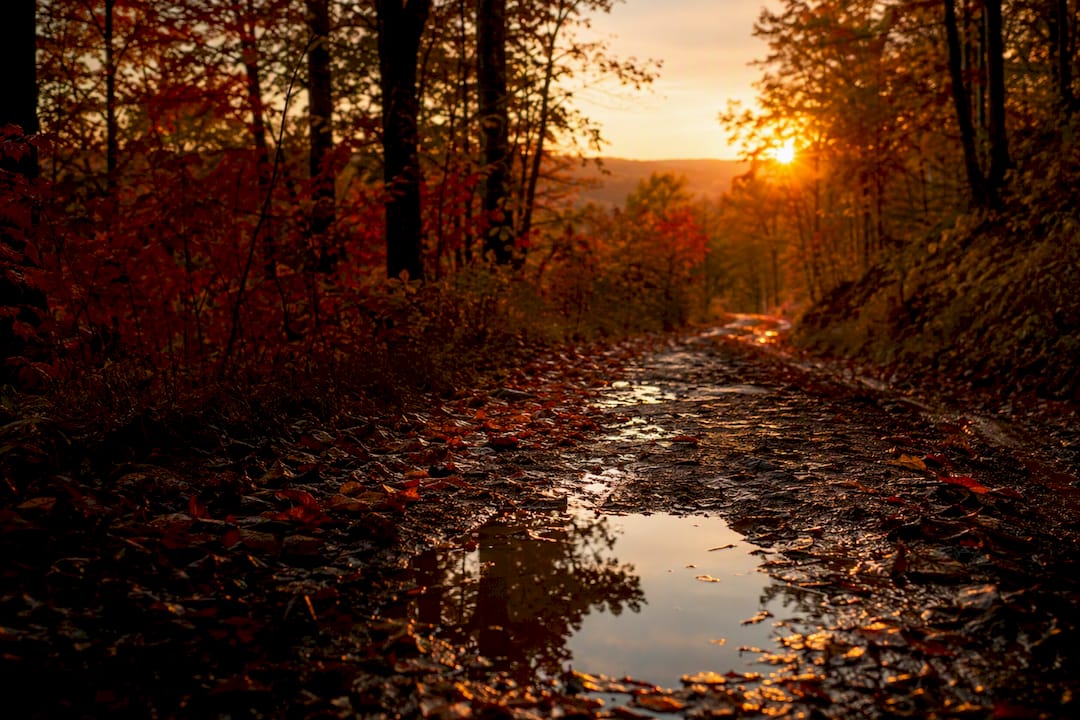
Geography also shapes tone. British rural horror, from Devil's Day to Starve Acre, tends toward damp, muddy, class-conscious dread rooted in centuries of continuous land use and inherited superstition. American rural horror, Harvest Home included, often layers a colonial unease onto the landscape, the sense of a community that built itself on land it doesn't fully understand. Scandinavian-set wilderness horror like The Ritual leans into scale and isolation instead: fewer people, more forest, a landscape too vast to fully map.
Even real events can echo this dynamic. A BBC feature on a disturbing UK village crime touched on exactly the kind of unsettling small-community intimacy that rural horror fiction exploits, though fiction gets to explore it with more restraint than any news report should. That's worth remembering: the genre works because rural intimacy is real, not just literary invention. For more on how writers translate this into craft, see this breakdown of how setting shapes atmosphere in spooky books.
Symbols and Motifs That Recur Across the Genre
A handful of images show up so often across rural horror that they've become genre shorthand. The harvest or bumper crop almost always signals payment coming due, a debt the land or community expects to collect. Bogs and standing water symbolize preservation and hidden history, places where old things (bodies, secrets, pacts) don't decompose the way they should, which is exactly the engine behind The Bog Wife.
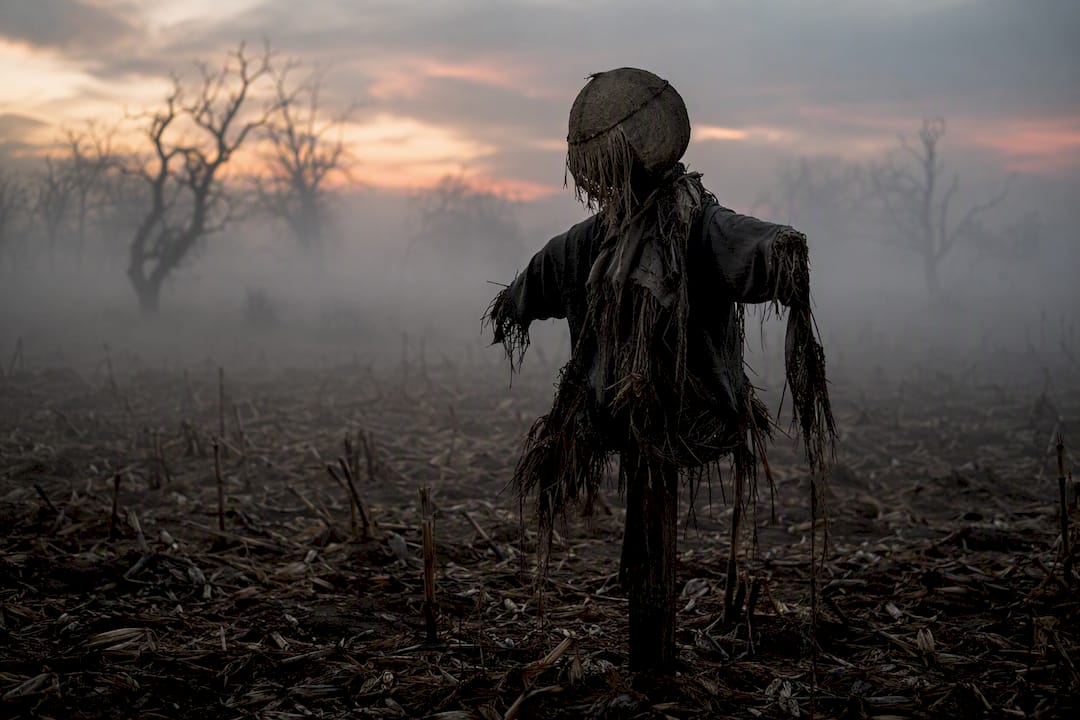
Scarecrows and effigies recur as stand-ins for sacrifice, objects that look harmless until you notice what they're meant to represent. Livestock deaths function as an early warning system in nearly every village-set folk horror novel, the first sign the land or the community's rituals have gone wrong before any human gets hurt. Weather, especially fog, frost, or an unusually good harvest, tends to mark the exact moment the story tips from unease into confirmed threat.
The outsider's notebook or camera, a device for documenting rituals from the outside, shows up in everything from academic-researcher plots to reality-TV framing in A Head Full of Ghosts, always signaling the gap between what the community believes and what an outsider is about to record. Readers who enjoy tracking these repeated images might also appreciate this atmospheric-horror comparison from pop culture's most sustained atmospheric dread, which uses isolation and creeping reveal in a very similar structural way, just off-planet instead of off the main road.
A Word From Mark Watson on Reading Rural Horror Well
Most reading lists treat rural horror as interchangeable: swap one moody farmhouse novel for another and call it a day. That undersells the genre. The real skill in picking a good rural horror novel isn't finding "atmosphere," it's identifying which kind of dread a book is actually selling you, ritual, ecological, psychological, or survivalist, because those four flavors reward completely different readers.
Conventional advice tends to overweight gore and underweight pacing. The books that stay with readers longest, Ghost Wall, Starve Acre, Harvest Home, all withhold violence far longer than genre convention suggests they should. That patience is the craft, not a flaw to push past.
If you're choosing your first rural horror novel, prioritize voice over premise. A strong narrator will sell you on a corrupted harvest festival faster than any plot summary can. Read the opening chapter before you commit to the whole book, and trust your gut if the landscape doesn't feel real by the end of it.
— Mark
Read More Rural Horror From Markwatsonbooks
Markwatsonbooks gives you a direct route into rural and isolate horror without hunting across a dozen retailer pages to piece together a reading list. Where the titles above scatter across different publishers and formats, Mark Watson's own catalog concentrates that same countryside dread into anthologies and thrillers you can browse in one place.

If you gravitated toward the short, sharp entries on this list, the Creepypasta anthologies deliver isolate horror in bite-sized doses built for one sitting, closer in spirit to Ghost Wall's brevity than Harvest Home's slow burn. Readers who want the full novel experience should start with the horror collection, where Watson's own countryside and isolation-driven thrillers sit alongside his other genre work. Browse the full books catalog and pick your next read based on the same criteria this article just walked through: tone, pace, and how much you want the dread to wait before it arrives.
Sources
Rural horror novels build dread from the countryside itself, using isolation, buried community secrets, and land-based rituals as the actual engine of fear rather than a backdrop for it. Some readers call this "country horror books" or "isolate horror tales," but the formal term critics and scholars use is folk horror, and it's worth knowing that phrase because it's what shows up in academic writing, publisher catalog copy, and awards coverage.
The genre splits into recognizable sub-styles, and knowing which one you're craving saves you from picking the wrong book on a Tuesday night.
1. Classic folk horror. These are the genre's load-bearing texts, and Harvest Home by Thomas Tryon sits at the center of it. A family relocates from Manhattan to a New England village called Cornwall Coombe and slowly discovers the town's harvest festival isn't quaint at all. Tryon's novel is frequently cited as a direct influence on later rural horror because it perfected the outsider-family-joins-community-to-ritual structure, and the pacing trick of letting the ritual look charming before it turns is a craft pattern worth studying if you want to know why the ending lands so hard.
2. Modern folk and eco-horror. The Bog Wife by Kay Chronister reworks the same DNA into something newer: a family whose survival has always depended on an unspoken pact with the bog on their land, and what happens when that pact starts to break. Publisher descriptions frame it as blending family drama with landscape-driven dread, and it's a strong entry point if you want horror that argues the land has needs of its own. Andrew Michael Hurley's Devil's Day belongs here too, set on a Lancashire farm where old folklore about "the Devil" isn't quite metaphor.
3. Psychological rural dread. Sarah Moss's Ghost Wall runs under 150 pages and still leaves a mark. A teenage girl joins her father on an Iron Age reenactment trip in Northumberland, and the historical roleplay stops being playacting long before anyone admits it. Paul Tremblay's A Head Full of Ghosts isolates a family in their own home with a possibly possessed daughter and a reality-TV crew, proving rural dread doesn't need acres of forest, just a house nobody can leave.
4. Wilderness survival horror. Adam Nevill's The Ritual drops four old friends into a Scandinavian forest where something ancient tracks them through the trees, and Andrew Michael Hurley's Starve Acre returns to Yorkshire farmland where a grieving couple dig up something that should have stayed buried. Both titles lean on what curators of British horror describe as the setting itself acting as a hostile, almost sentient force, which separates wilderness horror from village-bound folk horror.
If you want a browsable starting point beyond this list, curated shelf pages like UK Bookshop's rural horror collection group many of these same titles together, which tells you something about how consistently critics and booksellers agree on the genre's core canon.
- Stereotypes and slaughter: why are horror films set in the countryside? — MERL