
TL;DR:
- Ghost stories have origins in ancient Mesopotamia where spirits were part of daily life and rituals. Over time, they evolved from communal functions to literary forms exploring unresolved trauma and psychological fears. Today, they continue to reflect core human anxieties about death, memory, and moral obligation across all cultures.
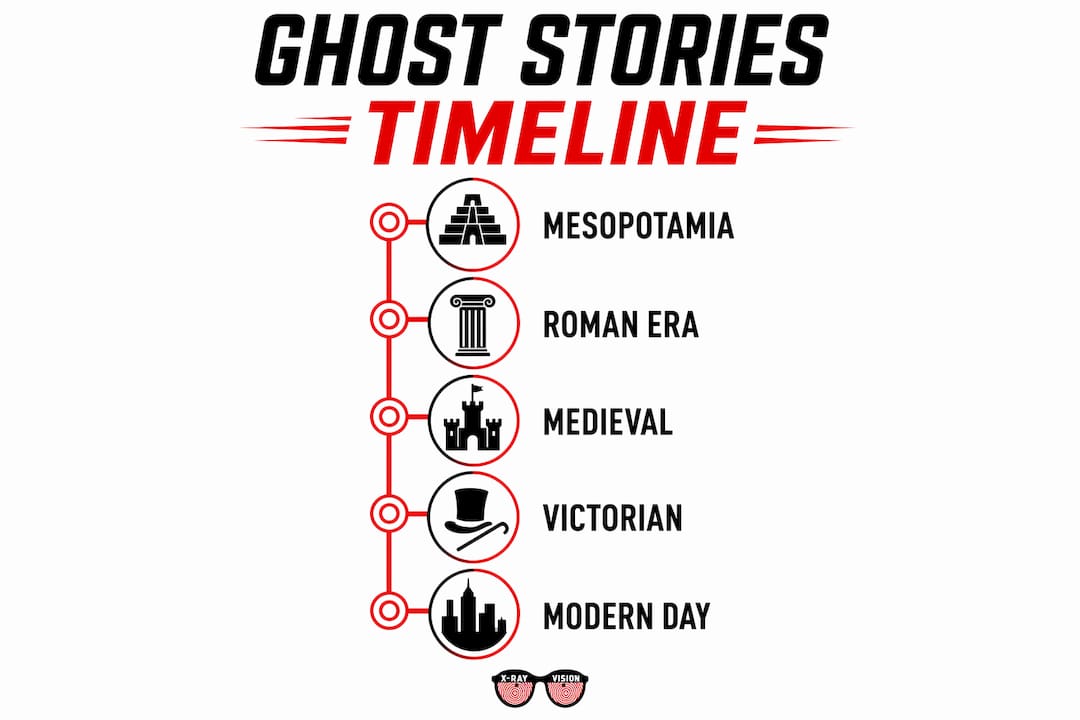
Ghost stories are defined by their oldest function: managing the relationship between the living and the dead. The origin of ghost stories reaches back at least 5,000 years to ancient Mesopotamia, where spirits called gidim and etemmu were woven into daily rituals, burial practices, and communal life. These were not campfire entertainments. They were cultural tools. Figures like Pliny the Younger later gave the Western world its first recognizable haunted house narrative, and writers from Shakespeare to M.R. James transformed those ancient fears into the psychological horror we recognize today. Understanding where ghost stories come from reveals something surprising: they were never really about monsters. They were about memory, obligation, and the terror of unfinished business.
What is the origin of ghost stories in ancient history?
The earliest ghost beliefs date to ancient Mesopotamia, roughly 5,000 years ago, during the Early Dynastic period between 2900 and 2350 BCE. Ghosts called gidim or etemmu were not fictional creatures. They were accepted parts of daily spiritual life, as real to ancient Sumerians as taxes or harvests.
These spirits were not primarily frightening. Ancient Mesopotamian ghosts were communal figures, tied to ancestral rituals and afterlife management. Families performed burial rites carefully because a ghost without proper burial became a restless, troublesome presence. Written spells and necromantic texts from this period show that people sought to communicate with spirits, not just flee from them.
Archaeological evidence supports this picture. Grave goods found across Mesopotamian sites indicate a widespread belief that the dead needed provisions for the afterlife. This was not superstition at the fringes of society. It was mainstream theology, practiced by rulers and farmers alike.
- Ghosts (gidim/etemmu) were part of daily Mesopotamian spiritual life, not rare supernatural events
- Burial rituals were performed to prevent spirits from becoming harmful to the living
- Written spells and necromantic texts show active communication with the dead
- Grave goods confirm material belief in an active afterlife requiring ongoing care
- Ghost beliefs served communal functions, not entertainment purposes
Pro Tip: If you want to understand why ghost stories feel so universal, start with Mesopotamia. The emotional core, fear of the neglected dead, has not changed in 5,000 years.
Cultural historians describe early ghost stories as functional "paperwork" between the living and the dead. That framing is precise. These narratives existed to process grief, explain misfortune, and enforce social norms around burial and remembrance. Entertainment came much later.
How did ancient Rome and Greece shape the ghost story format?
Rome gave the Western world its first ghost story with a clear narrative structure. Pliny the Younger's first haunted house story appears in his 1st-century AD letters. A philosopher named Athenodorus rents a notoriously haunted house in Athens, encounters a shackled ghost, follows it to a spot in the courtyard, and discovers buried bones. Once the bones receive a proper burial, the haunting ends.
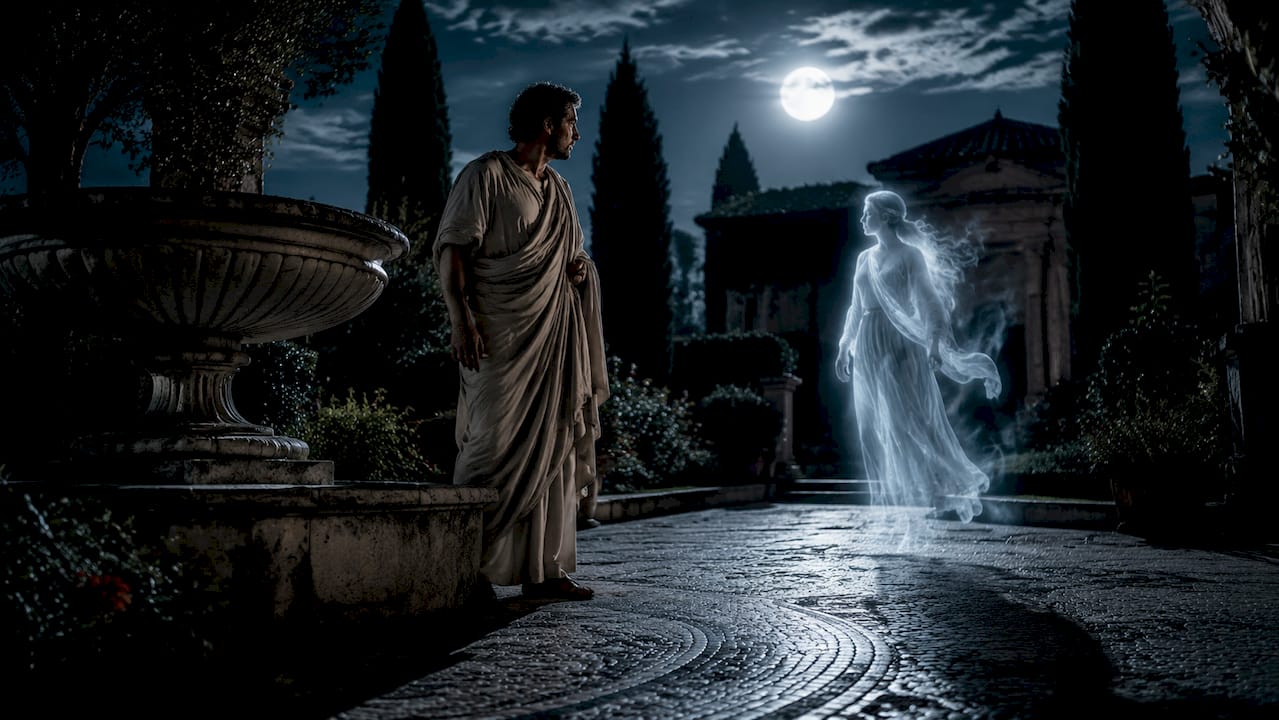
That story contains every element readers still recognize: the haunted location, the restless spirit, the unfinished business, and the resolution through ritual. Pliny's account is not mythology. It reads like a reported incident, which is exactly why it feels modern.
Greek literary tradition contributed a different angle. Homer's Odyssey features Odysseus summoning the dead to gain knowledge, framing ghosts as truth-tellers and witnesses rather than threats. This idea, that the dead know things the living cannot, runs through ghost literature from ancient Greece to Henry James's The Turn of the Screw.
The key difference between Mesopotamian and Greco-Roman ghost beliefs is structural:
- Mesopotamian ghosts required ritual management as part of ongoing communal life
- Greek ghosts often served as sources of hidden knowledge or moral testimony
- Roman ghost stories introduced the haunted location as a narrative device
- Resolution through proper burial or ritual was the expected ending in all three traditions
- None of these traditions treated hauntings as permanent or unresolvable
That last point matters. The idea of an unresolvable haunting is a modern invention. Ancient and classical ghost stories almost always ended with the spirit at peace. The horror of a ghost that cannot be stopped or reasoned with belongs to a much later era.
How did medieval and Renaissance shifts change ghost narratives?
Medieval Christianity reframed the ghost story completely. Medieval ghosts became souls in Purgatory, returning to the living world to request prayers, restitution, or the completion of unfinished moral obligations. The haunting was no longer a problem of improper burial. It was a problem of unpaid spiritual debt.
This shift made ghost stories explicitly moral. A ghost appearing to a medieval audience carried a theological message: the dead are watching, and they remember what you owe them. Ghost stories became a form of social enforcement, reminding communities about debts, broken promises, and sins left unconfessed.
- Medieval ghosts were souls in Purgatory seeking prayers or moral resolution
- Hauntings carried explicit theological meaning, not just supernatural dread
- Ghost stories reinforced community norms around debt, honesty, and religious duty
- The ghost as moral messenger persisted well into the Renaissance period
Shakespeare complicated this framework in ways that still resonate. In Hamlet, the ghost of King Hamlet is deliberately ambiguous. Is he a genuine spirit? A demon in disguise? A projection of Hamlet's grief and guilt? Shakespeare refused to answer that question, and that refusal was radical. For the first time in Western literature, a ghost story was also a psychological study. The haunting became internal as much as external.
This ambiguity opened a door that ghost writers have walked through ever since. Once a ghost could represent grief or guilt rather than a literal returning soul, the narrative possibilities multiplied. The ghost story stopped being theology and started becoming literature.
Why did the Victorian era define the modern ghost story?
The Victorian period, roughly the 1830s through World War I, is rightly called the Golden Age of ghost literature. Three forces converged to make it happen: industrialization, urbanization, and the rise of Spiritualism.
Industrialization and urbanization moved ghosts out of wild landscapes and into domestic spaces. The haunted house became the defining setting because the home itself felt newly threatening. Cities were crowded, anonymous, and full of strangers. The ghost in the parlor reflected real anxieties about what lurked behind respectable facades.
| Earlier ghost traditions | Victorian ghost stories |
|---|---|
| Ritual resolution expected | Unresolved hauntings maximized suspense |
| Ghosts as moral messengers | Ghosts as psychological manifestations |
| Rural or communal settings | Domestic and urban settings |
| Clear theological framing | Ambiguous, psychological framing |
| Entertainment secondary | Atmosphere and dread as primary goals |
Edgar Allan Poe brought psychological terror to the center of the form. Sheridan Le Fanu added slow, suffocating dread in stories like Carmilla and Uncle Silas. M.R. James transformed the genre further by stripping away gothic melodrama and replacing it with atmospheric realism. His ghosts are glimpsed, not explained. The terror comes from what the reader's imagination fills in.
Pro Tip: Read M.R. James's "Oh, Whistle, and I'll Come to You, My Lad" if you want to understand how restraint creates more dread than any explicit monster. The story shows what Victorian ghost writers understood that modern horror often forgets: suggestion is scarier than revelation.
Victorian ghost stories also abandoned the ritual resolution that defined earlier traditions. Hauntings in Le Fanu or James do not end with a proper burial or a prayer. They end with damage, madness, or silence. That shift toward unresolved hauntings is the defining feature of modern horror, and it was born in the 19th century.
What are the universal themes in ghost stories across cultures?
Ghost stories appear in every human culture, and despite their differences, they address the same core anxieties: fear of death, the possibility of communication with the dead, and the weight of moral obligation. That consistency is not coincidence. It reflects something fundamental about human psychology.
Japanese Yūrei are spirits of the violently dead, often women betrayed in life, who return to demand acknowledgment. Arabic Jinn occupy a complex spiritual ecology that includes entities tied to place, memory, and moral transgression. African ancestral spirits function as active participants in community life, much like the Mesopotamian gidim. Western ghosts, shaped by Christianity and Victorian literature, tend toward psychological manifestation and unresolved trauma.
- Japanese Yūrei: spirits of the violently or unjustly dead, demanding acknowledgment
- Arabic Jinn: place-bound entities tied to moral and spiritual transgression
- African ancestral spirits: communal figures with ongoing roles in family and village life
- Western ghosts: psychological manifestations of grief, guilt, and unresolved trauma
The history of ghost tales across these traditions shows that ghost stories are not escapism. They are a structured way for communities to process what cannot be processed otherwise: sudden death, injustice, grief that has no clean ending. Modern fantasy and horror writers who build elaborate ghost systems, think Shirley Jackson's The Haunting of Hill House or the structured ghost rules in contemporary horror fiction, are doing exactly what Mesopotamian priests did. They are creating frameworks for the unmanageable.
The persistence of ghost stories across 5,000 years and every known culture is the strongest evidence that they serve a real psychological and social function. They are not going away. They are adapting to new fears the way they always have.
Key Takeaways
Ghost stories originated as functional cultural tools in ancient Mesopotamia and evolved through Roman, medieval, and Victorian traditions into the psychologically complex narratives that define modern horror.
| Point | Details |
|---|---|
| Ancient Mesopotamian roots | Ghost beliefs date back 5,000 years, serving communal and ritual functions, not entertainment. |
| Rome's narrative contribution | Pliny the Younger's 1st-century account established the haunted house as a story format. |
| Medieval moral framing | Christian theology turned ghosts into moral messengers demanding accountability from the living. |
| Victorian psychological shift | Writers like Poe, Le Fanu, and M.R. James replaced ritual resolution with unresolved psychological dread. |
| Universal cultural themes | Ghost stories across all cultures address the same core fears: death, obligation, and the unfinished. |
Why ghost stories matter more than we admit
Writing horror has taught me that most people treat ghost stories as entertainment first and meaning second. That gets it backward. The most powerful ghost stories I have read, and the ones I find myself returning to when I write, are the ones that use the ghost as a stand-in for something the living character cannot face directly.
The history of ghost tales confirms this. From Mesopotamian burial rituals to Shakespeare's Hamlet to M.R. James's creeping dread, ghost stories have always been about the living more than the dead. The ghost is the thing you cannot put down, cannot resolve, cannot stop thinking about. That is grief. That is guilt. That is memory.
What modern readers and writers sometimes miss is how much craft went into the earliest ghost narratives. The Mesopotamian priests who wrote spells against restless spirits were not primitive. They were doing sophisticated psychological work, giving communities a structured way to process loss. When we write ghost stories today, we are part of that same tradition, whether we know it or not.
Understanding the cultural origins of ghost stories does not make them less scary. It makes them more meaningful. And meaningful fear is the only kind worth writing.
— Mark
Ghost stories worth reading right now
If tracing the history of ghost tales has made you want to experience the form at its most vivid, Markwatsonbooks has you covered.

The horror collection at Markwatsonbooks brings together ghost stories and psychological horror that carry the weight of this tradition. For readers drawn to the modern evolution of ghost lore, the Creepypasta books show how internet-age ghost stories carry the same ancient anxieties into entirely new territory. These are not watered-down thrills. They are the real thing, built on 5,000 years of storytelling craft.
FAQ
Where do ghost stories originally come from?
Ghost stories originate from ancient Mesopotamia, where spirits called gidim and etemmu were part of daily rituals dating back approximately 5,000 years. These beliefs spread and evolved through Greek, Roman, medieval, and Victorian cultures into the narratives recognized today.
What was the first recorded ghost story in Western history?
Pliny the Younger's 1st-century AD account of the philosopher Athenodorus is considered the first recorded Western ghost story. It introduced the haunted house format, complete with a restless spirit, an unresolved burial, and a ritual resolution.
Why do we tell ghost stories across so many cultures?
Ghost stories address universal human anxieties about death, moral obligation, and communication with the dead. Cultural historians describe them as functional tools for processing grief and enforcing community norms, not simply entertainment.
How did the Victorian era change ghost stories?
Victorian writers like Edgar Allan Poe, Sheridan Le Fanu, and M.R. James shifted ghost stories from moral or ritual narratives to psychologically complex tales focused on atmospheric dread and unresolved hauntings. This period established the modern ghost story format.
What is the significance of ghost stories today?
Ghost stories continue to process universal fears about death, injustice, and memory. Modern horror fiction, including internet-era Creepypasta, uses the same structural anxieties as ancient ghost beliefs, proving the form adapts rather than disappears.