
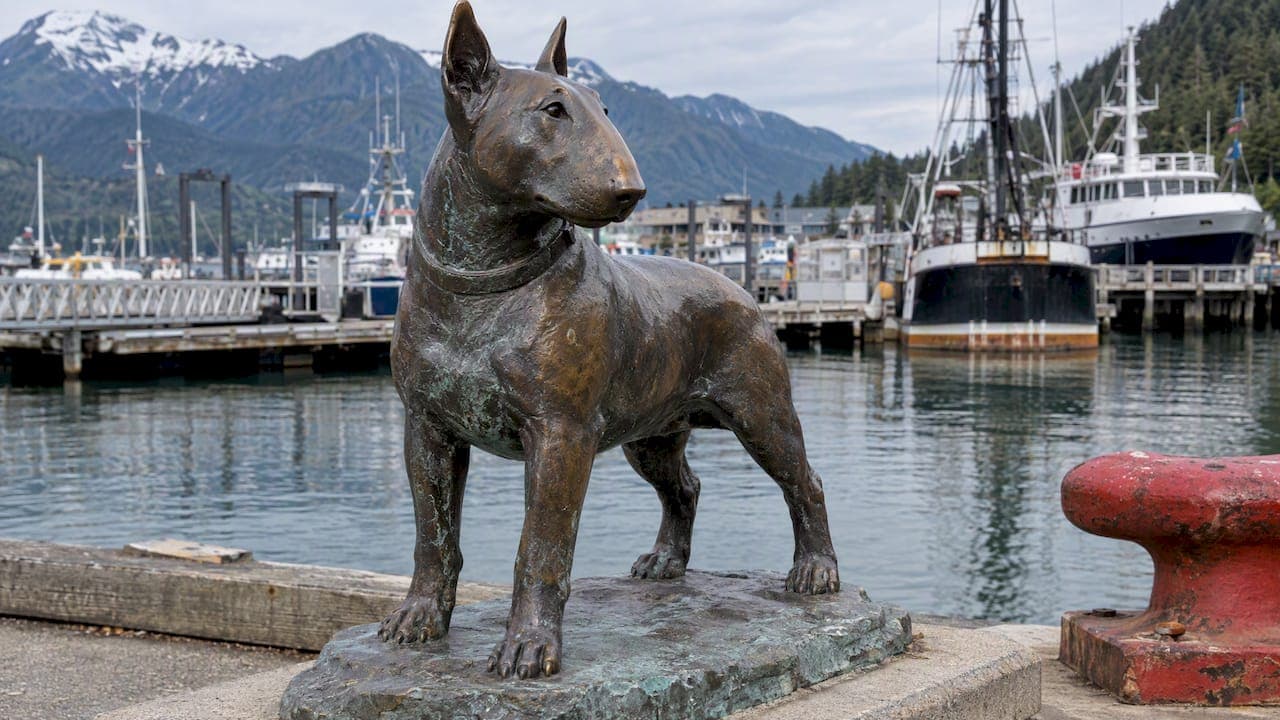
Five Bull Terriers stand above the rest in public memory: Spuds MacKenzie, the Bud Light party dog; Willie, General George S. Patton's loyal companion; Bullseye, Target's red-eyed mascot; Patsy Ann, Juneau's deaf harbor greeter; and Muffy, the plucky star of The Incredible Journey. Each one earned its fame a different way, and we're breaking down exactly how.
TL;DR:
- Spuds MacKenzie was played by a female Bull Terrier named Honey Tree Evil Eye, and Bud Light sales rose roughly 20% from 1987 to 1988.
- Willie lived from 1942 to 1955 as General Patton’s companion and is memorialized with a bronze statue at the General Patton Memorial Museum.
- Bullseye is a Miniature Bull Terrier, roughly half the height of a standard Bull Terrier; the red eye ring uses removable, nontoxic paint.
- The oval head, small triangular eyes, erect ears, and short glossy coat identify the breed, but Miniature Bull Terriers are about half the standard height.
- Breeder James Hinks reshaped the Bull Terrier in the 1860s from a fighting dog into an entirely white companion breed, helping shift its public image.
Table of Contents
- 1. The most famous Bull Terriers and where you've seen them
- 2. Why this breed keeps landing in ads, films, and celebrity homes
- 3. How to spot a Bull Terrier in photos, films, and comics
- 4. What these dogs mean to readers who love a good story
- 5. How famous Bull Terriers shaped public perception of the breed
- 6. Where Bull Terriers show up in books and darker tales
- 7. What the famous Bull Terriers actually prove about good storytelling
- Find more dog-driven stories in our collections
- FAQ
- Sources
1. The most famous Bull Terriers and where you've seen them
1. Spuds MacKenzie. Played by a female Bull Terrier named Honey Tree Evil Eye, Spuds fronted Bud Light's party-dog ad campaign from 1987 to 1989, strutting around in sunglasses and a Hawaiian shirt like the coolest guy at the barbecue.

Pro Tip: The Spuds MacKenzie campaigns ran for just two years, but the dog became one of the most recognized advertising mascots of the decade.
Statistic: Bud Light's sales climbed by roughly 20% between 1987 and 1988 during the height of the Spuds MacKenzie campaign, a jump contemporary reporting tied directly to the mascot's popularity.
2. Willie, General Patton's dog. Originally named Punch, Willie belonged to General George S. Patton and appears in countless wartime photographs at the general's side. Willie lived from 1942 to 1955) and is honored today with a bronze statue at the General Patton Memorial Museum.
3. Bullseye, the Target mascot. This white Miniature Bull Terrier has represented Target since the late 1990s, instantly recognizable by the red circle painted around one eye using removable, nontoxic paint for promotional appearances.
4. Patsy Ann. Deaf from birth, Patsy Ann became Juneau, Alaska's beloved companion, famously meeting every incoming ship at the dock between 1929 and her death in 1942. The city commissioned a bronze statue of her in 1992, and she's still celebrated as the town's "Official Greeter."
5. Muffy, from The Incredible Journey. This Bull Terrier is one of three animal companions trekking across the Canadian wilderness in the classic story, a role that helped cement the breed's image as loyal and a little scrappy.
6. Grim, from Mother Goose and Grimm. The gleefully chaotic star of Mike Peters' long-running comic strip, Grim brought the breed's clownish energy to newspaper pages nationwide.
7. Scud, from Toy Story. As Sid's menacing backyard dog, Scud gave millions of kids their first glimpse of the breed's unmistakable egg-shaped head, albeit in a scarier context than most Bull Terriers deserve.
8. Baxter, from Frankenweenie. Tim Burton's stop-motion short features a Bull Terrier neighbor dog whose expressive face leans into the breed's naturally dramatic look.
9. Spunky, from Rocko's Modern Life. This animated Bull Terrier sidekick brought slapstick energy to Nickelodeon in the 1990s, reinforcing the breed's reputation for comic timing even in cartoon form.
10. Old Bodger, from The Incredible Journeyensemble. Alongside Muffy, this character rounds out the trio of animal leads whose cross-country journey introduced generations of readers to the breed's personality. Together these film and literary appearances, cataloged across Bull Terrier media credits, show how consistently casting directors and illustrators reach for this breed when they need a character with presence.
2. Why this breed keeps landing in ads, films, and celebrity homes
The breed's modern look traces back to one man. In the 1860s, breeder James Hinks reshaped what had been a scrappy fighting dog into a cleaner, all-white companion type he nicknamed the "White Cavalier," steering public perception away from the breed's blood-sport roots and toward something families and advertisers could embrace.
That makeover left behind a few traits that still make the breed irresistible to casting directors:
- The "egg-shaped" head gives every Bull Terrier a silhouette no other breed can match.
- A famously clownish, energetic temperament means the dog practically performs on its own.
- Small, triangular eyes and a compact build photograph well in close-ups and wide shots alike.
Those same qualities explain why Patton gravitated toward Willie as a steady companion through a grueling war, and why Target's marketing team picked a Miniature Bull Terrier over a more conventional mascot breed. Pro Tip: If you want to understand why this breed has such staying power in media, start with the temperament traits that make them so animated on camera.
3. How to spot a Bull Terrier in photos, films, and comics
A few visual cues make this breed almost impossible to mistake once you know what to look for:
- The head curves in a continuous oval from nose to skull, with no stop between forehead and muzzle.
- Eyes sit small, dark, and triangular, angled toward the nose rather than facing straight forward.
- Ears stand fully erect and close together, giving an alert, attentive look.
- Coats come in solid white or colored varieties, always short and glossy.
Miniature Bull Terriers, like Bullseye, share every one of these traits but stand roughly half the height of a standard dog, so size alone isn't a reliable clue in photos without a scale reference. Costuming, camera angles, and digital effects can also obscure proportions, so when a production credits a named animal performer, checking the press kit or basic breed facts is the fastest way to confirm what you're looking at.
4. What these dogs mean to readers who love a good story
We've spent years looking at how individual animals become characters readers remember long after they close the book or turn off the screen. The dogs on this list work because each one carries a specific, memorable detail: a statue, a red eye, a harbor full of ships. That's the same instinct that drives good storytelling, and it's part of why our blog keeps returning to the literary life of Bull Terriers. If you enjoyed matching names to faces here, that post digs further into how the breed shows up across fiction and fandom.
5. How famous Bull Terriers shaped public perception of the breed
Before advertisers and Hollywood got involved, the Bull Terrier carried a rough reputation tied to its origins in the fighting pits of 19th-century England. James Hinks' white-coated redesign started chipping away at that image, but it was the celebrity dogs that finished the job.
Spuds MacKenzie turned the breed into a party icon practically overnight, while Bullseye gave Target decades of friendly, family-safe branding. Willie softened the image further by association, linking the breed to one of the most recognizable military leaders in American history. Patsy Ann did something different entirely: she made an entire town fall in love with a dog that couldn't even hear its own name called from the dock.
Each appearance chipped away at old stereotypes and replaced them with something warmer. That shift matters for anyone considering the breed today, since public perception still lags behind what these famous examples actually demonstrated: a dog that's playful, devoted, and far more goofy than tough.

6. Where Bull Terriers show up in books and darker tales
Fiction writers love a dog with a distinctive look, and the Bull Terrier's unmistakable profile makes it a natural fit for stories that need a character readers won't forget. The Incredible Journey built an entire adventure narrative partly around Muffy's grit, proving the breed could anchor a story meant for younger readers just as easily as an advertising campaign built for adults.
The breed's slightly unsettling, egg-headed appearance has also made it a recurring figure in darker internet fiction, where a dog's strange stare or silent loyalty can do a lot of narrative work in just a few lines. That's part of what draws us to these dogs as a publisher: a strong visual hook is often the fastest way into a reader's imagination, whether the story is a gentle children's tale or something built to keep you up past midnight.
7. What the famous Bull Terriers actually prove about good storytelling
Here's what stands out after going through this list: the most memorable Bull Terriers never needed elaborate backstories. Spuds needed sunglasses and an attitude. Patsy Ann needed a dock and a schedule she kept better than most humans. The lesson for anyone telling stories, whether in advertising, film, or fiction, is that a strong visual anchor paired with one consistent behavior creates more lasting recognition than pages of exposition ever could.
Conventional advice on pet-themed storytelling tends to focus on personality quirks and cute moments. That's not wrong, but it undersells how much work a distinctive physical trait does on its own. The egg-shaped head is doing half the job before a single scene plays out.
If you take one thing from this list, let it be that specificity beats volume. One sharp, true detail about a dog (a statue, a red eye, a war photograph) outlasts a dozen generic descriptions.
— Mark
Find more dog-driven stories in our collections
We've built our own catalog around exactly this kind of character-first storytelling, including dog-themed tales for younger readers and darker anthology entries for fans of the strange and unsettling. If the famous Bull Terriers above left you wanting more four-legged characters, our Children's Books collection and Creepypasta Books collection are good places to keep exploring.

| Collection | Best for |
|---|---|
| Children's Books | Readers who loved Muffy and gentle animal adventures |
| Creepypasta Books | Readers drawn to the breed's stranger, more unsettling appearances |
For a dog-themed gift that fits the spirit of this list, Greet 'n Grow's plantable holiday cards featuring dogs make a fitting companion to any of these stories.
FAQ
What are Bull Terriers best known for?
Bull Terriers are best known for their distinctive egg-shaped head, playful and clownish personality, and a string of famous appearances in advertising and film, including Spuds MacKenzie and Target's mascot Bullseye. The breed's unmistakable look makes it a favorite for casting directors and marketers alike.
What is the least wanted dog?
This question usually points to registration popularity rankings rather than anything about desirability, and Bull Terriers typically rank as a moderately popular breed rather than among the least registered. Specific yearly rankings vary by kennel club and country, so check your national registry for the current figures.
What movie has a Bull Terrier?
Several films feature Bull Terriers, including The Incredible Journey, which stars Muffy as one of three animal leads, and Frankenweenie, which includes a Bull Terrier neighbor dog named Baxter. The breed also appears in Toy Story as Scud, Sid's menacing backyard dog.
What famous people own Bull Terriers?
General George S. Patton famously owned a Bull Terrier named Willie, who appears in numerous wartime photographs and is memorialized with a bronze statue at the General Patton Memorial Museum. Beyond Patton, the breed has also achieved fame through its advertising roles rather than solely through celebrity ownership.
Sources
- Bull Terrier | Personality, Size, Lifespan & Origin | Britannica
- Bull Terrier history | American Kennel Club (AKC)