
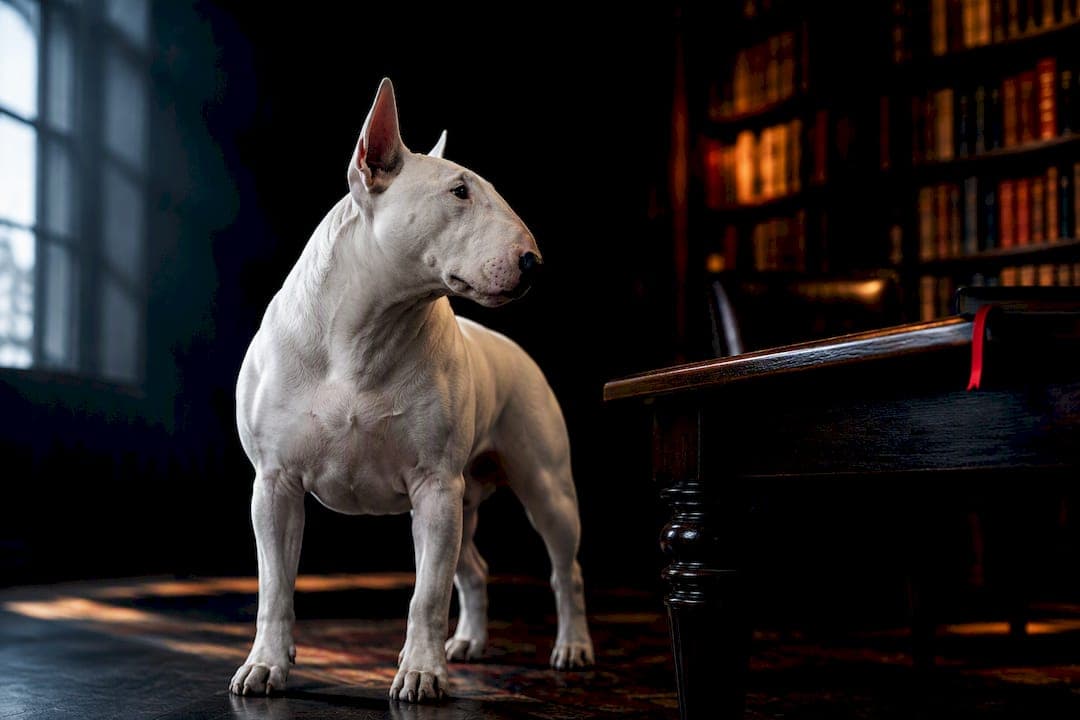
The bull terrier's strangest talent might be its literary one. Jonathan Carroll's The Land of Laughs leans on the breed to unsettle and charm readers at once, while Ernest Thompson Seton's Snap and Ken Greenhall's Baxter push the dog toward heroism and horror respectively. Across these works, the bull terrier keeps circling back to one idea: a creature that looks alien but acts loyal, or looks loyal but turns alien.
TL;DR:
- Writers use the bull terrier’s distinctive appearance to symbolize otherness and explore themes of loyalty versus alienation in literature.
- The breed’s history from fighting dogs to colorful specimens influences its narrative roles, from heroic to menacing portrayals.
- Literary dogs like Baxter subvert typical loyalty tropes, serving as counterexamples to the breed’s common friendly image.
- To find more related texts, search academic and library resources with breed-specific or thematic keywords rather than titles alone.
- Mark Watson’s resources provide practical breed insights and curated fiction collections for readers interested in literary and real dog portrayals.
Table of Contents
- Notable literary appearances of the bull terrier
- Themes and symbolism: the bull terrier as dual otherness
- Why authors reach for the bull terrier
- How to find more fiction and scholarship on bull terriers
- Mark Watson Books and bull terrier fiction resources
- What these portrayals say about us and our dogs
- Where to find bull terrier stories on Mark Watson Books
- Sources
- FAQ
Notable literary appearances of the bull terrier
Writers have reached for the bull terrier again and again, and each time the dog does slightly different work in the story. Here's where you'll find the breed showing up, and why it matters if you're building a reading list.
- The Land of Laughs (Jonathan Carroll): the bull terrier appears as a figure of eccentric appearance paired with gentle temperament, a combination critics connect to the novel's use of alienness as a running theme.
- Snap: The Story of a Bull Terrier (Ernest Thompson Seton): a foundational piece of youth animal literature, this one casts the dog as a moral, almost heroic presence, closer to the animal-hero tradition than to anything sinister.
- Baxter (Ken Greenhall): the novel centers on a homicidal white bull terrier and later became the basis for the 1989 film adaptation, making it the sharpest counterexample to the loyal-companion reading.
- Grim (Mother Goose and Grimm): the long-running comic strip gives the breed a comedic, mischievous voice, proof that the dog's visual punch works just as well for laughs as for menace.
- Spuds MacKenzie: not fiction exactly, but a useful marker of how far the breed's cultural silhouette traveled once advertising picked it up.
If you're hunting for primary texts, the novel and the comic strip are the easiest starting points. Baxter is worth tracking down specifically if you want to see the trope inverted rather than played straight.
Themes and symbolism: the bull terrier as dual otherness
Critics reading Carroll's work in particular describe the bull terrier as a case of "dual otherness": the dog reads as strange, even alien, in appearance, while behaving with ordinary affection and loyalty. That friction is the point. A chapter examining this directly, The Bull Terrier as an Alien Other, argues that authors use this contradiction to probe how humans project fear or fascination onto nonhuman characters.
That reading only works because the breed carries real baggage. A few facts explain why:
- The bull terrier's egg-shaped head and stocky build make it visually unlike almost any other dog, which is exactly why writers reach for it when they want a character to look unusual.
- The breed descended from 19th-century crosses of the Bulldog and the White English Terrier, a history tied to fighting-dog origins that still shadows the breed's reputation.
- Breeders later introduced colored lines specifically to reduce deafness common in all-white dogs, a detail scholars sometimes use to explain why fiction moves away from a "pure white" aesthetic toward more complicated portrayals.
A scholarly framing worth remembering: the same academic analysis notes that authors can invert the fighting-dog stereotype deliberately, using a dog that looks threatening but behaves affectionately to expose the reader's own prejudice.
Why authors reach for the bull terrier
Writers don't pick this breed by accident. A few reasons keep coming up:
- Visual shorthand for otherness: that distinctive head shape lets an author signal "different" without a word of description, which is exactly how Carroll uses the dog in The Land of Laughs.
- Built-in narrative tension: the breed's fighting-dog history gives a writer instant stakes, ready to be played straight (as in Baxter) or flipped for effect.
- Room for anthropomorphism: the bull terrier can carry a comic voice, as in Grim, or a nearly heroic one, as in Snap, because its look supports both extremes.
Pro Tip: If you're writing your own animal character, borrow the bull terrier's trick: let the physical description contradict the behavior, and the tension writes itself.
How to find more fiction and scholarship on bull terriers
Tracking down primary texts and criticism takes a bit of strategy, especially since the breed rarely gets its own subject heading.
- Search library catalogues and academic databases using terms like "bull terrier," "dogs in literature," and "animal studies" rather than the title alone.
- For half-remembered books, crowdsourced book-identification forums and bibliographic subject pages such as book lists tagged Bull Terrier can narrow things down fast.
- Before citing anything academic, check the source on Google Scholar or academia.edu and confirm the edition or DOI matches what you're quoting.
Mark Watson Books and bull terrier fiction resources
Mark Watson's site keeps a working library of breed-adjacent content alongside its fiction catalog. Readers researching bull terrier temperament for context can check the post on why the breed needs 45 to 60 minutes of daily play, useful for comparing real behavior against literary stereotype. The Children's Books collection is a natural next stop for readers who came for the fiction angle rather than the analysis.

What these portrayals say about us and our dogs
Every bull terrier in fiction is really a mirror for how people decide who counts as familiar and who counts as strange. The breed just makes that decision visible faster than most. If you've got a favorite bull terrier character I haven't mentioned, I'd genuinely like to hear about it.
— Mark
Where to find bull terrier stories on Mark Watson Books
If Snap or Grim left you wanting more dog characters with real personality, Mark Watson's Children's Books collection is built for exactly that kind of reader.

- Start with the Children's Books collection for illustrated stories that carry the same warmth these literary bull terriers do.
- Browse the full catalog if you'd rather see everything Mark Watson has published across genres.
- Check the breed-background posts on the blog first if you want the real-dog facts before the fictional ones.
Pick a title, add it to your shelf, and see where the story takes you.
Sources
FAQ
Who is the most famous bull terrier in literature?
The most discussed literary bull terrier is the one in Jonathan Carroll's The Land of Laughs, largely because of the academic attention paid to its symbolism. Ernest Thompson Seton's Snap and Ken Greenhall's Baxter are the next most commonly cited examples, though each uses the breed for a very different purpose.
Who is a famous dog in literature generally?
Famous literary dogs span many breeds, but among bull terriers specifically, Snap from Seton's Snap: The Story of a Bull Terrier stands out as an early animal-hero figure in youth fiction. Baxter, from Greenhall's novel of the same name, is the darker counterpart, cited whenever critics discuss the breed's fictional range.
What two breeds make up a bull terrier?
The modern bull terrier descended from crosses between the Bulldog and the White English Terrier, later refined by breeders in the 19th century. Colored lines were introduced afterward, partly to address deafness common in all-white dogs.
Are bull terriers on the autism spectrum?
Bull terriers are dogs, not people, so clinical terms like autism don't apply to them in any medical sense. What owners sometimes describe as unusual focus or repetitive behavior is a temperament trait, not a diagnosis, and it's worth reading breed-specific behavior guides rather than human psychiatric frameworks for an accurate picture.