
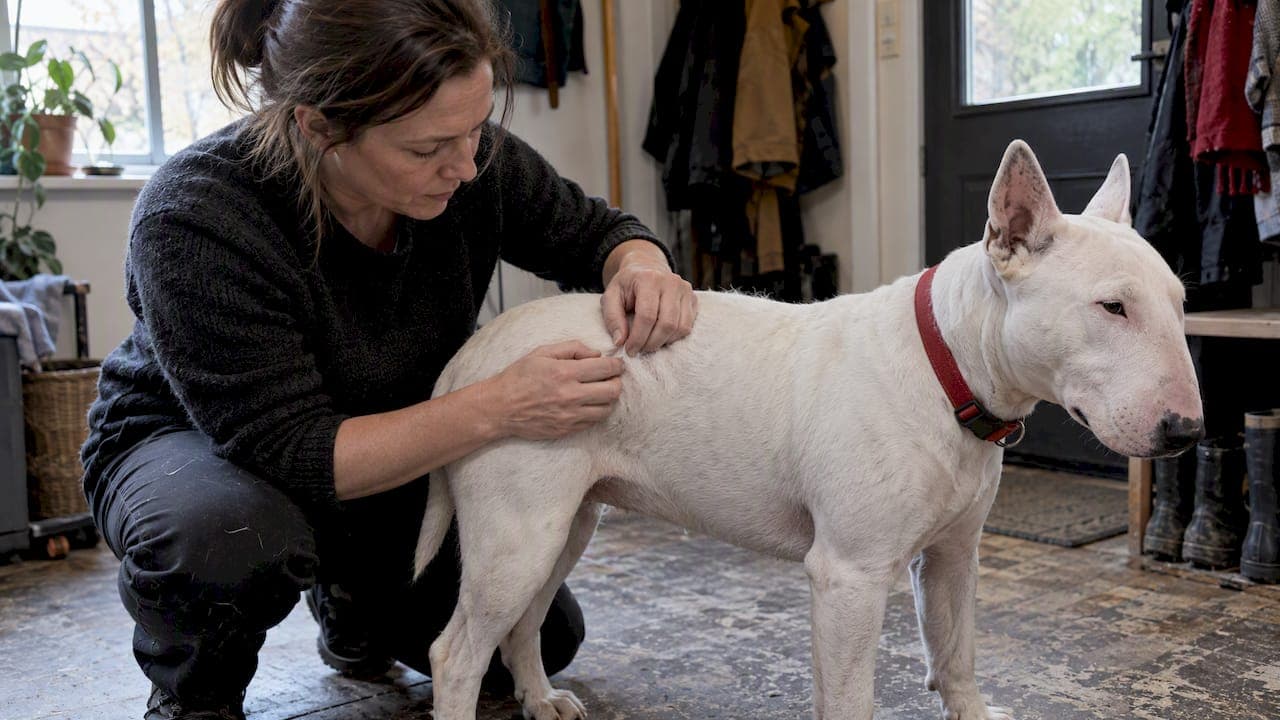
Yes, Bull Terriers shed, and for most dogs it is a moderate, manageable kind of hair loss rather than a dramatic seasonal blow-out. The single best strategy is a weekly brushing session with a rubber brush or grooming mitt, paired with a quick skin check while you're at it. If you ever spot sores, intense itching, or bald patches, that's your cue to call the vet instead of reaching for another brush.
TL;DR:
- Brush two or three times weekly in spring and autumn, then weekly in summer and winter; indoor climate control may sustain shedding all year.
- Bull Terriers face a higher risk of atopic dermatitis; even shedding is usually normal, but localized patches, redness, or persistent scratching warrant veterinary attention.
- Use a rubber brush weekly, bathe about once a month with shampoo made for dogs, and avoid overbathing, which can strip protective skin oils.
- Seek veterinary care for sores, crusting, odor, severe shedding, or itching that disrupts sleep; photos and notes on diet or product changes can aid diagnosis.
Table of Contents
- How much and when do Bull Terriers shed?
- What causes increased shedding in Bull Terriers?
- A grooming routine that keeps loose hair under control
- Diet and home care that support healthy skin and coat
- When shedding crosses the line into a vet visit
- A weekly and seasonal shedding checklist
- A note from the author on living with a shedder
- More Bull Terrier reading from our collections
- FAQ
- Sources
How much and when do Bull Terriers shed?
Bull Terriers carry a short, dense coat, so this isn't the heavy double-coat blowout you'd see in a Husky or Golden Retriever. Still, that tight coat sheds steadily, and owners notice it on dark clothes, couches, and car seats more than they'd expect from a "low maintenance" breed.
Shedding tends to peak twice a year, in spring and autumn, as the coat adjusts to changing daylight and temperature. Puppies add another wrinkle: somewhere between 3 and 12 months old, that soft baby coat gives way to the coarser adult coat, and you'll often see a noticeable (if temporary) increase in loose hair during that window.
A few things shape what you'll actually see at home:
- Brushing weekly catches loose hair before it ends up on your furniture.
- Seasonal peaks mean you'll likely need to brush more often in spring and fall.
- Indoor heating and air conditioning can blur the natural seasonal pattern, so some dogs shed a bit year-round.
If you're curious how the breed got its coat and temperament in the first place, our breed history post covers the background.
What causes increased shedding in Bull Terriers?
Normal shedding follows the seasons and the calendar, not your dog's mood or diet. When shedding spikes outside those patterns, something else is usually going on, and skin health is the first place to look.
Bull Terriers carry a notably higher risk of canine atopic dermatitis than the general dog population, according to UFAW's breed health summary. Atopic dermatitis is a common underlying cause of itch-driven hair loss in this breed, and it often shows up as secondary damage from scratching and licking rather than hair simply falling out on its own.
Other common culprits include:
- Fleas and other parasites, which trigger intense scratching and patchy hair loss.
- Poor nutrition or sudden diet changes that leave the coat dull and prone to breakage.
- Stress or anxiety, which can show up as excessive licking in one spot.
- Hormonal imbalances, which tend to cause more symmetrical thinning than random shedding.
The quickest way to tell the difference: general loose hair across the whole body usually means normal shedding, while hair loss concentrated in one patch, especially alongside redness or scratching, points toward a skin condition instead.
A grooming routine that keeps loose hair under control
A short coat doesn't mean skip grooming, it means grooming smarter. Three tools cover almost everything a Bull Terrier needs: a rubber curry brush for the weekly routine, a grooming mitt for a faster pass, and a fine-toothed comb for catching anything the brush misses around the legs and tail.
Here's a simple monthly rhythm to build around:
- Brush with the rubber curry brush once a week, working in small circles to lift loose hair.
- Wipe down with a grooming mitt between brushings if you notice extra hair on furniture.
- Bathe roughly once a month using a gentle, dog-specific shampoo, never human shampoo, which strips natural oils.
- Rinse thoroughly and follow with a light conditioner if the coat feels dry afterward.
- Dry completely before your dog settles anywhere drafty, since damp skin invites irritation.
Pro Tip: Brush outdoors or over a towel on bath days, it turns cleanup into a thirty-second job instead of a vacuuming session.
Over-bathing strips the skin's natural oils and can actually make shedding and dryness worse, so stick to once a month unless your vet recommends otherwise. While you're already handling your dog for grooming, use the moment to check nails for length and peek inside the ears for buildup or odor, small habits that catch problems early.

Diet and home care that support healthy skin and coat
What goes into your dog's bowl shows up on their coat. Diets rich in omega-3 and omega-6 fatty acids support skin repair and give the coat its shine, while high-quality protein gives hair the building blocks it needs to grow back after normal shedding cycles.
For dogs with diagnosed allergies or persistent skin issues, a vet may recommend a hypoallergenic or hydrolyzed protein diet, but that's a decision to make with professional guidance rather than on a hunch. Our feeding guide post walks through feeding basics for the breed if you want more detail.
A few home habits make a real difference too:
- Keep flea control consistent year-round, not just in summer.
- Wash bedding regularly to cut down on allergens and skin irritants.
- Choose gentle, fragrance-free grooming products to avoid triggering sensitive skin.
If you want to go deeper on nutrition for skin-related issues, Ultimate Pet Foods breaks down how diet affects coat health in more detail than we can cover here.
When shedding crosses the line into a vet visit
Most shedding is background noise, but a few signs mean it's time to stop guessing and get a professional opinion. Watch for sores, crusting, a noticeable odor, localized bald patches, sudden or severe hair loss, or itching that doesn't let up.
- Sores or crusting that don't heal within a few days.
- Bald patches concentrated in one area rather than spread evenly.
- Scratching intense enough to disrupt sleep or daily activity.
At the vet, expect skin scrapings, a parasite check, and possibly an allergy workup if atopic dermatitis is suspected. Bring a short photo timeline of the affected area and a note of any recent diet or product changes, it speeds up the diagnosis considerably. In the meantime, stick to gentle cleansing, skip harsh shampoos, and keep flea prevention current. Our roundup of breed health topics is a useful starting point if you want more context before your appointment.
A weekly and seasonal shedding checklist
Keep this short routine on the fridge or your phone and run through it once a week:
- Quick brush with a rubber brush or mitt.
- Skin spot-check for redness, bumps, or bald patches.
- Flea check, especially around the belly and base of the tail.
- Bath if it's been about a month or your dog looks like it needs one.
- Jot down anything unusual, a date and a sentence is enough.
| Season | Grooming frequency | Watch for |
|---|---|---|
| Spring | Brush 2 to 3 times weekly | Increased loose hair, itching |
| Summer | Brush weekly | Flea activity, heat irritation |
| Autumn | Brush 2 to 3 times weekly | Coat thickening, dry skin |
| Winter | Brush weekly | Indoor heating dryness |
A note from the author on living with a shedder
Shedding looks alarming until you realize it's just biology doing its thing on a schedule. A weekly brush and a watchful eye solve most of it, and the rest is knowing when to call in help. If you've enjoyed thinking about Bull Terriers this closely, our post on the breed in literature is a fun next read, and our mailing list keeps you posted on new stories as they land.
— Mark
More Bull Terrier reading from our collections
If loose hair on the couch has you thinking about your dog's personality as much as their coat, our temperament post is worth a look, and naming a new puppy gets easier with our names list.

For readers who love animal characters as much as the real thing, our Children's Books collection and full book index are worth a browse between grooming sessions.
- Illustrated stories that pair well with a dog-loving household.
- Genre variety across horror, Creepypasta, and children's titles for every kind of reader.
FAQ
Why is my Bull Terrier shedding so much right now?
Seasonal shedding peaks in spring and autumn as the coat adjusts to daylight changes, so a sudden increase during those months is usually normal. If the shedding comes with itching, redness, or bald patches, atopic dermatitis or another skin issue may be the real driver.
Do Bull Terriers shed more than other short-coated breeds?
Bull Terriers shed at a fairly typical level for a short-coated breed, with individual variation between dogs. Breed-specific skin sensitivity, including a higher tendency toward atopic dermatitis, can make shedding worse in some individuals compared with other short-haired breeds.
What are the downsides of having a Bull Terrier?
Beyond shedding, Bull Terriers carry a higher breed risk for atopic dermatitis, which can mean ongoing skin management for some dogs. They're also a high-energy breed that needs consistent daily exercise and mental stimulation to stay settled.
Do Bull Terriers like to cuddle?
Many Bull Terriers are affectionate and enjoy close contact with their families, though individual personalities vary. Their short coat also makes them more prone to seeking out warm laps and blankets than longer-haired breeds.
How can I tell normal shedding from hair loss caused by a skin problem?
Normal shedding is spread evenly across the body and doesn't come with redness, sores, or intense scratching. Localized bald patches, crusting, or persistent itching point toward a skin condition that warrants a vet visit rather than extra brushing.